

A kind of alloy aluminum paste for the back of perc solar cells
A solar cell and alloy aluminum technology, applied in the field of alloy aluminum paste, can solve problems such as low void filling rate and irregularity, achieve good boiling performance and adhesion, reduce aluminum beads, and good wettability and volatility Effect
Patent Information
- Authority / Receiving Office
- CN · China
- Patent Type
- Patents(China)
- Current Assignee / Owner
- Publication Date
- 2021-10-26
Smart Images
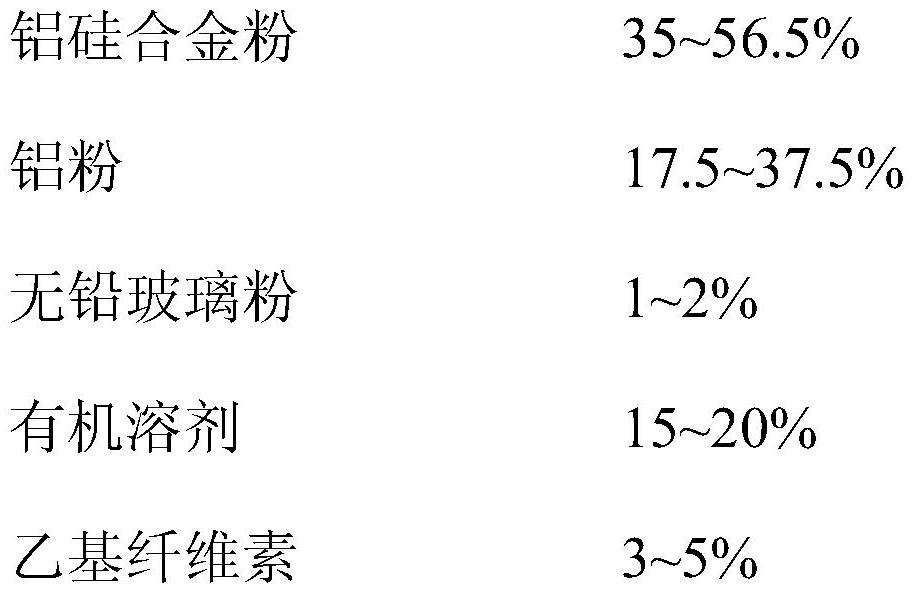
Figure 1 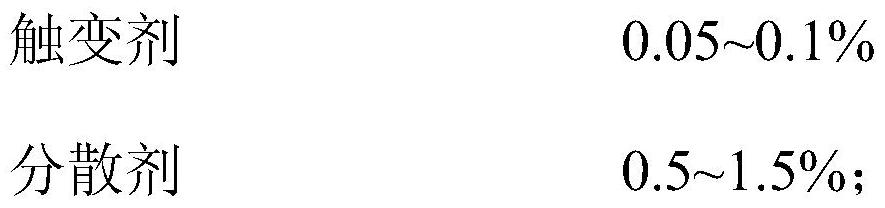
Figure 2 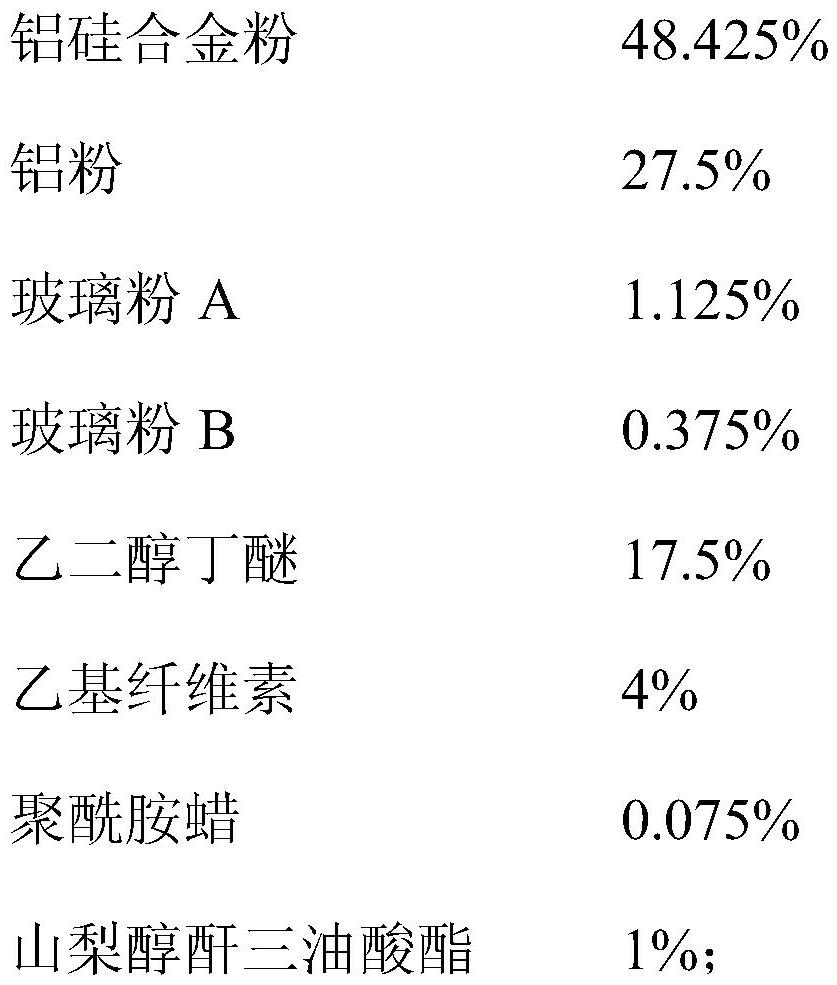
Figure 3
Abstract
Description
technical field
[0001] The invention relates to an aluminum paste on the back of a solar cell, in particular to an alloy aluminum paste used on the back of a PERC solar cell. Background technique
[0002] PERC technology, Passivated Emitter Back Contact, improves conversion efficiency by forming a passivation layer on the back of the solar cell. PERC cells have the advantages of simple process, low cost, and high compatibility with existing cell production lines, and are expected to become the mainstream direction of high-efficiency solar cells in the future.
[0003] PERC technology increases conversion efficiency by adding a dielectric passivation layer on the back of the cell. Higher efficiency levels in standard cell configurations are limited by the tendency for photogenerated electrons to recombine. PERC cells maximize the potential gradient across the P-N junction, which enables a more stable flow of electrons, less electron recombination, and higher efficiency leve...
Examples
Embodiment 1
[0031] 1. Preparation of lead-free glass powder
[0032] The preparation of glass powder A: take the weight of glass powder A as 100%, prepare 20% ZnO, 20% B 2 o 3 , 35% Sb 2 o 3 , 5% BaCl 2 , 10%Na 2 CO 3 and 10% Rb 2 o 2 , this example uses BaCl 2Metal compounds of other halogen group elements are also applicable by adjusting the addition ratio, and then utilize known mixers such as a disperser or a three-roller to mix each material evenly, then carry out drying treatment for 3.5h, and then transfer the dried treatment raw materials to In the crucible, put the crucible containing the raw materials into the heating chamber, first raise the temperature to 950 ° C, and then keep it warm for 1.5 hours, then pass the smelted material liquid through cooling rollers to obtain glass frit, and then crush and sieve the glass frit The median particle size D 50 The glass frit A is 1.36 μm and the softening temperature is 544.7°C.
[0033] Preparation of glass frit B: take the...
Embodiment 2
[0039] 1. Preparation of lead-free glass powder
[0040] The preparation of glass powder A: take the weight of glass powder A as 100%, prepare 40% ZnO, 5% B 2 o 3 , 30% Sb 2 o 3 , 5% SrCl, 10% Cs 2 CO 3 And 10% BaO, what this embodiment adopts is that the metal compound of SrCl and other halogen group elements is also applicable by adjusting the addition ratio, then utilize known mixers such as disperser or three-roller to mix each material evenly, then carry out Drying treatment for 3 hours, then transfer the dried raw materials into the crucible, then place the crucible containing the raw materials in the heating chamber, first raise the temperature to 850 °C, then keep it warm for 2 hours, and then pass the smelted material liquid through cooling rollers to obtain Glass frit, then the glass frit is crushed and sieved to obtain the median particle size D 50 The glass frit A is 1.89 μm and the softening temperature is 570°C.
[0041] Preparation of glass frit B: take t...
Embodiment 3
[0048] 1. Preparation of lead-free glass powder
[0049] The preparation of glass powder A: take the weight of glass powder A as 100%, prepare 10% ZnO, 30% B 2 o 3 , 30% Sb 2 o 3 , 10% CaCl 2 , 10%K 2 CO 3 and 10% Cs 2 O, what this embodiment adopts is CaCl 2 Metal compounds of other halogen elements are also applicable by adjusting the addition ratio, and then use a known mixer such as a disperser or a three-roller to mix the various materials evenly, then dry them for 4 hours, and then transfer the dried raw materials to the crucible In the heating chamber, put the crucible containing the raw materials into the heating chamber and raise the temperature to 1050°C, then keep it warm for 2 hours, then pass the smelted material liquid through cooling rollers to obtain glass frit, and then crush and sieve the glass frit to obtain Median particle size D 50 The glass frit A is 2.17μm and the softening temperature is 530.6°C.
[0050] Preparation of glass frit B: take the ...