
Composite phase-change material using PVA as skeleton, and preparation method thereof
A technology of composite phase change materials and skeleton materials, which is applied in the field of composite phase change materials, can solve problems such as less research, and achieve the effects of not being easily damaged, good leakage prevention performance, and good mechanical properties
Patent Information
- Authority / Receiving Office
- CN · China
- Patent Type
- Applications(China)
- Current Assignee / Owner
- Publication Date
- 2020-02-04
Smart Images
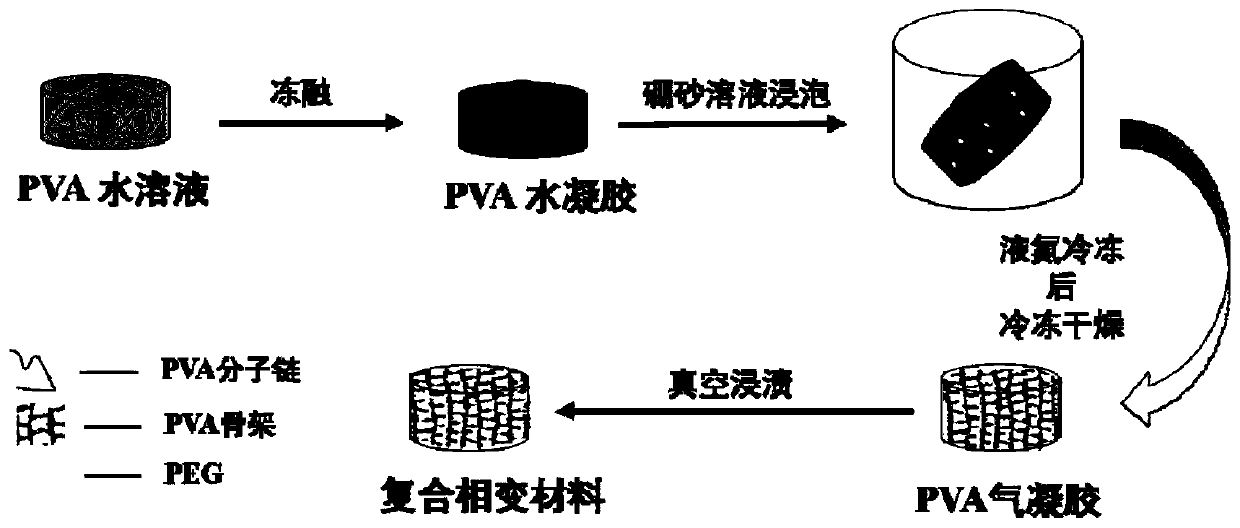
Figure 1 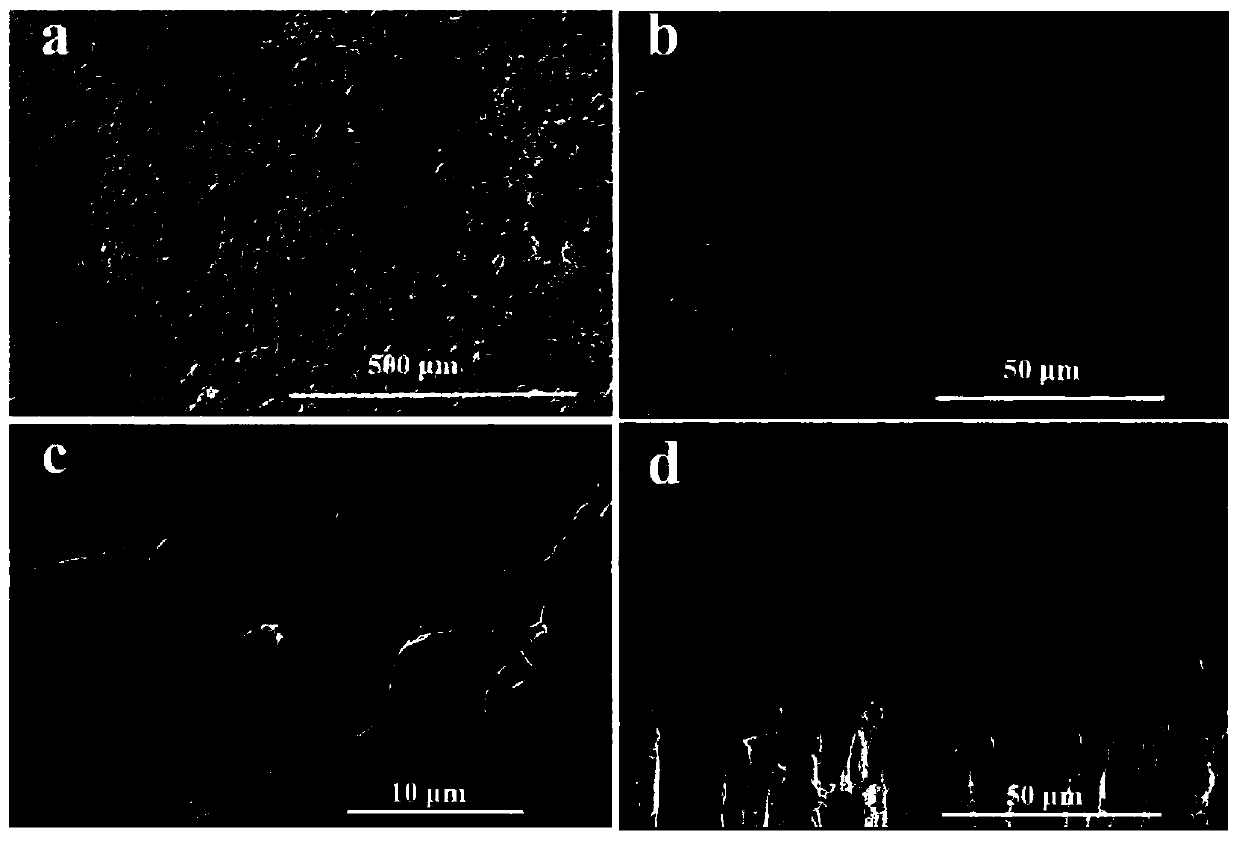
Figure 2 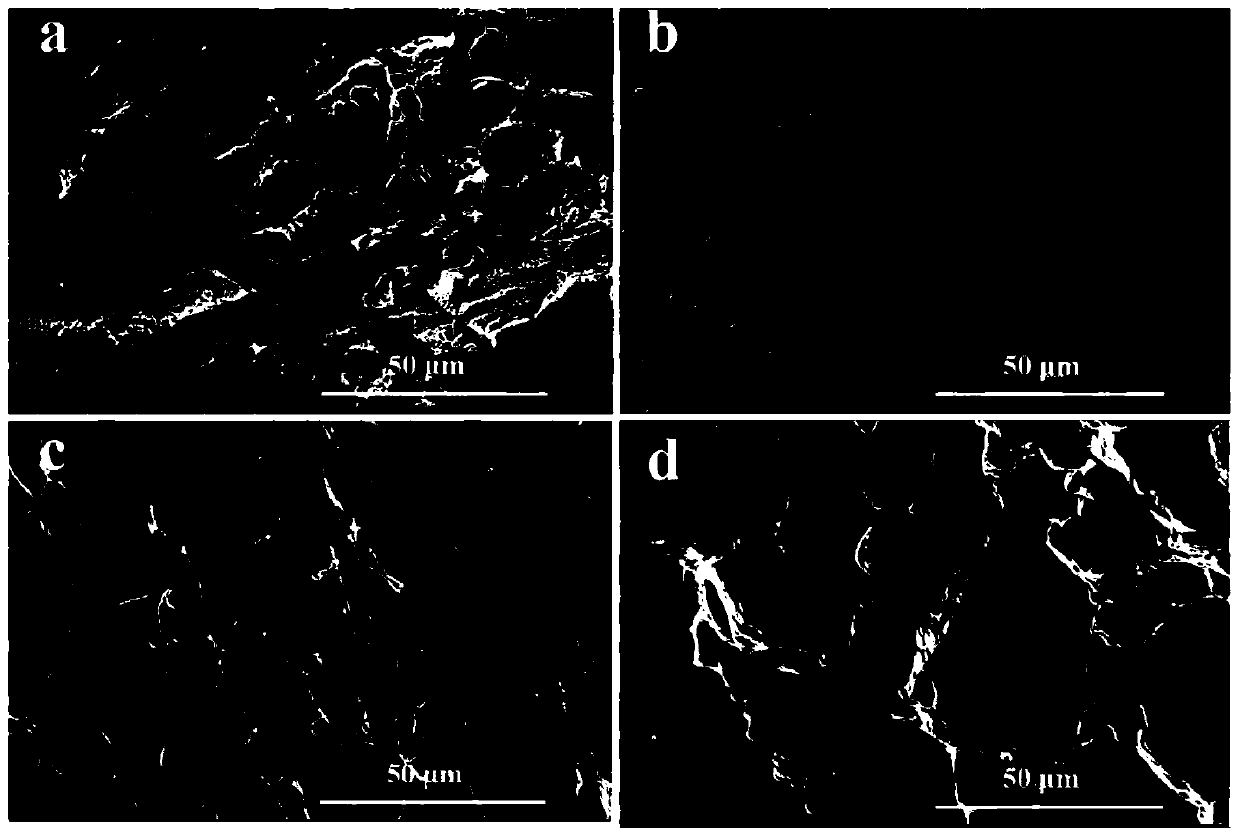
Figure 3
Abstract
Description
technical field
[0001] The invention belongs to the technical field of materials, and in particular relates to the preparation and application of a composite phase change material, in particular to a composite phase change material with a polymer material as a skeleton. Background technique
[0002] With the rapid growth of population and the acceleration of industrialization, the problem of energy crisis has become increasingly prominent. Vigorously develop advanced energy storage technology to alleviate the contradiction between energy supply and demand. As an energy storage technology, phase change materials (PCMs) can store large amounts of energy in the form of latent heat during phase transitions. Phase change materials are divided into inorganic phase change materials and organic phase change materials. Although organic phase change materials have the advantages of no phase separation and small undercooling, there is still a problem of liquid leakage during the phase...
Examples
Embodiment 1
[0044] The preparation of composite phase change material comprises the following steps:
[0045] Step 1): At room temperature, add PVA (molecular weight 146000-186000) into deionized water according to 5% mass fraction, stir for 30 minutes to make it swell, then raise the temperature to 97 ° C, stir for 2 hours, and obtain a PVA aqueous solution;
[0046] Step 2): Inject the aqueous solution obtained in the above step 1 into a twelve-well plate, put it in the refrigerator to freeze for 12 hours, then take it out, and thaw it for 12 hours. One freeze-thaw cycle to get a stronger hydrogel;
[0047] Step 3): Take out the hydrogel in the above step 2 from the twelve-hole plate, put it into an aqueous solution of sodium tetraborate (the mass fraction of sodium tetraborate in the aqueous solution is 2%) and soak for 24 hours, then take it out and clean it to obtain PVA hydrogel with cross-linked structure;
[0048] Step 4): Put the hydrogel in the above step 3 in a six-well plate, ...
Embodiment 2
[0053] Step): At room temperature, add PVA (molecular weight 146000-186000) into deionized water according to 5% mass ratio, stir for 30 minutes to make it swell, then raise the temperature to 97° C., and stir for 2 hours to obtain a PVA aqueous solution;
[0054] Step 2): Inject the aqueous solution obtained in the above step 1 into a twelve-well plate, put it in the refrigerator to freeze for 12 hours, then take it out, and thaw it for 12 hours. One freeze-thaw cycle to get a stronger hydrogel;
[0055] Step 3): Take out the hydrogel in the above step 2 from the twelve-hole plate, put it into an aqueous solution of sodium tetraborate (the mass fraction of sodium tetraborate in the aqueous solution is 2%) and soak for 24 hours, then take it out and clean it to obtain PVA hydrogel with cross-linked structure;
[0056] Step 4): Put the hydrogel in the above step 3 in a six-well plate, inject a certain amount of deionized water to completely immerse the PVA hydrogel, and then f...
Embodiment 3
[0061] Step): At room temperature, add PVA (molecular weight 146000-186000) into deionized water according to 5% mass ratio, stir for 30 minutes to make it swell, then raise the temperature to 97° C., and stir for 2 hours to obtain a PVA aqueous solution;
[0062] Step 2): Inject the aqueous solution obtained in the above step 1 into a twelve-well plate, put it in the refrigerator to freeze for 12 hours, then take it out, and thaw it for 12 hours. One freeze-thaw cycle to get a stronger hydrogel;
[0063] Step 3): Take out the hydrogel in the above step 2 from the twelve-hole plate, put it into an aqueous solution of sodium tetraborate (the mass fraction of sodium tetraborate in the aqueous solution is 2%) and soak for 24 hours, then take it out and clean it to obtain PVA hydrogel with cross-linked structure;
[0064] Step 4): Put the hydrogel in the above step 3 in a six-well plate, inject a certain amount of deionized water to completely immerse the PVA hydrogel, and then f...