
A multi-terminal differential protection method for active distribution network based on amplitude-phase relationship
A distribution network, multi-terminal technology, applied in the field of multi-terminal differential protection of active distribution network based on amplitude-phase relationship, can solve problems such as difficult adaptation, high normal misoperation, fault refusal, etc., to achieve flexible and guaranteed setting values. The effect of swiftness
Patent Information
- Authority / Receiving Office
- CN · China
- Patent Type
- Patents(China)
- Current Assignee / Owner
- Publication Date
- 2022-03-29
Smart Images
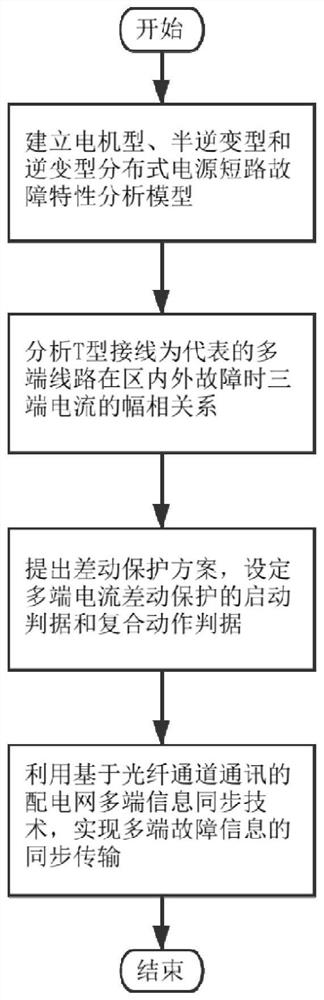
Figure 1 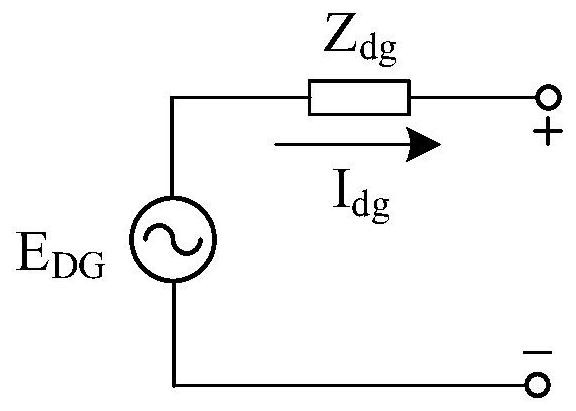
Figure 2 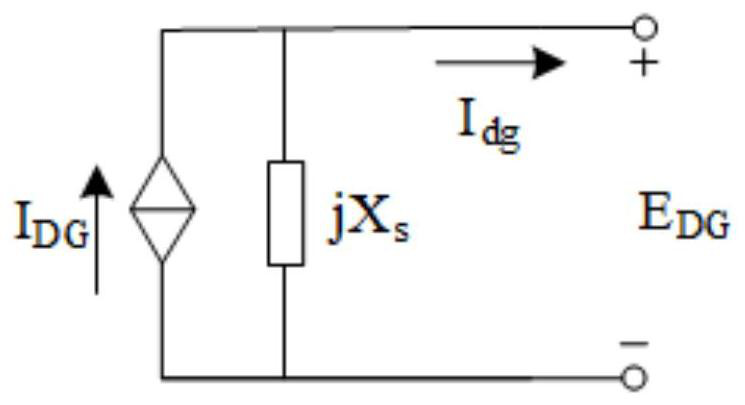
Figure 3
Abstract
Description
technical field
[0001] The invention relates to the technical field of distribution network protection, in particular to a multi-terminal differential protection method for an active distribution network based on amplitude-phase relationship. Background technique
[0002] The concept of distributed power generation was born in the 1980s, which refers to the power supply with small capacity introduced near the user side in the power distribution system. With the maturity of small-scale power generation technologies such as solar energy and wind energy, scattered resources are used to meet the needs of small-scale users.
[0003] Distributed power generation technology has many benefits. However, traditional distribution network protection is based on the radiation characteristics of the distribution network and the principle of selectivity. The fault area is isolated through the cooperation of protection equipment to achieve the smallest power loss range and ensure power supp...
Examples
Embodiment Construction
[0044] Such as figure 1 As shown, a multi-terminal differential protection method for active distribution network based on amplitude-phase relationship includes the following steps:
[0045] (1) Establish short-circuit fault characteristic analysis models of three main types of distributed power sources: motor type, semi-inverter type and inverter type; analyze the faults of various distributed power sources under fault conditions according to the established distributed power source fault model Characteristics and their influence on the magnitude and phase of the short-circuit current at the fault point;
[0046] (2) According to the fault characteristics of different types of distributed power sources, analyze the amplitude-phase relationship of the three-terminal current when the multi-terminal line represented by the T-type connection is faulty inside and outside the area; according to the different positional relationship between the fault point and the protected section,...