
Gas ash microscopic image segmentation method and system based on full convolution residual network
A microscopic image and convolutional neural network technology, which is applied in the field of gas ash microscopic image segmentation methods and systems, can solve the problems of poor target recognition ability of small objects, loss of edge details of objects, etc., and achieves good segmentation effect, complete details, The effect of sharp image outlines
Patent Information
- Authority / Receiving Office
- CN · China
- Patent Type
- Applications(China)
- Current Assignee / Owner
- Publication Date
- 2020-08-11
Smart Images
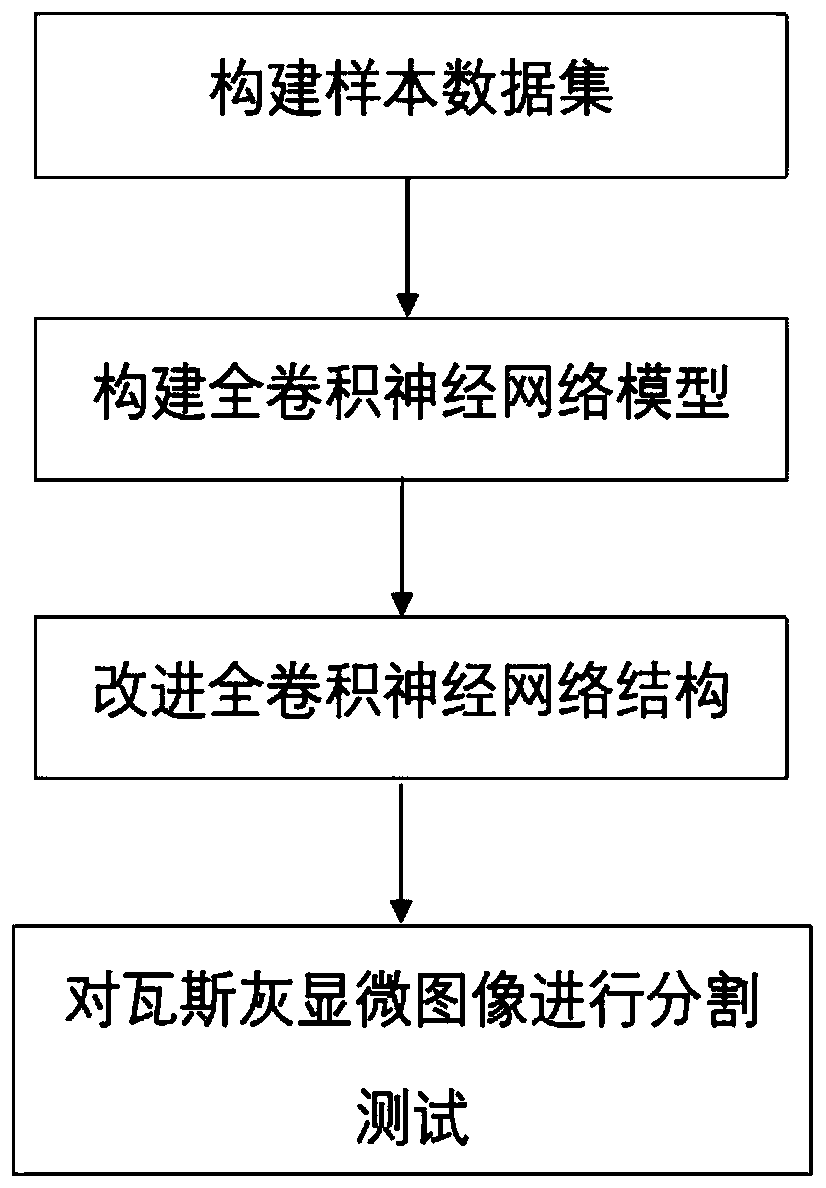
Figure 1 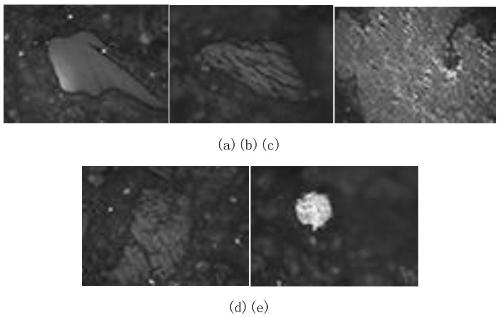
Figure 2 
Figure 3
Abstract
Description
technical field
[0001] The invention relates to the technical field of image processing, in particular to a gas ash microscopic image segmentation method and system based on a fully convolutional residual network. Background technique
[0002] A sufficient amount of analysis and extraction of carbon-containing substances, metal substances and their oxides in gas ash can guide blast furnace maintenance and comprehensive reuse of metallurgical resources. On the other hand, the detection of carbon content in gas ash can provide It provides a reference basis for the optimization of parameters such as coal injection ratio and coal type selection in blast furnace smelting. Therefore, it is of great significance to realize the quantitative analysis of gas ash composition to guide blast furnace production and comprehensive utilization of gas ash.
[0003] The chemical components in the gas ash are diverse. In addition to a large amount of metal oxides, it also includes a small amou...
Examples
Embodiment 2
[0090] Such as figure 1 As shown, this embodiment provides a technical solution: a gas ash microscopic image segmentation method based on an improved fully convolutional neural network, including the following steps:
[0091] S1: Build the dataset
[0092] In the image segmentation experiment of this embodiment, carbonaceous substances, unburned coal, and metal oxide substances are used as target components, and ash and other minerals are used as background impurities;
[0093] The specific implementation process of generating the dataset is as follows:
[0094] S101: Prepare microscopic image of gas ash sample
[0095] The microscopic images of gas ash samples were prepared according to the relevant standards in GB / T6948-2008. A total of 207 images were collected, and the size of each image was 2592 x 1944 pixels. Some typical structures of gas ash microscopic images are as follows: figure 2 as shown, figure 2 a is an isotropic structure, figure 2 b is a massive crack...