
Application of GPR110, VEGFR and CD34 in identification of lung adenocarcinoma subtypes
A 9. CD34, lung adenocarcinoma technology, applied in the field of disease identification and diagnosis, can solve problems such as unseen lung adenocarcinoma subtypes, and achieve the effects of fast diagnosis, excellent accuracy, and accurate and reliable results
Patent Information
- Authority / Receiving Office
- CN · China
- Patent Type
- Applications(China)
- Current Assignee / Owner
- Publication Date
- 2020-12-04
Smart Images
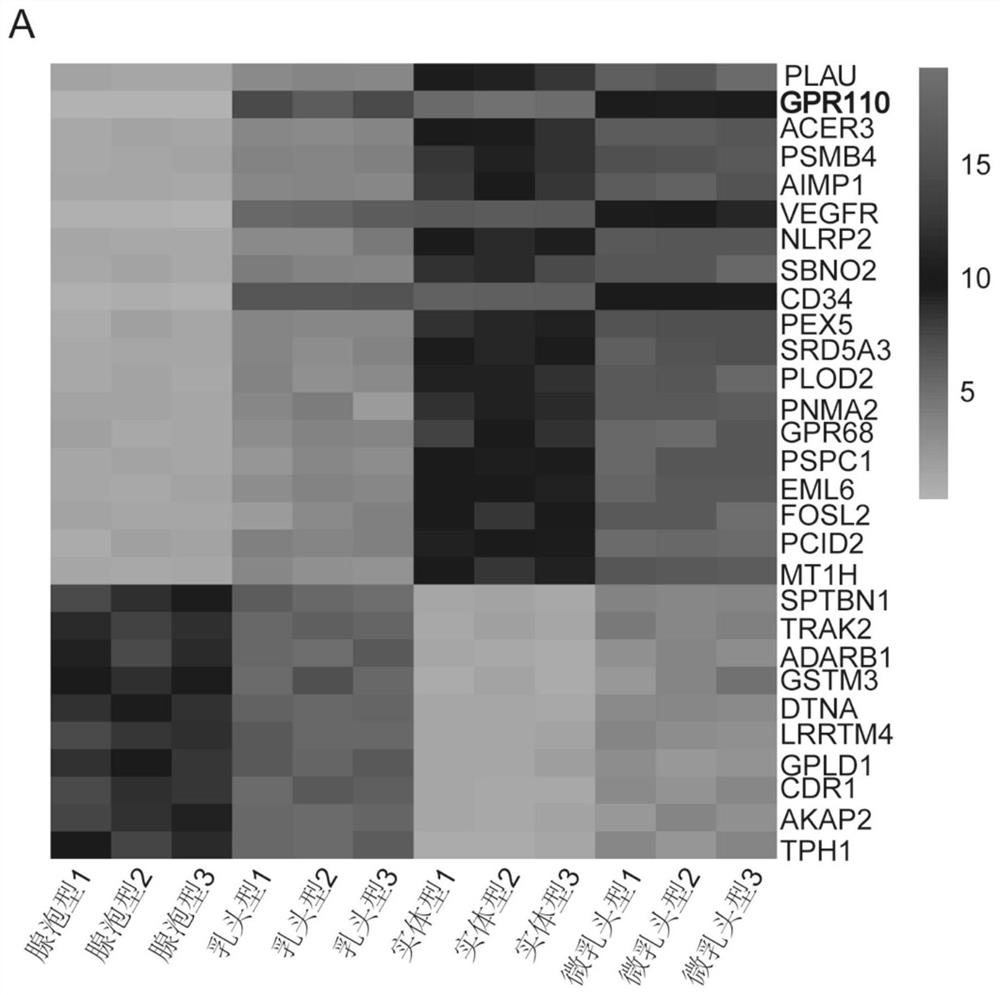
Figure 1 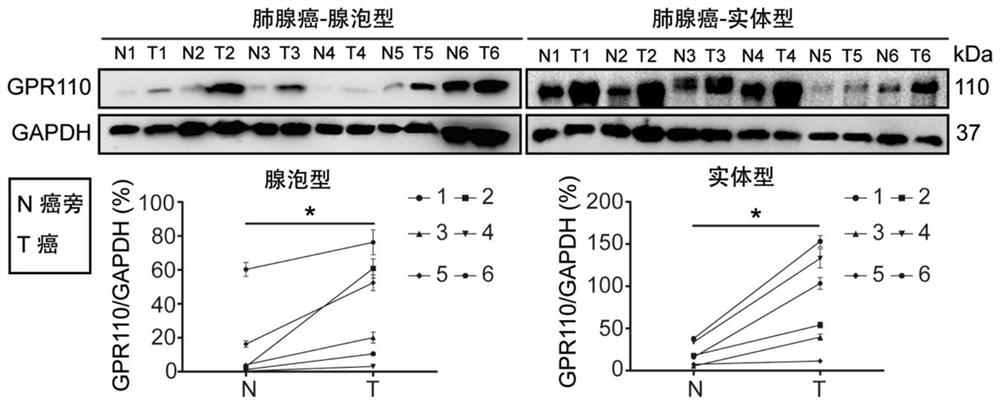
Figure 2 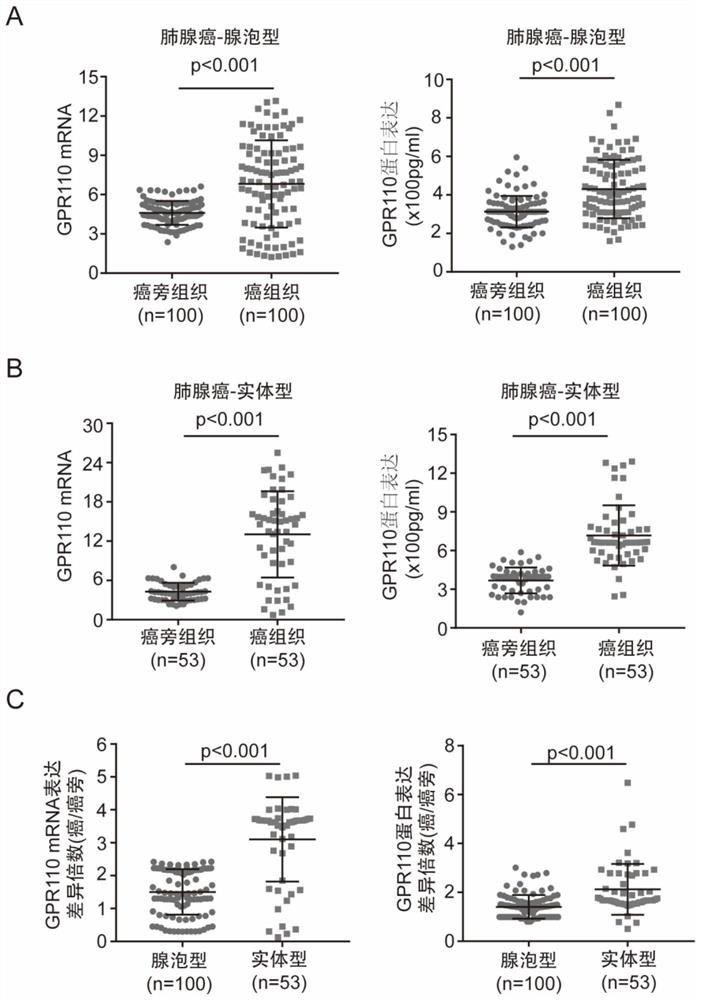
Figure 3
Abstract
Description
technical field
[0001] The present invention relates to the field of disease identification and diagnosis, in particular to the application of GPR110, VEGFR and CD34 in identifying subtypes of lung adenocarcinoma. Background technique
[0002] Lung cancer is mainly divided into non-small cell lung cancer (NSCLC, about 85%) and small cell lung cancer (SCLC, about 15%). NSCLC can be divided into lung adenocarcinoma (lung adenocarcinoma), squamous cell carcinoma, adenosquamous carcinoma, large cell carcinoma and sarcomatoid carcinoma according to histopathological type. The incidence of lung adenocarcinoma is increasing year by year, and it has become the most common subtype of NSCLC, accounting for almost 50% of all lung cancers, and the overall survival rate is low.
[0003] The new tissue classification of lung adenocarcinoma released by the World Health Organization (WHO) in 2015 adopted the 2011 International Association for the Study of Lung Cancer (IASLC), American Thor...
Examples
Embodiment 1
[0030] 1 case collection
[0031] Collected 213 lung adenocarcinoma tissue samples from January to December 2018, including 100 cases of acinar-based lung adenocarcinoma, 30 cases of papillary-based lung adenocarcinoma, and micropapillary-based lung adenocarcinoma. 30 specimens of adenocarcinoma and 53 specimens of lung adenocarcinoma mainly solid were obtained from the surgical resection specimens of the Chest Hospital Affiliated to Shanghai Jiaotong University. The preoperative and postoperative diagnoses were clear. Interpret and confirm the histopathological subtype. All specimens were stage IA lung adenocarcinoma without distant organ and lymph node metastasis; the clinical data were complete, no radiotherapy or chemotherapy was received before operation, and no other basic diseases or acute and chronic diseases were present. At the same time, 10 inflammatory paraffin specimens were selected as controls. Among them, there were 126 males and 87 females; their age ranged ...