
Loudspeaker with multiple sound cones
A loudspeaker and sound cone technology, applied in the field of loudspeakers, can solve the problems of reducing the sensitivity of the loudspeaker and increasing the weight of the voice coil, and achieve the effects of ingenious and reasonable product structure, increased sensitivity, and reduced distortion
Patent Information
- Authority / Receiving Office
- CN · China
- Current Assignee / Owner
- Publication Date
- 2020-12-11
Smart Images
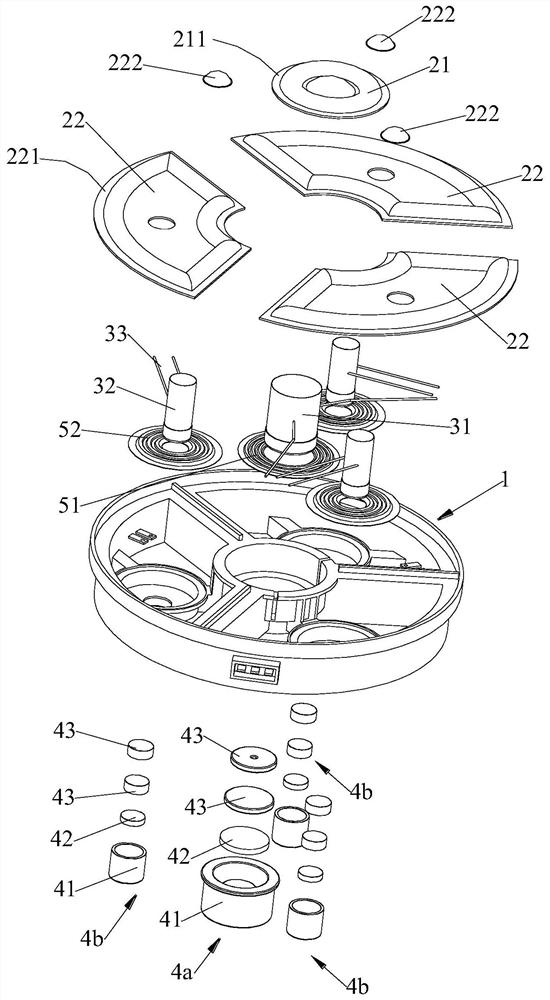
Figure 1 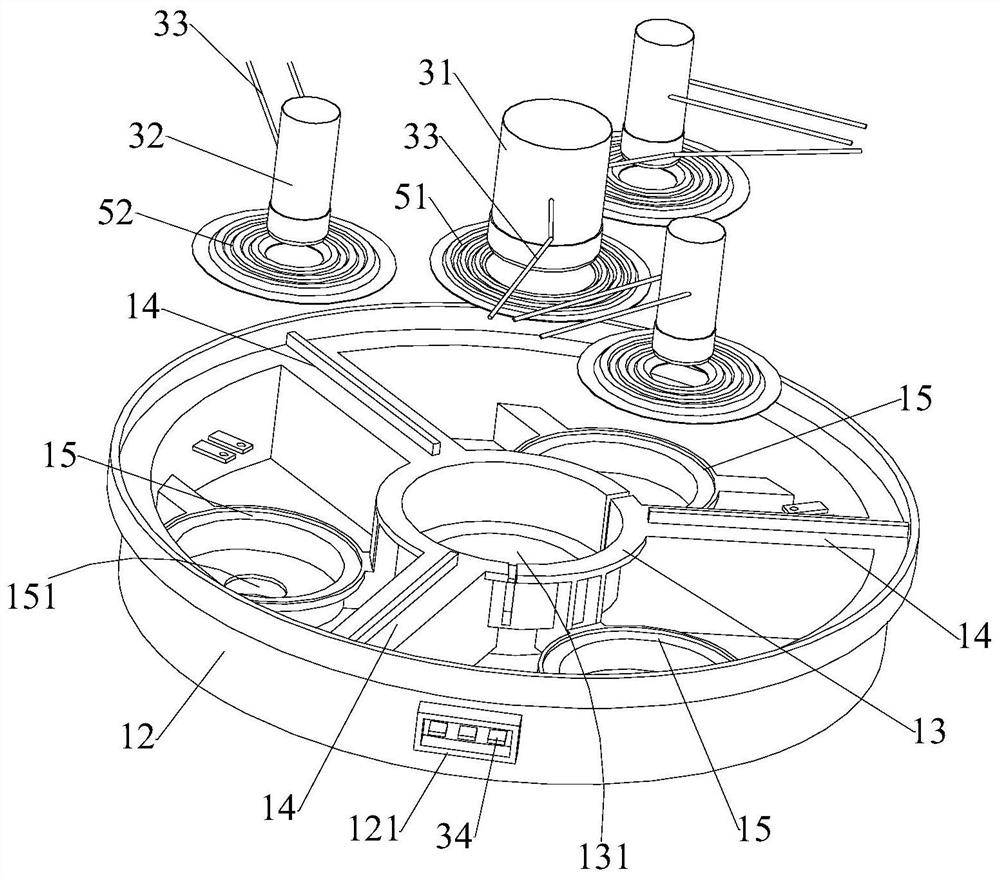
Figure 2 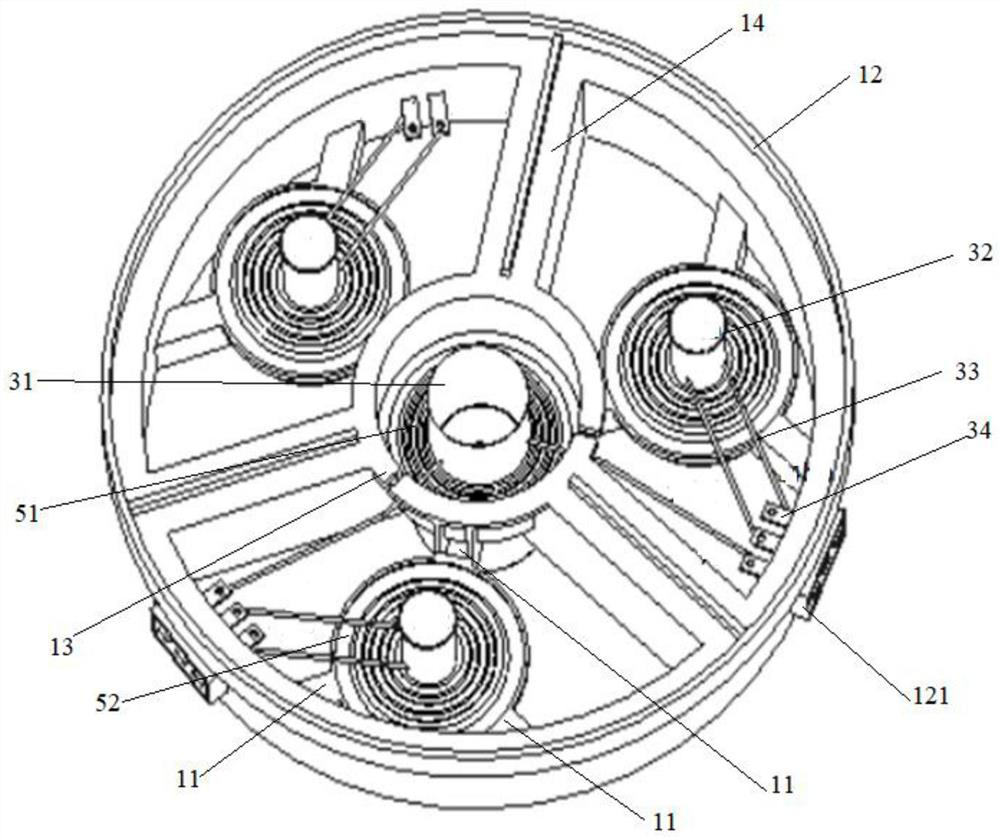
Figure 3
Abstract
Description
technical field
[0001] The invention belongs to the field of loudspeakers, and relates to a multi-cone loudspeaker, in particular to a multi-cone loudspeaker without a positioning support piece that can input multi-channel audio input signals. Background technique
[0002] The sound cone used by the existing traditional speakers without positioning struts is generally dish-shaped, and the sound cone is connected with a voice coil to form a speaker vibration system without positioning struts. Input, single audio signal input has limitations on the original sound reproduction, and the combination of a single voice coil and the sound cone has high requirements on the rigidity of the sound cone material. Although, the voice coil of this speaker can also use a voice coil that can input multiple signals. This voice coil is formed by stacking multiple sets of coils from the inside to the outside. Above, a loudspeaker vibration system is formed, which can be applied to multi-channe...
Examples
Embodiment Construction
[0032] The preferred embodiments of the present invention will be described in detail below in conjunction with the accompanying drawings, so that the advantages and features of the present invention can be more easily understood by those skilled in the art. It should be noted here that the descriptions of these embodiments are used to help understand the present invention, but are not intended to limit the present invention.
[0033] In the description of the present application, it should be understood that the orientation or positional relationship indicated by the terms "center", "upper", "lower", "bottom", etc. is based on the orientation or positional relationship shown in the drawings, and is only for the purpose of It is convenient to describe the application and simplify the description, but not to indicate or imply that the device or element referred to must have a specific orientation, be constructed and operate in a specific orientation, and thus should not be const...