
Method for calculating rotor forced excitation hot spot temperature of air-cooled non-salient pole synchronous phase modifier
A technology of hot spot temperature and calculation method, which is applied in calculation, computer-aided design, complex mathematical operations, etc., and can solve problems such as inability to accurately evaluate hot spot temperature
Patent Information
- Authority / Receiving Office
- CN · China
- Current Assignee / Owner
- Publication Date
- 2021-04-02
Smart Images
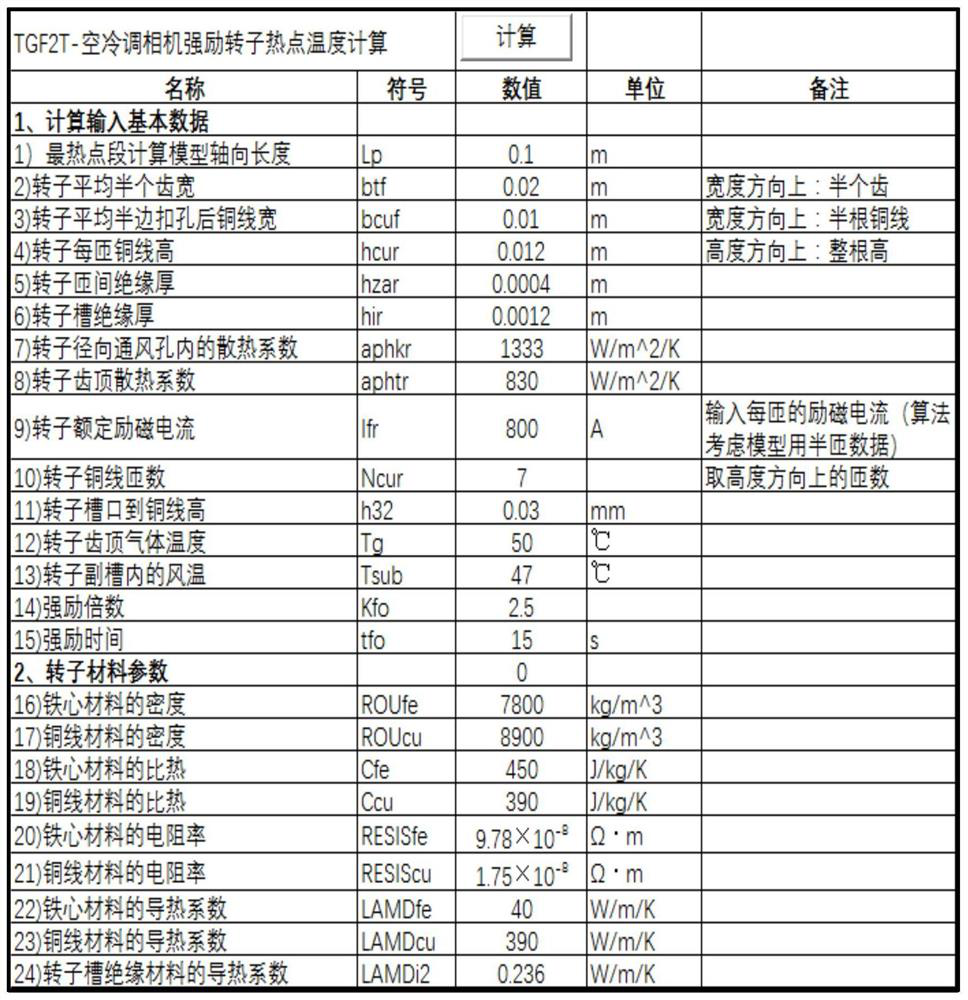
Figure 1 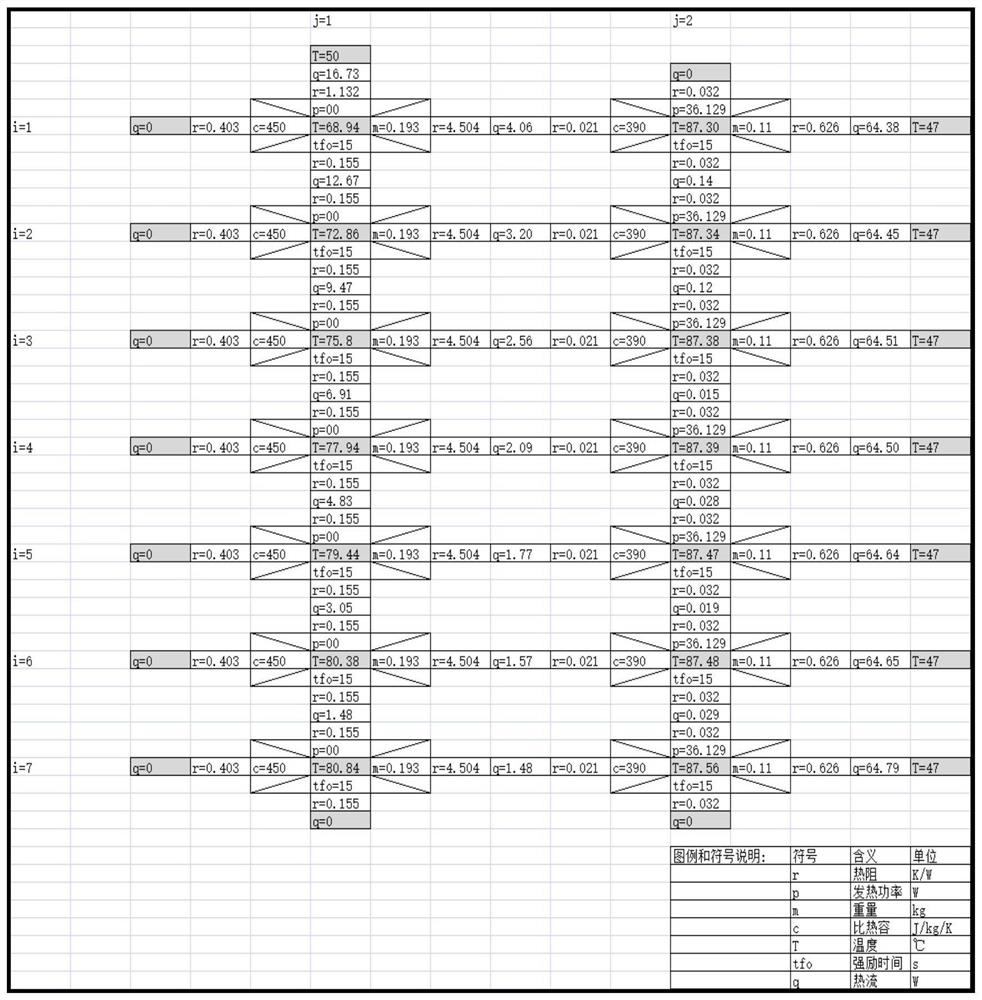
Figure 2 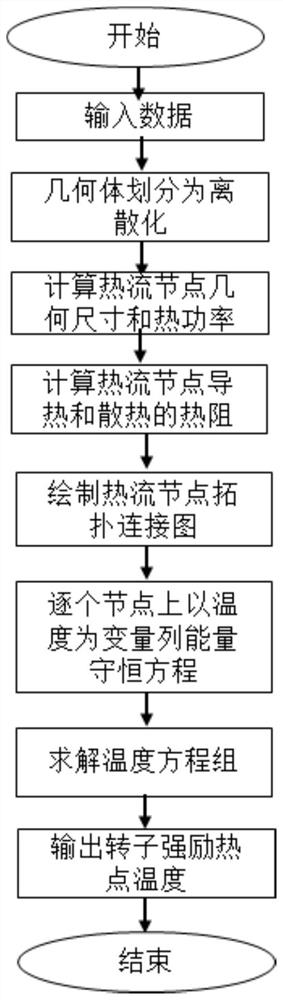
Figure 3
Abstract
Description
technical field
[0001] The invention relates to a calculation method for the forced excitation hot spot temperature of the rotor of an air-cooled hidden pole synchronous condenser, which can be used in the calculation research and product design and development of the rotor forced excitation hot spot temperature of a distributed air-cooled hidden pole synchronous condenser, and belongs to the electromagnetic and The field of cooling design technology. Background technique
[0002] The forced excitation requirements of the new generation of distributed air-cooled hidden-pole synchronous condenser are relatively high, and the calculation of the forced excitation hotspot temperature of its air-cooled rotor winding is an important link in product design and development. The accuracy of rotor forced excitation hotspot temperature calculation not only affects the determination of product design schemes, but also is closely related to the safety of air-cooled air-conditioning camer...
Examples
Embodiment Construction
[0048] In order to make the present invention more comprehensible, preferred embodiments are described in detail below with accompanying drawings.
[0049] Such as image 3 As shown in the present invention, a method for calculating the rotor forced excitation hot spot temperature of an air-cooled hidden pole synchronous condenser comprises the following steps:
[0050] Step 1: Obtain the parameters of the input calculation model and material property parameters: only 24 parameters need to be input, including the axial length L of the calculation model of the hottest point section p (Unit: m), the average half tooth width of the rotor b tf (Unit: m), rotor half copper wire width b cuf (unit: m), the height of copper wire per turn of the rotor h cuf (unit: m), rotor turn-to-turn insulation thickness h zar (unit: m), rotor slot insulation thickness h ir (unit: m), the heat dissipation coefficient aph in the rotor radial ventilation hole kr (Unit: W / m 2 / K),, rotor addendu...