
Mixed source positioning method based on convolutional neural network
A convolutional neural network and source localization technology, which is used in the field of simultaneous localization of near-field and far-field sources using radar arrays, which can solve problems such as inability to locate near-field sources or mixed sources, and achieve faster convergence and larger arrays. Aperture, effect of reducing estimation time
Patent Information
- Authority / Receiving Office
- CN · China
- Patent Type
- Applications(China)
- Current Assignee / Owner
- Publication Date
- 2021-04-23
Smart Images
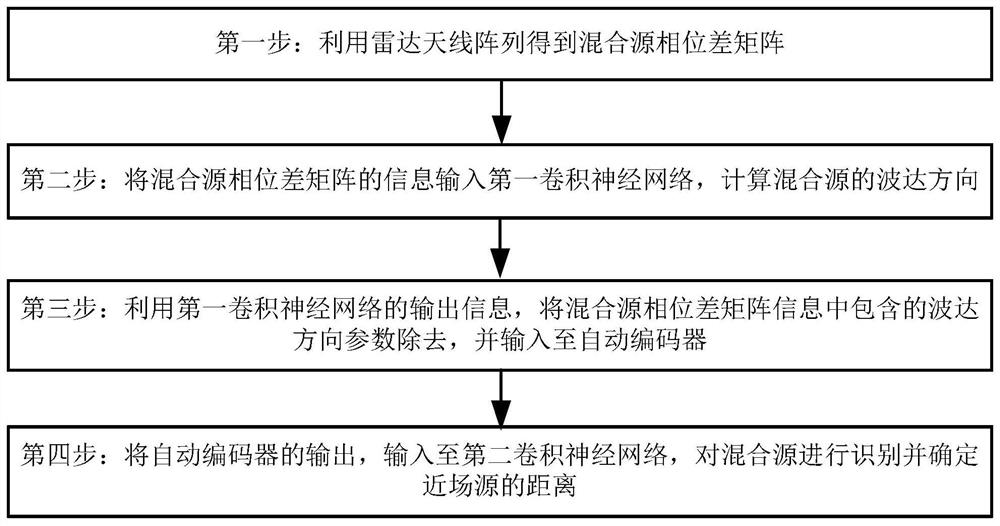
Figure 1 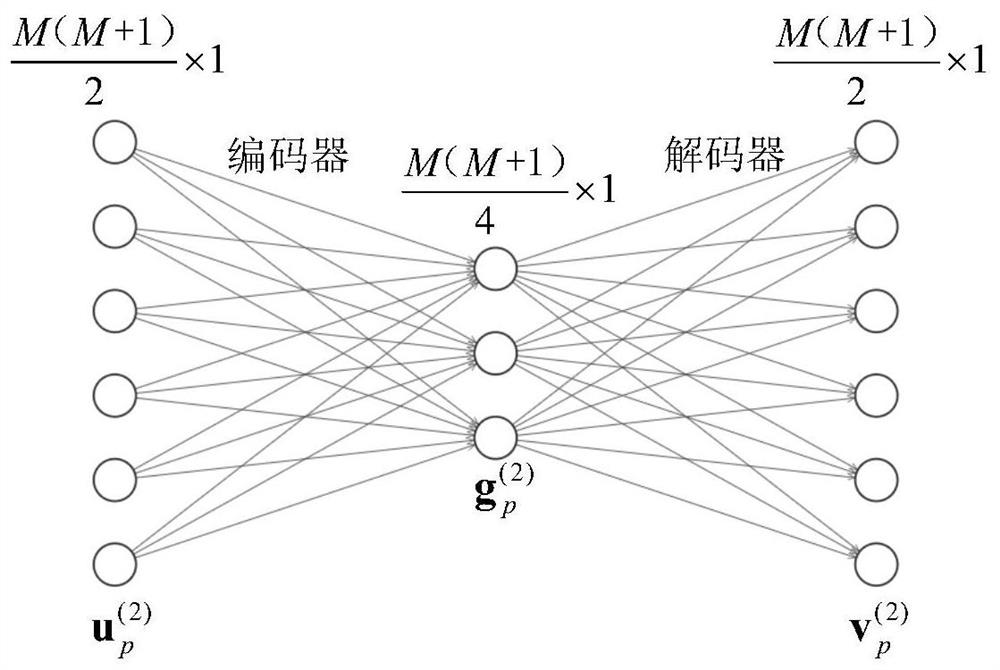
Figure 2 
Figure 3
Abstract
Description
technical field
[0001] The invention belongs to the technical field of artificial intelligence and array signal processing, in particular to a method for simultaneously locating near-field sources and far-field sources by using a radar array. Background technique
[0002] Mixed source localization plays an important role in passive radar. The mixed source includes near-field sources and far-field sources. The distance between the near-field source and the radar array is usually 0.62(D 3 / λ) 1 / 2 ~2D 2 / λ, where D is the aperture of the radar array, and λ is the wavelength of the radar receiving signal. To locate the near-field source needs to estimate the direction of arrival (Direction Of Arrival, DOA) and distance; the distance of the far-field source is usually relative to the radar array greater than 2D 2 / λ, the location of the far-field source needs to estimate the direction of arrival. Convolutional Neural Networks (CNN) is a feedforward neural network with convolu...
Examples
Embodiment Construction
[0032] The present invention will be further described below in conjunction with accompanying drawings and examples.
[0033] The present invention comprises the following steps:
[0034] First, use the radar antenna array to obtain the mixed source phase difference matrix; then, input the information of the mixed source phase difference matrix into the first convolutional neural network to calculate the direction of arrival of the mixed source; secondly, use the output of the first convolutional neural network Information, remove the direction of arrival parameter contained in the phase difference matrix information of the mixed source, and input it to the autoencoder; finally, input the output of the autoencoder to the second convolutional neural network to identify and determine the mixed source The distance to the near-field source.
[0035] Such as figure 1 As shown, the hybrid source localization method based on convolutional neural network includes the following steps...