
On-chip near-zero transmission type sensor based on aggregation effect and detection method
A sensor and transmission-type technology, applied in the direction of instruments, measuring devices, scientific instruments, etc., to achieve the effect of simple detection method, high sensitivity, and accurate information capture results
Patent Information
- Authority / Receiving Office
- CN · China
- Patent Type
- Applications(China)
- Current Assignee / Owner
- Publication Date
- 2022-02-08
Smart Images
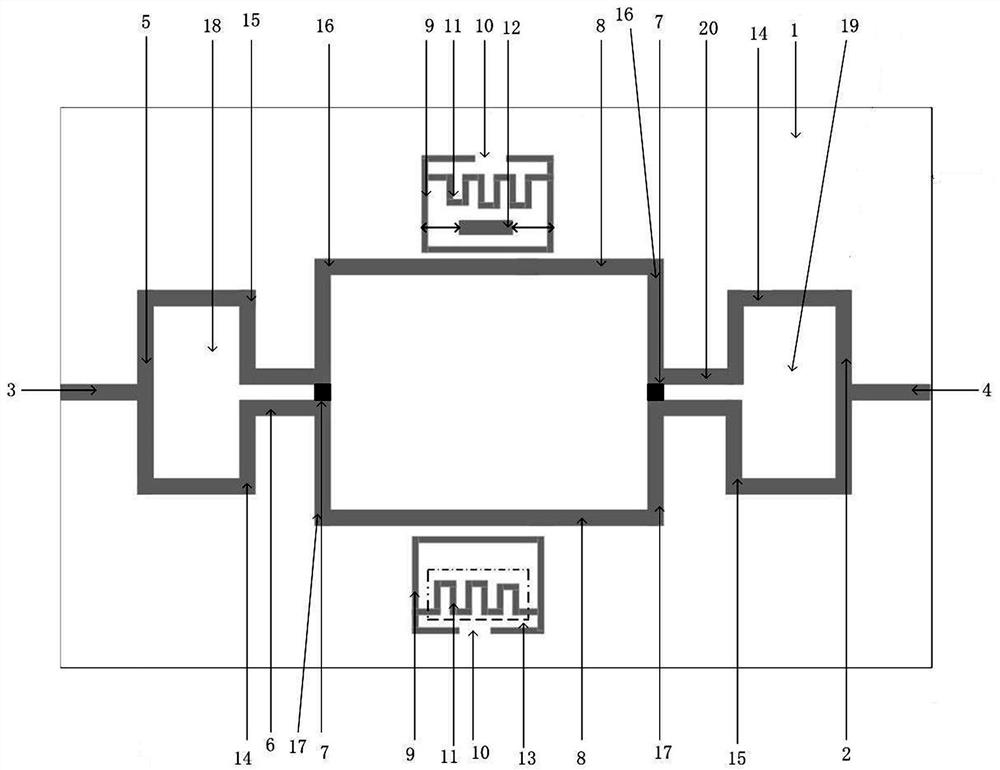
Figure 1 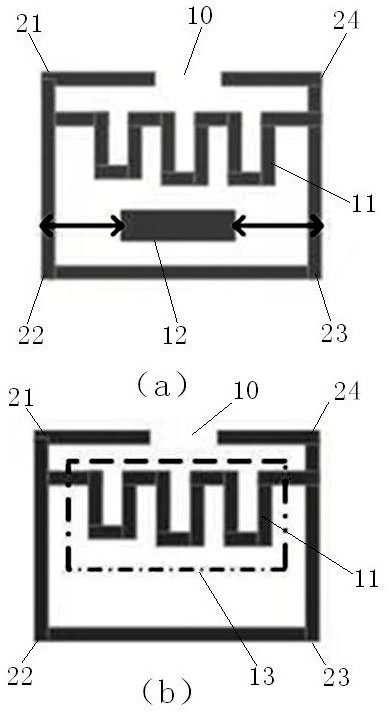
Figure 2 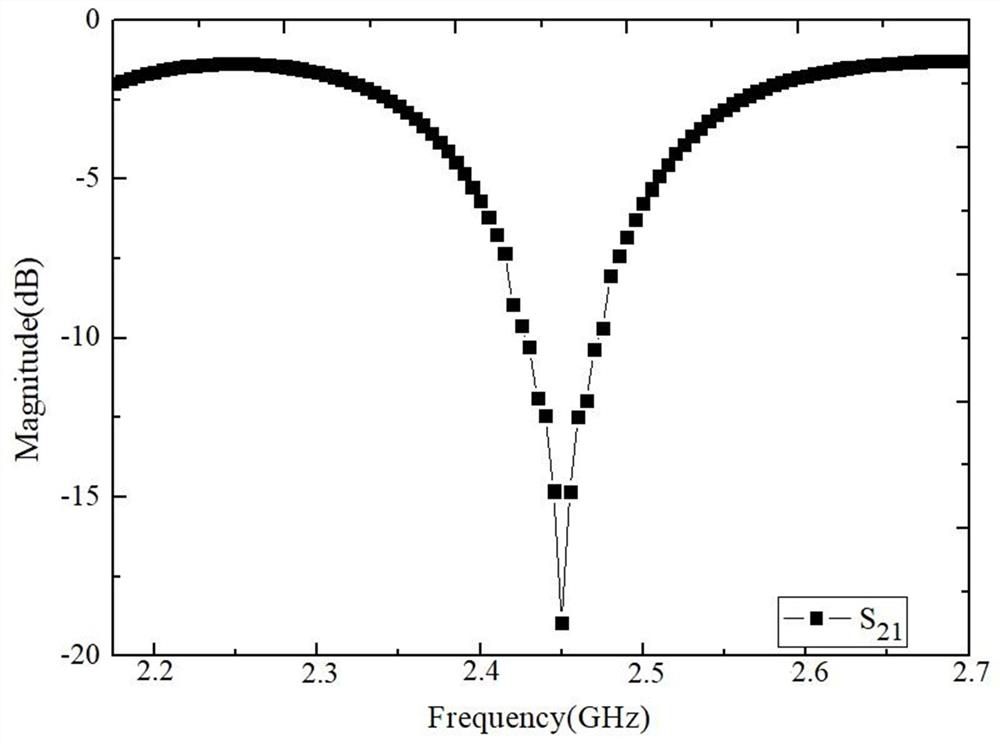
Figure 3
Abstract
Description
technical field
[0001] The invention relates to a microwave detection device for the dielectric properties of microfluids, which belongs to the technical field of microwave measurement, and more specifically relates to an on-chip near-zero transmission sensor based on polymerization effect. Background technique
[0002] With the continuous development of microwave technology, especially the rapid development of electromagnetic metamedia based on transmission line structure, it provides new opportunities for new breakthroughs in various information components, and has attracted extensive attention in various industries. Electromagnetic metamedia has the characteristics of subwavelength resonance, negative refraction, perfect lens, energy convergence and surface wave suppression, making it popular among scientific researchers in the field of microwave testing in recent years. Based on the many exotic electromagnetic properties of electromagnetic metamaterials, many novel detec...
Examples
Embodiment Construction
[0028] In order to make the purpose, technical solutions and advantages of the embodiments of the present invention more clear, the technical solutions in the embodiments will be clearly and completely described below in conjunction with the drawings in the embodiments of the present invention. The following embodiments are used to illustrate the present invention , but not to limit the scope of the present invention.
[0029] In the description of the present invention, it should be noted that the terms "upper", "lower", "front", "rear", "left", "right", "vertical", "inner", "outer" etc. The indicated orientation or positional relationship is based on the orientation or positional relationship shown in the drawings, and is only for the convenience of describing the present invention and simplifying the description, rather than indicating or implying that the referred device or element must have a specific orientation, or in a specific orientation. construction and operation, ...