
Process for producing genetic engineering of tobacco etch virus protease and use thereof
A technology of genetic engineering and production methods, applied in hydrolytic enzymes, recombinant DNA technology, bacteria, etc., can solve problems such as poor practicability
Patent Information
- Authority / Receiving Office
- CN · China
- Patent Type
- Applications(China)
- Current Assignee / Owner
- Publication Date
- 2006-10-11
- Estimated Expiration
- Not applicable · inactive patent
Smart Images
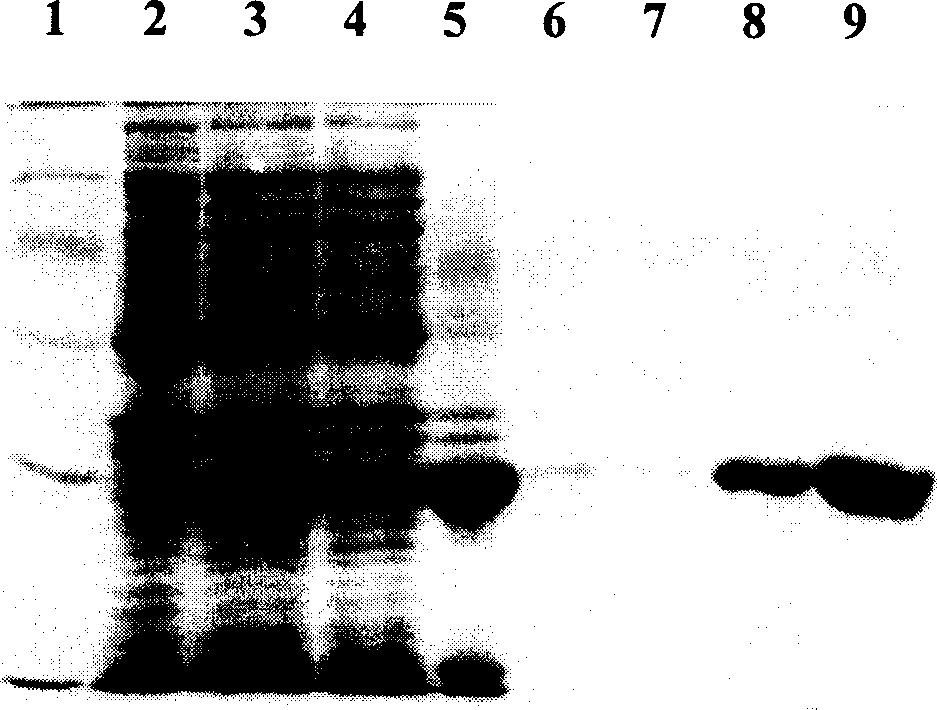
Figure 1 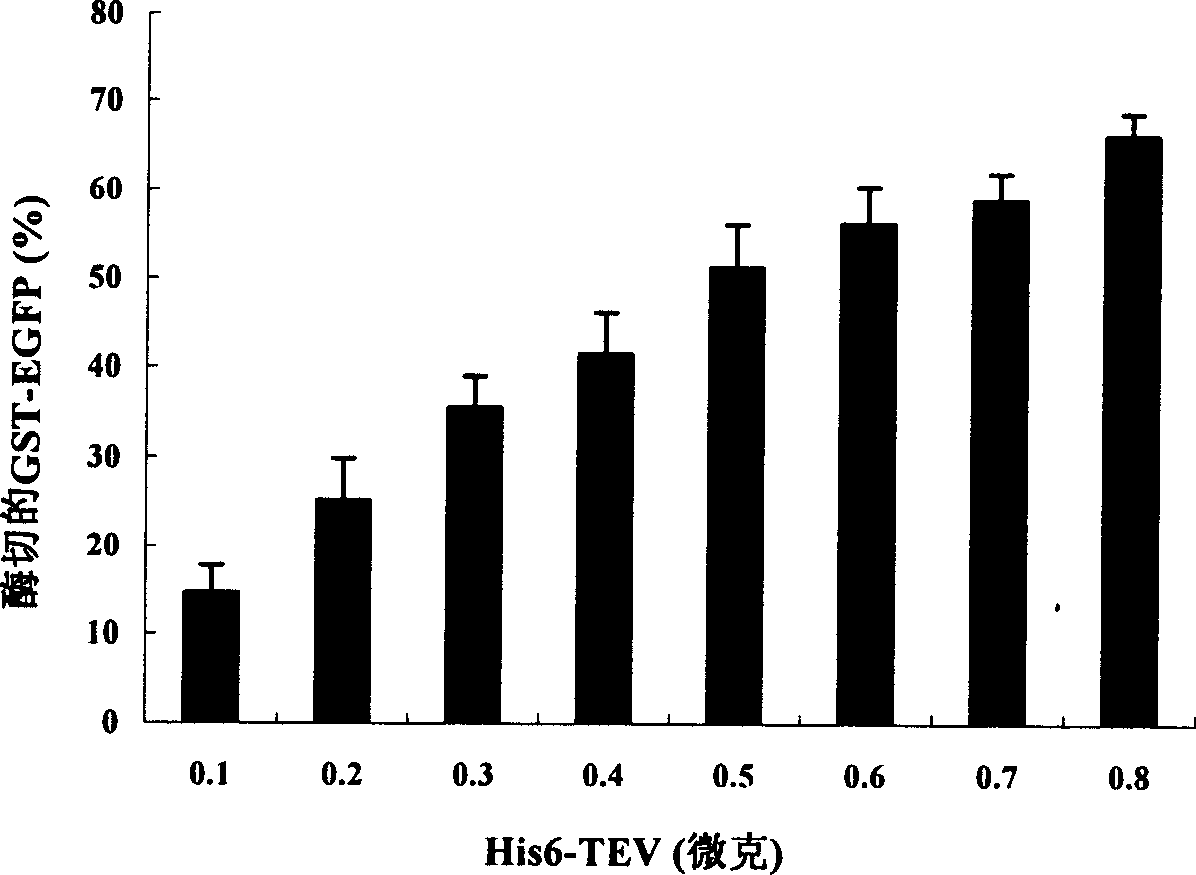
Figure 2 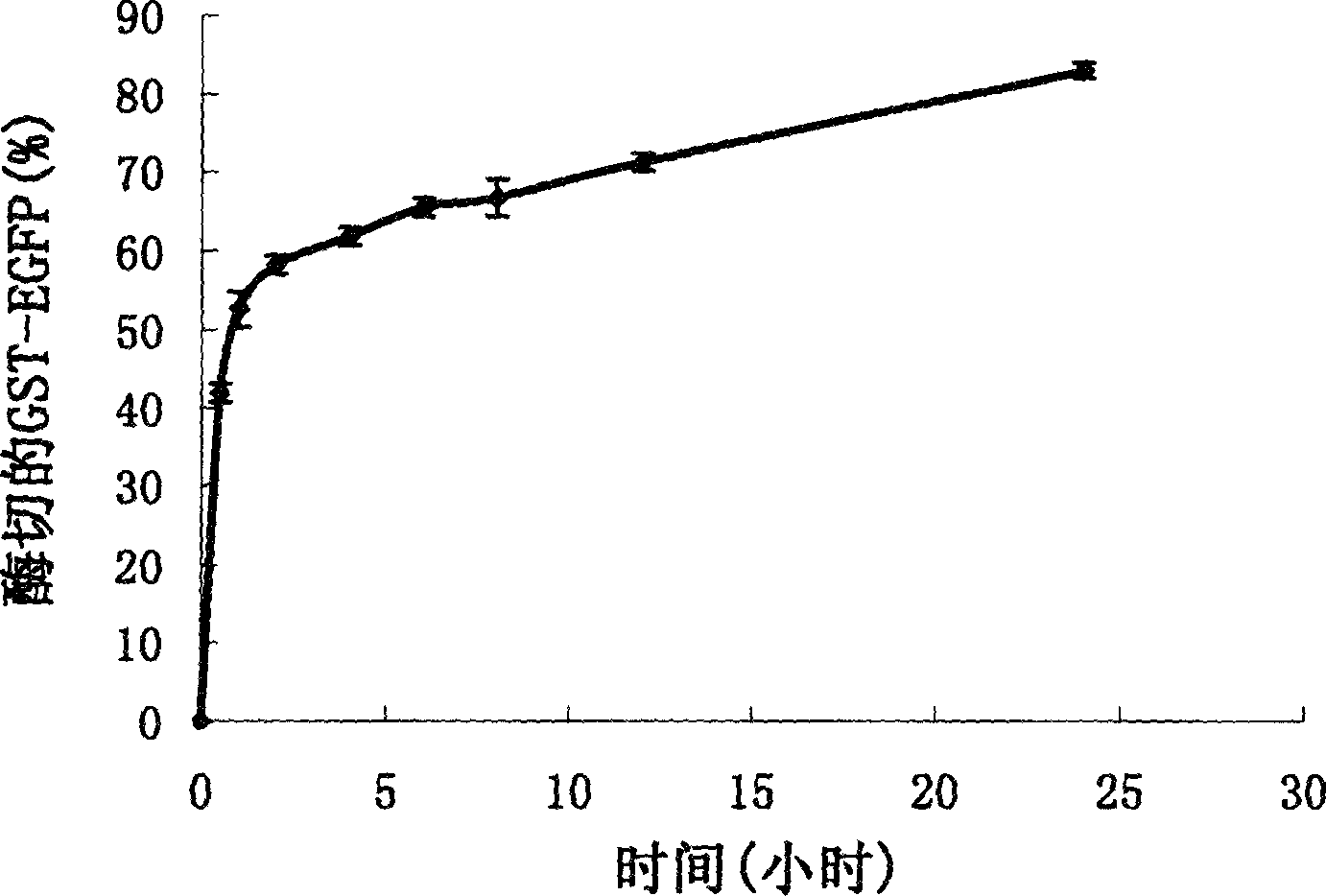
Figure 3
Abstract
Description
1. Technical field:
[0001] The invention belongs to the technical field of genetic engineering. 2. Background technology:
[0002] Fusion expression is often used in genetic engineering practice to express and produce target proteins. With the help of the biochemical characteristics and properties of fusion proteins or short peptides, fusion expression can greatly simplify and facilitate product detection, property research and separation and purification. Therefore, in genetic engineering, from prokaryotic expression systems (such as Escherichia coli) to eukaryotic expression systems (such as mammalian cells), fusion expression methods are often used to produce recombinant target proteins. But this also brings new problems at the same time, that is, the specific removal of fusion proteins. When recombinant proteins are used as genetic engineering drugs and some other purposes, the target product must be a complete product like the natural protein, and cannot be used in th...
Examples
Embodiment Construction
[0033] 1. Construction of expression plasmid pET28a-His6-TEV and pALEX-GST-EGFP expression vector:
[0034] Using the plasmid containing the TEV protease gene as a template, the cDNA of TEV was amplified by PCR. The primers for PCR are as follows: primer 1: 5’-tgta catatg ggagaaagcttgtttaagg-3' and primer 2: 5'gata gtcgac ttaattcatgagttgag-3'. The boxed or underlined parts in the primers are the enzyme cutting sites Nde I and Sal I, respectively. The PCR program was: denaturation at 94°C for 1 minute, annealing at 65°C for 1 minute, and extension at 72°C for 1 minute, a total of 28 cycles. The thus obtained DNA fragment was inserted into the E. coli expression vector pET28a (Novagen Company) after double digestion with Nde I and Sal I.
[0035] The correct construction of pET28a-His6-TEV plasmid was confirmed by double enzyme digestion and sequencing.
[0036] 2. Expression and purification of His6-TEV
[0037] Pick a single clone in LB medium, shake at 250 rpm at 37°C o...