
Device for connecting two fluid-conducting lines
a fluid-conducting line and fluid-conducting technology, applied in the direction of sleeve/socket joint, pipe heating/cooling, mechanical equipment, etc., can solve the problem of certain degree of unreliability in terms of leakproofness, and achieve the effect of cost saving
Patent Information
- Authority / Receiving Office
- US · United States
- Patent Type
- Patents(United States)
- Current Assignee / Owner
- Publication Date
- 2018-10-30
Smart Images
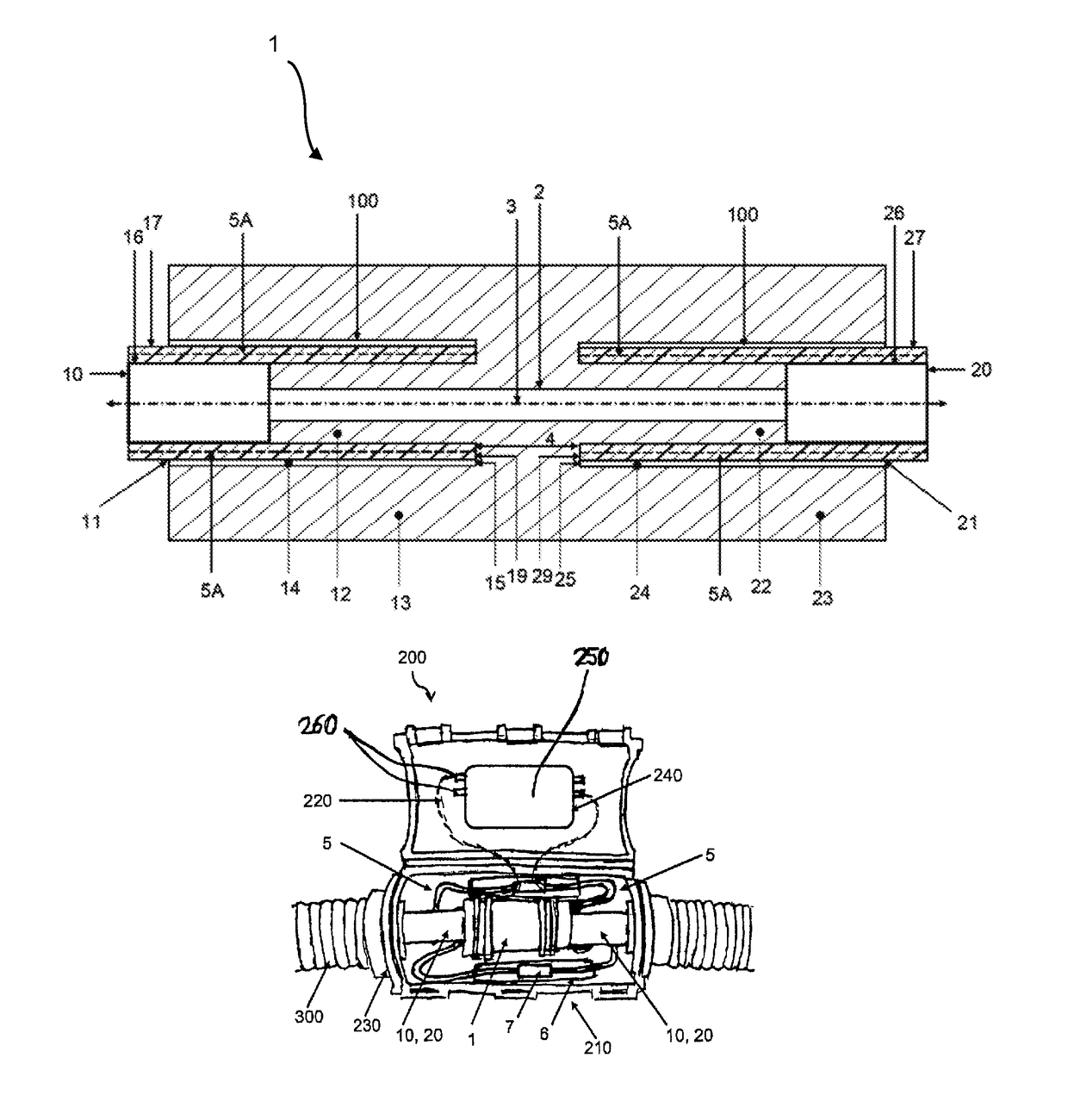
Figure 1 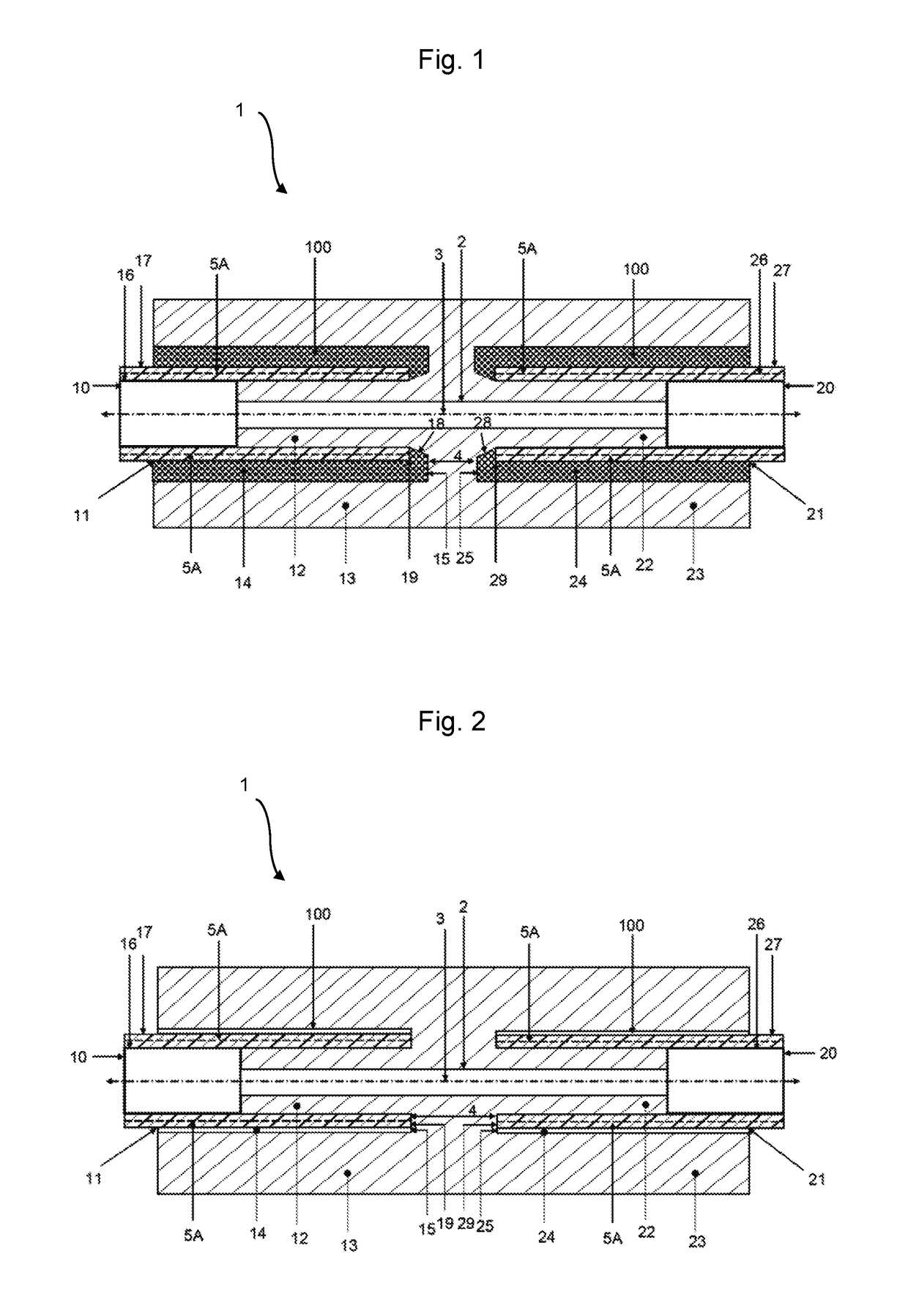
Figure 2 
Figure 3
Abstract
Description
FIELD OF THE INVENTION
[0001] The invention relates to a device for connecting two fluid-conducting lines to one another.BACKGROUND OF THE INVENTION
[0002] German utility model DE 1 732 279 U1 discloses a connection between two fluid-conducting lines, to be more precise a connecting element for connecting two housing hoses. The connecting element is embodied as a single-piece component through which a continuous drilled hole leads and which is provided at its outer side with a thread which is embodied in opposite directions, with the result that two garden hoses can easily be connected to one another by screwing onto the thread, and disconnected again from one another.
[0003] In addition, European Patent EP 2 035 737 B1 discloses a sleeve for connecting two pipes which are each embodied with a connecting collar. The sleeve can be fitted here over the connecting collars of the pipes to be connected and can be fastened against unintentional removal by a locking device against unintentional ...
Examples
Embodiment Construction
[0025]FIG. 1 is a schematic illustration of a first exemplary embodiment of a device 1 according to the invention. The device 1 is penetrated in the direction of its longitudinal axis by a continuous drilled hole 2, with the device 1 has an opening at it respective ends in the direction of the longitudinal axis 3. However, in contrast to the illustration in the figures, an angled device, in which the longitudinal axis within the device is bent or curved, and as a result experiences a change in angle of, for example, 90° C. is also possible.
[0026]A line receptacle (21) is provided at each of the ends of the device, each of which line receptacles 11, 21 can receive a fluid-conducting line 10, 20. The one line receptacle 11 ends within the device 1 at a predetermined distance 4 from the other line receptacle 21, with the result that, apart from the continuous drilled hole 2, there is no fluid connection between the line receptacles 11 and 21.
[0027]The line receptacles 11, 21 are embodi...