
Hybrid energy harvesting system for thermal-powered underwater vehicle
a technology of underwater vehicles and energy harvesting systems, applied in underwater equipment, energy supply, special-purpose vessels, etc., can solve the problems of constant need, limited total battery energy by vehicle weight, volume, speed, buoyancy, etc., to facilitate laboratory testing, expand the range and endurance of underwater vehicles, and facilitate the effect of expansion of operational areas
Patent Information
- Authority / Receiving Office
- US · United States
- Patent Type
- Patents(United States)
- Current Assignee / Owner
- Publication Date
- 2019-11-12
Smart Images
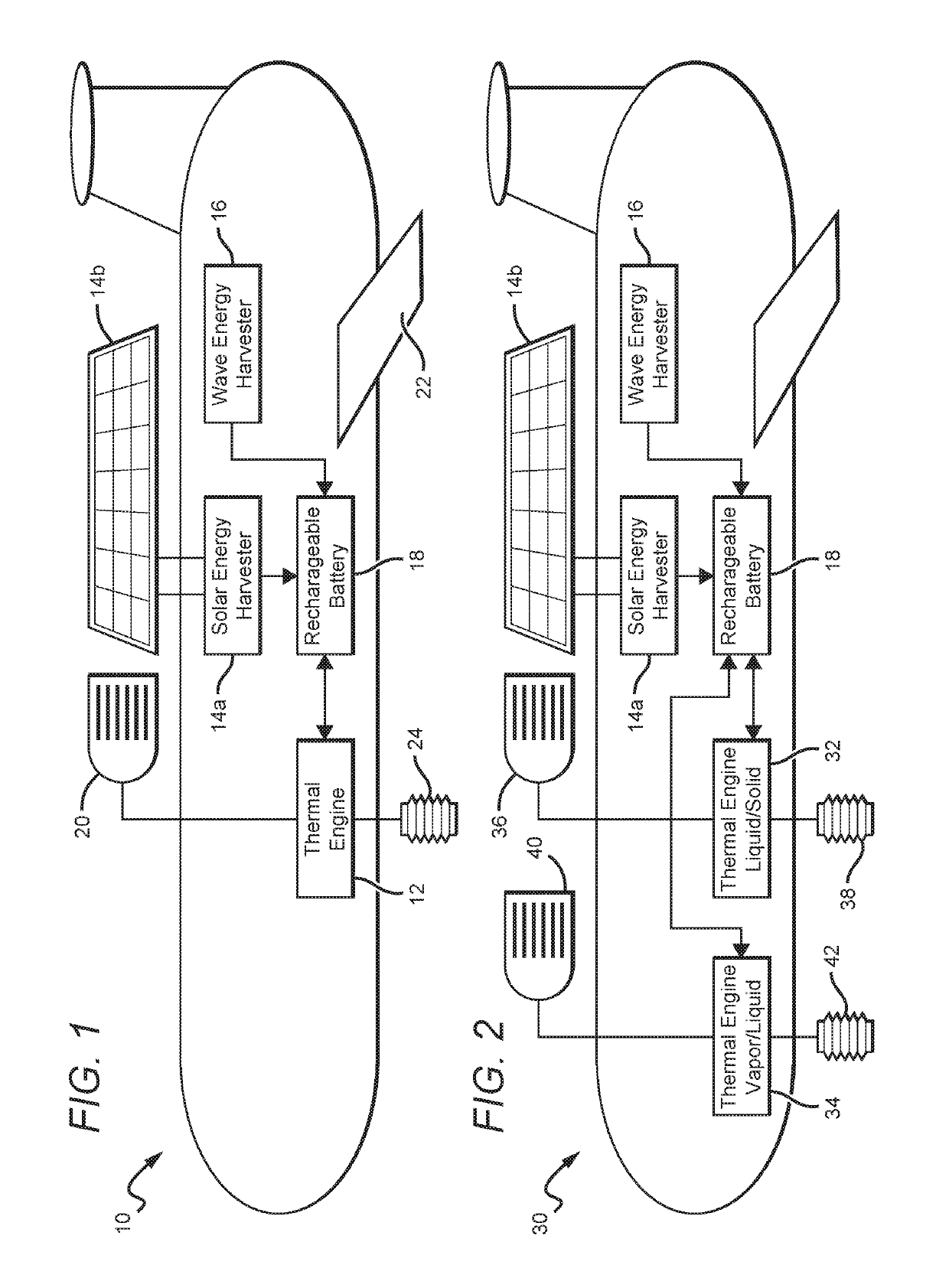
Figure 1 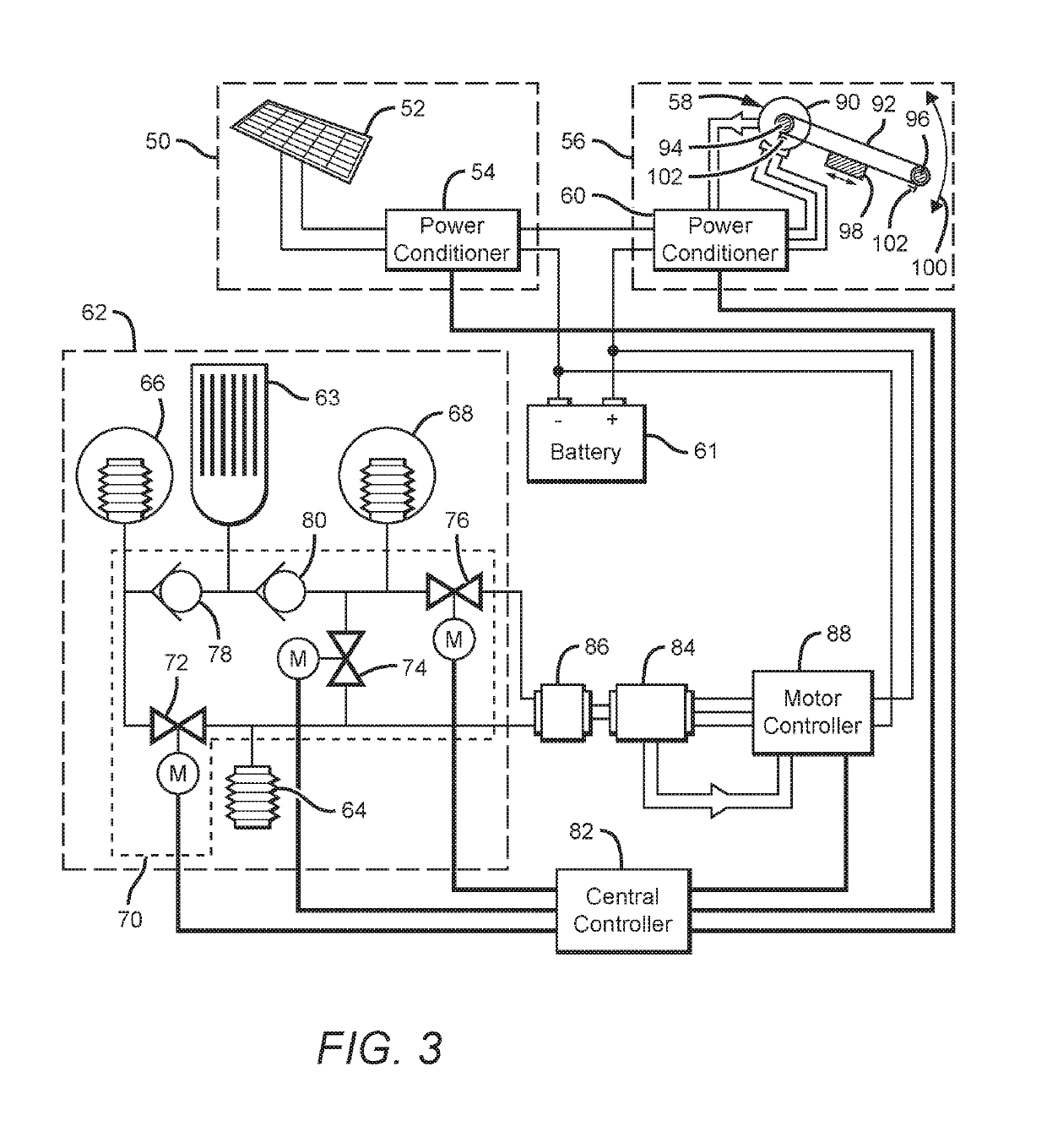
Figure 2 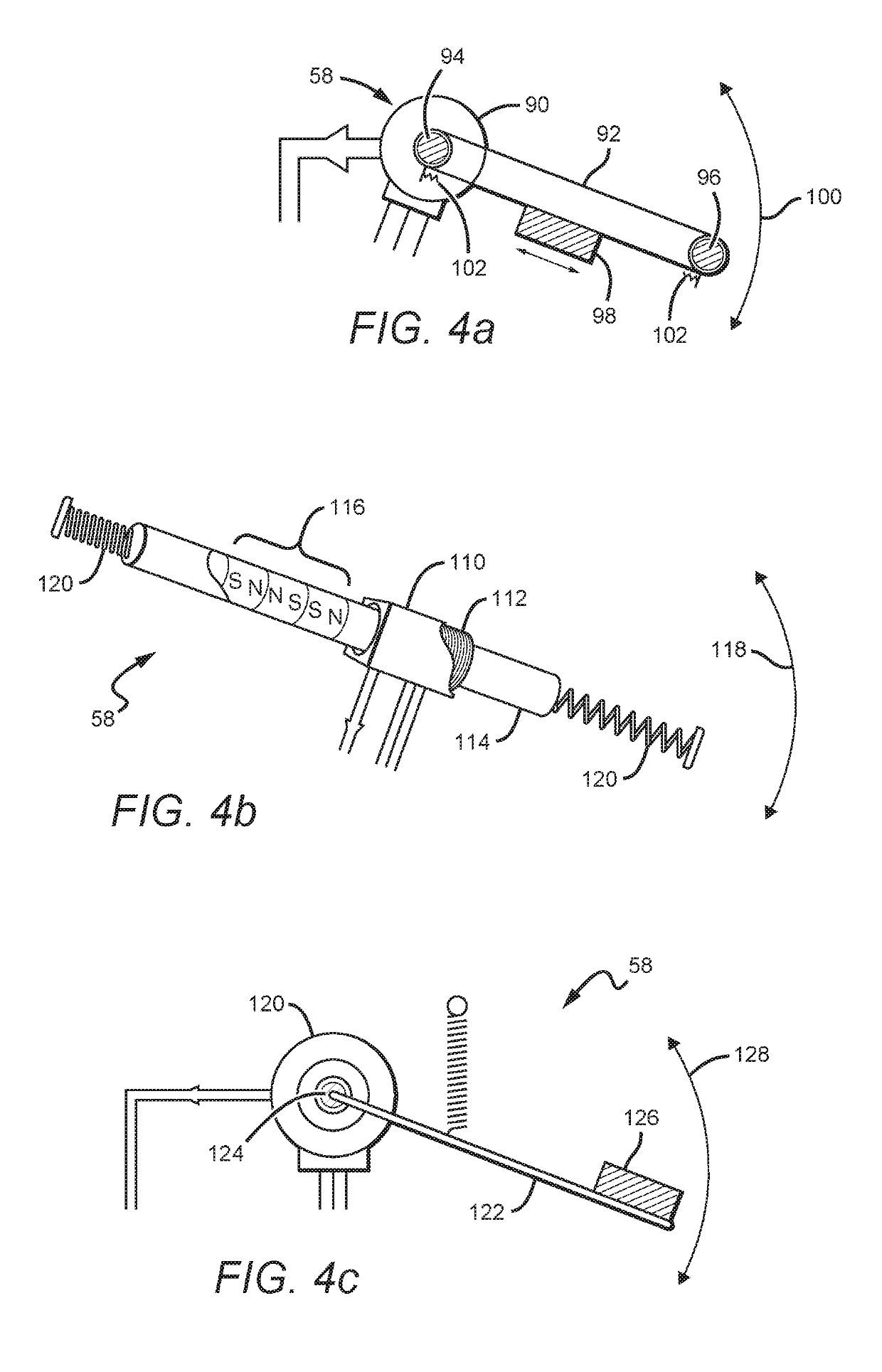
Figure 3
Abstract
Description
BACKGROUND OF THE INVENTIONField of the Invention
[0001] This invention relates generally to unmanned underwater vehicles, and more particularly to thermal-powered underwater vehicles.Description of the Related Art
[0002] Autonomous floats and underwater gliders are principal instruments for global ocean monitoring. Thousands of floats and hundreds of underwater gliders currently continuously measure deep-water parameters in the world's oceans and transmit data through satellite communication to a computer data center. Floats can operate in the ocean for a few years, gliders for a few months, limited only by battery capacity. Though these vehicles need only a few watts of energy for operation, they need it continuously over long periods of time.
[0003] Vehicles that operate in the ocean interior for extended missions are generally powered by expensive high-performance batteries. Total battery energy is limited by vehicle weight, volume, speed, and buoyancy, as well the mission's energy re...
Examples
Embodiment Construction
[0018]The present hybrid energy harvesting system expands the range and endurance of thermal-powered underwater vehicles by adding the capability to harvest energy from solar and / or wave sources. Vehicles such as gliders and profilers designed to make repeated vertical descent-ascent cycles powered by thermal engines require thermal gradients that occur only in deep water in latitudes from 0° to 50°. In shallow water, wave energy is constantly available worldwide (maximal between latitudes of 30° to 60°), and solar power ubiquitously during daylight hours (maximum solar power is most available in low latitudes). Use of these additional sources of energy and making a rechargeable battery the main energy storage means can expand operational areas for underwater vehicles to high latitudes and shallow water in areas where thermal gradients are inadequate.
[0019]In addition, the energy harvesting system described herein can use, for example, two thermal energy generators with different PC...