
Systems and methods for network optimization in a distributed big data environment
a big data environment and network optimization technology, applied in the field of network optimization in a distributed big data environment, can solve the problems of complicated analysis, too many items to be stored and/or analyzed together, etc., and achieve the effect of optimizing the solution by minimizing or maximizing the master objective, minimizing the sum of slacks, and maximizing or minimizing the target metri
Patent Information
- Authority / Receiving Office
- US · United States
- Patent Type
- Patents(United States)
- Current Assignee / Owner
- Publication Date
- 2020-05-26
Smart Images
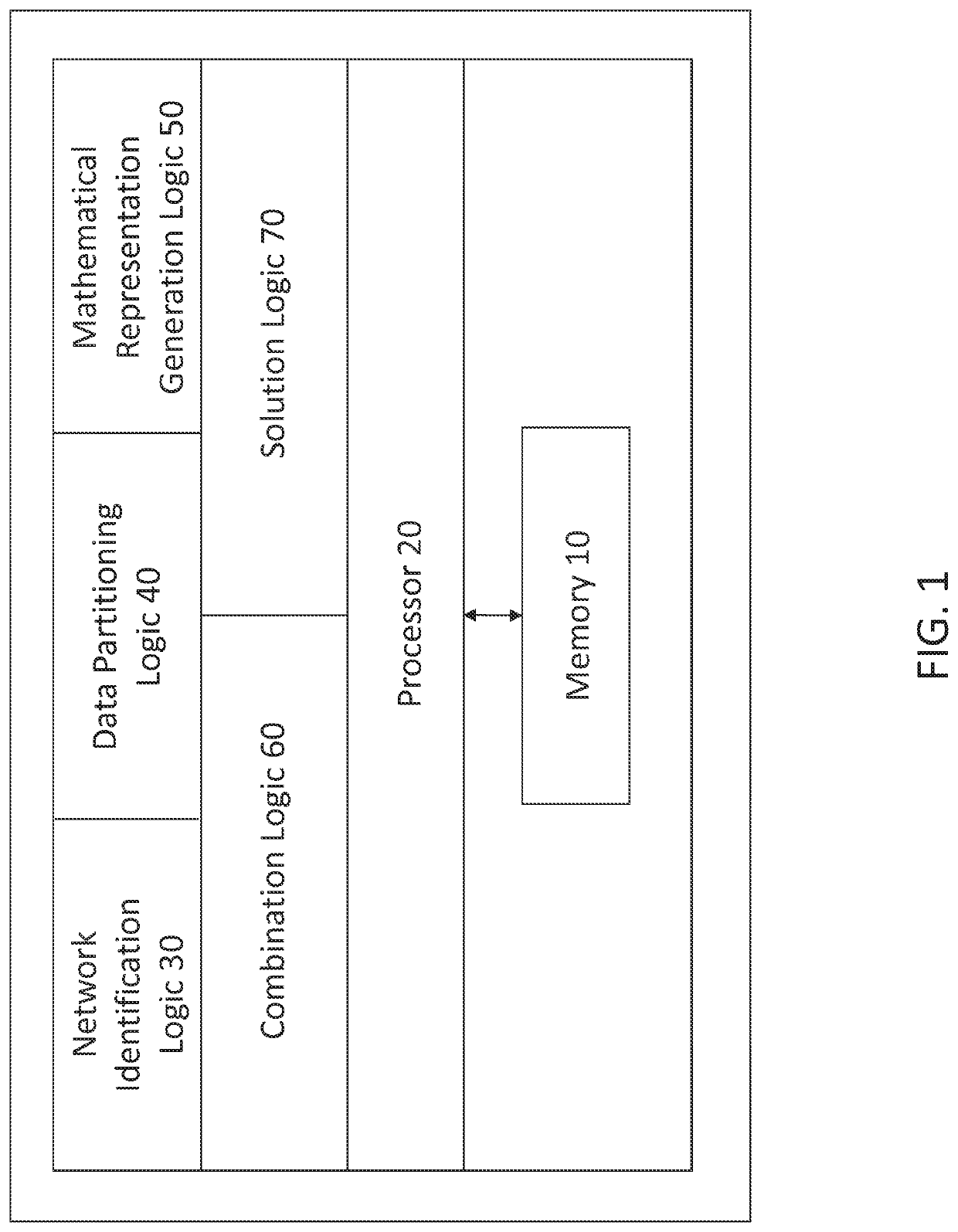
Figure 1 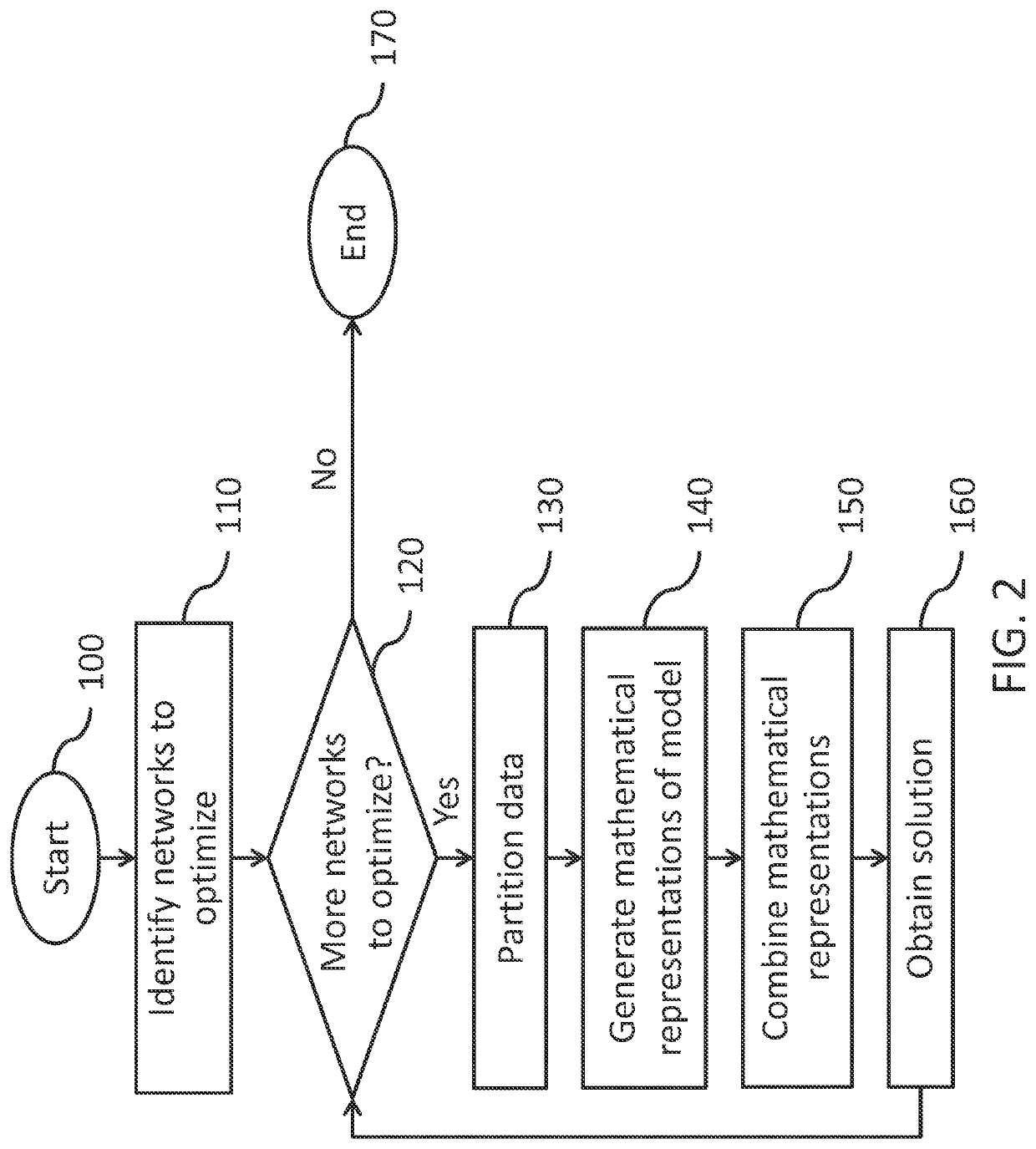
Figure 2 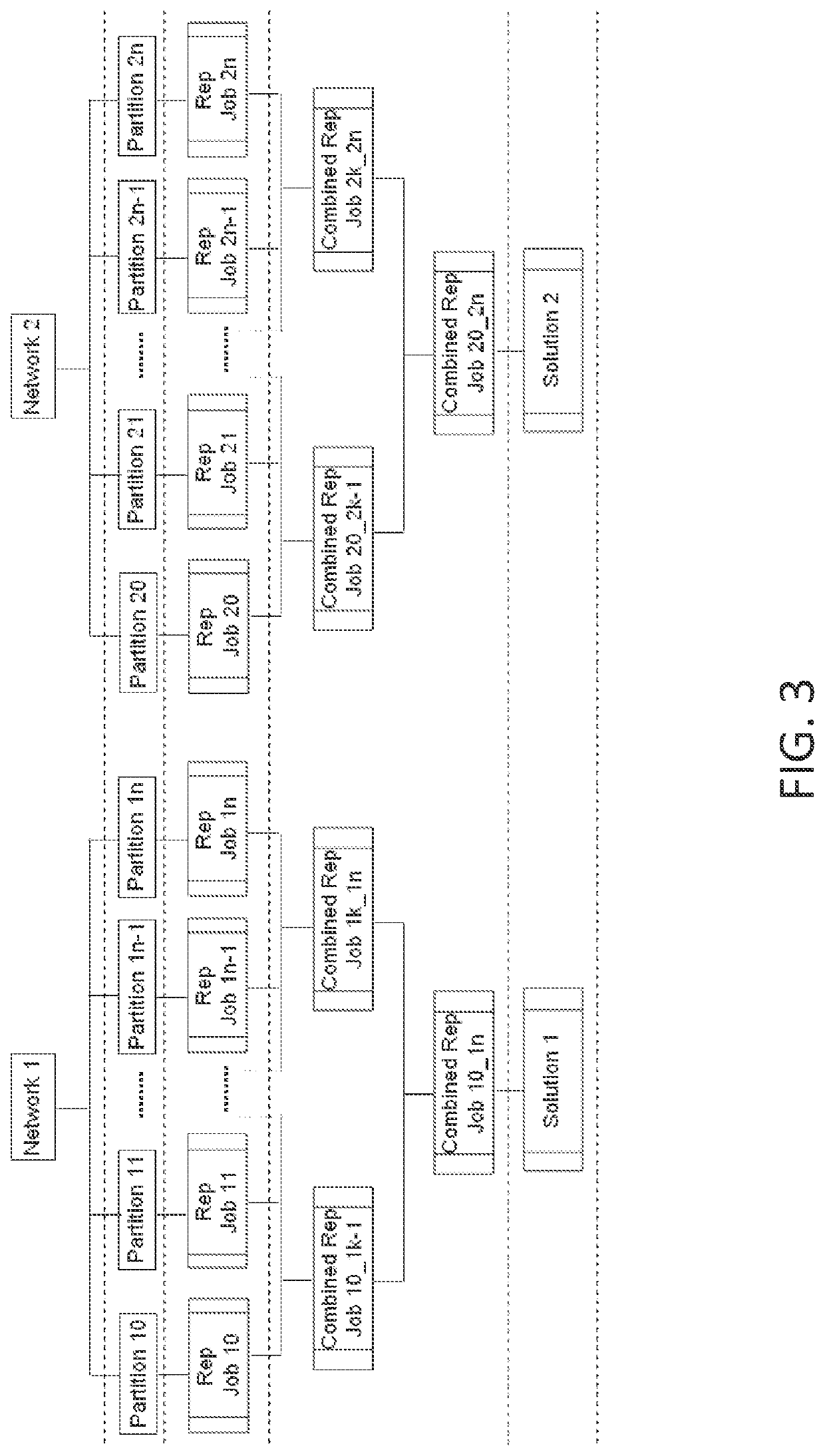
Figure 3
Abstract
Description
BACKGROUND OF THE INVENTION
[0001] The present invention relates to optimizing a network in a distributed big data environment. A network is defined as a distribution of resources across products. For example, the resources may be seats in an airplane cabin, and the products may be airline tickets on flights between various destinations. Similarly, the resources may be cabins within a cruise ship, and the products may be cruise tickets or packages between various destinations. However, the network is not limited to these examples, and may include any situation in which resources are distributed across products having some capacity.
[0002] Data describing the resources may be analyzed to determine the optimal distribution of the resources across products to be offered for sale to customers. However, the data often include too many items to be stored and / or analyzed together. For example, in the cruise industry, a product's dimensions may include 1 ship, 1 week, 6 destinations, 9 segments...
Examples
Embodiment Construction
[0018]FIG. 1 shows a block diagram of an exemplary embodiment of a system for optimizing a network in a distributed big data environment. As shown in FIG. 1, the system includes a memory 10 and a processor 20 coupled to the memory 10. The processor 20 includes logic 30-70, which will be described in more detail below in connection with FIGS. 2-7. The processor 20 can be any type of processor, such as a microprocessor, a field programmable gate array (FPGA), and / or an application specific integrated circuit (ASIC). When the processor 20 is a microprocessor, logic 30-70 can be processor-executable code that is loaded from the memory 10.
[0019]FIGS. 2-7 show flowcharts of an exemplary embodiment of a method for optimizing a network in a distributed big data environment. FIG. 2 shows the overall workflow, and FIG. 3 shows how the data are handled in each step of the workflow. As shown in FIG. 2, the method begins at step 100. The network identification logic 30 identifies at least one ne...