
Reconstruction of essential visual cues in mixed reality applications
a mixed reality and visual cue technology, applied in the field of virtual reality and augmented reality, can solve the problems of reducing the user's spatial awareness of the real-world environment, artificial reality systems typically lack the processing power to generate mixed, and poor user experience, so as to achieve little or no latency, improve the effect of reconstruction and reduce the cost of reconstruction
Patent Information
- Authority / Receiving Office
- US · United States
- Patent Type
- Patents(United States)
- Current Assignee / Owner
- Publication Date
- 2020-08-04
Smart Images
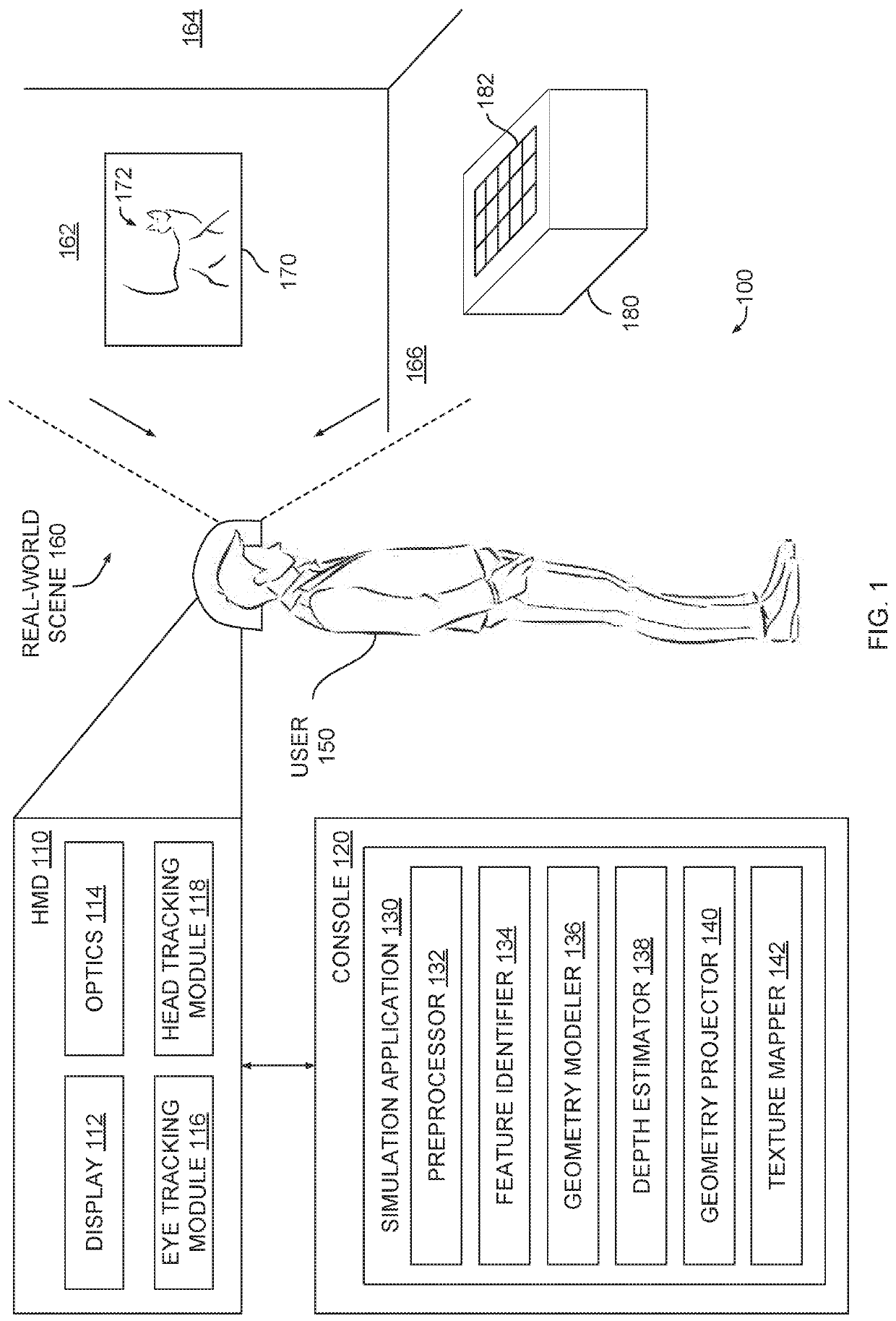
Figure 1 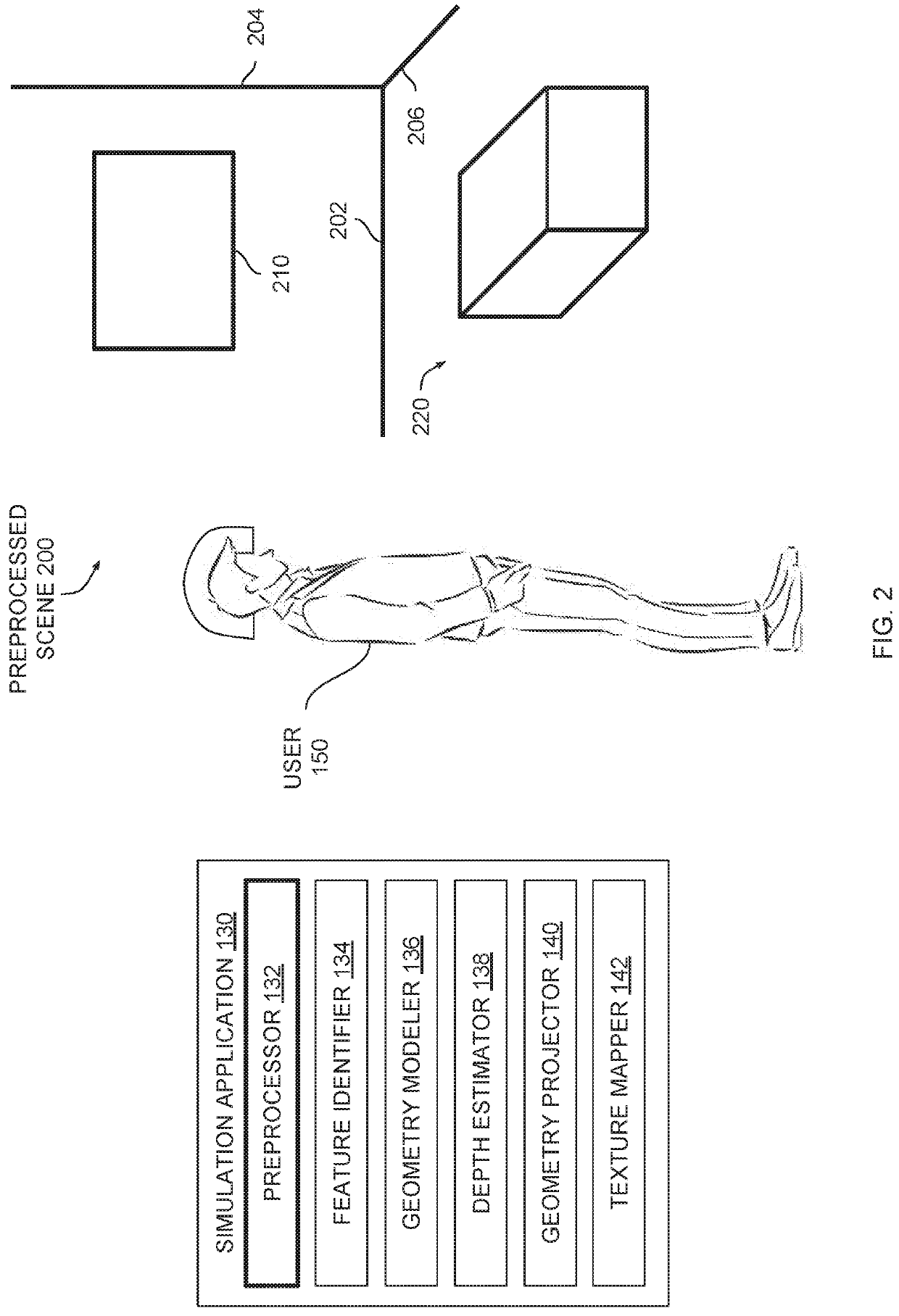
Figure 2 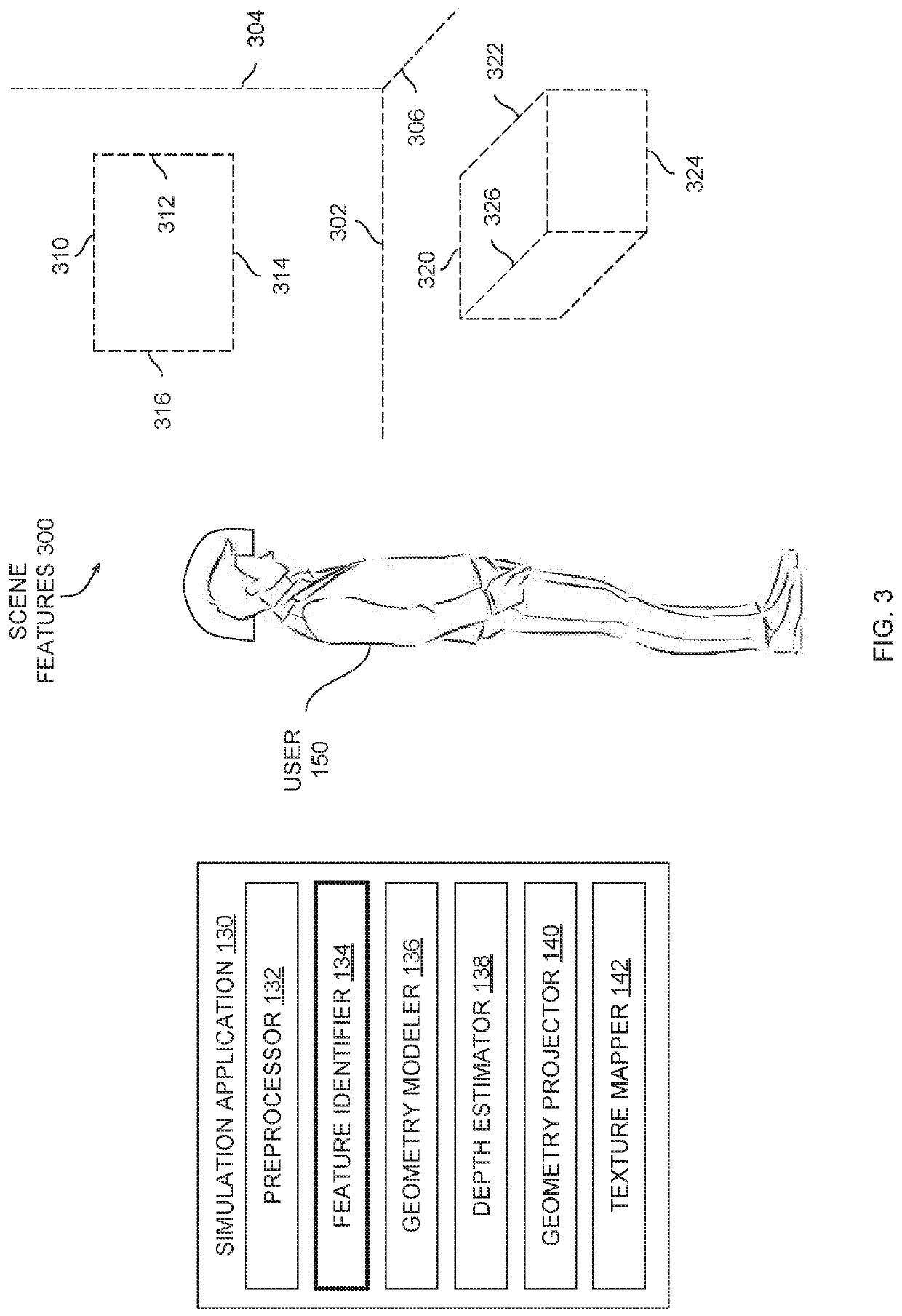
Figure 3
Abstract
Description
BACKGROUNDField of the Various Embodiments
[0001] Various embodiments relate generally to virtual reality and augmented reality, and, more specifically, to reconstruction of essential visual cues in mixed reality applications.Description of the Related Art
[0002] Artificial reality systems simulate virtual environments or add virtual elements to real environments in order to provide virtual reality (VR), augmented reality (AR), and / or mixed reality (MR) content to a user. The artificial reality system includes a console and a headset. The console generates and renders graphical elements, while the headset outputs these graphical elements to a user. A headset includes a stereoscopic display that outputs slightly different images to each eye of the user, thereby causing the user to perceive a 3D spatial environment. Headsets may also include outward facing cameras configured to capture stereoscopic imagery in order to generate a mixed reality simulation.
[0003] The term “mixed reality” gene...
Examples
Embodiment Construction
[0001]Various embodiments relate generally to virtual reality and augmented reality, and, more specifically, to reconstruction of essential visual cues in mixed reality applications.
Description of the Related Art
[0002]Artificial reality systems simulate virtual environments or add virtual elements to real environments in order to provide virtual reality (VR), augmented reality (AR), and / or mixed reality (MR) content to a user. The artificial reality system includes a console and a headset. The console generates and renders graphical elements, while the headset outputs these graphical elements to a user. A headset includes a stereoscopic display that outputs slightly different images to each eye of the user, thereby causing the user to perceive a 3D spatial environment. Headsets may also include outward facing cameras configured to capture stereoscopic imagery in order to generate a mixed reality simulation.
[0003]The term “mixed reality” generally refers to any type of simulation whe...