
Packed beverages suppressed in the fading of dyes
a beverage and dye technology, applied in the field of beverages, can solve problems such as dye fading, and achieve the effect of suppressing dye fading and good flavor
Patent Information
- Authority / Receiving Office
- US · United States
- Patent Type
- Patents(United States)
- Current Assignee / Owner
- Publication Date
- 2022-11-01
Smart Images
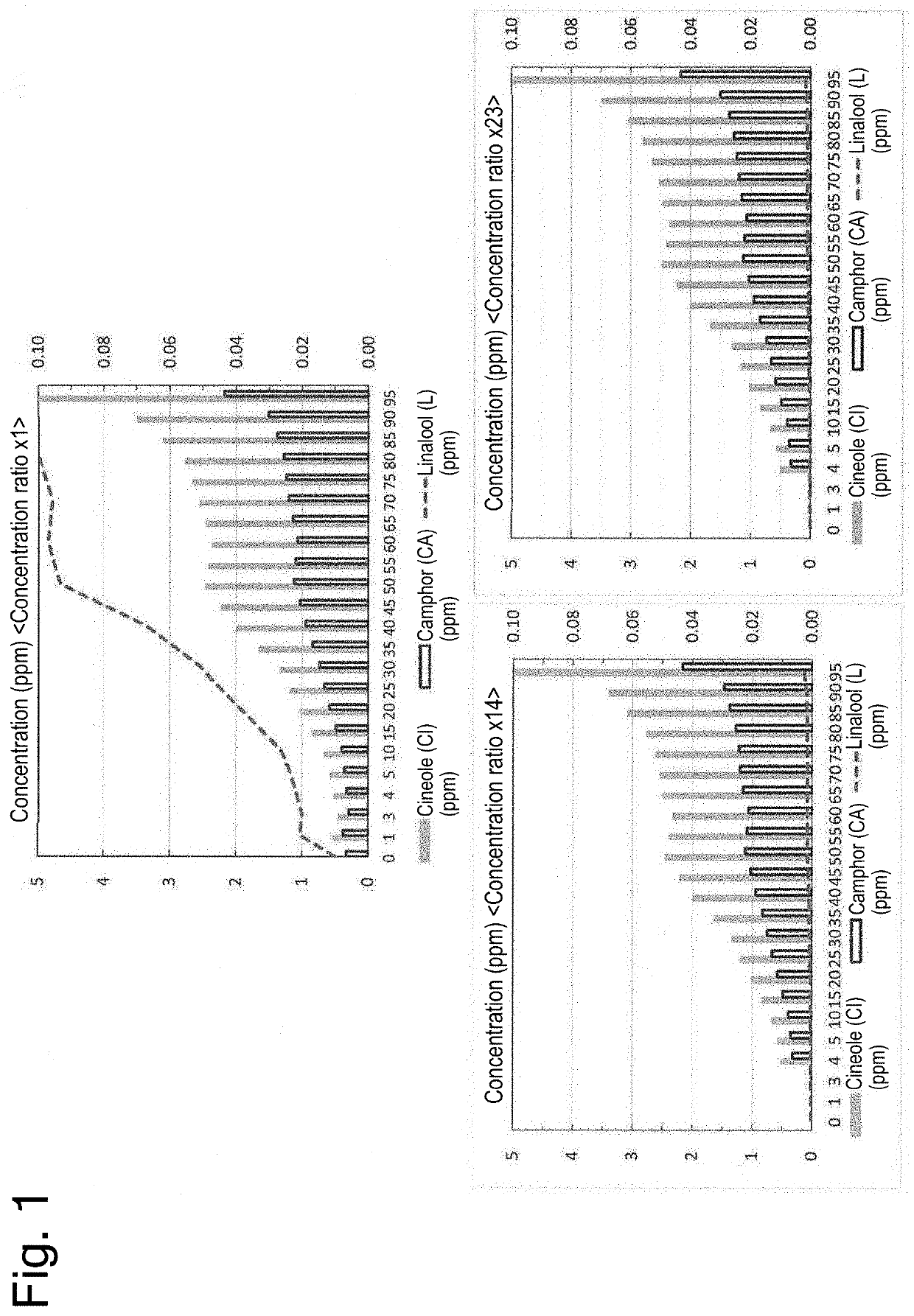
Figure 1 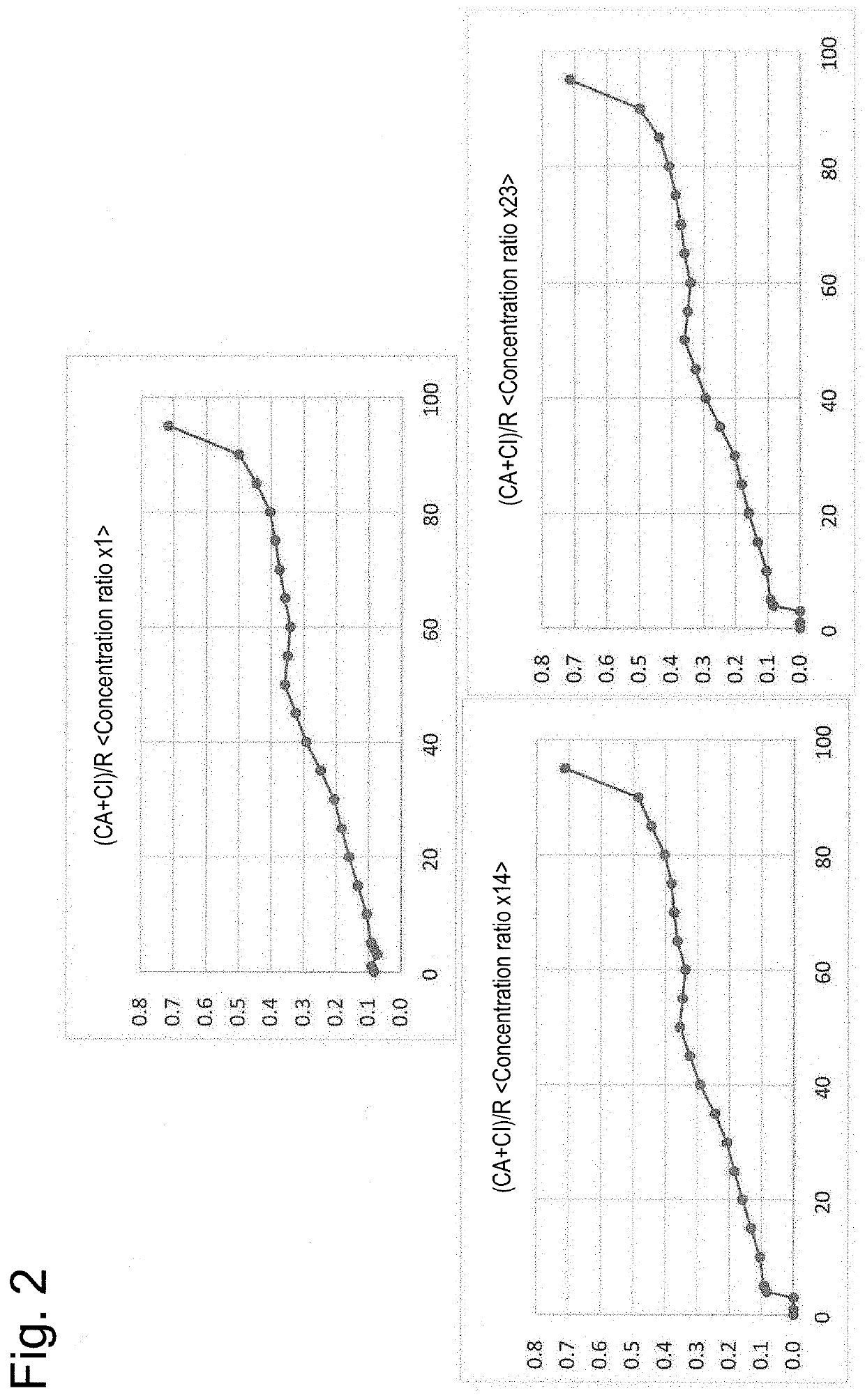
Figure 2 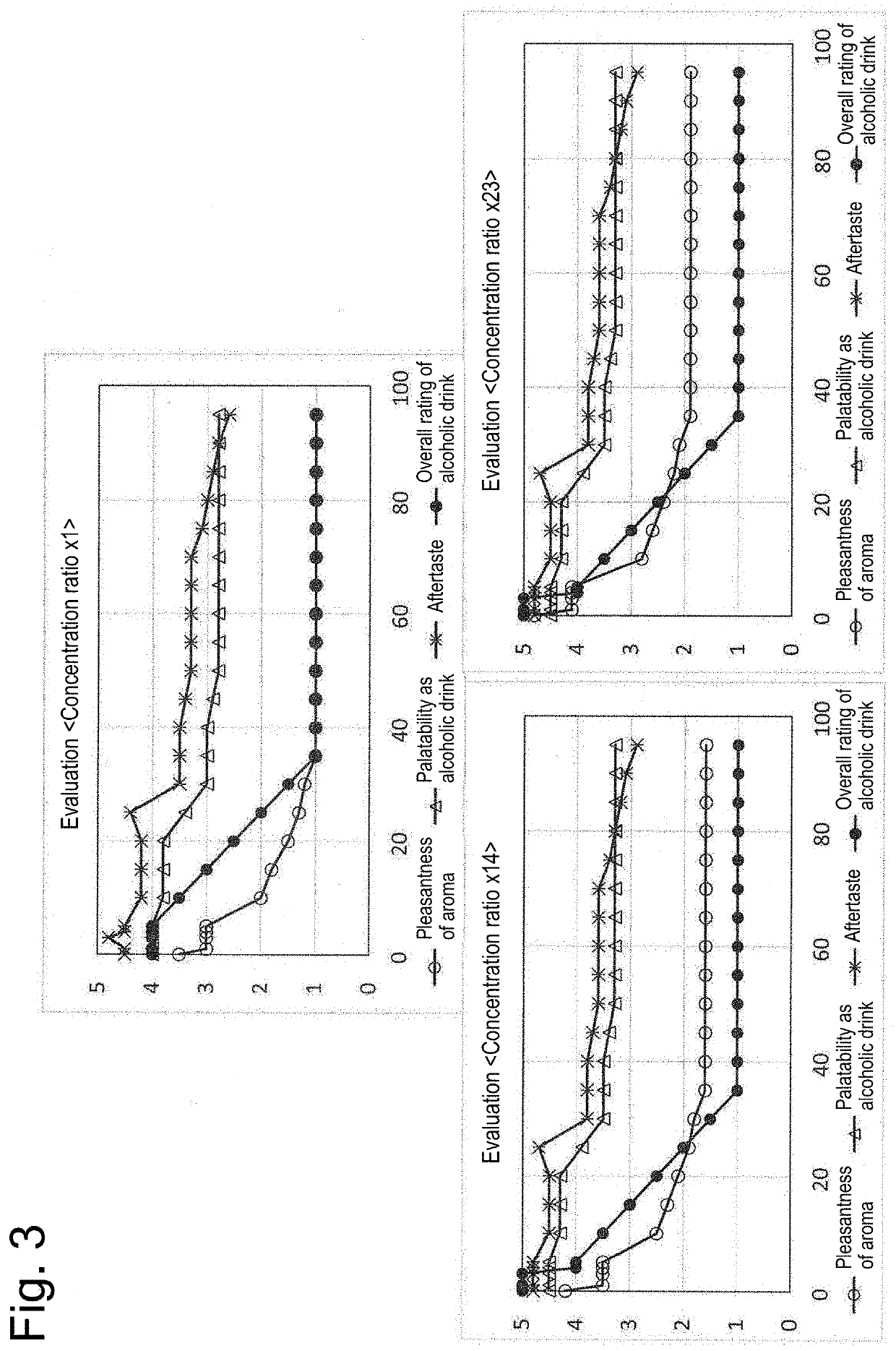
Figure 3
Abstract
Description
CROSS REFERENCES TO RELATED APPLICATIONS
[0001] This application is the National Stage of International Application No. PCT / JP2018 / 028773 filed Aug. 1, 2018, and claims benefit of Japanese Application No. 2017-150152 filed on Aug. 2, 2017.TECHNICAL FIELD
[0002] The present invention relates to beverages that are suppressed in the fading of dyes and which yet retain their inherent good flavor. More specifically, the present invention relates to beverages that contain rosmarinic acid and linalool while having reduced contents of cineole and camphor.BACKGROUND ART
[0003] Some beverages have colors originating from their feedstock while others have been artificially colored by various methods; color shades are a very important element for supplying beverages of high added value to consumers. Dyes that constitute colors sometimes fade. Especially, irradiation with sunlight, fluorescent lamps, LED lamps and other lights is known to cause fading of dyes.
[0004] To prevent dyes in foods from changi...
Examples
examples
[0093]On the pages that follow, the present invention will be described by reference to working examples but it should be understood that the present invention is by no means limited to such examples.
[0094]Experiment 1: Evaluating the flavor of liquid rosemary extract containing colored beverages as produced by using aqueous solutions of alcohol at various concentrations (1)
[0095](Producing a Liquid Rosemary Extract)
[0096]Leaves of rosemary (produce of Spain) weighing 100 g were immersed in 1 L of an aqueous alcoholic solution with an alcohol content of 0 to 95% and stored at 50° C. for 2 hours. Thereafter, the supernatant of the aqueous alcoholic solution was transferred into a separate vessel and passed through filter paper to obtain a filtrate (liquid rosemary extract A). Subsequently, the filtrate was concentrated under reduced pressure by a factor of 14 or 23 and mixed with a spirit (95% alcohol) at a ratio of 1:1 to prepare liquid rosemary extract B with an alcohol content of ...