
Method of coating an SLA part
a technology of sla parts and ear shells, applied in the field of stereolithography methods, can solve the problems of inconsistency in the removal rate of materials, poor customer satisfaction, and discoloration of the appearance and achieve the effects of less susceptible to build-up, high gloss exterior finish, and fast build-up times of the ear shell
Patent Information
- Authority / Receiving Office
- US · United States
- Patent Type
- Applications(United States)
- Current Assignee / Owner
- Publication Date
- 2005-04-07
- Estimated Expiration
- Not applicable · inactive patent
Smart Images
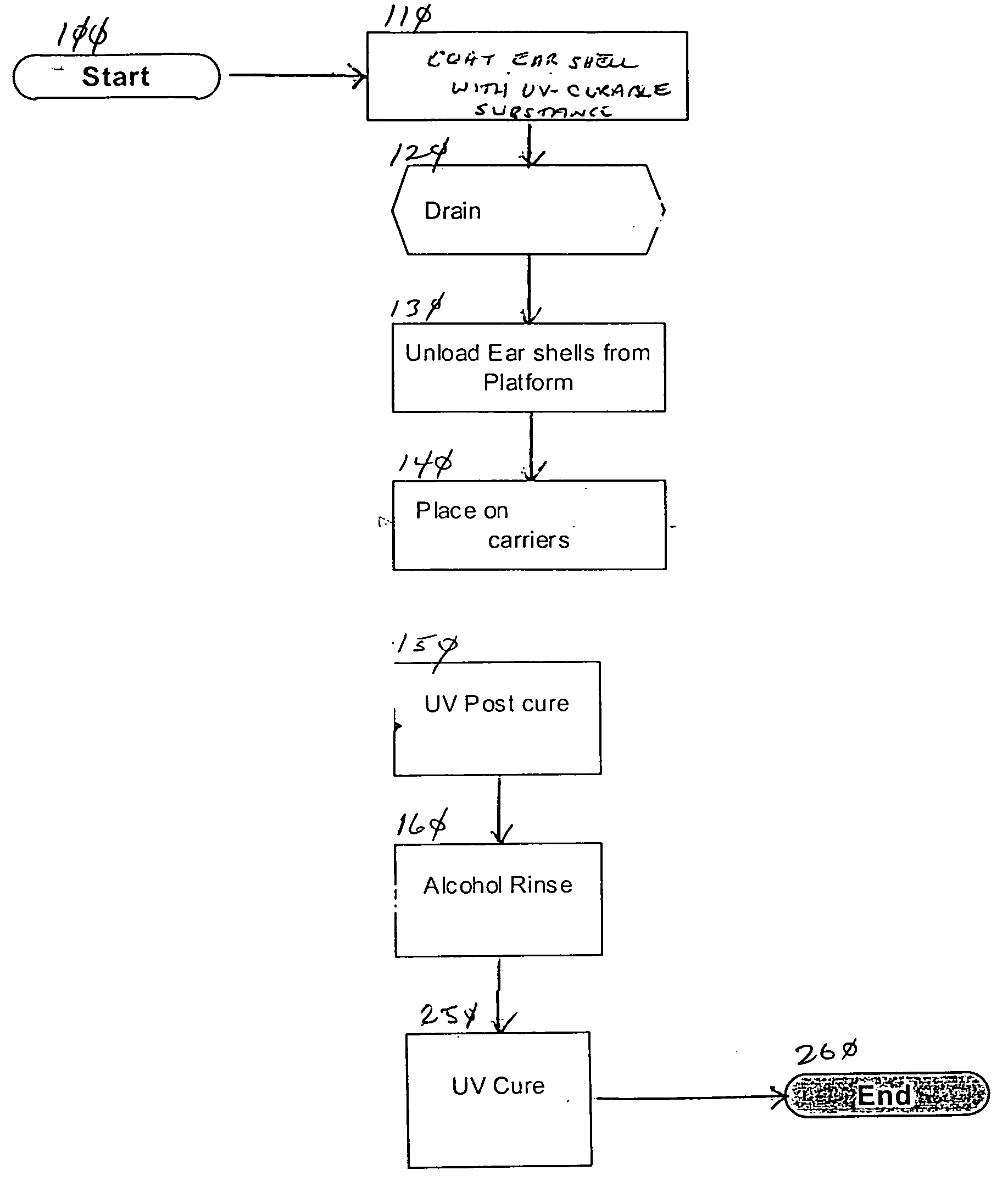
Figure 1 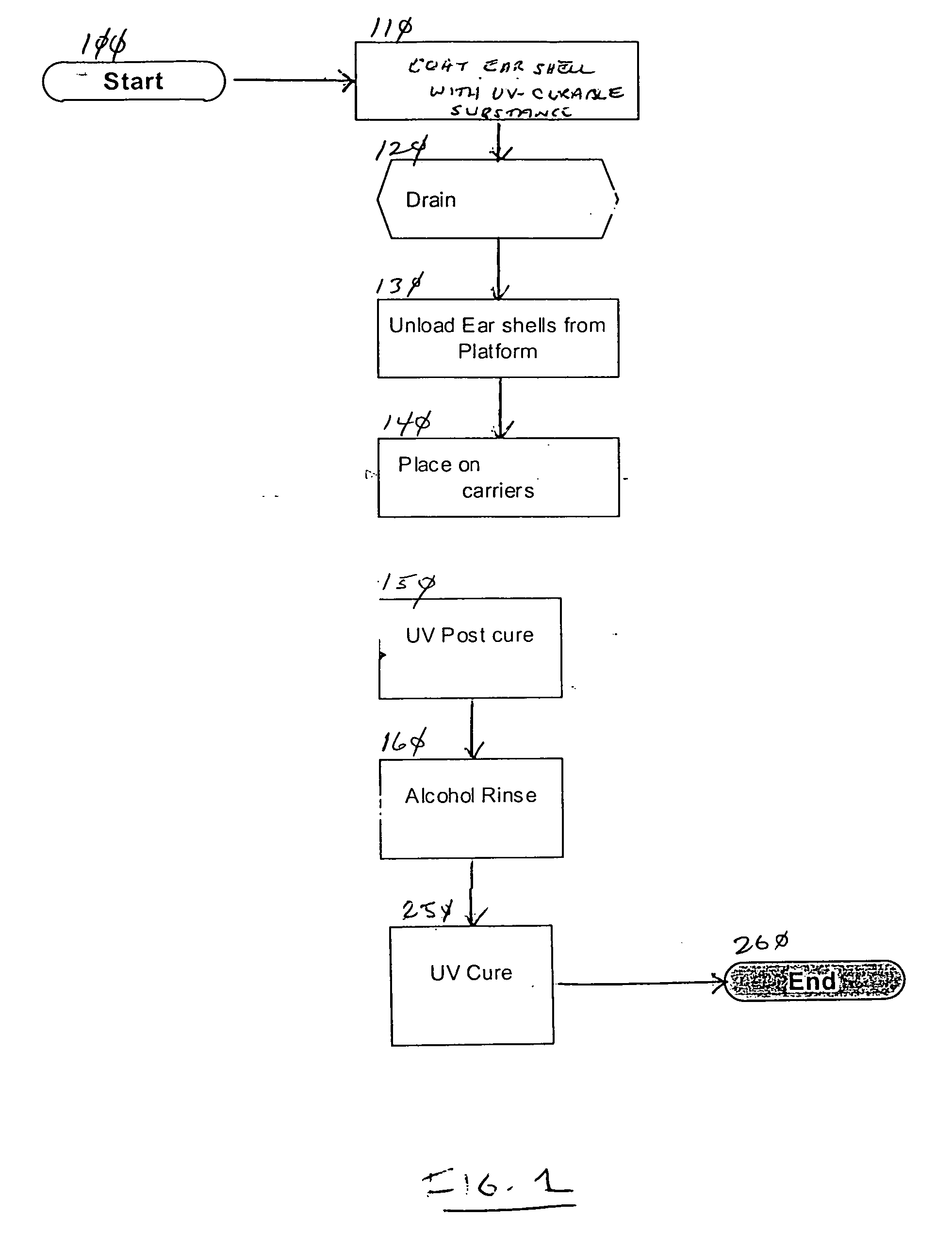
Figure 2
Abstract
Description
BACKGROUND OF THE INVENTION
[0001] Stereo-lithography methods are presently being used to manufacture highly accurate hearing instrument ear shells over prior conventional pouring or UV methods. SLA methodology has two predominant resolution modes derived by how fine the stl file is sliced for processing. High resolution mode consists of building the part to be manufactured in either 0.002″ / 0.05 mm or 0.004″ / 0.10 mm layered thicknesses.
[0002] The layering process has a faceting or stair stepped effect on the completed ear shells exterior surfaces. The finer the slice thickness the less noticeable the effect is. Further more, this high resolution mode has proportionately longer build times as a result of twice the amount of layers processed. The present invention smoothens the faceted surfaces of the ear shell, allowing lower resolution mode, i.e. faster build times to be used while generating a high gloss finish.
[0003] Stereo-lithographic ear shells manufactured without additional...
Examples
experiment 1
[0030] Hearing aid ear shells manufactured through stereo-lithography were placed on the platform of the SLA apparatus and submerged in the SLA resin. The platform was then raised, allowing the SLA resin to drain off the ear shells. The shells were allowed to drain for 5 to 10 minutes. Forceps were then used to grip the supports of the ear shells, and the ear shells were placed on a carrier and exposed to UV light for about 3 minutes. The ear shells were then placed in an ultrasound alcohol bath for about 2 minutes. The ear shells were then removed from the alcohol bath. Finally, the ear shells were cured in UV light for an additional 30 minutes.
[0031] The resulting ear shells had a smooth, high gloss exterior finish. If a microscopic examination were to be made of the ear shell, the exterior would appear seamless, since the same SLA resin was used to coat the ear shells as was used to manufacture them.