
Medical diagnostic testing device with voice message capability
Patent Information
- Authority / Receiving Office
- US · United States
- Current Assignee / Owner
- Publication Date
- 2005-07-28
- Estimated Expiration
- Not applicable · inactive patent
Smart Images
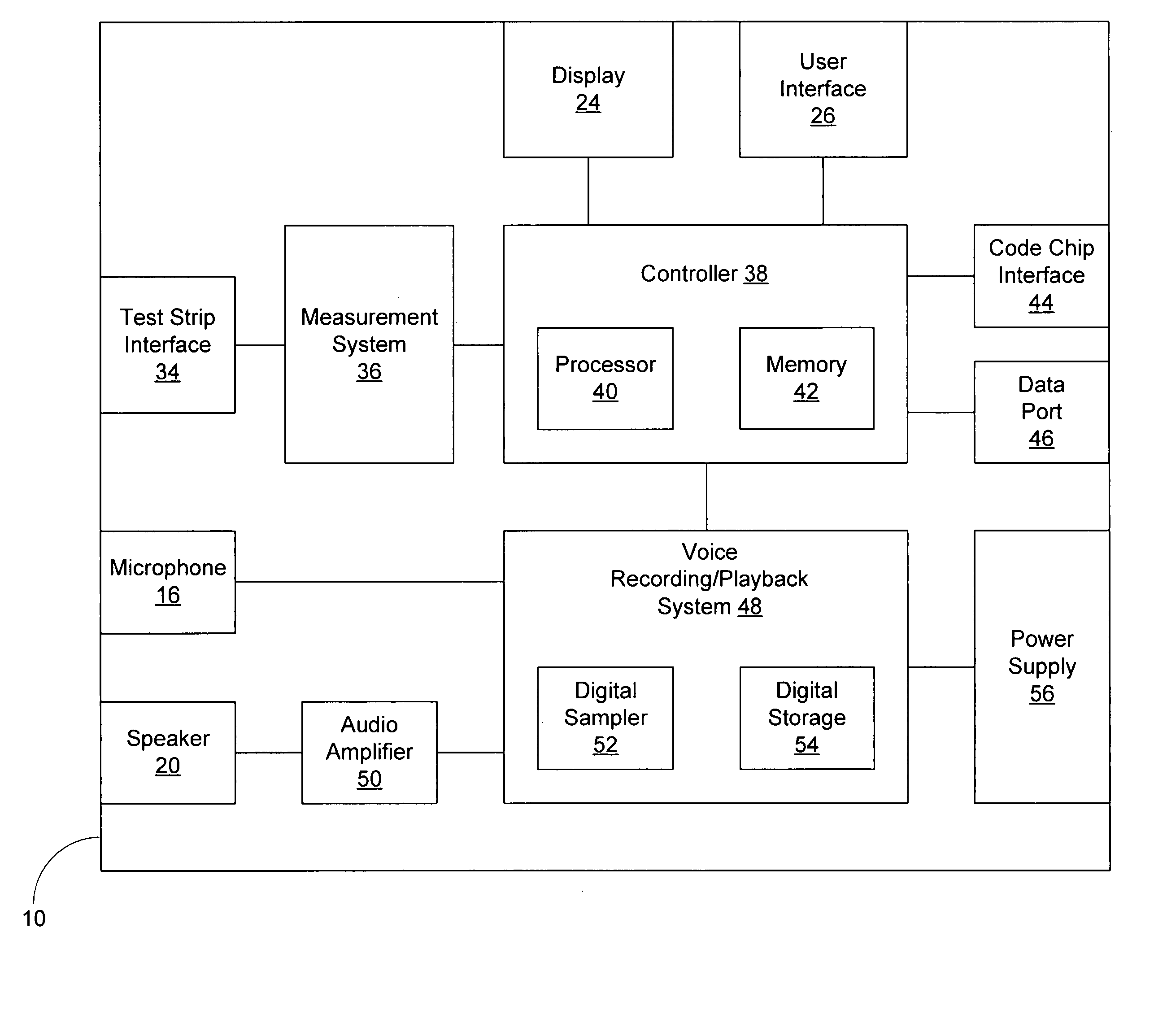
Figure 1 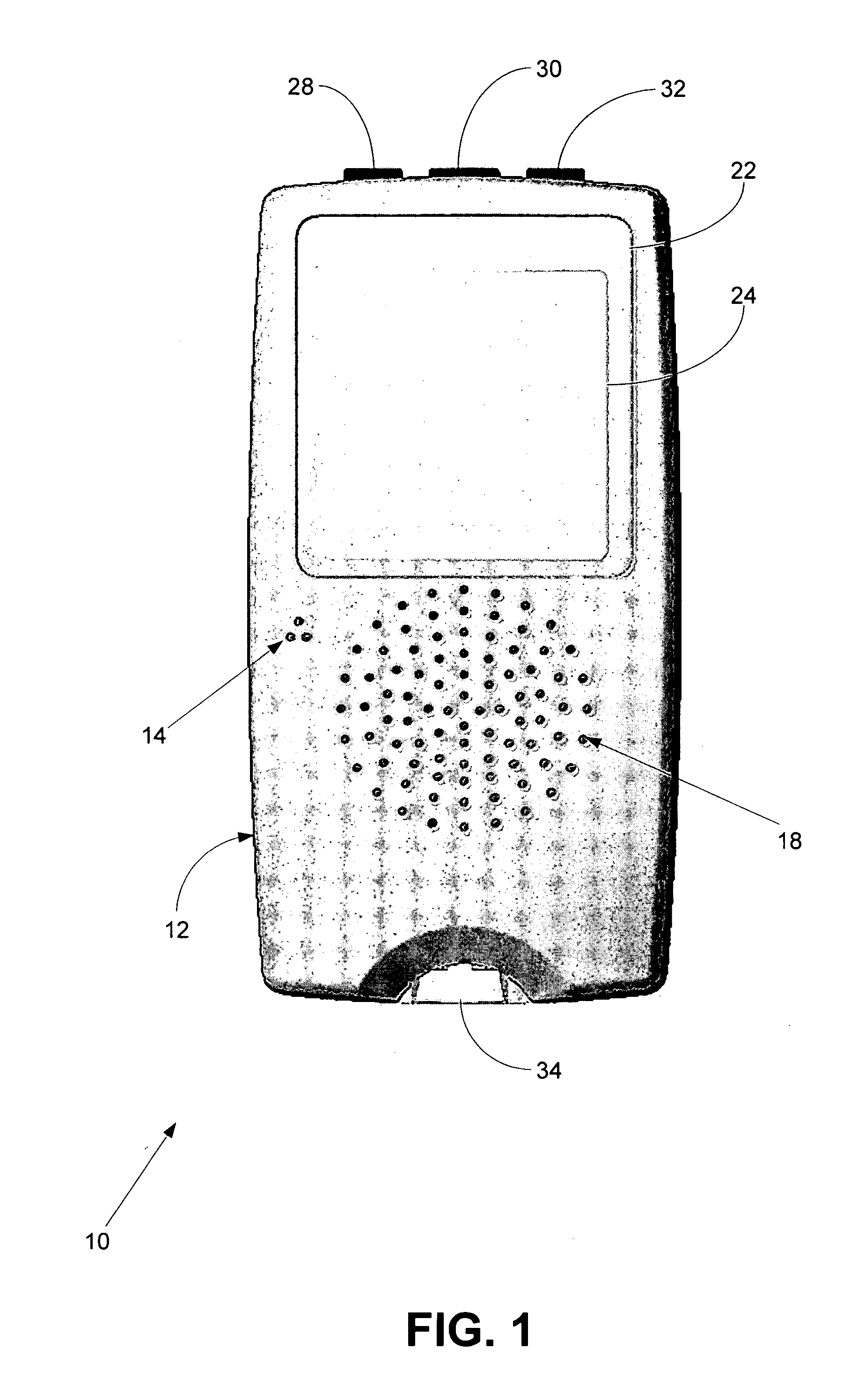
Figure 2 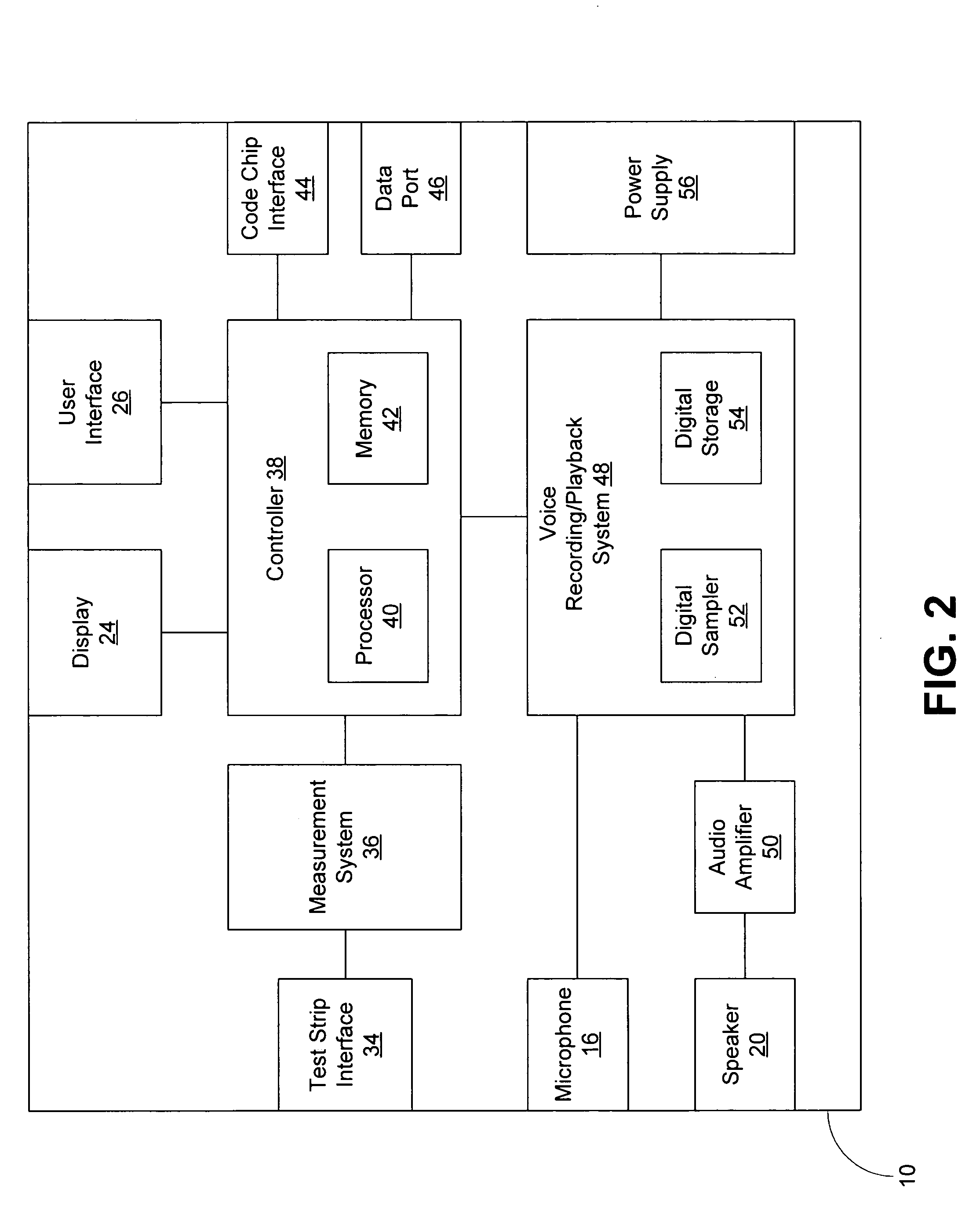
Figure 3
Abstract
Description
BACKGROUND
[0001] 1. Field of the Invention
[0002] The present invention relates to the field of medical diagnostic testing devices and, more particularly, to a medical diagnostic testing device with a voice message capability.
[0003] 2. Description of Related Art
[0004] Currently, medical diagnostic testing devices, such as blood glucose meters, store test rest results, such as blood glucose readings, which a user or medical professional can later retrieve and review. However, in order to properly interpret test results that are reviewed at a later time, it is often helpful to have information regarding the user's condition at the time the test result was obtained, e.g., what the user had eaten or how much the user had exercised. In one approach, a user could keep track of this information by keeping a journal, e.g., on paper or on a computer. However, this approach can be difficult or inconvenient for many users. For many users, the easiest and most natural way to keep track of in...
Examples
Embodiment Construction
[0010] The present invention, in exemplary embodiments, relates to a medical diagnostic testing device with a voice message capability. The medical diagnostic testing device is a device, often configured to be hand-held, that is used to conduct one or more types of medical diagnostic tests on one or more types of samples. The sample is typically a biological material, such as blood, urine, or saliva. The test performed on the sample is typically a qualitative or quantitative test to determine the presence of or amount of one or more analytes in the sample. Such analytes could be glucose, cholesterol, human choriogonadotropin (HCG), hemoglobin A1c, fructosamine, carbohydrates, tumor markers, lead, anti-epilepsy drugs, bilirubin, liver function markers, toxins or their metabolites, drugs of abuse, blood coagulation factors (PT, APTT), or others. For example, the medical diagnostic testing device could be a glucose meter that determines glucose levels in whole blood samples. Such gluco...