
System and method for localization over a wireless network
a wireless network and wireless network technology, applied in the field of computer systems and localization techniques, to achieve the effect of reducing the time necessary, and ensuring the accuracy of data samples
Patent Information
- Authority / Receiving Office
- US · United States
- Patent Type
- Applications(United States)
- Current Assignee / Owner
- Publication Date
- 2006-04-27
- Estimated Expiration
- Not applicable · inactive patent
Smart Images
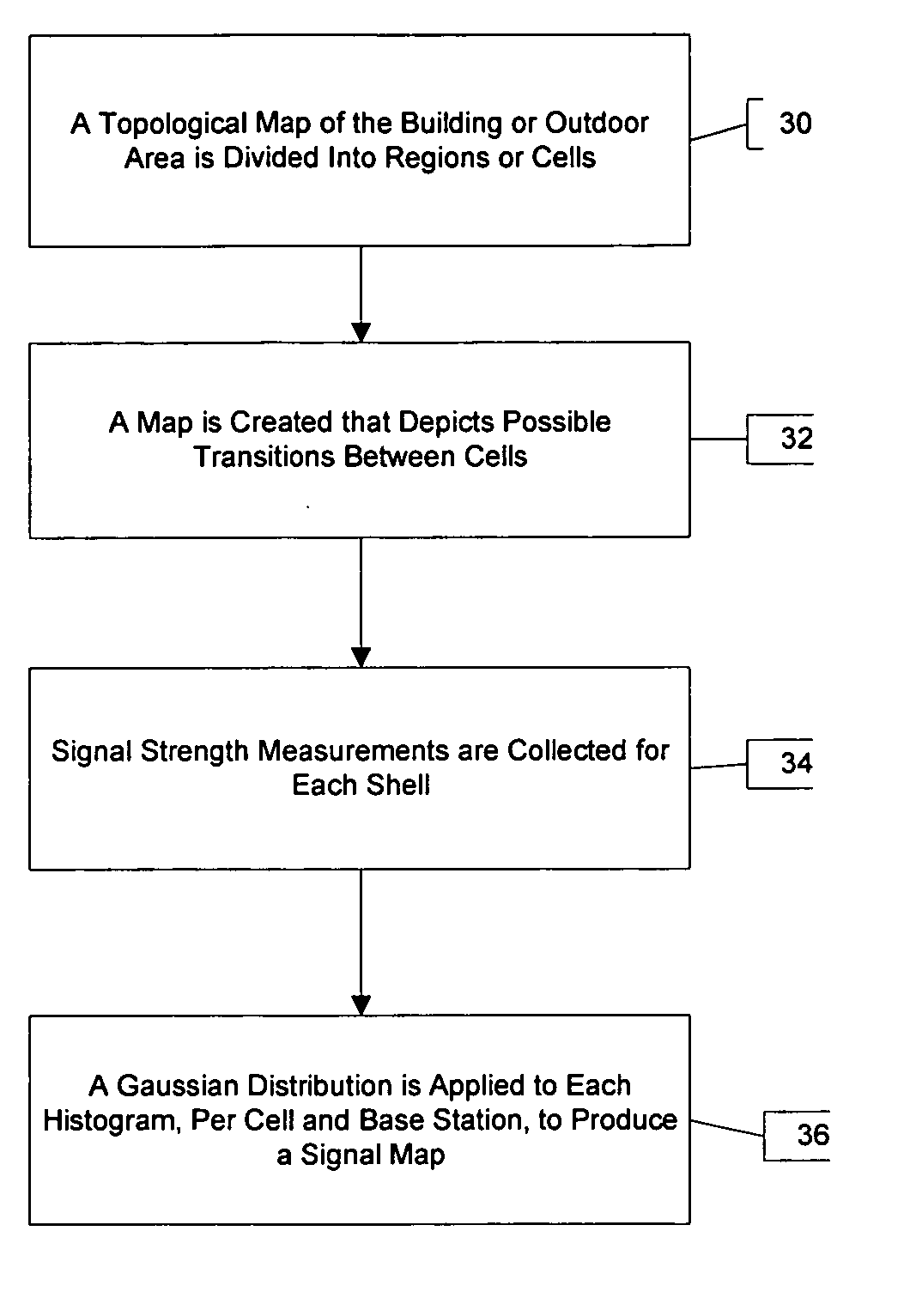
Figure 1 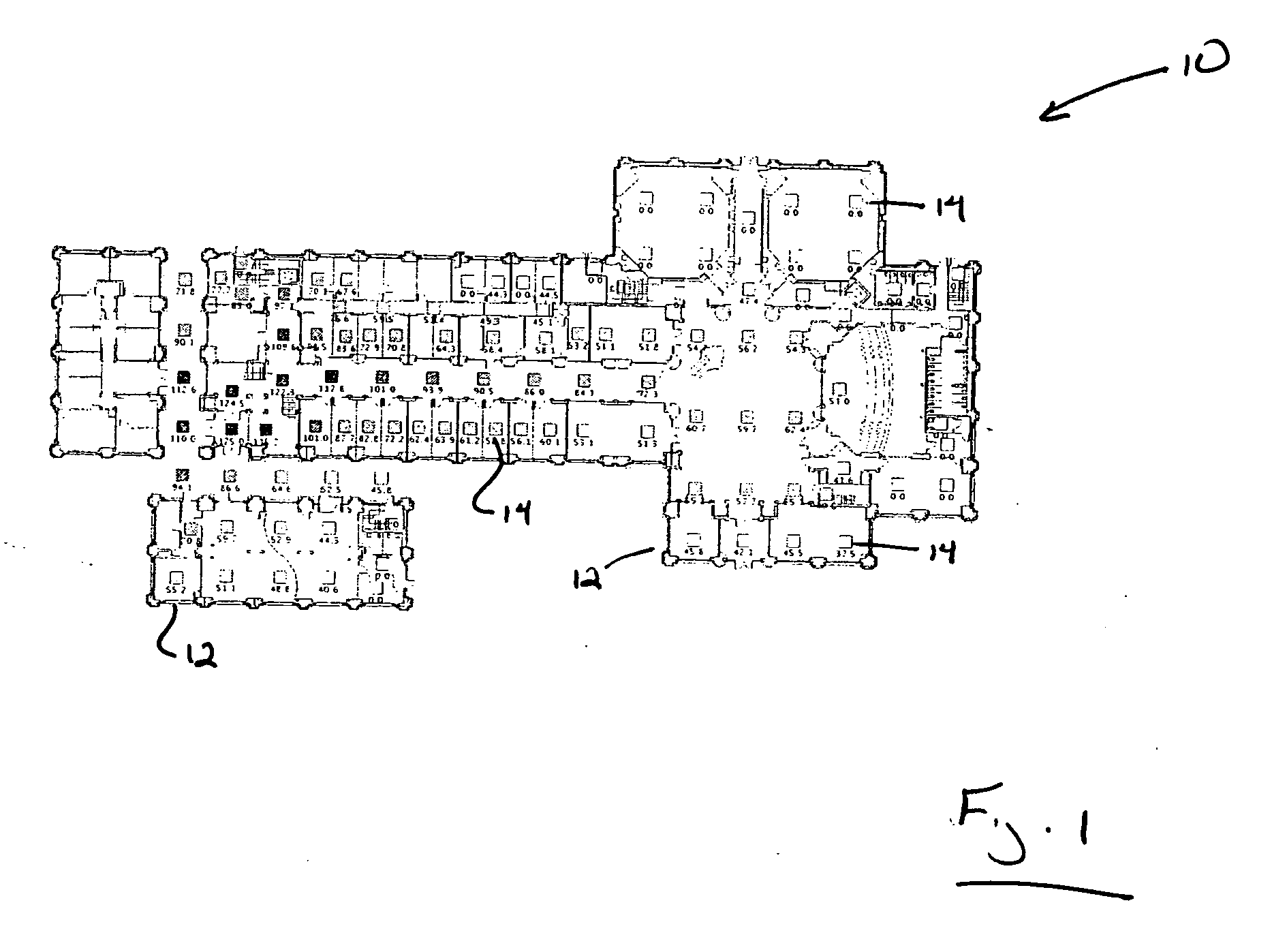
Figure 2 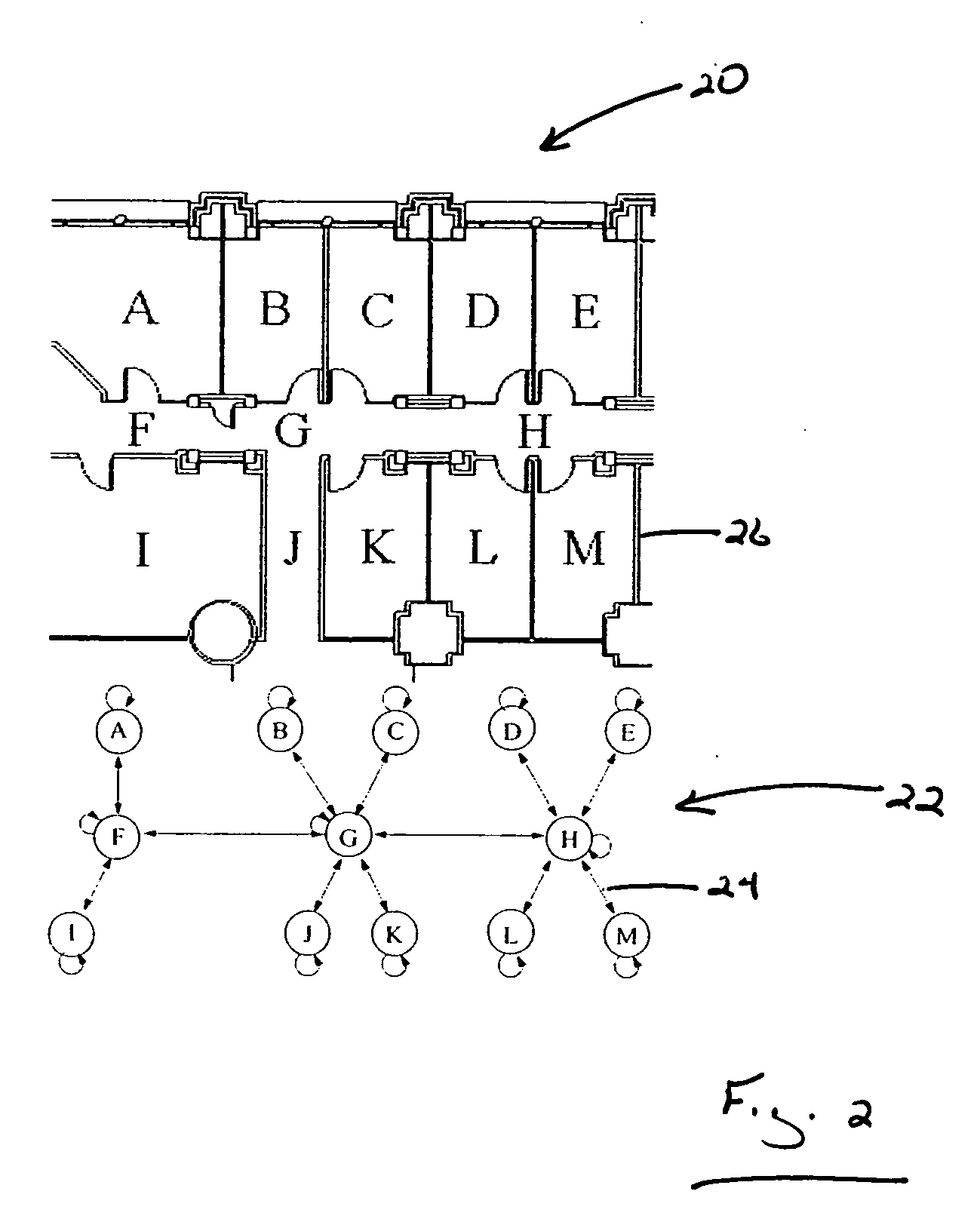
Figure 3
Abstract
Description
CROSS-REFERENCE TO RELATED APPLICATIONS
[0001] This application claims the benefit of U.S. Provisional Application No. 60 / 587,301, filed Jul. 12, 2004, which is incorporated herein by reference.TECHNICAL FIELD OF THE INVENTION
[0002] The present disclosure relates generally to the field of computer systems and localization techniques. BACKGROUND OF THE INVENTION
[0003] A practical scheme for mobile device location awareness has long been a target of mobility research. Known location sensing schemes have involved or have been characterized by specialized hardware, lengthy training steps, or poor precision. Previous location aware schemes have often involved the step of dividing the environment into a coordinate grid, followed by the step of attempting to map a device's location to a geometric point on that grid. These systems involve lengthy training, or testing and calibration at each point in the grid to achieve usable accuracy. These known systems attempted to identify with some p...
Examples
Embodiment Construction
[0013] The disclosed invention involves the creation of a topological map for localization. The disclosed invention involves the determination of a location of a device from the measured signal strength of various base stations in a given building or region. A topological map models the environment as a graph, with each node representing a region (such as a particular room or corridor), and each edge representing regions that are connected in space. The invention is described herein with respect to a localization framework and is described with respect to deployment results in an office building or in a defined outdoor area. The disclosed localization system use Markov localization and involves the collection of signal intensity measurements for whole offices and hallways, treating the entire office or hallway as a single position. The distribution of signal intensities for each base station is then fit to a normal distribution. The localization technique that is described herein ma...