
Thermal recording material and method of manufacturing the same
a technology of thermal recording material and manufacturing method, which is applied in the direction of thermography, duplicating/marking methods, printing, etc., to achieve the effect of high translucency, easy-to-divide, and preferable color development properties
Patent Information
- Authority / Receiving Office
- US · United States
- Current Assignee / Owner
- Publication Date
- 2006-06-01
- Estimated Expiration
- Not applicable · inactive patent
Smart Images
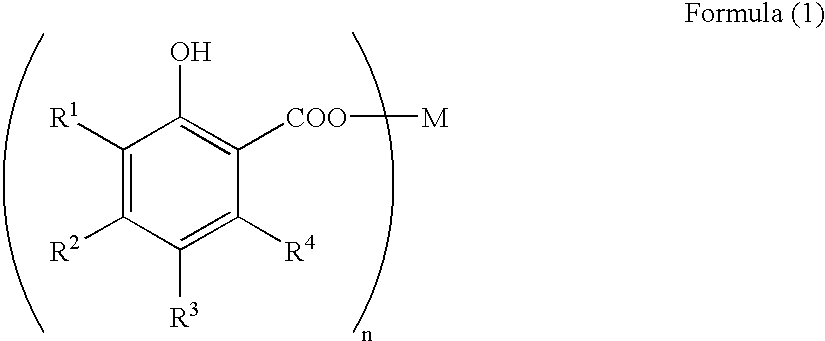
Figure 1 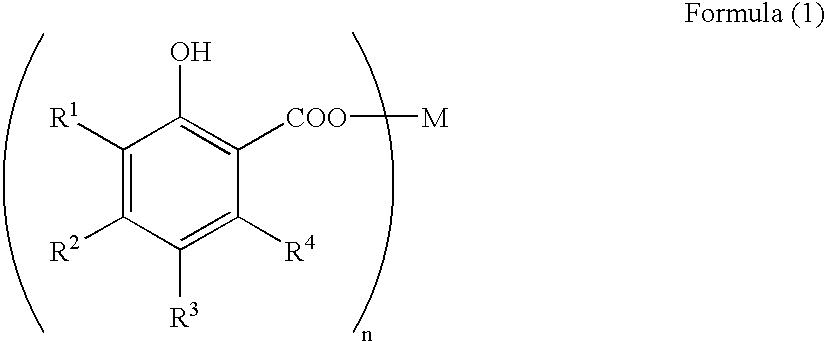
Figure 2 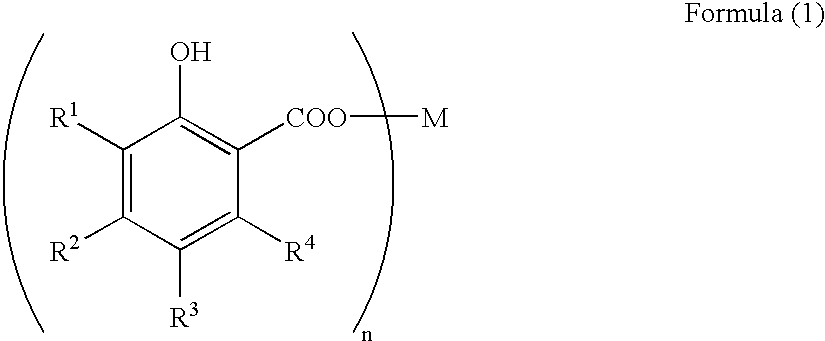
Figure 3
Abstract
Description
CROSS-REFERENCE TO RELATED APPLICATION
[0001] This application claims priority under 35USC 119 from Japanese Patent Application No. 2004-346667, the disclosure of which is incorporated by reference herein. BACKGROUND OF THE INVENTION
[0002] 1. Field of the Invention
[0003] The present invention relates to a thermal recording material and a method of manufacturing the same, more particularly a thermal recording material which is better in thermal sensitivity and storage stability of an image, and is particularly suitable for recording a medical image, and a method of manufacturing the same.
[0004] 2. Description of the Related Art
[0005] Since a thermal recording material has advantages that (1) development is not necessary, (2) when a support is a paper, quality of a material is near a plain paper, (3) handling is easy, (4) a density of developed color is high, (5) a recording device is simple, high reliability and inexpensive, (6) a noise at recording is small, (7) maintenance is n...
Examples
examples
[0148] The present invention will be further specifically explained below by way of Examples, but the invention is not limited to the following Examples as far as it is not beyond the gist thereof. Unless indicated otherwise, “%” is based on a mass.
examples 1
[0149] 1) Preparation of Protective Layer Pigment Dispersion
[0150] To 900 g of water, was added 280 g of aluminum hydroxide (trade name: HIDILITE H42S, manufactured by SHOWA DENKO K.K.) which had been subjected to surface treatment with stearic acid as a pigment, this was stirred for 3 hours, 8.5 g of a dispersing assistant (trade name: POISE 532A, manufactured by Kao Corporation), 300 g of a 10% aqueous polyvinyl alcohol solution (trade name: PVA105, manufactured by Kuraray Co., Ltd.), and 75 g of a 2% aqueous solution of a compound “CH3(CH2)7CH═CH(CH2)7—CON(CH3)—CH2CH2SO3Na” were added thereto, they were dispersed to an average particle diameter of 0.33 μm with a sand mill, and water was further added thereto to prepare a protective layer pigment dispersion having an adjusted concentration of 18%.
[0151] The aforementioned average particle diameter refers to an average particle diameter of pigment particles corresponding to a 50% volume of a total pigment obtained by dispersing a...
example 2
[0183] According to the same manner as that of Example 1 except that the compound represented by the structural formula [1] was replaced with a compound represented by the following structural formula [2] (color developer in the invention) in “3) Preparation of color developer solid dispersion” in Example 1, the thermal recording material (2) of the invention was manufactured.