
Low turbulence fluid management system for endoscopic procedures
a fluid management system and low turbulence technology, applied in the field of low turbulence fluid management system for endoscopic procedures, can solve problems such as danger to the patient's life, and achieve the effects of reducing the time of cavity filling, accurate knowing the maximum pressure, and fairly accurate assessmen
Patent Information
- Authority / Receiving Office
- US · United States
- Patent Type
- Applications(United States)
- Current Assignee / Owner
- Publication Date
- 2006-06-08
Smart Images
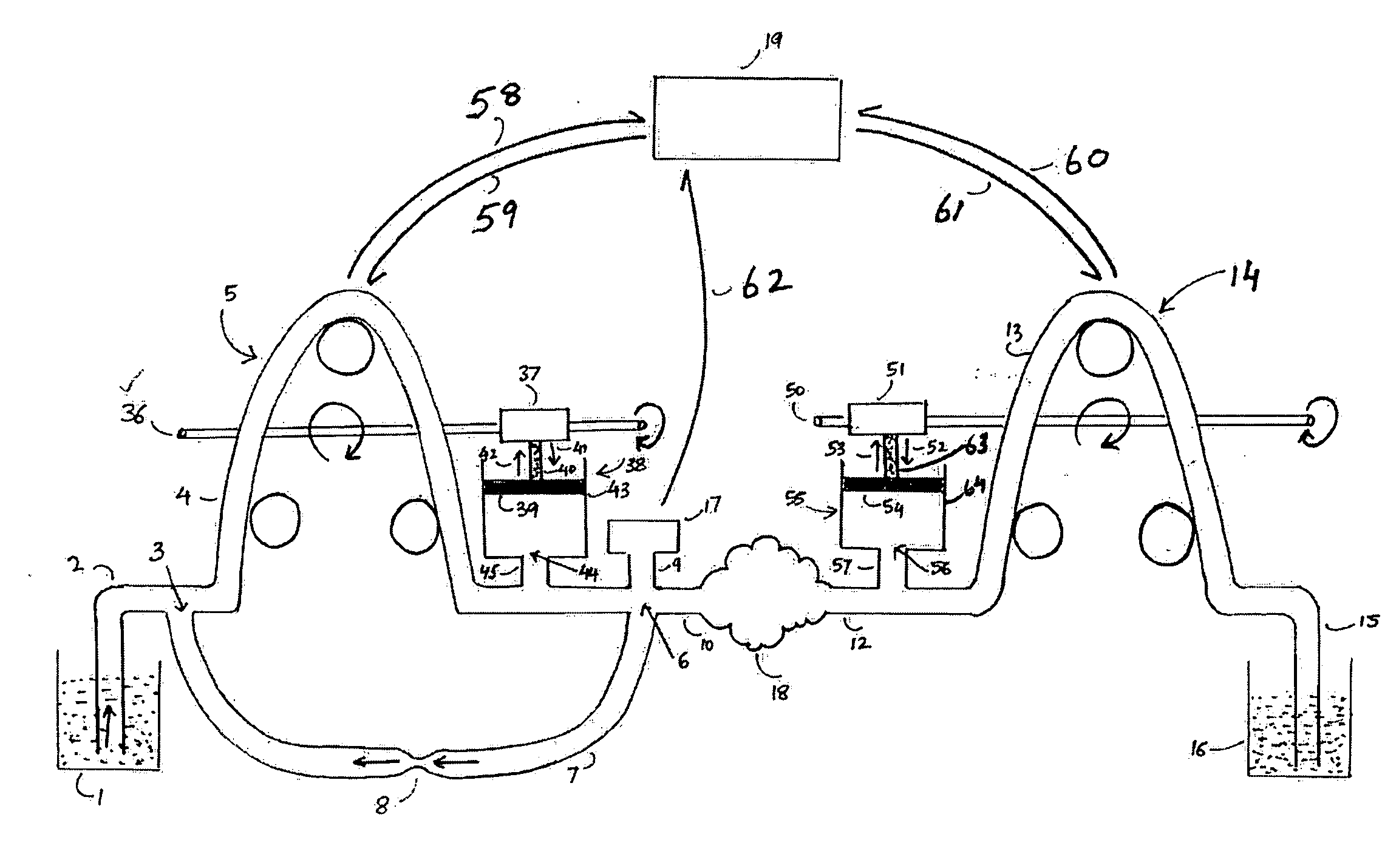
Figure 1 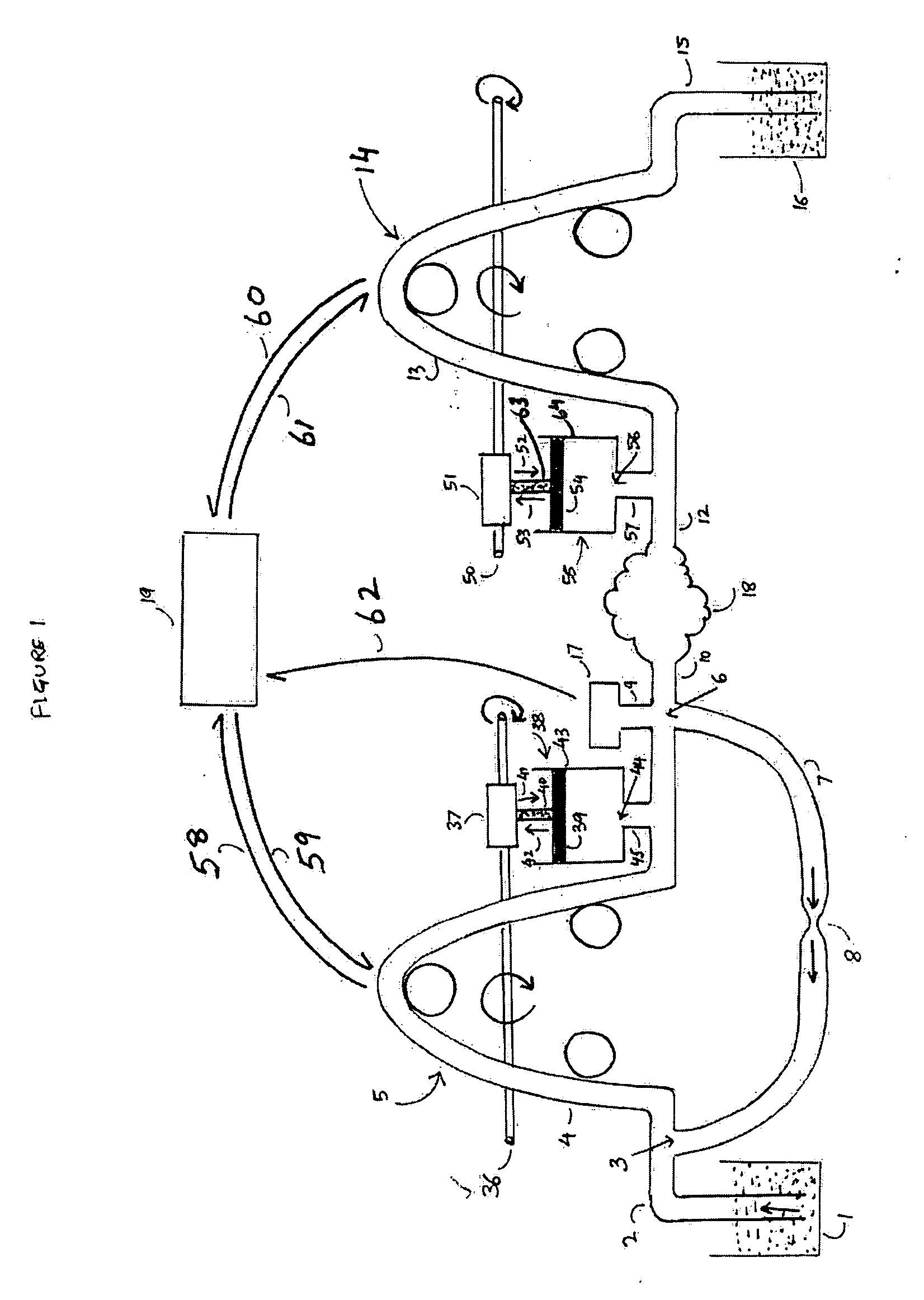
Figure 2 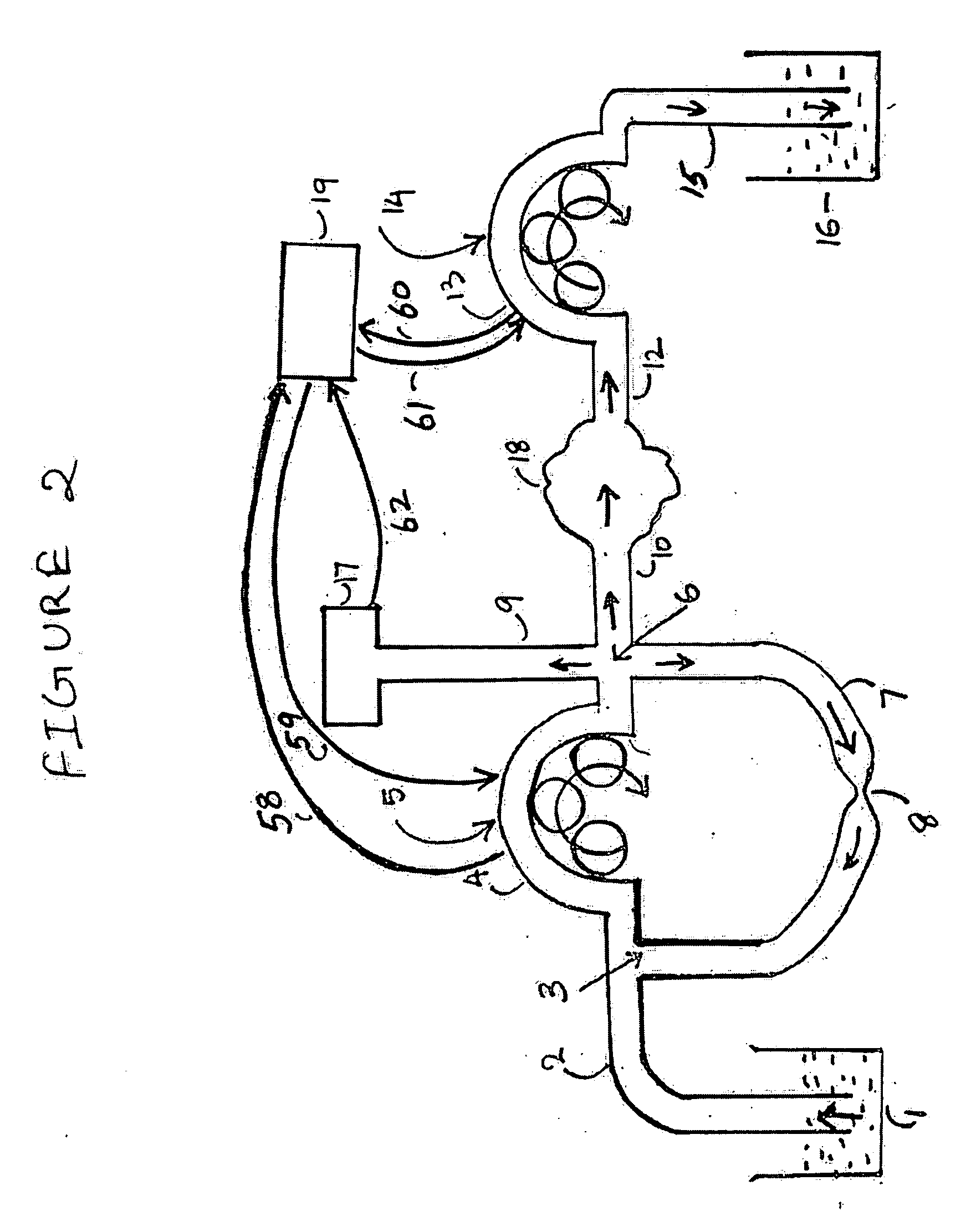
Figure 3
Abstract
Description
FIELD OF INVENTION
[0001] The present invention relates to a system for distending body tissue cavities of subjects utilizing continuous flow irrigation during endoscopic procedures. The system and the methods of the present invention described above can be used in any endoscopic procedure requiring continuous flow irrigation few examples of such endoscopic procedures being hysteroscopic surgery, arthroscopic surgery, trans uretheral surgery (TURP), endoscopic surgery of the brain and endoscopic surgery of the spine. The proposed invention can also have certain useful non medical applications. BACKGROUND OF THE INVENTION
[0002] Endoscopic surgery is becoming increasingly popular because of the following reasons:
[0003] (a) it is a minimally invasive form of surgery,
[0004] (b) it avoids large incisions over the skin and muscle,
[0005] (c) it is associated with less pain,
[0006] (d) there is a relatively less requirement of blood transfusions and
[0007] (e) the patients can return ba...
Examples
Embodiment Construction
[0053] Accordingly, the present invention provides a system for distending body tissue cavities of subjects by continuous flow irrigation during endoscopic procedures the said system comprising:
a fluid source reservoir containing a non viscous physiologic fluid meant for cavity distension;
[0054] a fluid supply conduit tube connecting the fluid source reservoir to an inlet end of a variable speed positive displacement inflow pump and an outlet end of the said inflow pump being connectable to an inflow port of an endoscope instrument through an inflow tube for pumping the fluid at a controlled flow rate into the cavity, the flow rate at which the fluid enters into the cavity via the inflow tube being termed as the cavity inflow rate;
an inflow pressure transducer being located anywhere in the inflow tube between the outlet end of the inflow pump and the inflow port of the endoscope;
an inflow pressure pulsation dampening means connected to the inflow tube for dampening the pressu...