
Tri-point hydro sled
a hydro sled and tri-point technology, applied in the field of marine vessels, can solve the problems of marine vessels generally having a tendency to bounce, fuel efficiency is diminished, and drag is increased, and achieves low profile in the water, low cost, and little disturbance of backwashing
Patent Information
- Authority / Receiving Office
- US · United States
- Patent Type
- Applications(United States)
- Current Assignee / Owner
- Publication Date
- 2006-11-16
- Estimated Expiration
- Not applicable · inactive patent
Smart Images
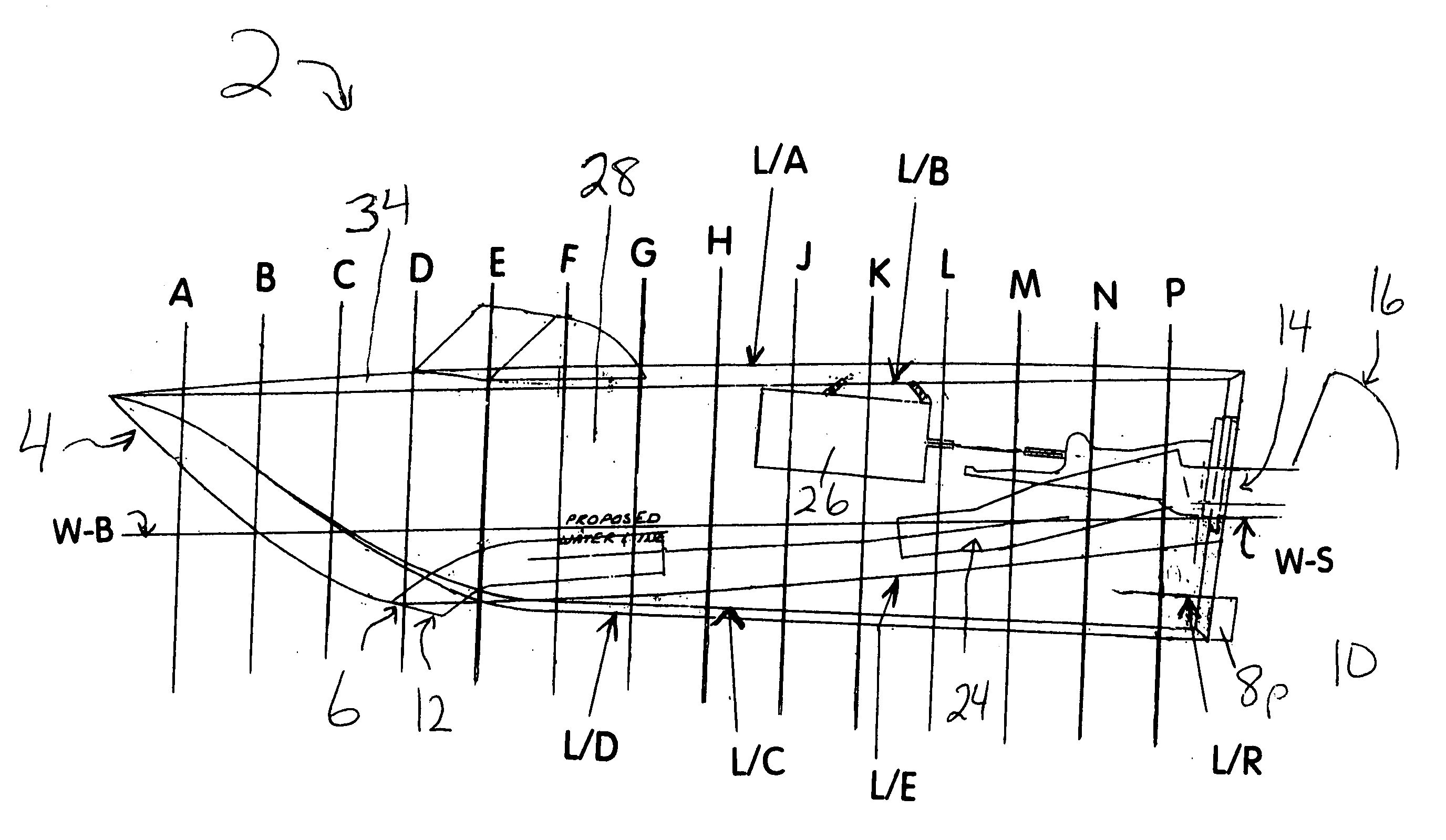
Figure 1 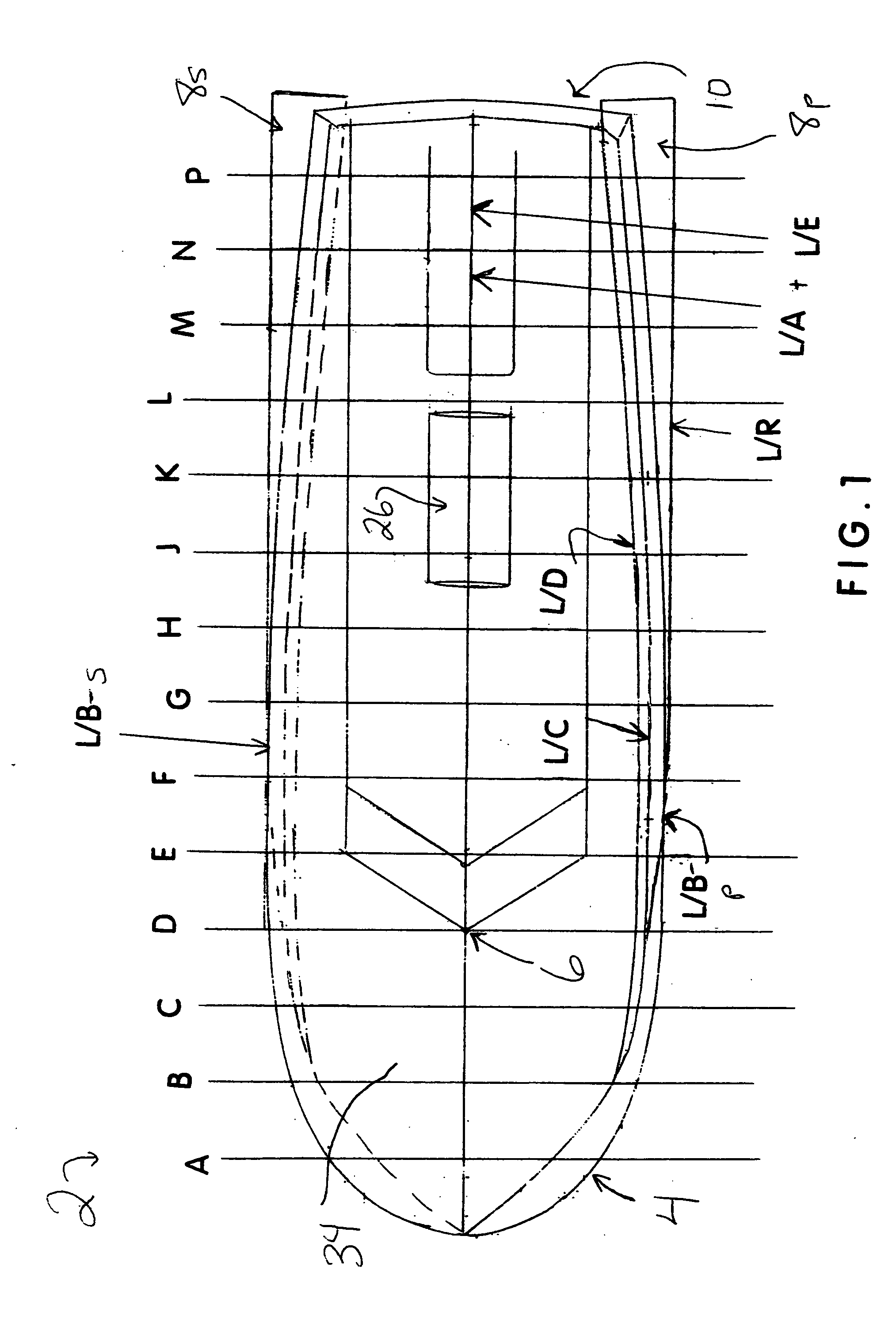
Figure 2 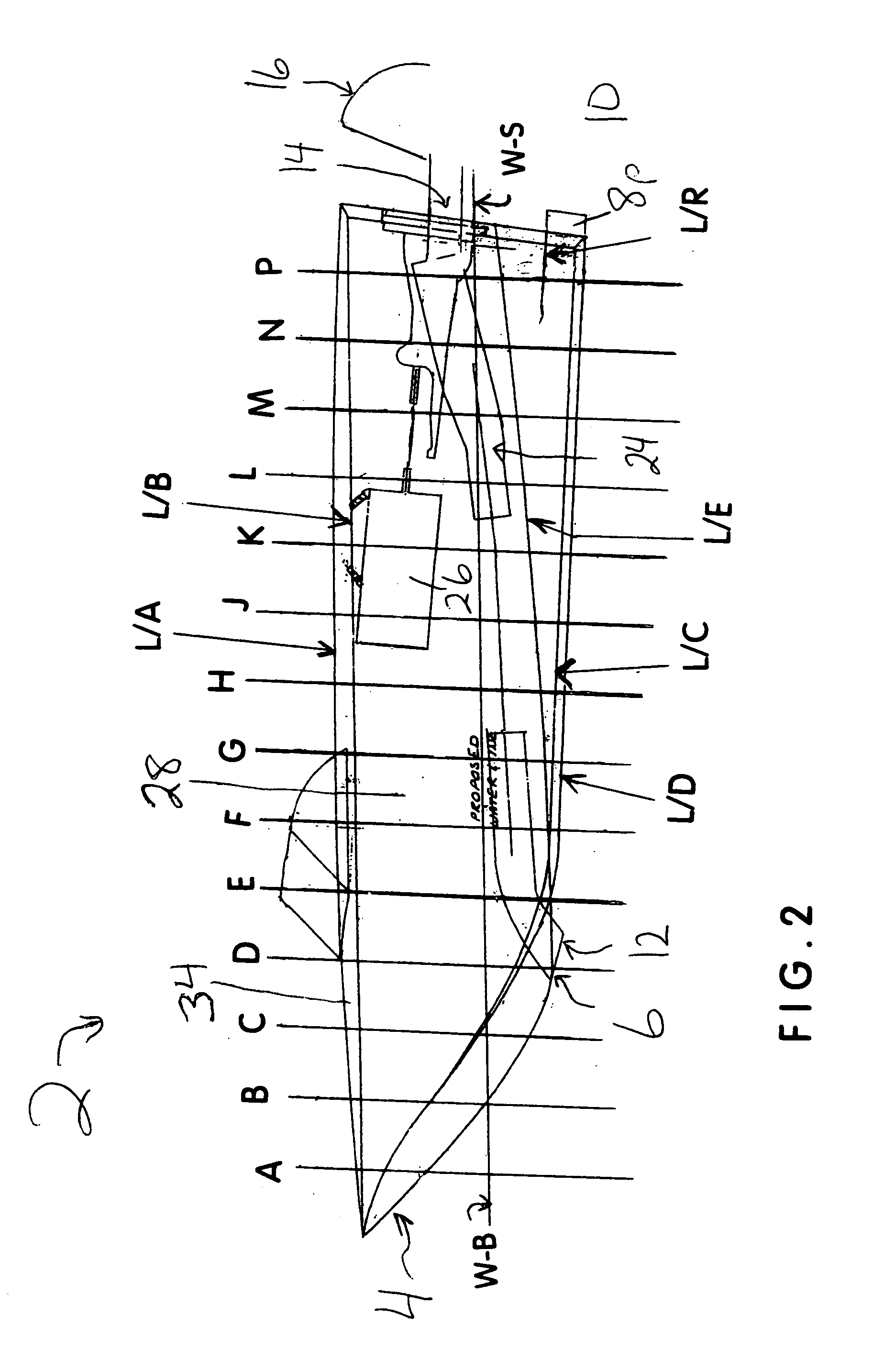
Figure 3
Abstract
Description
CROSS-REFERENCES TO RELATED APPLICATIONS
[0001] None. BACKGROUND OF THE INVENTION
[0002] 1. Field of the Invention
[0003] This invention relates to the field of marine vessels, specifically to a marine vessel having a V-shaped bow, a water jet intake rearward of the bow, two lateral rails, and a water jet discharge through the transom above the water line. The bottom of the V-shaped bow and the rear portions of the rails give the present invention its tri-point contact with the water. The rails allow it to move like a sled through the water and minimize the wet area under the hull along the center aft of the water jet intake, thus allowing the vessel to plane over the water while in a straight ahead mode. The configuration of the present invention allows it to move faster through the water, be more stable in choppy seas, move more smoothly and silently through flat water, make less wake, and make quicker and tighter turns than vessels of comparable size. Also, its water jet propulsi...
Examples
Embodiment Construction
[0019] The present invention vessel can be described as a marine attack sled, since it has a configuration creating a tri-point contact with the water at high speed. The bottom of the V-shaped bow in combination with the rear portion of its two lateral rails provide the three water contact points. A water jet intake is located aft the V-shaped bow, with the water jet discharge located through the transom above the water line. Thus, the present invention is allowed to plane in a straight ahead mode at high speed while the wet area aft of the bow, when the vessel is running at high speed in flattened water, is maintained at a minimum for improved fuel efficiency, performance, turning without loss of velocity, and less backwash disturbance. When at idle or at low speed, the present invention vessel sits low in the water. However, at high speeds it simply climbs out of the water with only its tri-point areas remaining in contact therewith. A portion of the bow must remain in the water s...