
Call management over reduced bandwidth
Patent Information
- Authority / Receiving Office
- US · United States
- Current Assignee / Owner
- Publication Date
- 2007-12-13
Smart Images
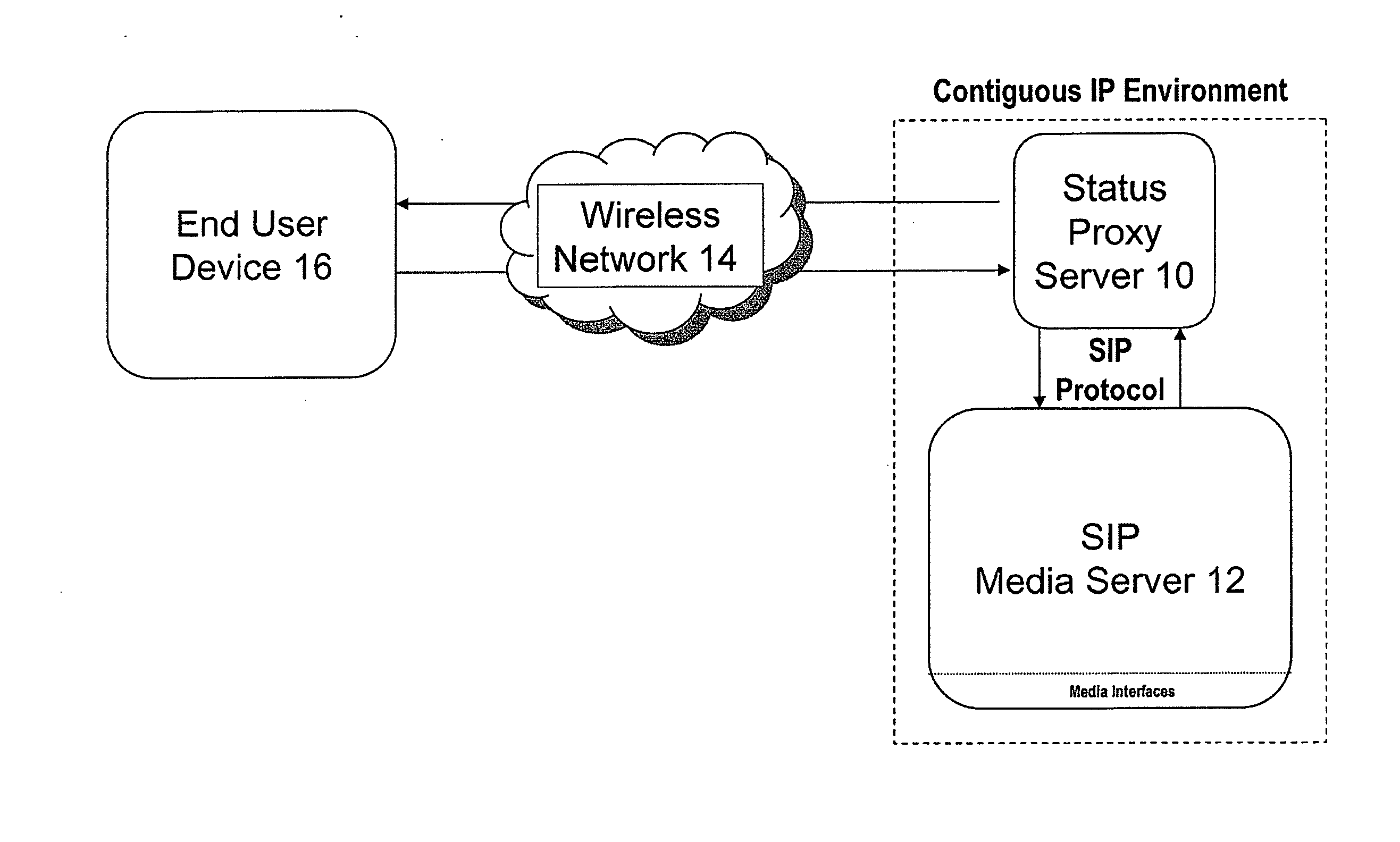
Figure 1 
Figure 2 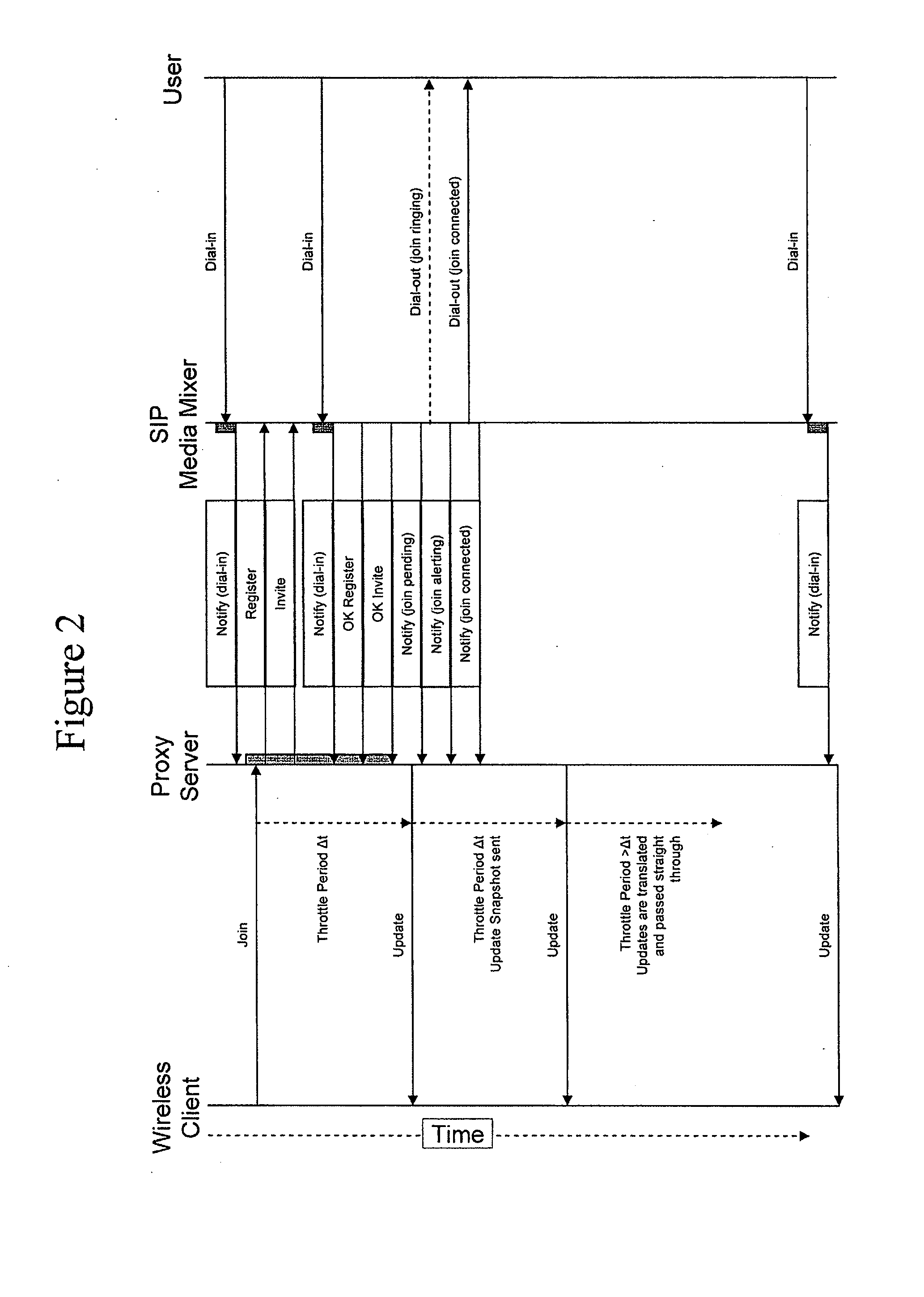
Figure 3
Abstract
Description
CROSS REFERENCE TO RELATED APPLICATION
[0001] This application claims the benefit of U.S. Patent Application No. 60 / 800.431, filed May 16, 2006, under 35 U.S.C. § 119(e).BACKGROUND OF THE INVENTION
[0002] This invention relates to telecommunication and—in an important example—to the provision of enhanced telecommunication services such as conference calls.
[0003] Telephone systems and services are ubiquitous and are used for both residential and business purposes. The services and features provided by telephony systems have developed from simple person-to-person calls to conference calls where many parties are connected together at a time. There exist of course a wide variety of telephony devices for end users, including fixed line handsets, mobile / cellular handsets, personal digital assistants or other mobile computing devices that are mobile / cellular enabled and Internet Protocol (IP) telephones.
[0004] A variety of methods and systems have been proposed for managing telephone cal...
Examples
Embodiment Construction
[0021] In arrangements such as that disclosed in WO 2005 / 101857 (the contents of which are incorporated herein by reference) call control is effected between a device, such as a computer, entering into a communication with a voice over internet protocol (VoIP) server, such as a conference bridge and relevant PSTN gateways. Such communication is over a data connection and uses a protocol such as H323 or SIP. However, this requires significant computing capacity on the device and bandwidth for the communications required by the protocol (typically, an event in a VoIP protocol generates an information package of a few kilobytes of information). Internet connected wireless devices can theoretically be used to manage a VoIP session with a VoIP server, however, memory, processor and bandwidth limitations make running a VoIP codec directly on a wireless device unworkable for real time call management purposes in many practical applications.
[0022] As illustrated in FIG. 1, the present inve...