
Non-aqueous electrolyte secondary battery and production method thereof
a technology of non-aqueous electrolyte and secondary batteries, which is applied in the direction of wound/folded electrode electrodes, cell components, sustainable manufacturing/processing, etc., can solve the problems of reducing discharge characteristics, electrode reactions, and conductive agents that tend to form agglomerated particles including fluorocarbon resin, so as to improve the active material density of positive electrodes, reduce the amount of conductive agents, and improve the effect of capacity and improved characteristics
Patent Information
- Authority / Receiving Office
- US · United States
- Patent Type
- Applications(United States)
- Current Assignee / Owner
- Publication Date
- 2008-12-18
- Estimated Expiration
- Not applicable · inactive patent
Smart Images
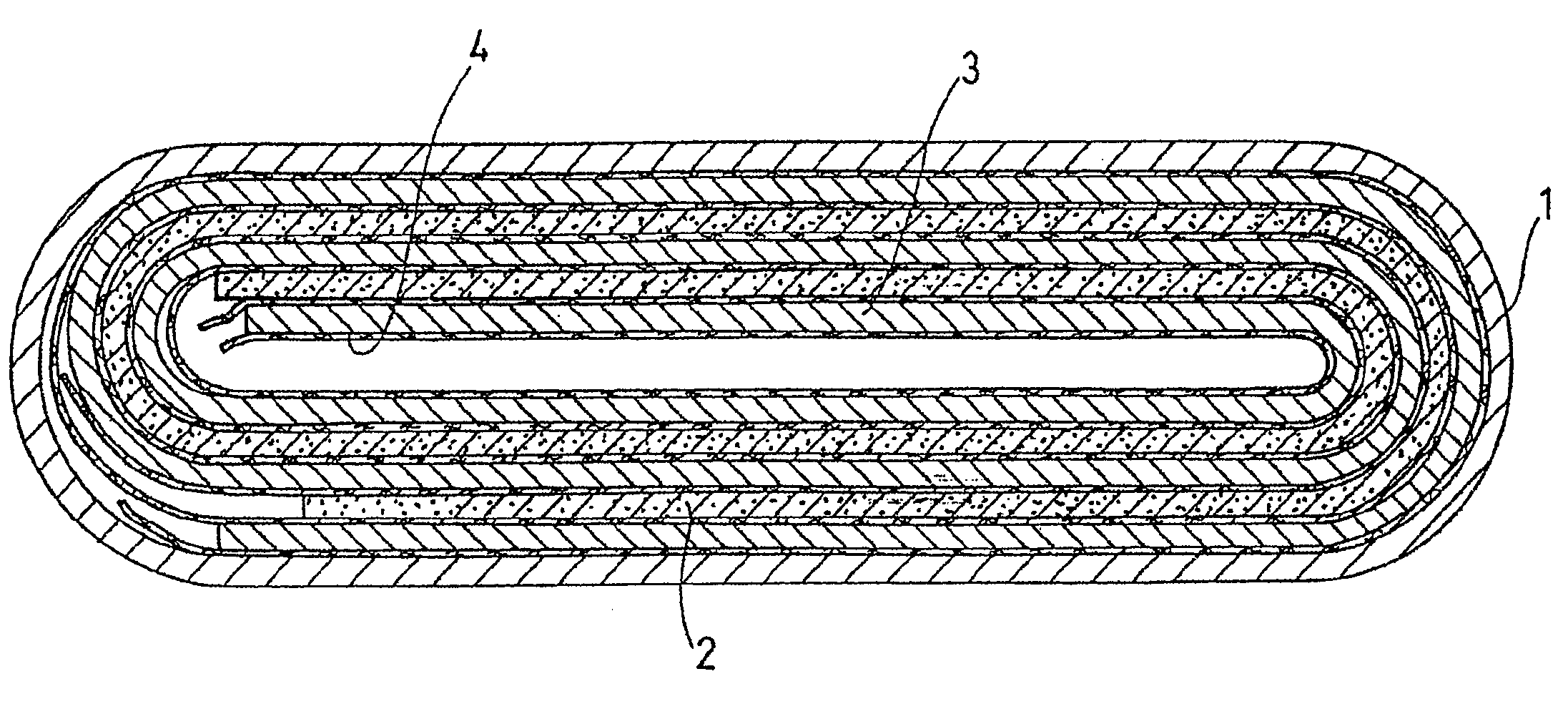
Figure 1 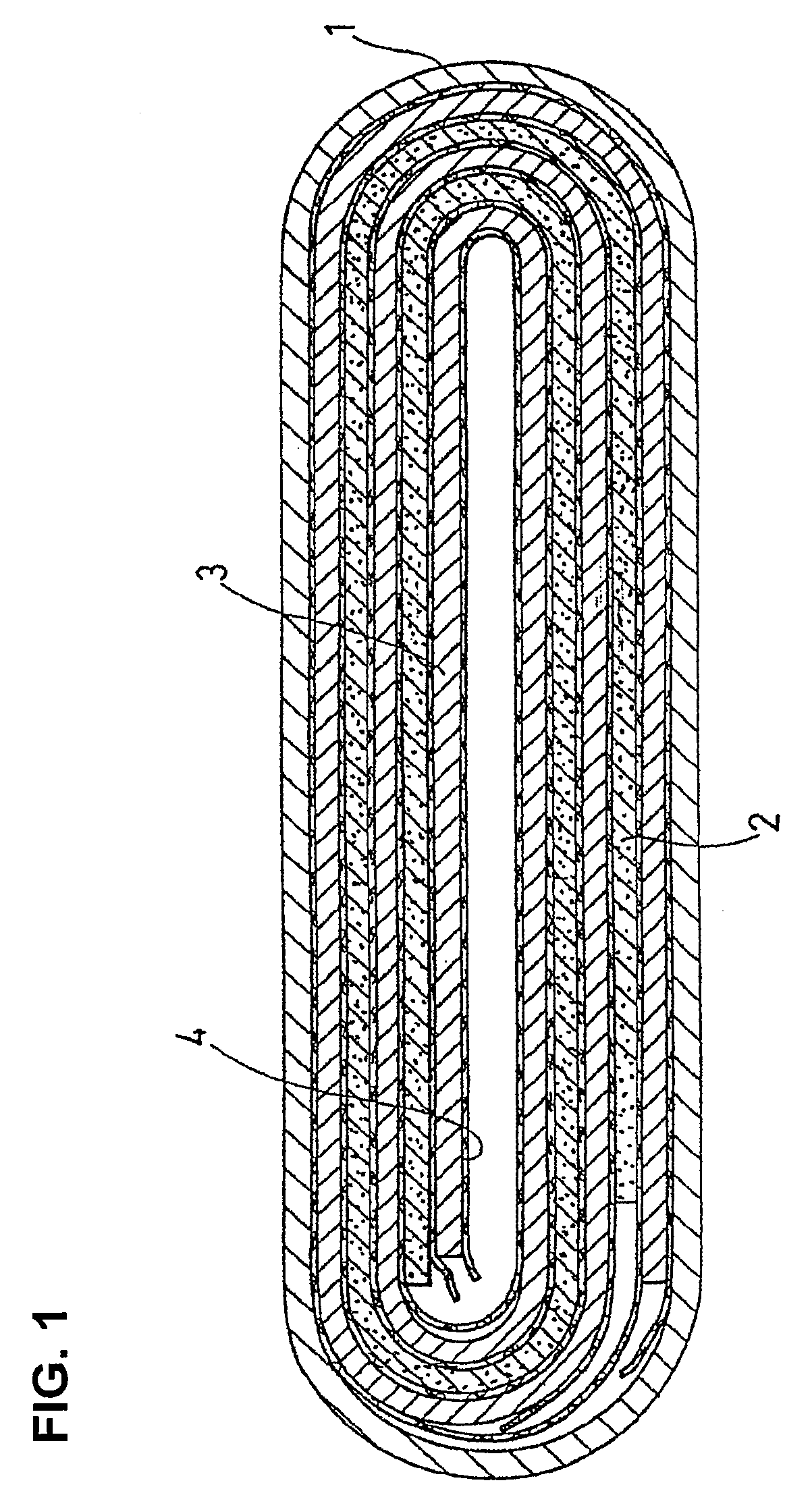
Figure 2 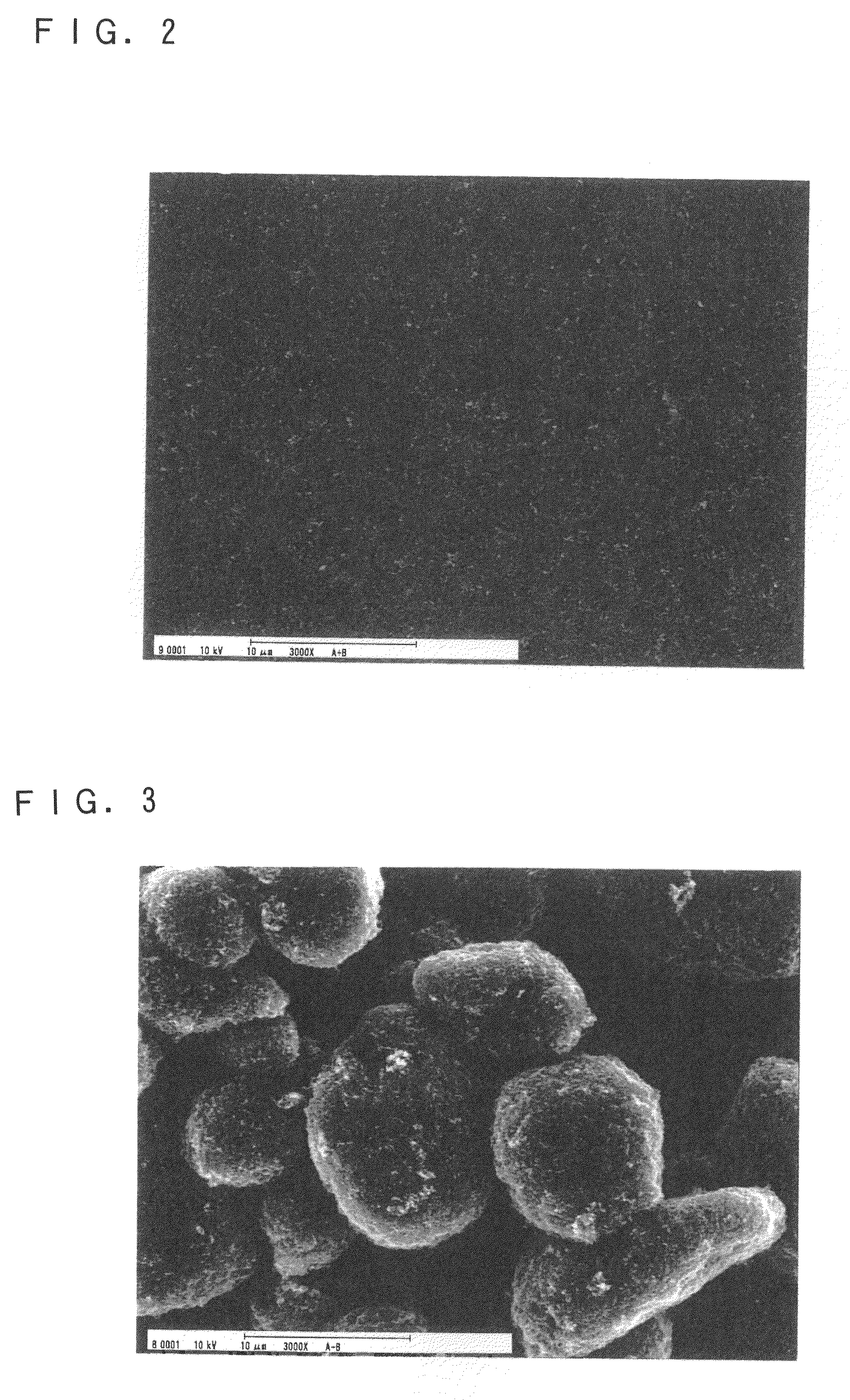
Figure 3
Abstract
Description
BACKGROUND OF THE INVENTION
[0001] With the rapidly growing trend toward cordless and more portable consumer electronic products, there is an increasing demand for batteries that are small and lightweight but have high energy density as the power source for such electronic products. From this viewpoint, non-aqueous electrolyte secondary batteries, particularly lithium ion secondary batteries, are commonly used in such appliances as notebook computers, mobile phones and audiovisual equipment as batteries having high voltage and high energy density.
[0002] Because of the use in such appliances, these non-aqueous electrolyte secondary batteries are required to have good discharge characteristics while maintaining high capacity. In order to satisfy the requirement, it is essential to improve permeability of an electrolyte into a positive electrode.
[0003] The permeability of the electrolyte into the positive electrode can be improved, for example, by a process of adding a proper amount of flu...
Examples
example 1
(i) Production of Positive Electrode
[0097]The followings were measured for producing a positive electrode:
[0098]Active material: LiCoO2 (100 parts by weight)
[0099]Binder A: PVDF, which is a solid content of “KF polymer L #1320” manufactured by Kureha Chemical Industry Co., Ltd. (1 part by weight)
[0100]Binder B: hydrogenated nitrile rubber, which is a solid content of “BM-720H” manufactured by Nippon Zeon Co., Ltd. (0.5 part by weight)
[0101]Conductive agent: acetylene black having an average primary particle size of 0.03 μm (2 parts by weight)
[0102]LiCoO2 and PVDF (binder A) were kneaded using NMP as a dispersion medium to prepare an active material paste A having a solid content of 85 wt %.
[0103]Acetylene black and hydrogenated nitrile rubber (binder B) were kneaded using NMP as a dispersion medium to prepare a conductive agent paste B having a solid content of 22 wt %.
[0104]Part of the paste B was applied onto a glass plate to form a film having a thickness of 60 μm, and the film w...
examples 2 to 6
[0118]Positive electrodes and non-aqueous electrolyte secondary batteries were produced in the same manner as in Example 1 except that the amounts of the binders were varied as shown in Table 1.
example 7
[0119]A positive electrode and a non-aqueous electrolyte secondary battery were produced in the same manner as in Example 4 except for the addition of 0.3 part by weight of modified acrylic rubber fine particles per 100 parts by weight of the active material to the active material paste A in the first step. The modified acrylic rubber fine particles were insoluble in NMP and were solid content of “BM-500B” having an average particle size of 0.2 μm, manufactured by Nippon Zeon Co., Ltd.