
Knock signal detection in automotive systems
Patent Information
- Authority / Receiving Office
- US · United States
- Current Assignee / Owner
- Publication Date
- 2009-05-07
- Estimated Expiration
- Not applicable · inactive patent
Smart Images
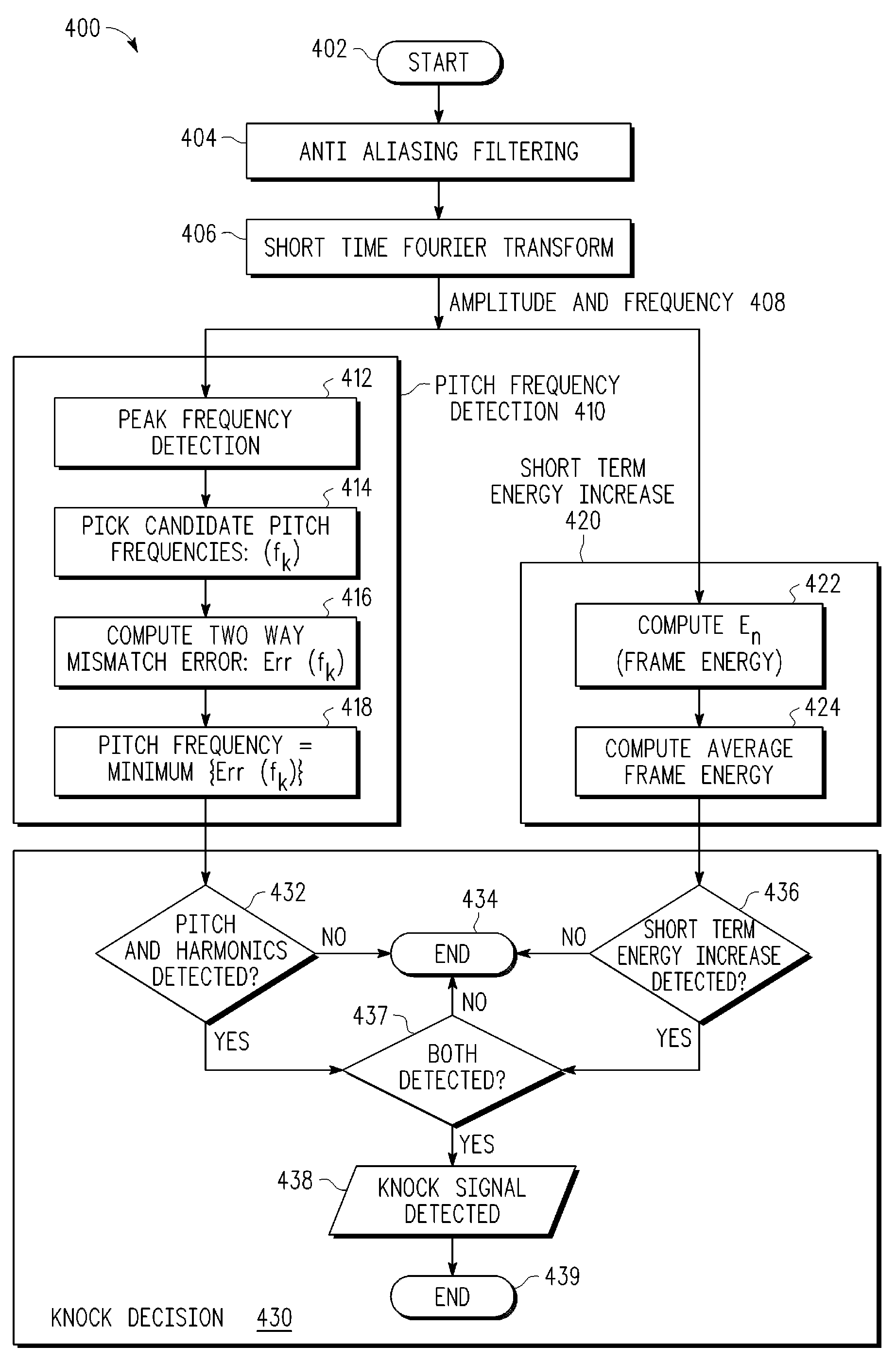
Figure 1 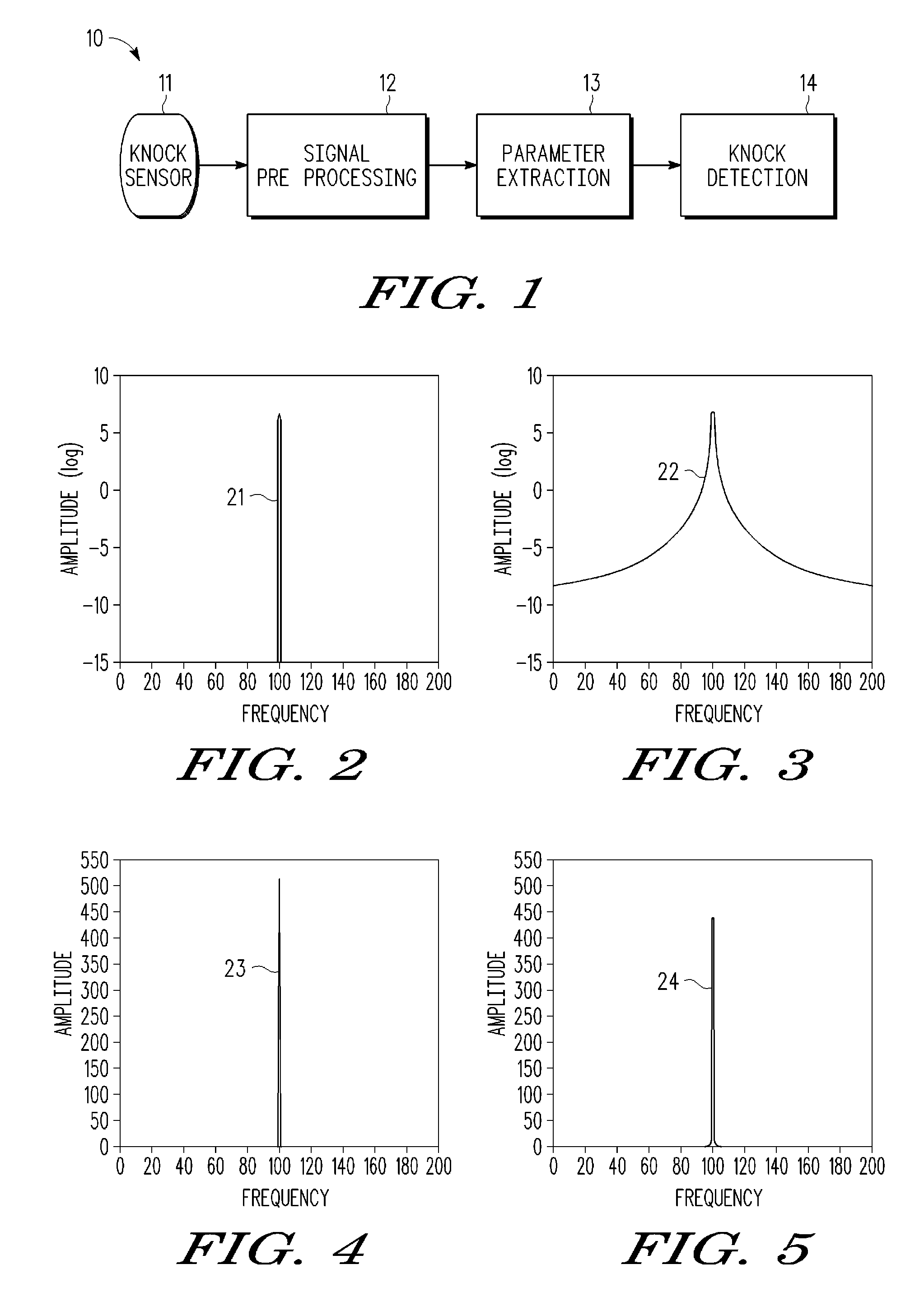
Figure 2 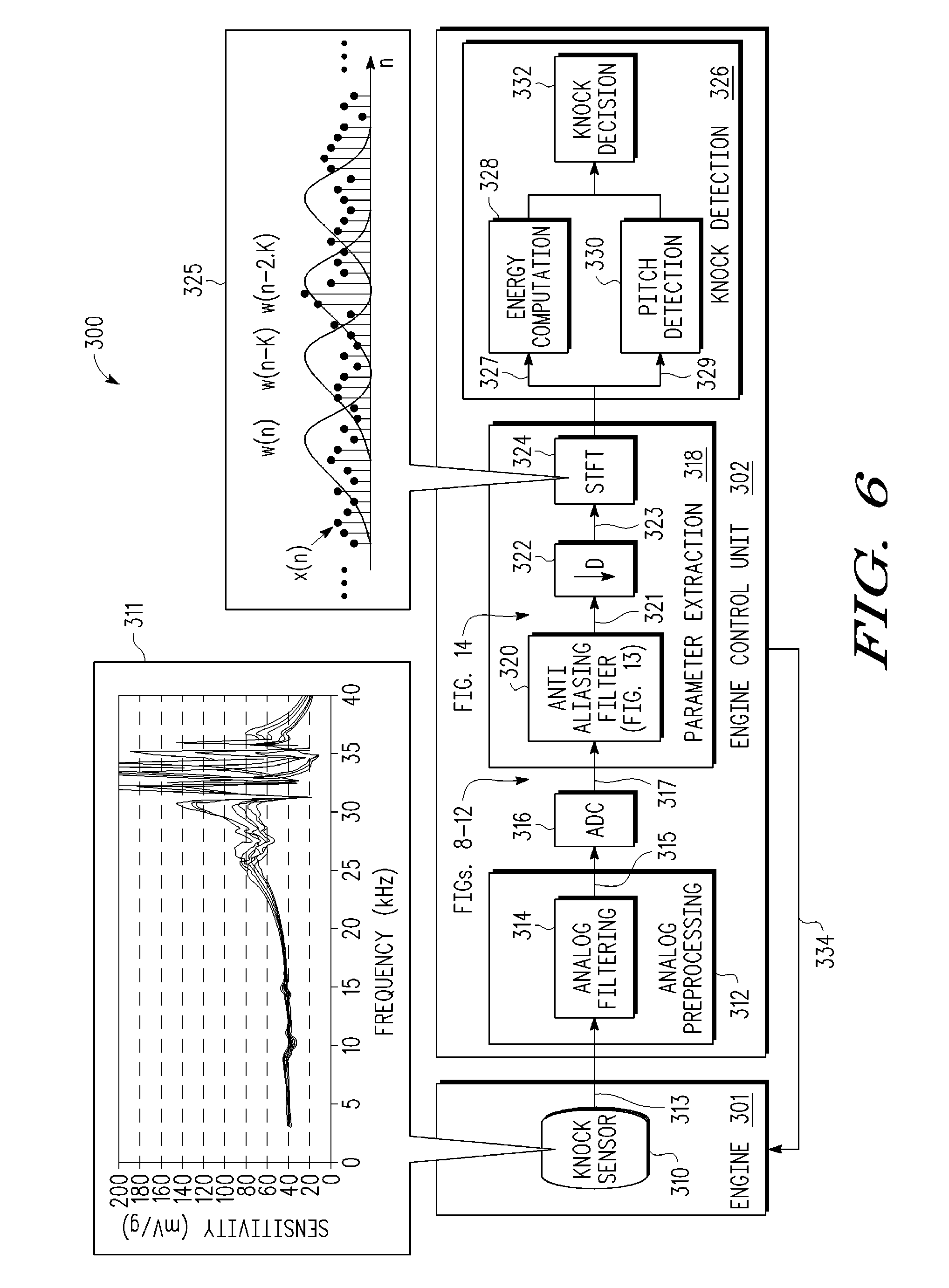
Figure 3
Abstract
Description
BACKGROUND OF THE INVENTION
[0001] 1. Field of the Invention
[0002] The present invention is directed in general to field of internal combustion engines. In one aspect, the present invention relates to a system and method for improving the combustion process in automotive systems by predicting knock signals.
[0003] 2. Description of the Related Art
[0004] As gasoline supplies have decreased and become more costly, there is an increasing demand for efficient fuel consumption. In addition, concern about the environmental effects caused by combustion engines has increased demand for combustion engines with reduced engine emissions. While auto manufacturers have attempted to meet these demands by increasing the engine compression ratio, this can result in engine knocking, which is an undesirable mode of combustion which originates spontaneously and sporadically, causing increased pollution and damaging engine parts, as well as creating unpleasant metallic noises.
[0005] To increase fuel economy a...
Examples
Embodiment Construction
[0026]An engine knock signal processing system and methodology are described for use in efficiently and accurately detecting knock events in an internal combustion engine. Using non-intrusive sensors (such as accelerometers) to detect engine knock signals, the intensity of vibrations induced in the combustion chamber by knock events can be measured. After lowpass filtering, the measured vibration signal is converted from analog to digital form, allowing digital processing techniques to be applied to extract parameters for detecting the presence of knock events in the signal. Parameters are then extracted by applying an anti-aliasing filter, decimating the filtered signal (e.g., by a factor D) and using a time-frequency technique (such as STFT) to transform the decimated filtered signal into a bi-dimensional representation as a function of time and frequency. By decimating the filtered signal to reduce its sampling frequency, the computational load on the processor is reduced as the ...