
Method for controlling catalyst and filter temperatures in regeneration of a catalytic diesel particulate filter
a technology of catalyst and filter temperature, which is applied in the field of regenerating a catalytic diesel particulate filter, can solve the problems of affecting the efficiency of diesel engines
Patent Information
- Authority / Receiving Office
- US · United States
- Patent Type
- Applications(United States)
- Current Assignee / Owner
- Publication Date
- 2009-07-30
- Estimated Expiration
- Not applicable · inactive patent
Smart Images
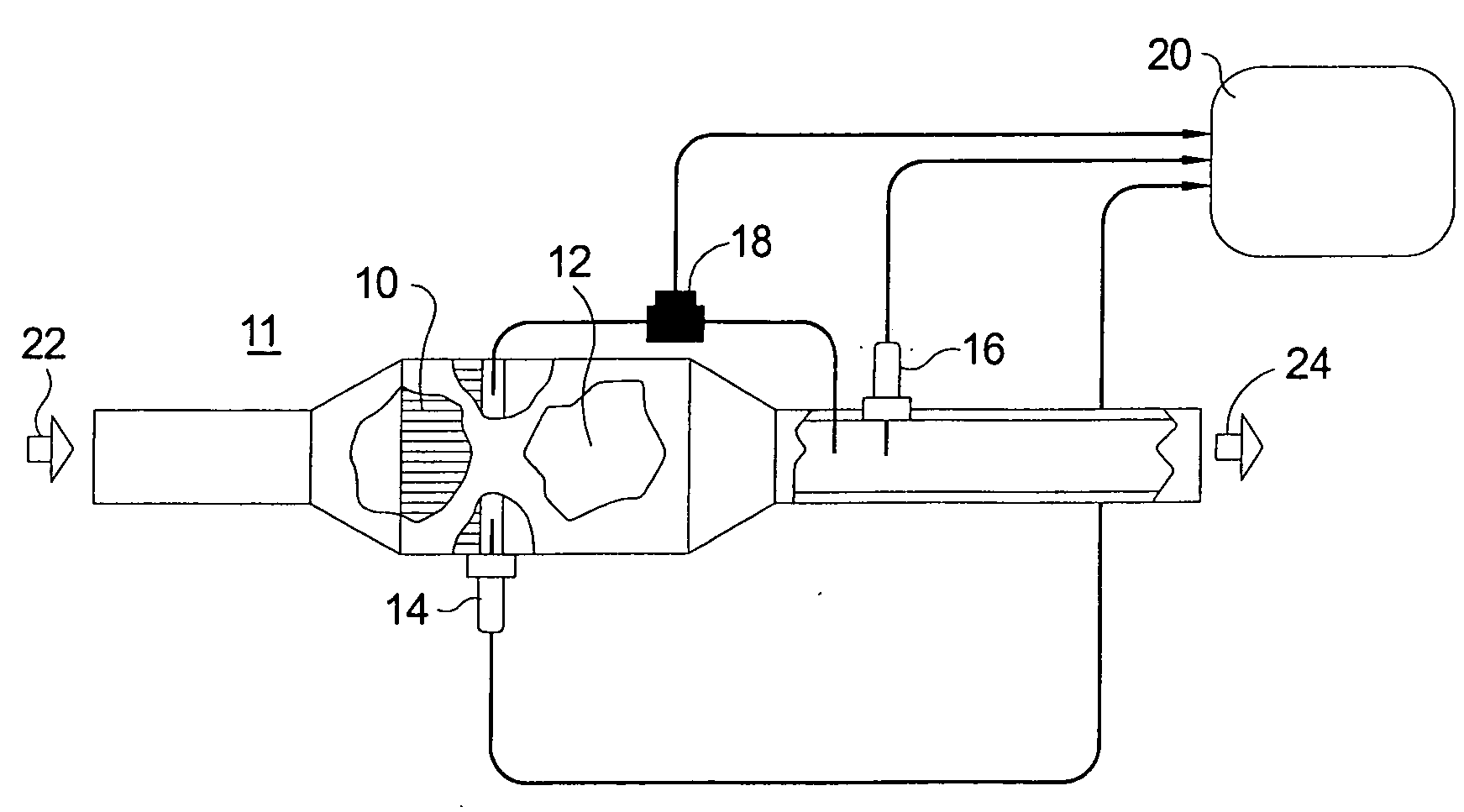
Figure 1 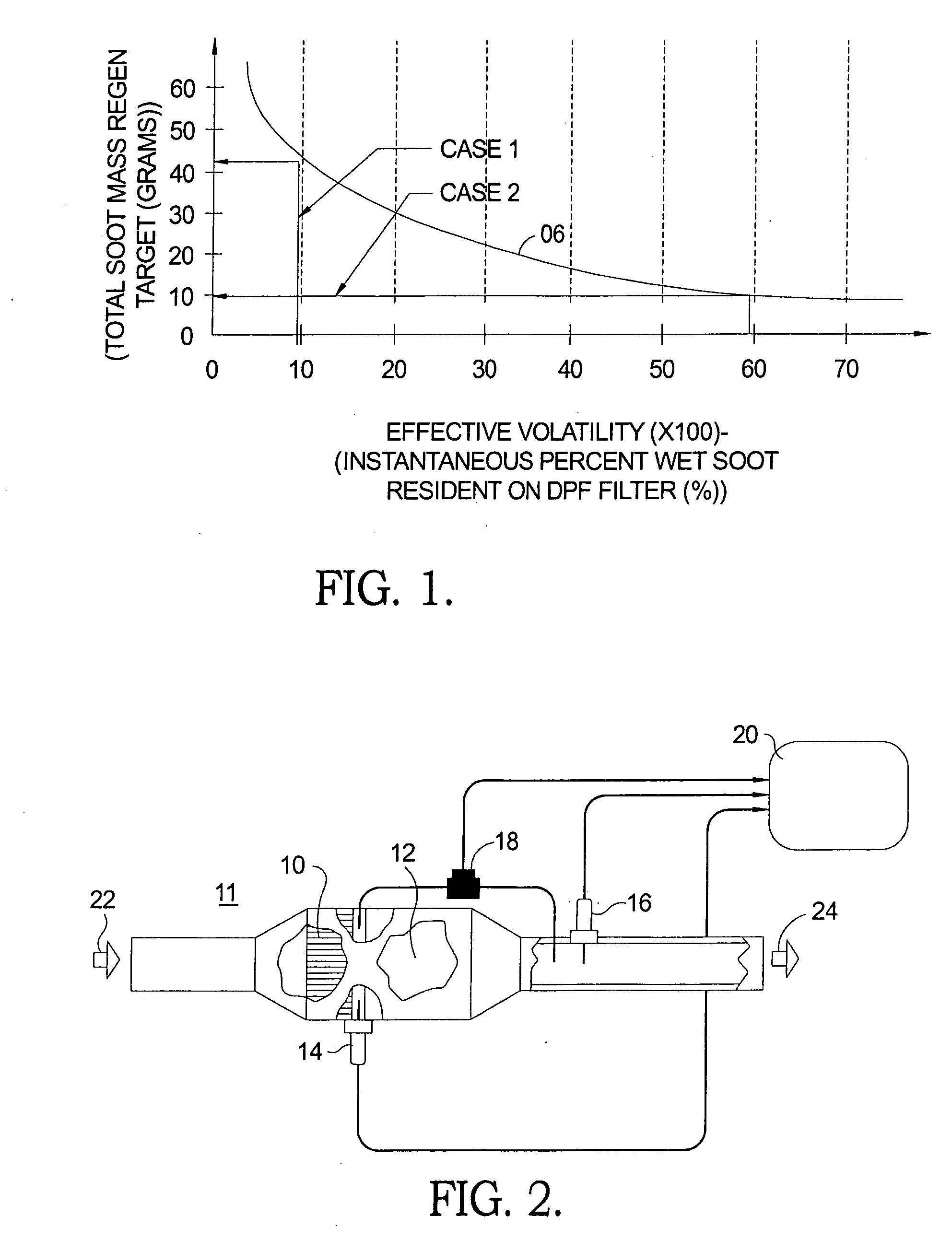
Figure 2 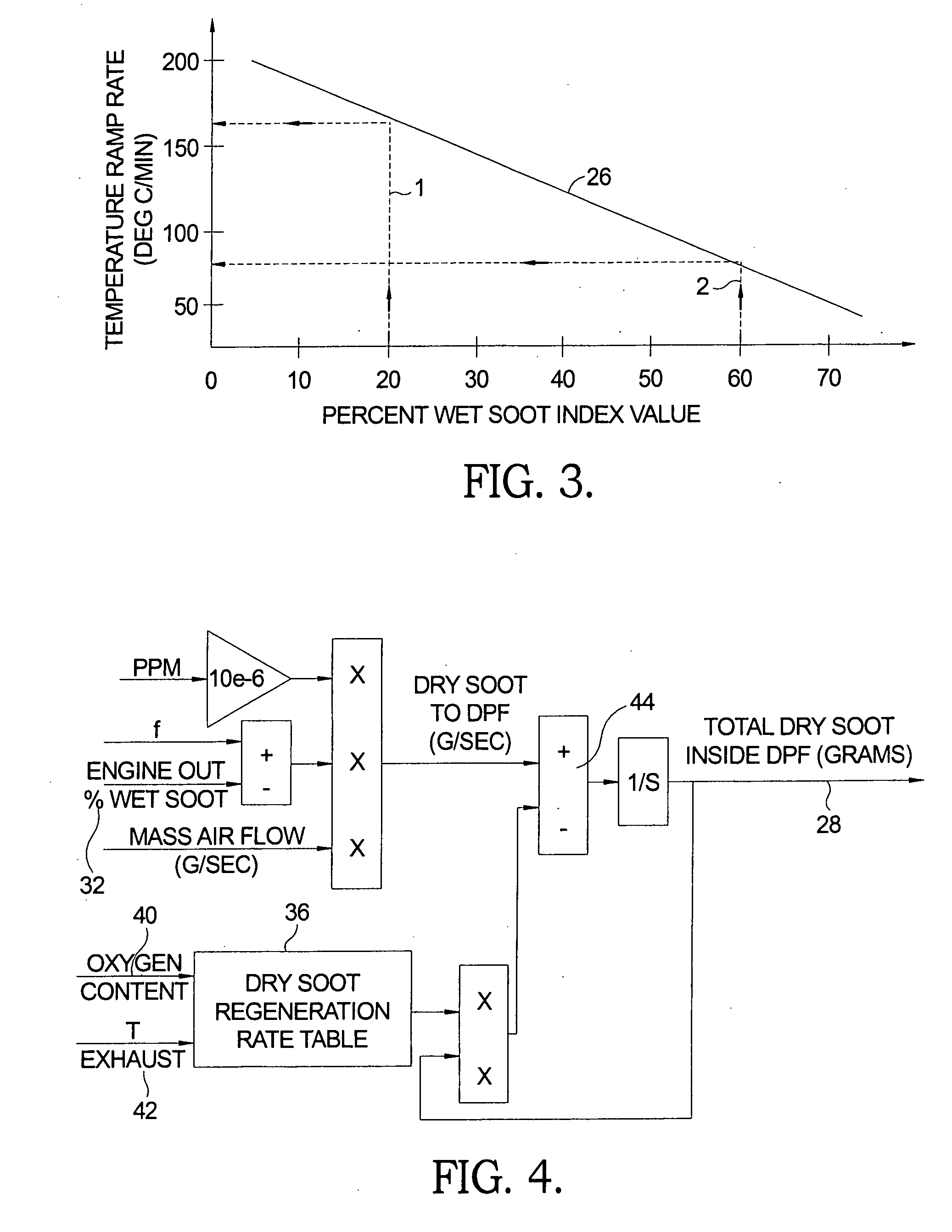
Figure 3
Abstract
Description
TECHNICAL FIELD
[0001] The present invention relates to exhaust emission control systems for internal combustion engines; more particularly, to methods for regenerating an exhaust gas particulates filter in a diesel engine exhaust system; and most particularly, to a method for optimizing timing of regeneration and for controlling temperature in a diesel particulates filter during regeneration thereof to prevent thermal damage to the filter.BACKGROUND OF THE INVENTION
[0002] Internal combustion engine exhaust emissions, and especially diesel engine exhaust emissions, have recently come under scrutiny with the advent of stricter regulations, both in the U.S. and abroad. While diesel engines are known to be more economical to run than spark-ignited engines, diesel engines inherently suffer disadvantages in the area of emissions. For example, in a diesel engine, fuel is injected during the compression stroke, as opposed to during the intake stroke in a spark-ignited engine. As a result, a d...
Examples
example a
[0045]At the initiation of regeneration, the fuel PID of FIG. 6 begins commanding the introduction of post combustion fuel injection to produce hydrocarbons required to heat up the DOC 10 (FIG. 2) to the current time step calculated regeneration Target Temperature 62 (FIG. 6), which is based on the existing DPF inlet temperature 68 (FIG. 7) at the time of initiation and is increased by the sum of all the products of the ensuing time steps times the temperature ramp rate depicted in FIG. 9, the Mode Line Index. From this process, it can be determined for Profile A that the engine operating condition is stable from regeneration initiation at time zero until time period 250 seconds (A1), increasing at a rate corresponding to slope “x” (Mode Line 5, ramp rate=0.90 degrees / sec). The regeneration Target Temperature used for PID control is now approximately 225 degrees. At this point, the operating conditions of the engine and remaining wet soot fraction are such that the control logic rec...