
Vascular occlusion drill
Patent Information
- Authority / Receiving Office
- US · United States
- Current Assignee / Owner
- Publication Date
- 2010-04-01
- Estimated Expiration
- Not applicable · inactive patent
Smart Images
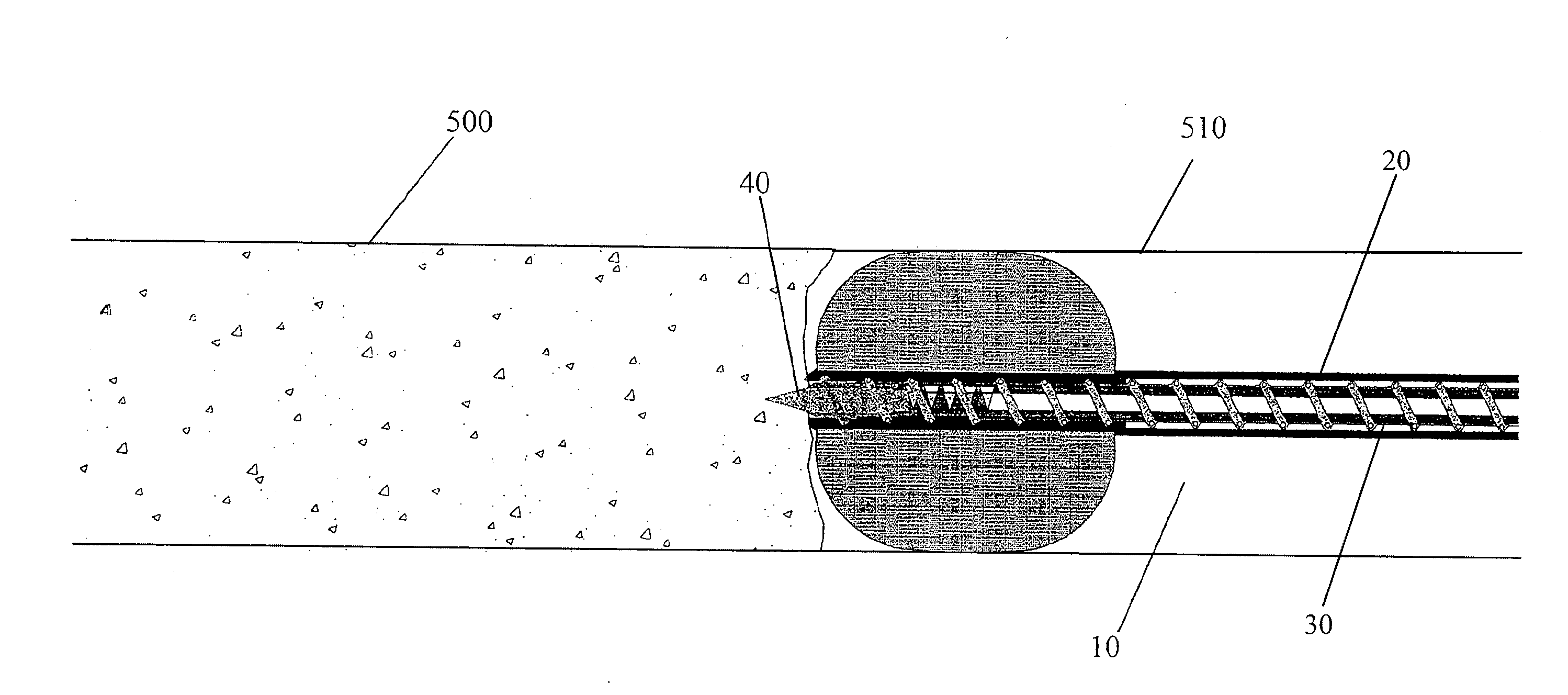
Figure 1 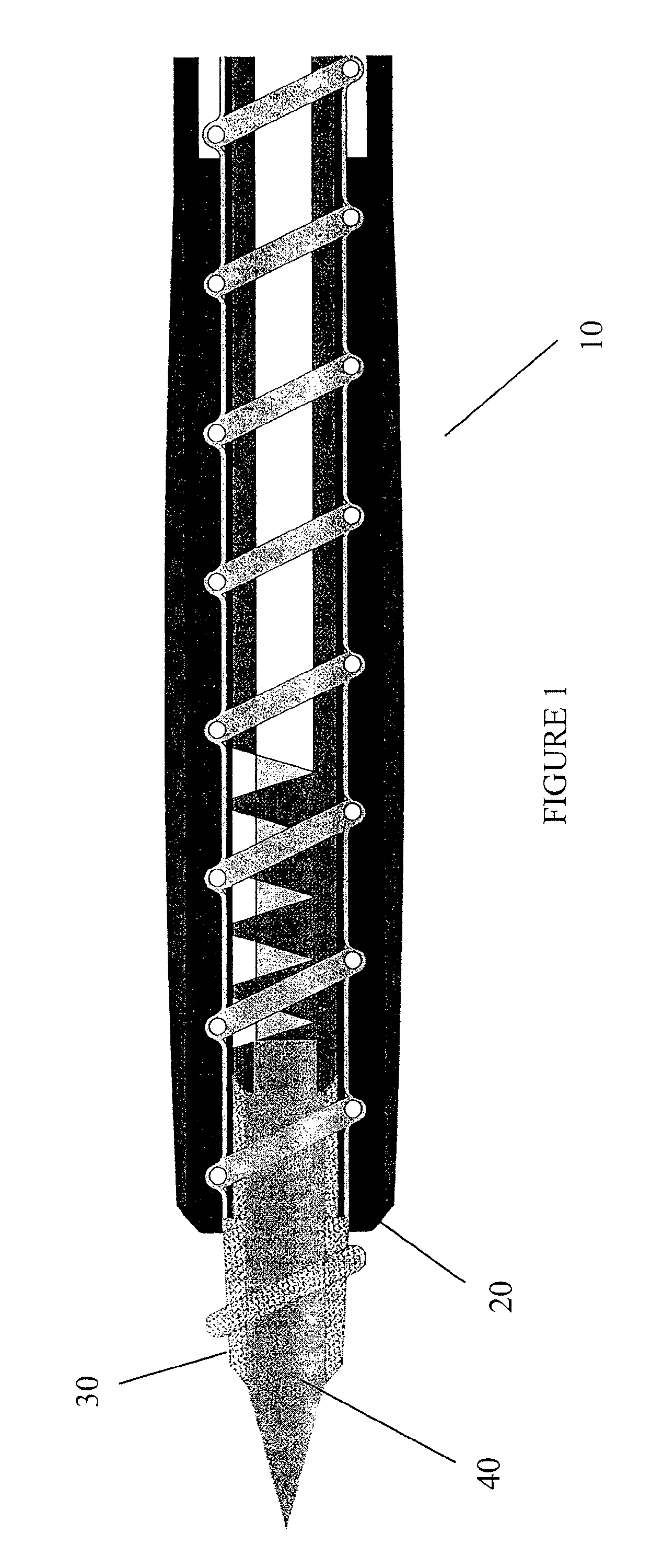
Figure 2 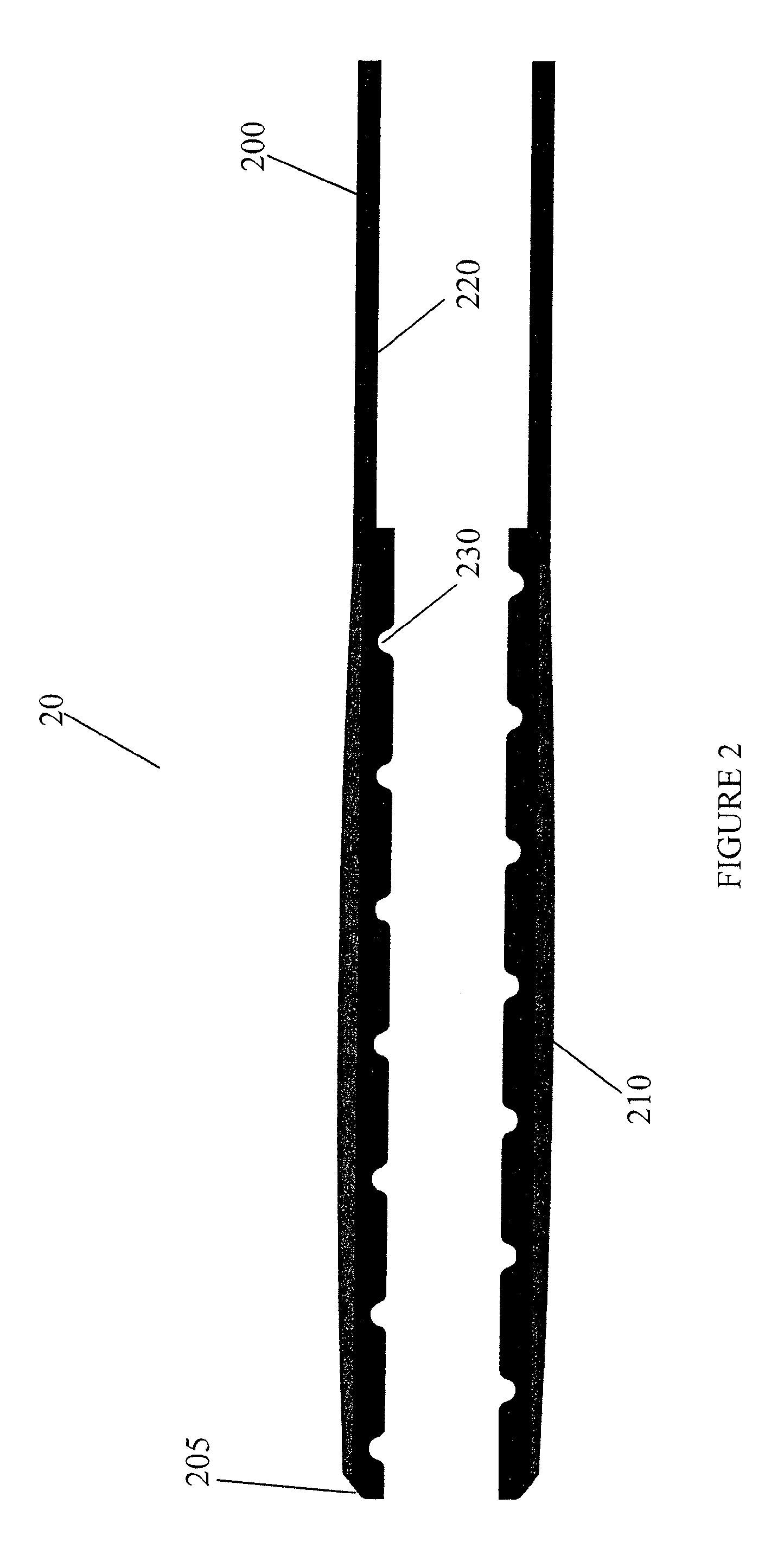
Figure 3
Abstract
Description
PRIORITY
[0001] This invention is a continuation-in-part of U.S. Patent Application No. 61 / 098,684, filed Sep. 19, 2008, the full disclosure of which are incorporated herein in its entirety.BACKGROUND OF THE INVENTION
[0002] 1. Field of the Invention
[0003] The products and methods of the present invention provide a drill for chronic total occlusions (CTO).
[0004] 2. Description of the Related Art
[0005] As the population ages, the prevalence of chronic occlusive disease of the lower extremity increases, significantly influencing lifestyle, morbidity, mortality and health related overall costs. In addition, multiple co-morbid conditions will increase the risks of open surgical procedures.
[0006] New endovascular devices have been introduced that are able to cross atherosclerotic obstructions with less morbidity and comparable results with traditional surgery.
[0007] However, a close review of the technologies, indications, restrictions and clinical results of all endovascular devices available in...
Examples
Embodiment Construction
[0120]This invention provides a device for minimally invasive procedures for the treatment of severe peripheral vascular disease, which has become an important problem for an increasing number of patients in our aging population, including all types of organized fibrous occlusions in blood vessels, particularly CTOs.
[0121]The device is catheter-based, cost effective and simple to operate, and can effectively treat all types of occluded vessels and various lesions in any location, with minimal morbidity. Having relatively few coordinating parts, the device is simple to manufacture via use of variable stiffness tubings and guidewires.
[0122]The device also enables identification of the variable patterns present in an occlusion, uncovering the true lesion in a long occlusive segment, reducing the need for stent implants.
[0123]The device is capable of creating a passage through the real chronic total occlusion, while avoiding arterial wall damage, and can transverse long and calcified oc...