
Computerized method for loading a load carrier with packages
a load carrier and computerized technology, applied in the direction of stacking articles, instruments, de-stacking articles, etc., can solve the problems of difficult calculation implementation and handling, over-building, and not very densely packed
Patent Information
- Authority / Receiving Office
- US · United States
- Current Assignee / Owner
- Publication Date
- 2010-09-30
Smart Images
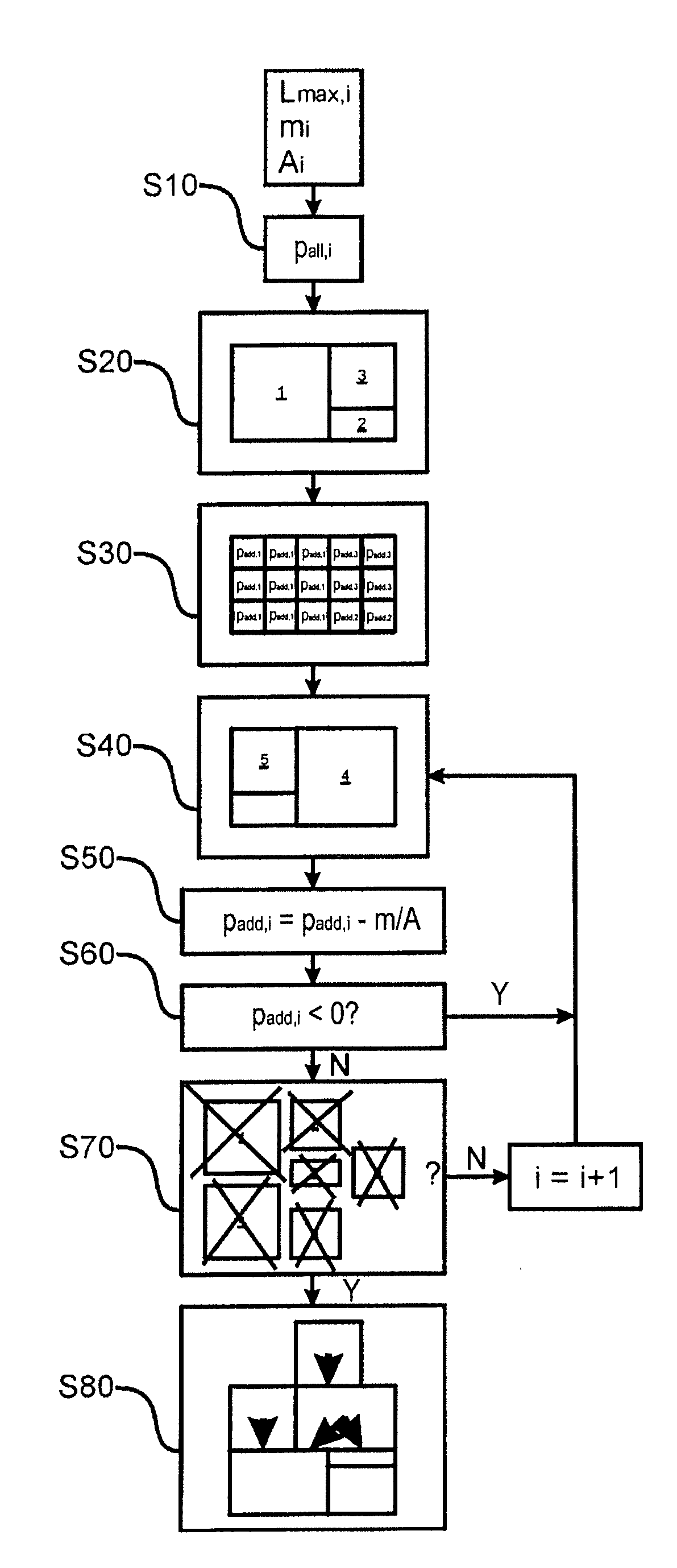
Figure 1 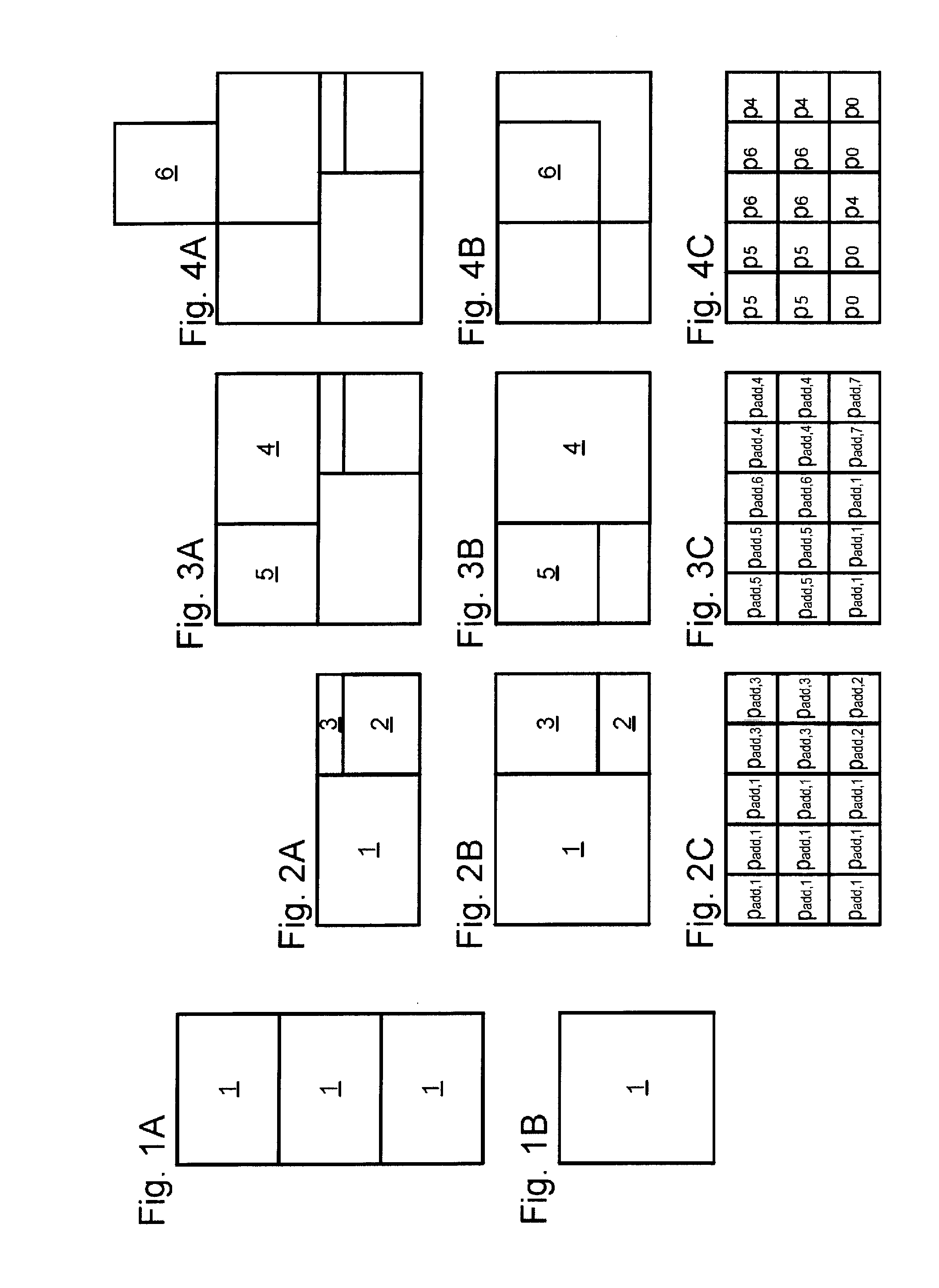
Figure 2 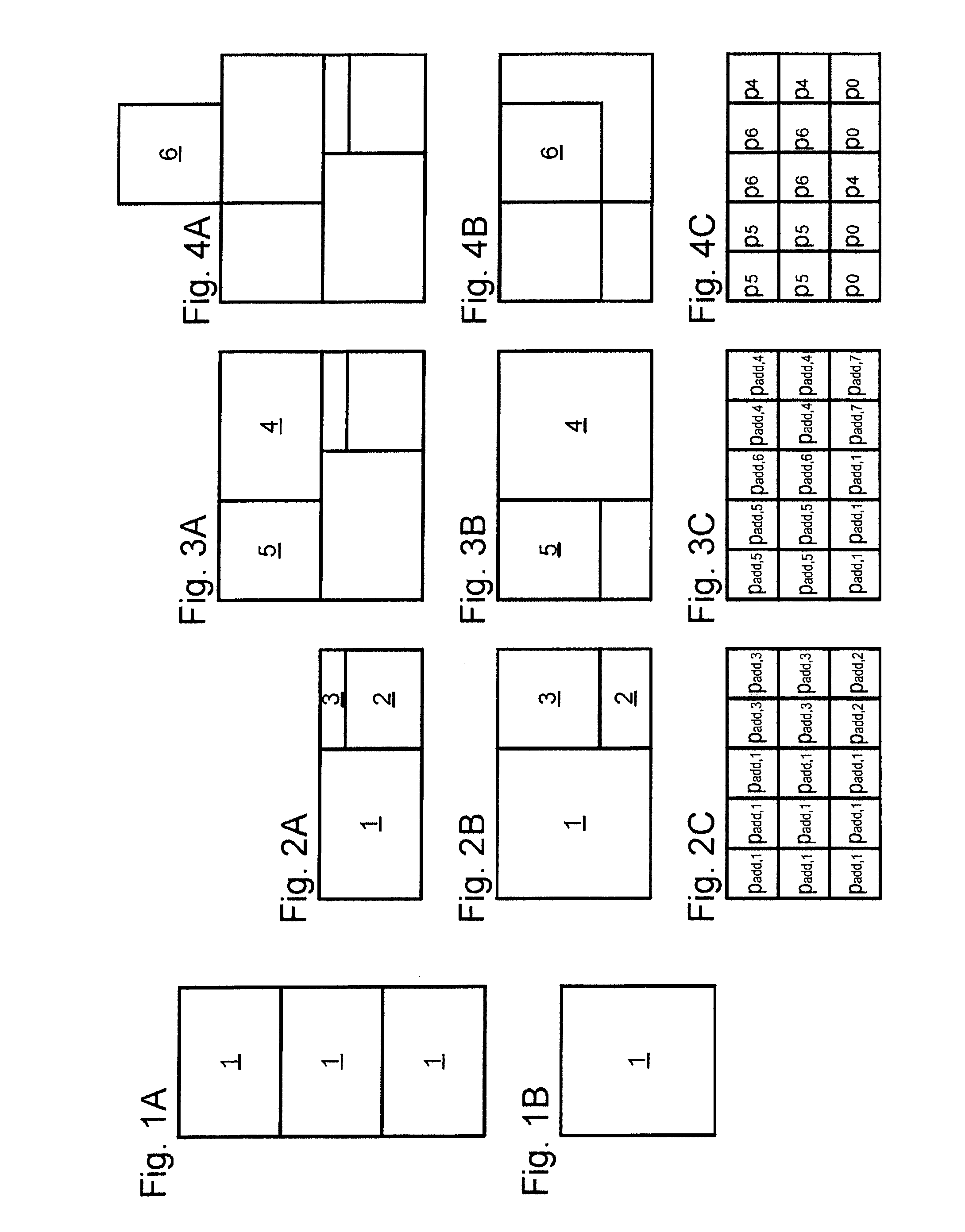
Figure 3
Abstract
Description
BACKGROUND OF THE INVENTION
[0001] 1. Field of the Invention
[0002] The present invention concerns a method and a device for planning the automated loading of a load carrier (in particular a pallet) with packages.
[0003] 2. Description of the Prior Art
[0004] For example, an automated planning of a palletizing or loading pattern (i.e. an arrangement of packages on a load carrier) is known from EP 1 211 203 B1. “Packages” as used herein designates individual goods or goods bundles in general, in particular those transported by manipulators.
[0005] DE 10 2007 001 263 A1 discloses a method for checking such palletizing patterns with regard to the stability of the package stack, i.e. the packages arranged on the load carrier, by constructing virtual package layers and determining characteristic values for these virtual package layers.
[0006] In order to avoid damaging packages and a collapse of the package stack, it is known in practice to classify the packages that are to be placed into ranking cl...
Examples
Embodiment Construction
[0029]FIG. 5 shows a flowchart of an iterative generation in a computer (processor) of an allowable package stack composed of 6 packages 1, . . . , 6 according to an embodiment of the present invention, under consideration of maximum allowable pressures on packages. Such a computer can be programmed to execute the steps shown in FIG. 5 by a non-transitory computer-readable medium that is loaded into (stored in) the computer, and that is encoded with programming instructions that cause the computer to execute the steps of FIG. 5.
[0030]First, the maximum allowable pressure pall n that may act on the packages to be consigned is estimated in a first Step S10.
[0031]For this purpose, for each package type a homogeneous pallet of this package type forms the base on which packages are palletized in the densest packing up to a then-maximum allowable stack height. FIGS. 1A, 1B show in side view and plan view from above such a pallet as an example in which identical packages 1 are stacked up t...