
Method for producing curable composition for imprints
a composition and composition technology, applied in the field of curable composition for imprints, can solve the problems of so-called magnetic field expansion, cost reduction and throughput increase, and difficult to satisfy all three of micropattern resolution, and achieve the effect of enhancing patternability and forming good patterns
Patent Information
- Authority / Receiving Office
- US · United States
- Patent Type
- Applications(United States)
- Current Assignee / Owner
- Publication Date
- 2012-03-29
Smart Images

Figure 1 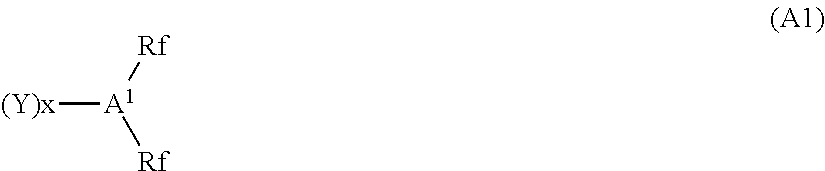
Figure 2 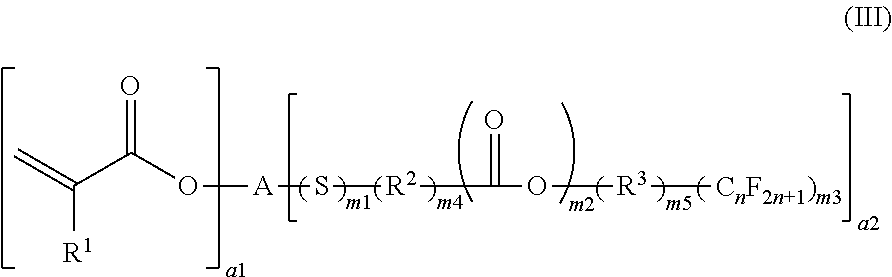
Figure 3
Abstract
Description
CROSS-REFERENCE TO RELATED APPLICATIONS
[0001] The present application claims the benefit of priority from Japanese Patent Application No. 215795 / 2010, filed on Sep. 27, 2010, and Japanese Patent Application No. 180798 / 2011, filed on Aug. 22, 2011, the contents of which are herein incorporated by reference in their entirety.TECHNICAL FILED
[0002] The present invention relates to a method for producing a curable composition for imprints, a patterning method, and a device for producing a curable composition for imprints.
[0003] More precisely, the invention relates to a method for producing a curable composition for patterning through photo-irradiation to give imprints, which is used in producing magnetic recording media such as semiconductor integrated circuits, flat screens, micro electromechanical systems (MEMS), sensor devices, optical discs, high-density memory discs, etc.; optical members such as gratings, relief holograms, etc.; optical films for production of nanodevices, optical de...
Examples
examples
[0248]The characteristics of the invention are described more concretely with reference to Production Examples and Examples given below. In the following Examples, the material used, its amount and the ratio, the details of the treatment and the treatment process may be suitably modified or changed not overstepping the scope of the invention. Accordingly, the invention should not be limitatively interpreted by the Examples mentioned below.
[0249]As the polymerizable monomer for use in the Example, the viscosity at 25° C. and the boiling point at 1 atom were shown in the following Table 1. The viscosity was measured at 25±0.2° C., using RE-80L-type relative viscosmeter manufactured by Toki Sangyo Co., Ltd.
(R1) Synthesis of Polymerizable Monomer, m-Xylylene Diacrylate
[0250]To 1000 ml of distillated water, 411 g of sodium hydroxide was added, and 781 g of acrylic acid was dropwisely added to the solution under ice. To the mixture, 107 g of benzyl tributylammonium chloride and 600 g of α...