
Treatment Of Penetrative Injury To The Brain
a brain injury and penetrative technology, applied in the field of brain injury treatment, can solve the problems of clinical trials of these drugs in stroke and traumatic brain injury, and achieve the effect of improving the safety and efficacy of the drug
Patent Information
- Authority / Receiving Office
- US · United States
- Patent Type
- Applications(United States)
- Current Assignee / Owner
- Publication Date
- 2013-10-10
Smart Images
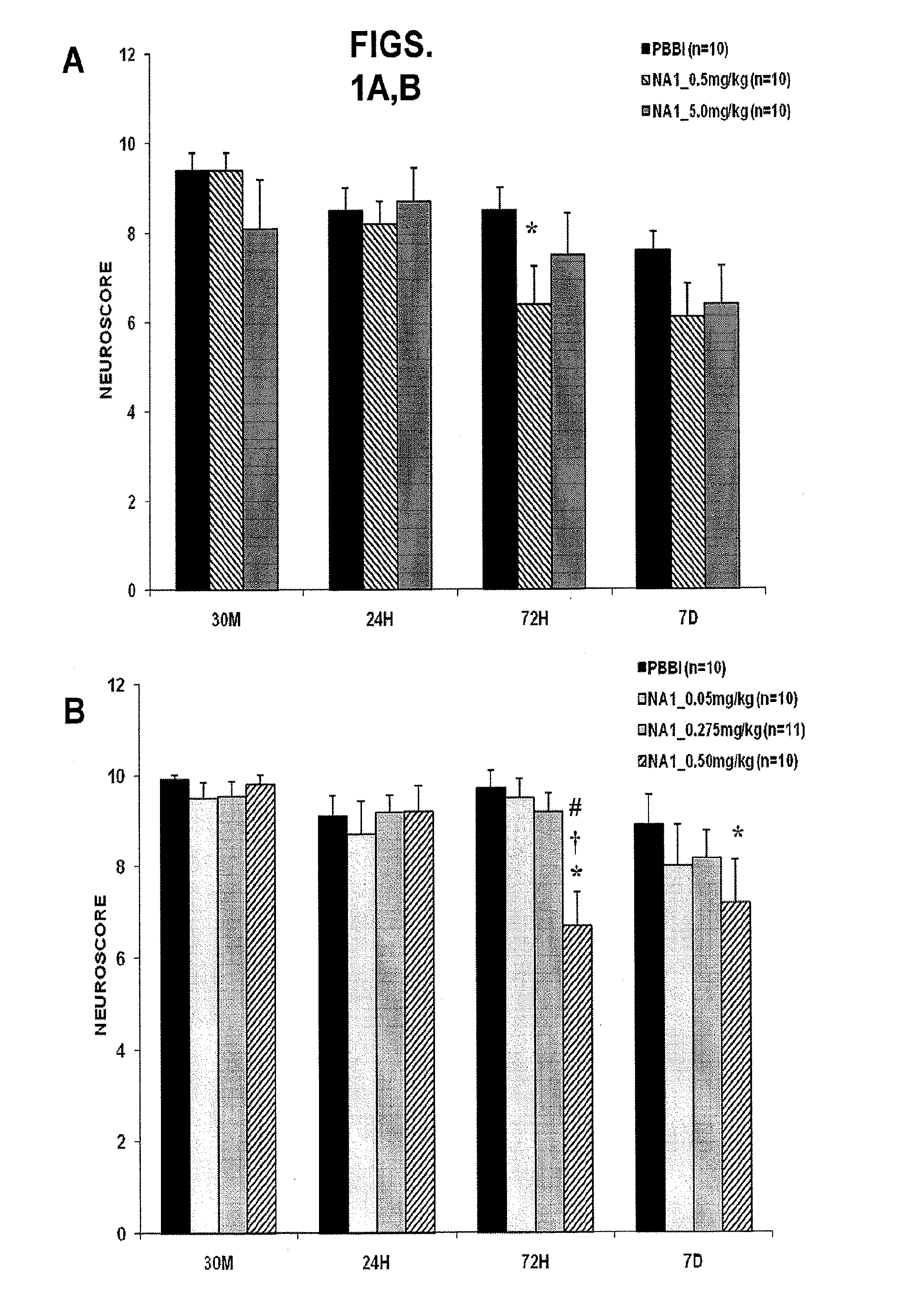
Figure 1 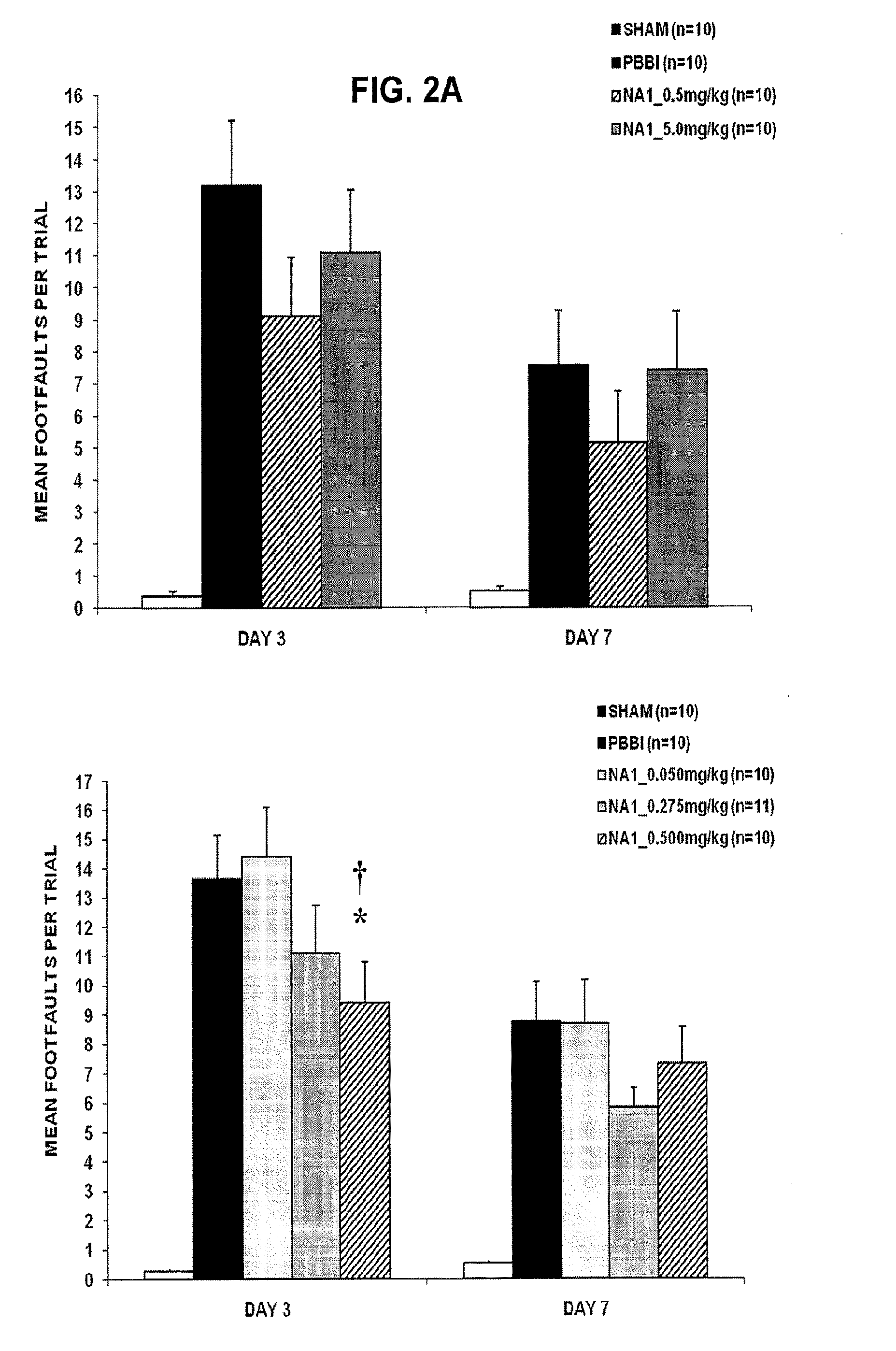
Figure 2 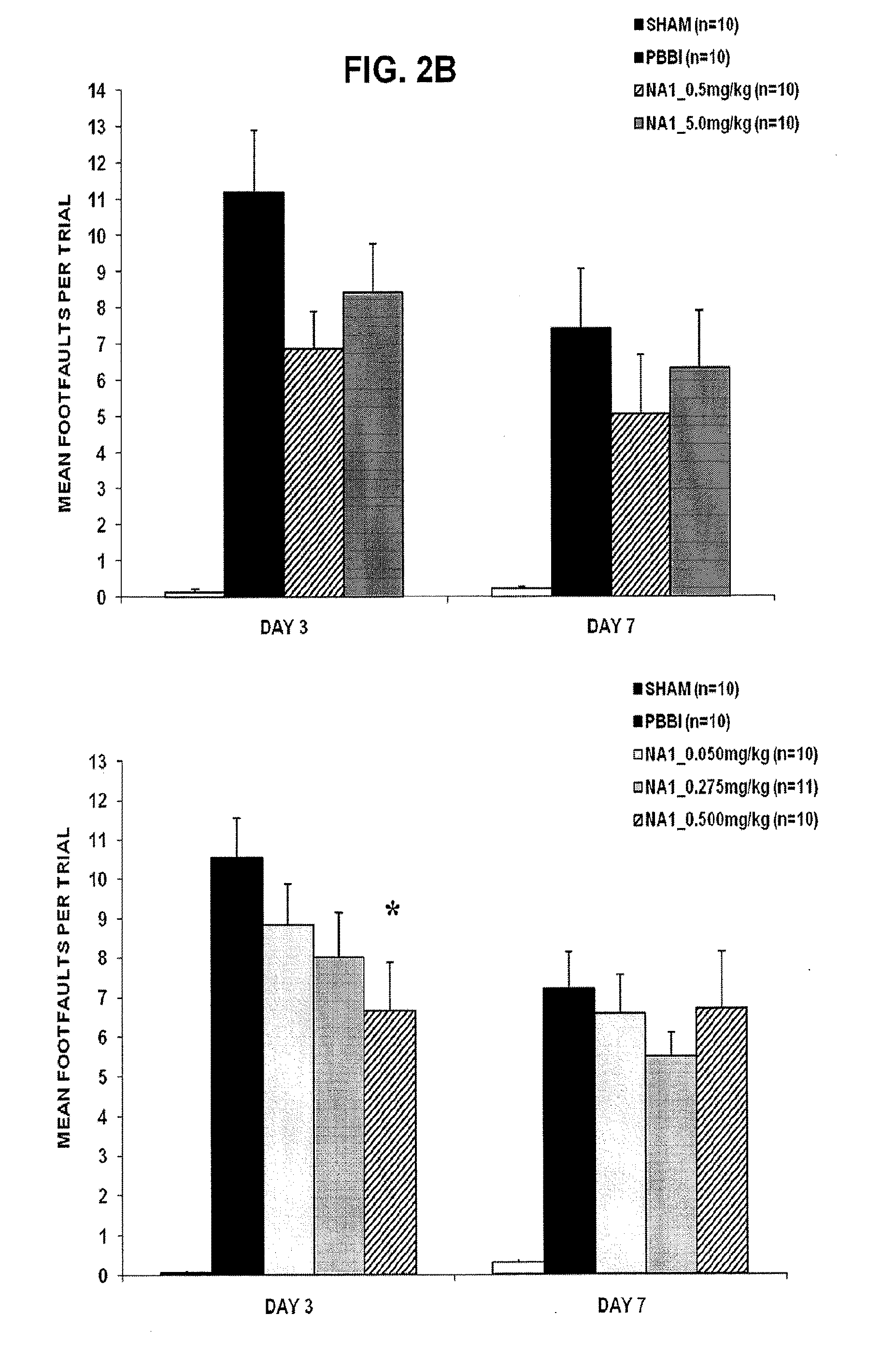
Figure 3
Abstract
Description
CROSS-REFERENCE TO RELATED APPLICATION
[0001] The present application is a nonprovisional of 61 / 373,204 filed Aug. 12, 2010, which is incorporated by reference in its entirety for all purposes.BACKGROUND OF THE INVENTION
[0002] Glutamate is the main excitatory neurotransmitter in the central nervous system (CNS) and mediates neurotransmission across most excitatory synapses. Three classes of glutamate-gated ion channel receptors (N-methyl-D-aspartate (NMDA), alpha-amino-3-hydroxy-5-methylisoxazole-4-propionic acid (AMPA) and Kainate) transduce the postsynaptic signal. Of these, NMDA receptors (NMDAR) are responsible for a significant portion of the excitotoxicity of glutamate. NMDA receptors are complex having an NR1 subunit and one or more NR2 subunits (2A, 2B, 2C or 2D) (see, e.g., McDain, C. and Caner, M. (1994) Physiol. Rev. 74:723-760), and less commonly, an NR3 subunit (Chatterton et al. (2002) Nature 415:793-798). The NR1 subunits have been shown to bind glycine, whereas NR2 subu...
Examples
examples
1. Rat Model of Penetrative Brain Injury
[0077]Male Sprague-Dawley rats (250-300 g) were subjected to a simulated ballistic wound to the right frontal hemisphere implemented by an inflatable penetrating probe. Three levels of injury severity were compared to control animals. Neurological and physiological outcome was assessed over a 3-day recovery period and brain tissue collected at 72 h for histopathological evaluation. Brain-injured regions included the ipsilateral frontal cortex and striatum with volumetric increases in intracranial hemorrhage (5-18 mm3) and lesion size (9-86 mm3) related to severity. Similarly, hemispheric swelling increased (3-14%) following PBI, associated with a significant rise in intracranial pressure. Astrogliosis was present in regions adjacent to the core-injury along with microglial and leukocyte infiltration. Injury remote to the lesion was observed in the cerebral peduncle that may have accounted, in part, for observed neurological deficits. Neurologi...