
Differentiated secondary index maintenance in log structured nosql data stores
a technology of structured nosql and secondary indexes, applied in the field of data storage, can solve the problems of secondary indexes, lack of basic database functionality, and has become a stumbling factor, and achieve the effect of accelerating point queries, avoiding broadcast queries, and being more robus
Patent Information
- Authority / Receiving Office
- US · United States
- Patent Type
- Applications(United States)
- Current Assignee / Owner
- Publication Date
- 2014-09-18
- Estimated Expiration
- Not applicable · inactive patent
Smart Images
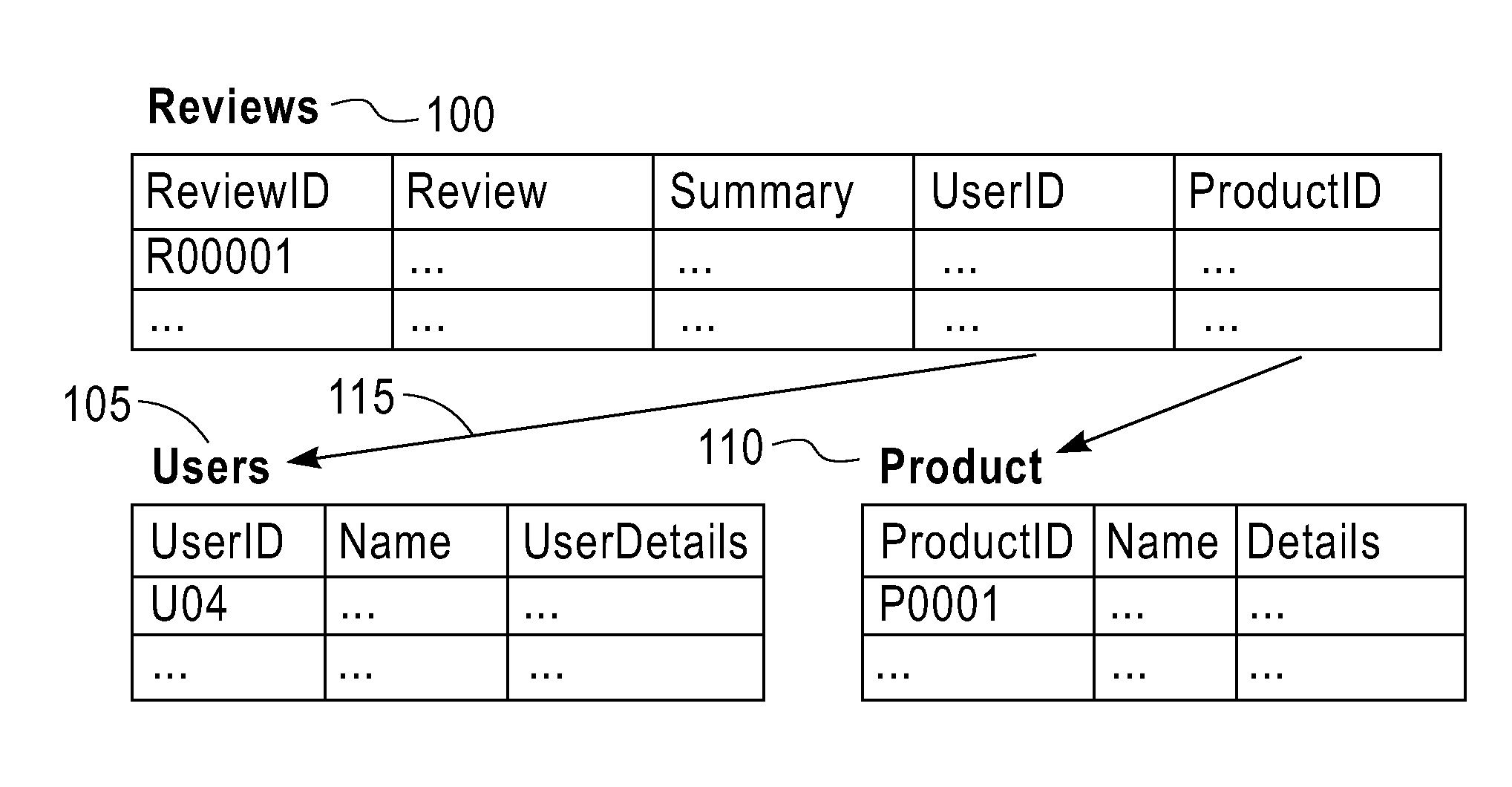
Figure 1 
Figure 2 
Figure 3
Abstract
Description
BACKGROUND
[0001] This disclosure relates generally to data storage, and particularly to a multi-node data store.BACKGROUND OF THE INVENTION
[0002] A data store refers to a data repository that uses a database, e.g., IBM® DB2®, etc., to manage data stored in the data repository. A data store may include a plurality of computing nodes, each of which uses a database management system to management data stored in a corresponding computing node. In recent years, scale-out data stores, referred as NoSQL data stores, are gaining attraction to support high-traffic Internet applications, e.g., yelp.com. A NoSQL data store is a class of database management systems that do not use a relational database model. A category of NoSQL data stores includes Log Structured Merge (LSM) Tree which is optimized for writing of data and MapReduce for scanning of data but is not optimized for point queries, e.g., a query directed to a specific datum. Examples of NoSQL data stores include, but are not limited to...
Examples
Embodiment Construction
[0018]Astonishing growth and diversity in data have profoundly affected a way that data have been stored and served. Monolithic relational databases that are good at processing structured data and excel in ACID (atomicity, consistency, isolation, durability) cannot handle high-traffic Internet applications in an elastic manner. This is because relational databases put restrictions on data normalization and consistency, and also the relational databases are not able to perform data sharing in an automatic way so that the relational databases are difficult to scale out. To address challenges in flexible schema and elasticity, data stores dealing with columns, key / value pairs, documents and graphs have emerged and collectively identified as NoSQL data stores. A NoSQL data store, e.g., HBase, that supports a convergence of transactional and analytics workloads is able to offer balanced “read” and “write” performance.
[0019]Consider a web application that manages social reviews (e.g., yel...