
Additive for an electrolyte of a lithium-based secondary battery cell
a lithium-based secondary battery cell and additive technology, which is applied in the manufacture of final products, batteries, electrochemical generators, etc., can solve the problems of no longer available additives, negative effects of electrolyte additives, etc., and achieve the suppression of aluminum corrosion, increase in oxygen solubility, and increase conductivity
Patent Information
- Authority / Receiving Office
- US · United States
- Patent Type
- Applications(United States)
- Current Assignee / Owner
- Publication Date
- 2015-04-02
- Estimated Expiration
- Not applicable · inactive patent
Smart Images
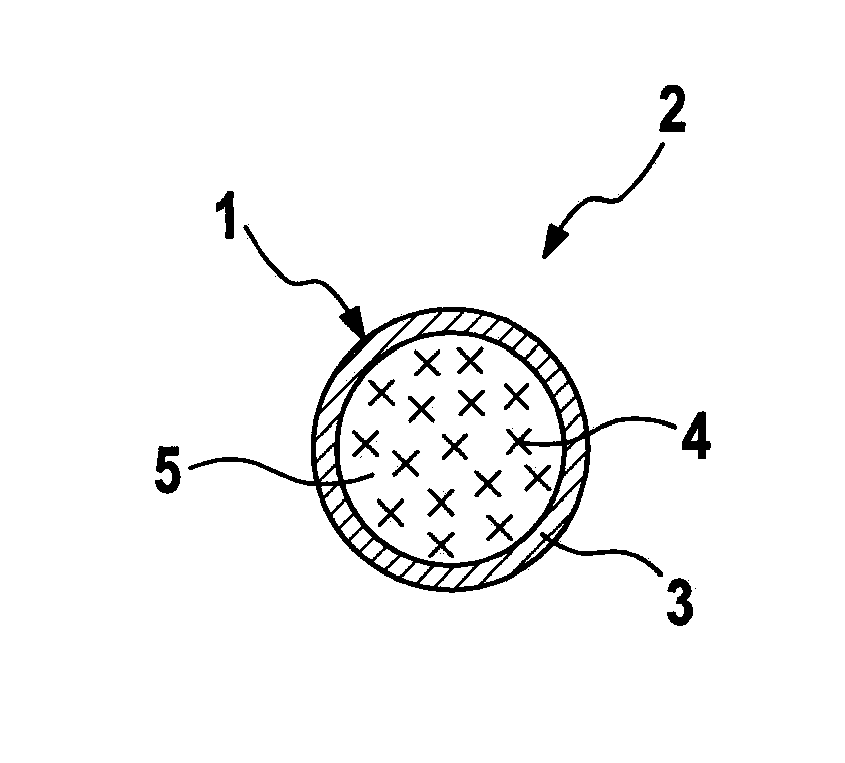
Figure 1 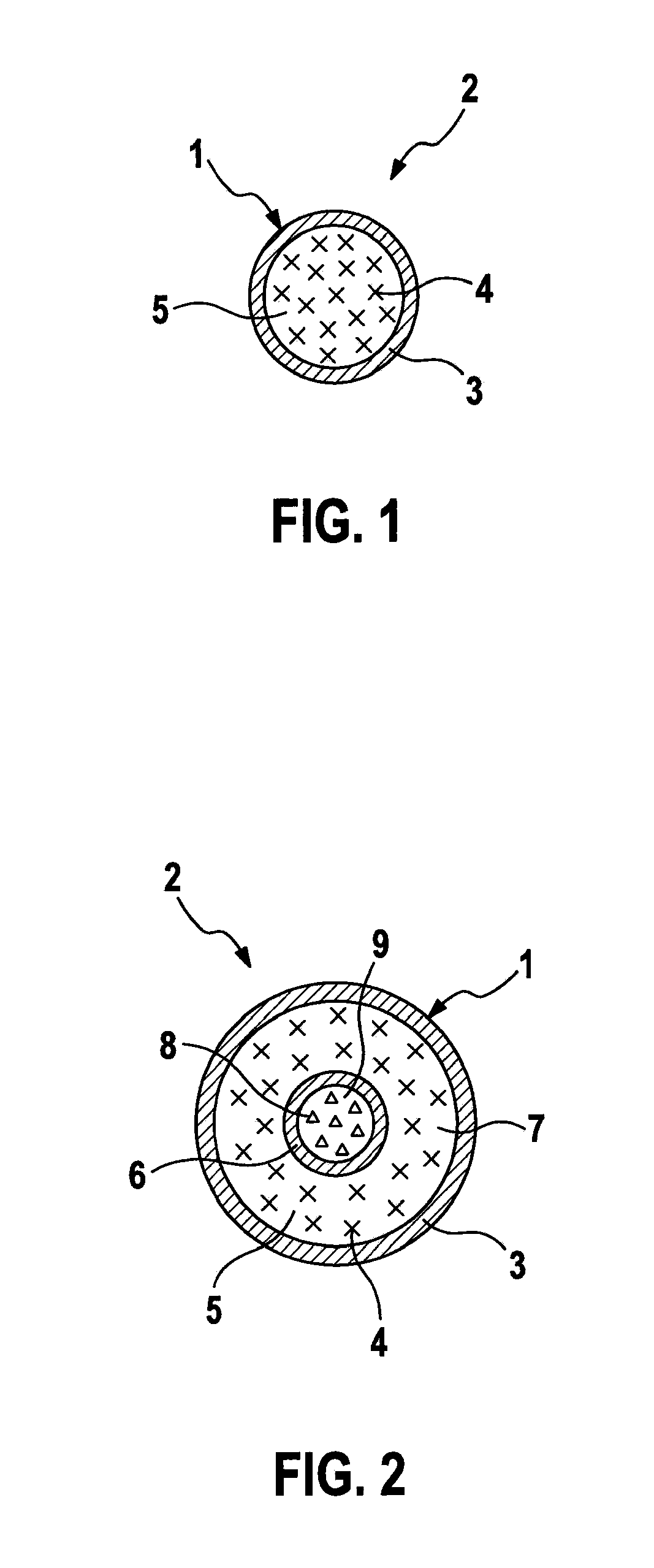
Figure 2
Abstract
Description
FIELD OF THE INVENTION
[0001] Lithium ion secondary battery cells are very promising candidates for use in electric vehicles because of their high specific energy density. Even higher energy densities are achieved, for example, by lithium-metal secondary battery cells, for example, lithium-sulfur and lithium-air secondary battery cells.BACKGROUND INFORMATION
[0002] High demands are made of all types of secondary battery cells with respect to their cycle stability and safety. A wide variety of additives, for example, SEI-forming agents (SEI=solid electrolyte interface) or overload protection substances are therefore added to the electrolyte of secondary battery cells in lithium-ion secondary battery cells. Additives such as LiNO3 are also added to the electrolyte in lithium-metal secondary battery cells, for example, lithium-sulfur secondary battery cells.
[0003] According to the present related art, additives are added to the electrolyte in a certain quantity during the manufacture of a s...
Examples
Embodiment Construction
[0032]FIG. 1 shows a schematic diagram of one exemplary embodiment of an additive unit 1 for an additive 2 according to the present invention for an electrolyte (not shown) of a lithium-based secondary battery cell (not shown). Additive unit 1 includes a closed capsule 3 which is filled with a fluid 5 containing at least one additive 4. As an alternative, instead of being filled with fluid 5 containing additive 4, capsule 3 may also be filled with a liquid additive 4 or with an additive 4 in the form of a solid. Capsule 3 is designed in coordination with additive 4, in such a way that additive 4 may be released into the environment around capsule 3 by diffusion out of capsule 3 and thus into an electrolyte around capsule 3.
[0033]FIG. 2 shows a schematic diagram of a cross section through another exemplary embodiment of an additive unit 1 for an additive 2 according to the present invention. In contrast with the exemplary embodiment shown in FIG. 1, an internal capsule 6 is situated ...