
Polyisobutylene-based polyurethanes containing organically modified montmorillonite
a technology of organically modified montmorillonite and polyisobutylene, which is applied in the field of polyurethane prepolymers and polyurethanes, can solve the problems of incompatibility between the use of such polymers, the ionic attachment between the modifier and the mmt will diminish, and the proposition is flawed, so as to improve the tensile strength, elongation and/or toughness, and improve mechanical properties
Patent Information
- Authority / Receiving Office
- US · United States
- Patent Type
- Applications(United States)
- Current Assignee / Owner
- Publication Date
- 2015-07-09
Smart Images
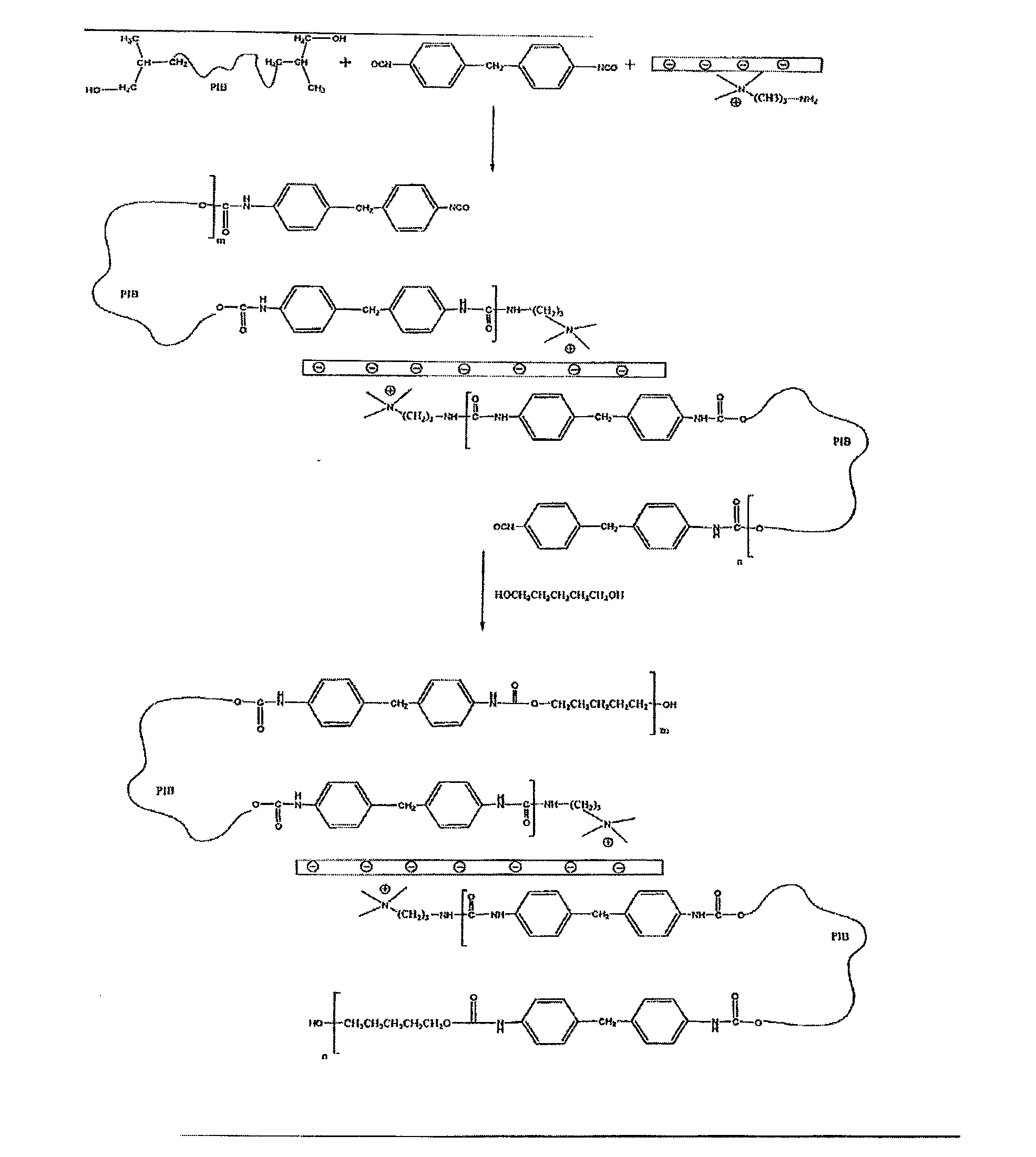
Figure 1 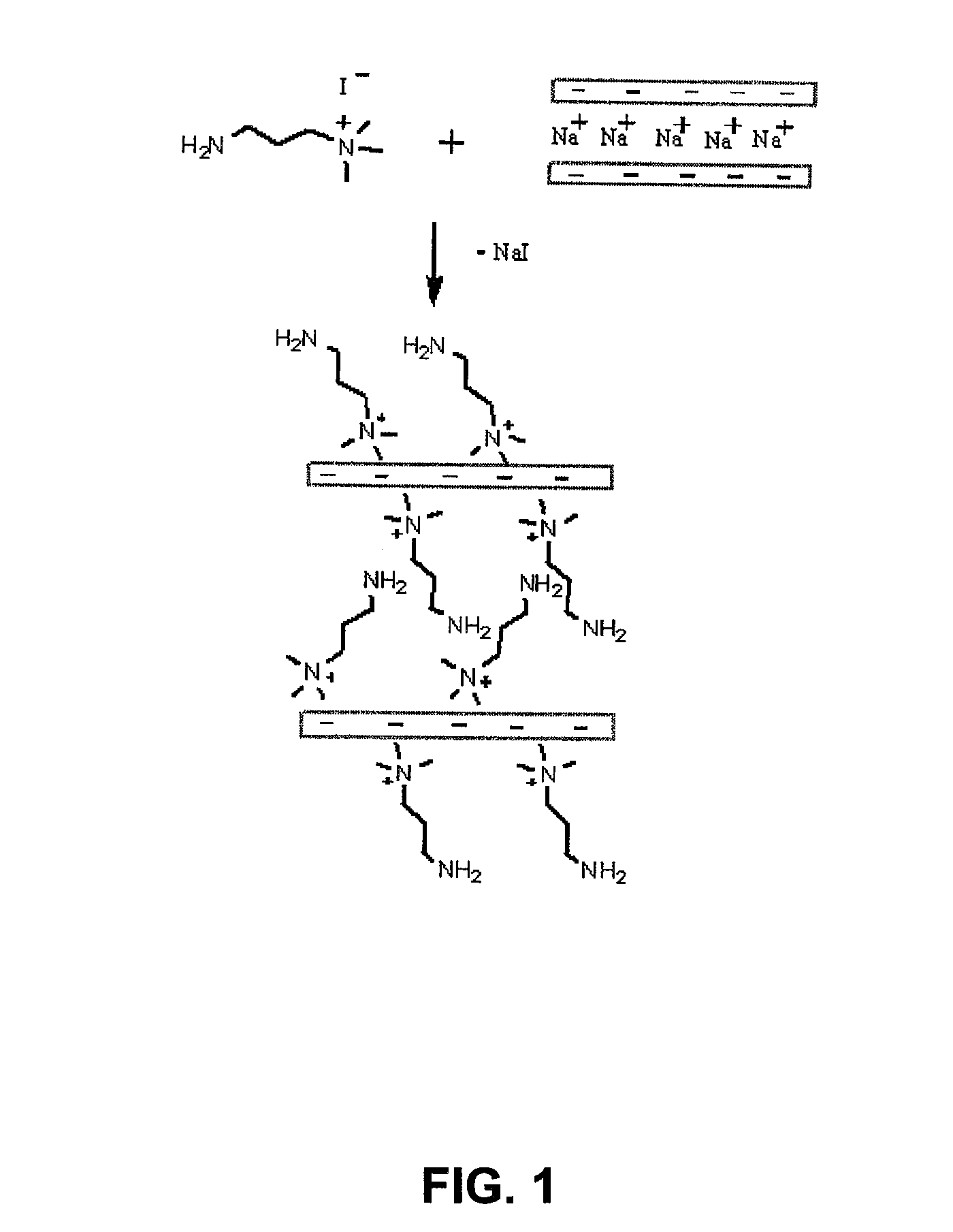
Figure 2 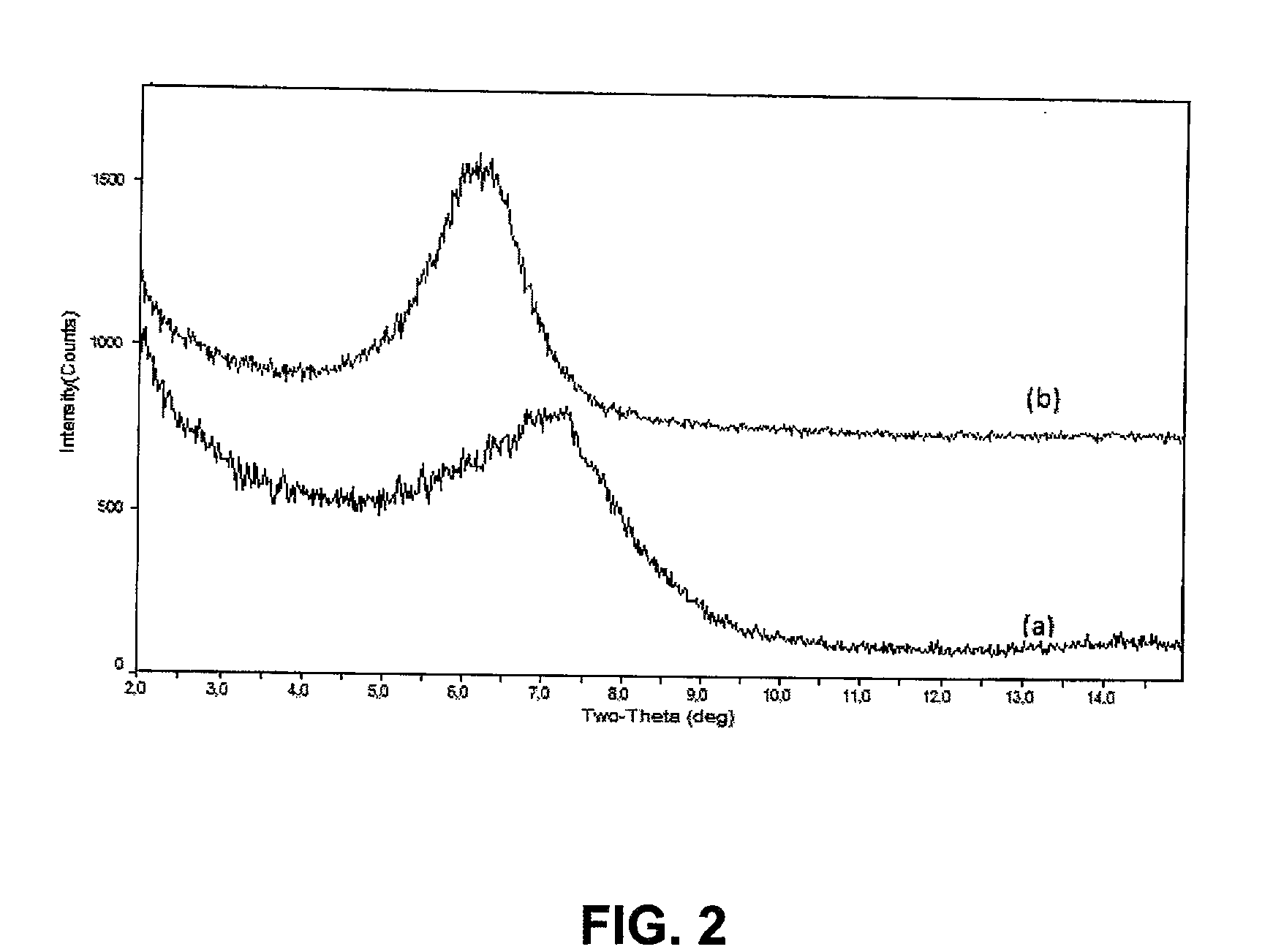
Figure 3
Abstract
Description
RELATED APPLICATION DATA
[0001] This patent application claims the benefit of U.S. Provisional Patent Application No. 61 / 674,593, filed on Jul. 23, 2012, entitled “Minute Amounts of Organically-Modified Montmorillonite Improves the Properties of PIB-Based Polyurethanes” the entirety of which is hereby incorporated by reference herein.FIELD OF THE INVENTION
[0002] The present invention generally relates to novel polyurethane prepolymers and polyurethanes. More particularly, the polyurethane prepolymers and polyurethanes include a very small amount, i.e., less than 1 weight percent based upon the total polymer composition, of a layered clay exfoliated with organic quaternary ammonium salts having alkyl substituents, wherein at least one of the alkyl substituents carries an —NH2 group. Such a layered clay may be organically-modified montmorillonite, among others.BACKGROUND OF THE INVENTION
[0003] It is known that some properties of many kinds of polymers (e.g., various rubbers, polyesters, p...
Examples
Embodiment Construction
[0032]The present invention generally relates to the production of polyurethanes or polyurethane prepolymers containing very small amounts of organically-modified layered clays, such as organically-modified montmorillonite (OmMMT), to produce optically clear polyurethane films with greatly improved properties relative to those of unadulterated virgin polyurethane. Such polyurethanes are believed to be particularly suited for use in medical devices.
[0033]In one embodiment, polyurethane prepolymers may be made from the reaction product of a diol and a stoichiometric excess of diisocyanate, together with less than 1 weight percent, based upon the total polymer composition, of a layered clay exfoliated with organic quaternary ammonium salts having alkyl substituents, wherein at least one of the alkyl substituents carries an —NH2 group. Any diol known and used in the art for the production of polyurethane may be used. Examples of such diols include PIB-based diols, such as HO-PIB-OH, or ...