

Machine Translation System and Method
a machine translation and computer technology, applied in the field of machine or computer based translation systems and methods, can solve the problems of unambiguous identification of all parts of speech and dependencies between words, and achieve the effect of easy translation into any other field
Patent Information
- Authority / Receiving Office
- US · United States
- Patent Type
- Applications(United States)
- Current Assignee / Owner
- Publication Date
- 2015-12-10
- Estimated Expiration
- Not applicable · inactive patent
Smart Images
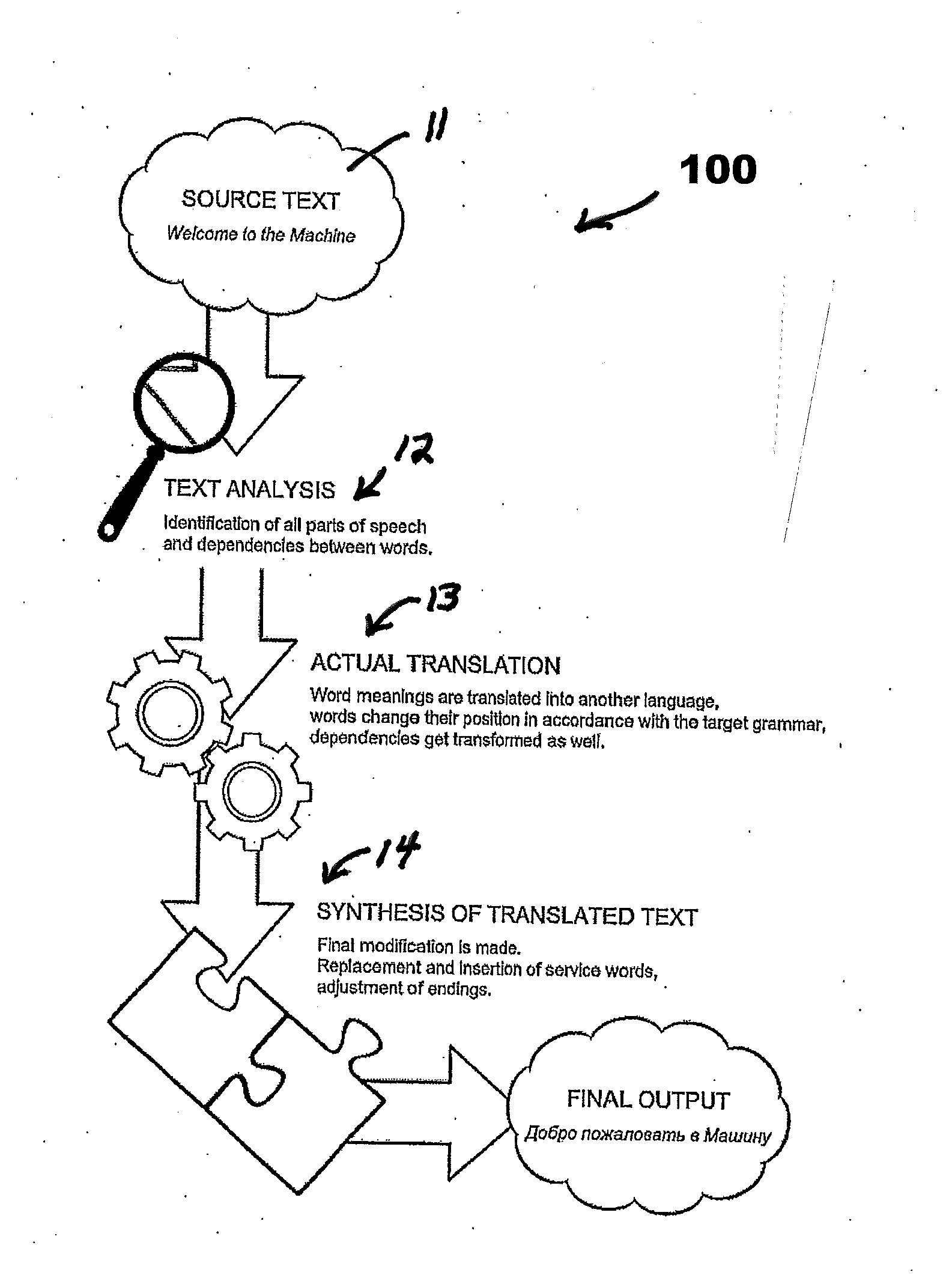
Figure 1 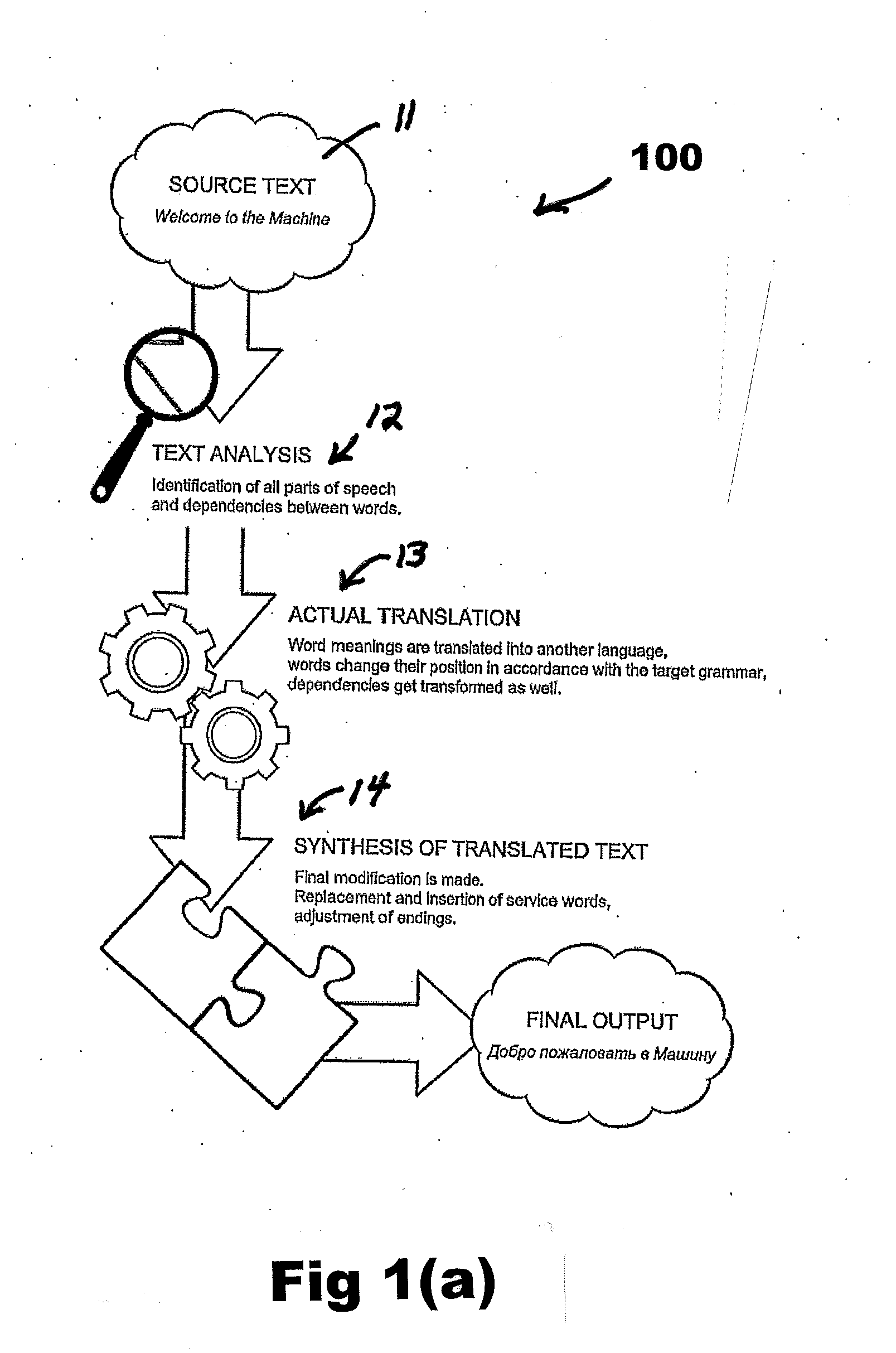
Figure 2 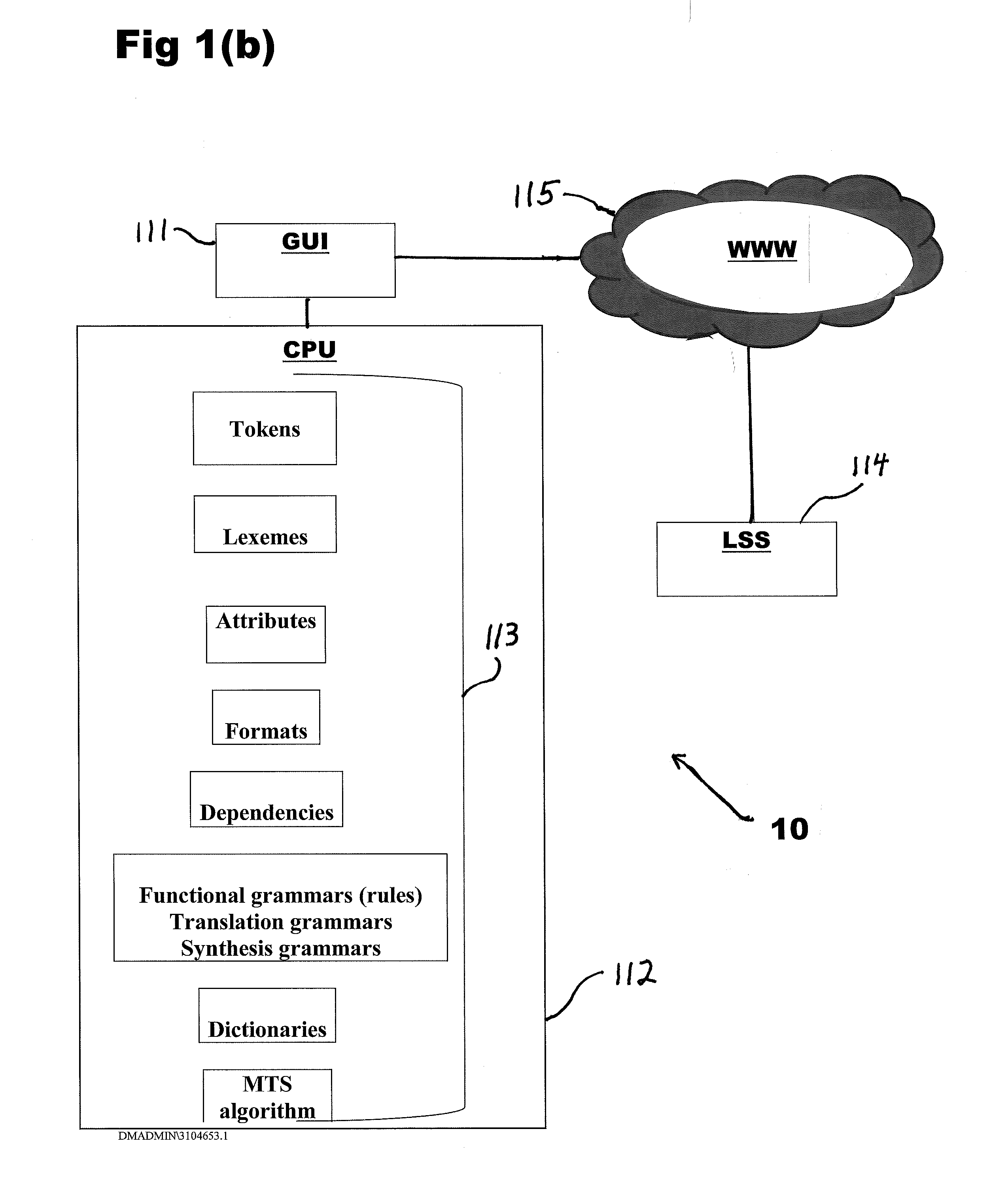
Figure 3
Abstract
Description
[0001] The present application is a non-provisional application, and claims the priority benefit of U.S. Provisional Application No. 61 / 971764 filed on Mar. 28, 2014, the contents of which is hereby incorporated by reference in its entirety.FIELD OF THE INVENTION
[0002] The present invention relates generally to the field of machine or computer based translation systems and methods, and more particularly to a machine or computer translation system and method that performs translation of written text from one natural language into another using a modular organization of languages, together with a transit process of translation. This provides creation of a multilingual system with the ability to translate in all directions between all integrated languages. As used herein, “translation” is intended to mean a conversion of the meaning of an expression or word in one language to the same meaning in another language.BACKGROUND
[0003] Various types and configurations of computer ...
Examples
example 2
[0326] This is an example of a rule with an operator for check / modify. Assume a grammar of SIMPL. For our purposes it only contains one rule: / X V.
[0327]Any token may occupy the first position, but in the second position only a word that checks out as a verb (V for verb). In light of this if the word in the second position has several different possible parts of speech, including verb, the verb form will be chosen. All other parts of speech will be ignored.
[0328]Thus, the grammar SIMPL works in a step-by-step example using the sentence—“I go.”
[0329]The word ‘go’ can be two parts of speech- verb and noun. After our rule is applied, only the verb form remains. The input sentence is written like this: .l go.
[0330]Grammar SIMPL is used for the first token (.).The first token is the parameter for the grammar, and has saved ‘I’ in the flow list:
[0331]The first operator of the rule IX is applied to this element and of course returns TRUE. Further on the second operator V comes into play. T...