
Heating oximeter
a technology of oximeter and oximeter body, which is applied in the field of heating oximeter, can solve the problems of complex configuration of sensor unit, difficulty in continuous measurement during activity, and risk of increasing cost, and achieve the effect of improving the measurement accuracy of oxygen saturation, resistance value, and accurate measuremen
Patent Information
- Authority / Receiving Office
- US · United States
- Patent Type
- Applications(United States)
- Current Assignee / Owner
- Publication Date
- 2018-07-19
Smart Images
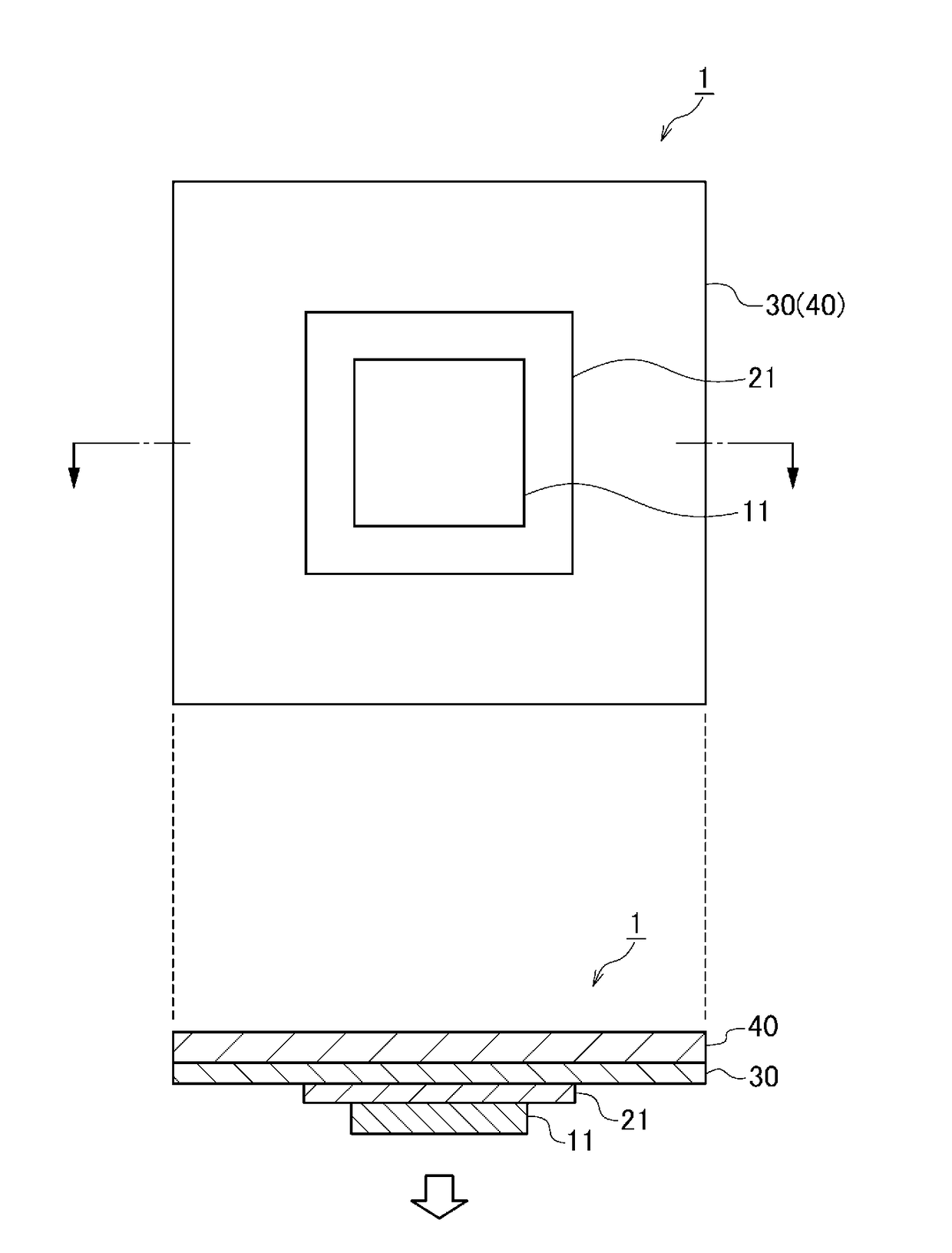
Figure 1 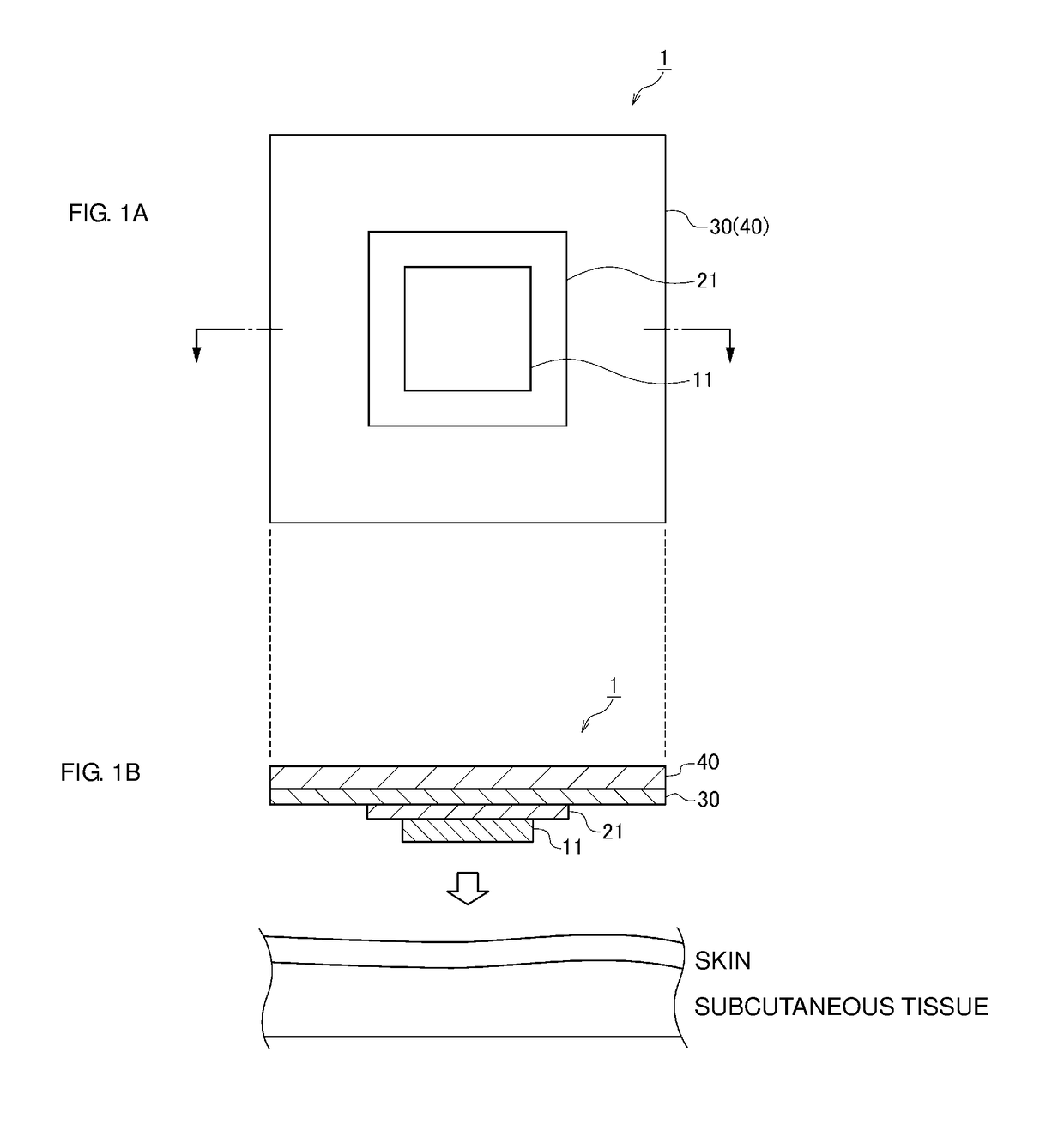
Figure 2 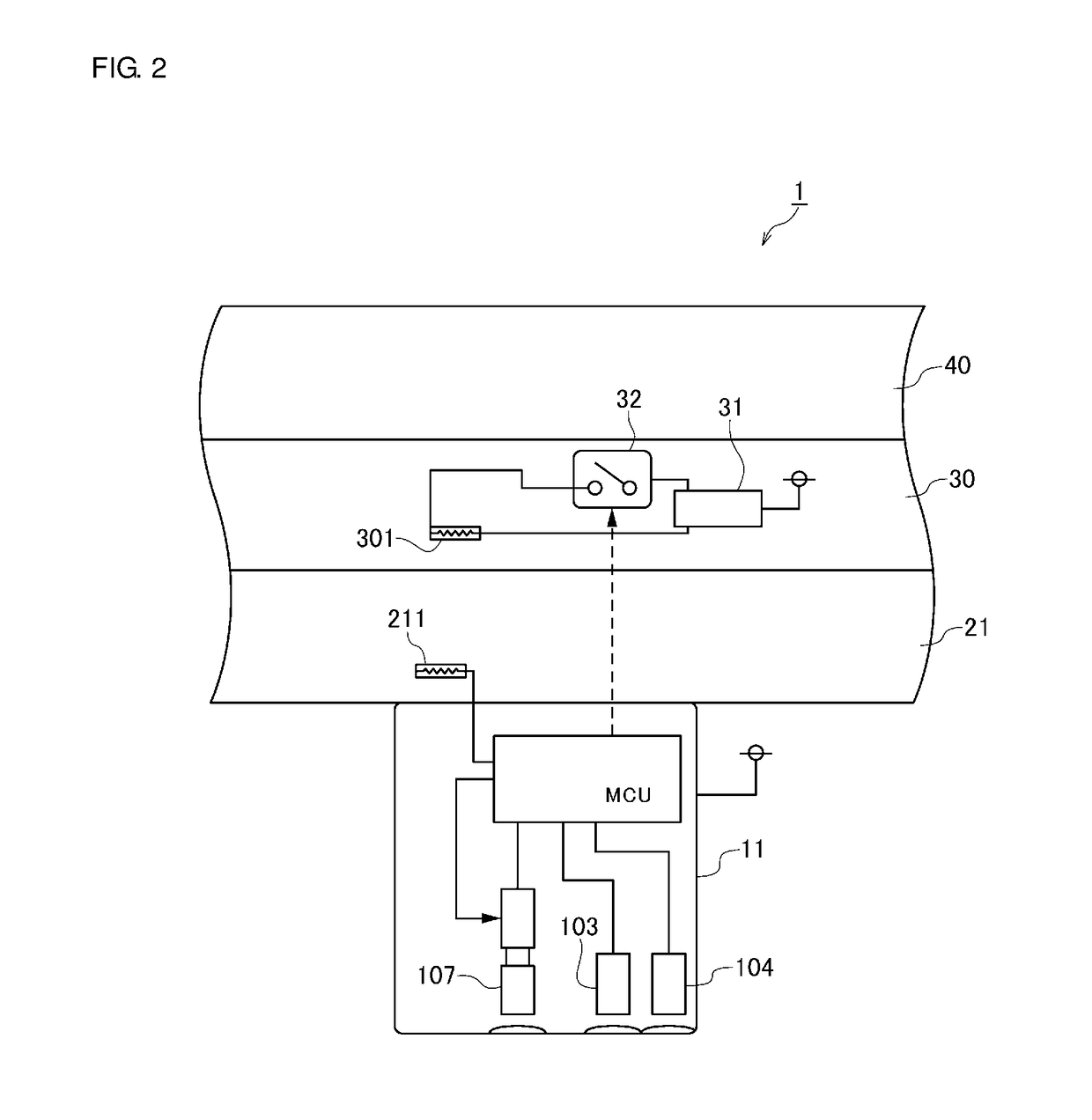
Figure 3
Abstract
Description
CROSS REFERENCE TO RELATED APPLICATIONS
[0001] This application claims the benefit of priority to Japanese Patent Application No. 2015-180406 filed on Sep. 14, 2015 and is a Continuation Application of PCT Application No. PCT / JP2016 / 075775 filed on Sep. 2, 2016. The entire contents of each application are hereby incorporated herein by reference.BACKGROUND OF THE INVENTION1. Field of the Invention
[0002] Preferred embodiments of the present invention relate to a heating oximeter that measures oxygen saturation in blood while heating a measurement site.2. Description of the Related Art
[0003] As an existing index of the amount of oxygen that is transported to a body, in particular, an index of whether or not sufficient oxygen can be supplied to the body involving the lungs, oxygen saturation (SpO2) indicating a ratio of hemoglobin (oxygenated hemoglobin: HbO2) which actually carries oxygen in hemoglobin in blood has been used. A pulse oximeter has been used in order to measure the oxygen sa...
Examples
first preferred embodiment
[0032]First, the configuration of a heating pulse oximeter (hereinafter, simply referred to as a “heating oximeter”) 1 according to a first preferred embodiment will be described with reference to FIG. 1 to FIG. 3. FIG. 1A is a plan view and FIG. 1B is a longitudinal cross-sectional view of the heating oximeter 1. FIG. 2 is a view illustrating a main component of the heating oximeter 1 in an enlarged manner. FIG. 3 is a block diagram illustrating the configuration of an oxygen saturation acquisition assembly 11 of the heating oximeter 1.
[0033]The heating oximeter 1 has a heating function of heating a measurement site, increasing a blood flow volume in the measurement site to cause arterialization, and optically measuring oxygen saturation (e.g., a presence ratio between oxygenated hemoglobin and reduced hemoglobin) using light absorption characteristics of hemoglobin (i.e., oxygenated hemoglobin and reduced hemoglobin) in blood, specific details of this will be described later. In p...
second preferred embodiment
[0063]Next, a heating oximeter 2 according to a second preferred embodiment will be described with reference to FIGS. 5 and 6. Description of the same or similar configurations as or to those in the above-described first preferred embodiment is simplified or omitted and different points are mainly described. FIG. 5 is a longitudinal cross-sectional view of the heating oximeter 2. FIG. 6 is a view illustrating a main component of the heating oximeter 2 in an enlarged manner. It should be noted that the same reference numerals denote the same or equivalent components as or to those in the first preferred embodiment in FIGS. 5 and 6.
[0064]The heating oximeter 2 is different from the heating oximeter 1 according to the above-described first preferred embodiment in a point that it further includes a third temperature detector 23 and in a point that it includes an oxygen saturation acquisition assembly 12 instead of the oxygen saturation acquisition assembly 11. It should be noted that ot...
third preferred embodiment
[0073]Next, a heating oximeter 3 according to a third preferred embodiment of the present invention will be described with reference to FIG. 7. Description of the same or similar configurations as or to those in the above-described first preferred embodiment is simplified or omitted and different points are mainly described. FIG. 7 is a longitudinal cross-sectional view of the heating oximeter 3. It should be noted that the same reference numerals denote the same or equivalent components as or to those in the first preferred embodiment in FIG. 7.
[0074]The heating oximeter 3 is different from the heating oximeter 1 according to the above-described first preferred embodiment in a point that it includes a heat generation portion 33 instead of the heat generation portion 30. It should be noted that other configurations are the same as or similar to those of the above-described heating oximeter 1 and detail description thereof is therefore omitted herein.
[0075]A resistance value of the h...