
Process for upgradation of heavy crude oil/residue using waste plastic as hydrogen donating agent
a technology of waste plastic and heavy crude oil, which is applied in the direction of hydrocarbon oil treatment, hydrocarbon oil cracking, bio-feedstock, etc., can solve the problems of low hydrogen utilization efficiency, low h/c ratio of residuals, and high difficulty in reducing the so as to achieve high conversion rate of hydrocracking and high conversion rate of residuals
Patent Information
- Authority / Receiving Office
- US · United States
- Patent Type
- Applications(United States)
- Current Assignee / Owner
- Publication Date
- 2018-07-19
Smart Images
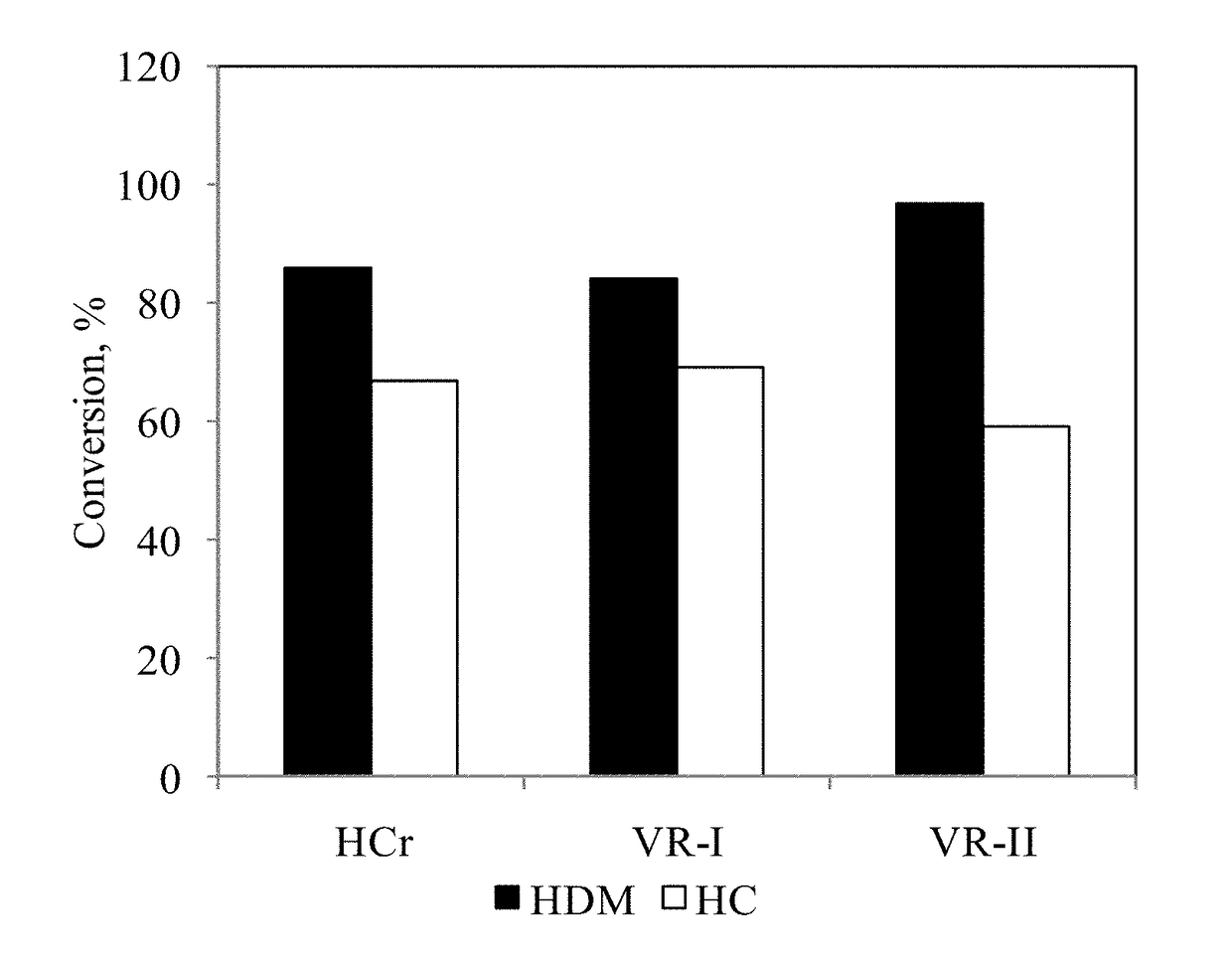
Figure 1 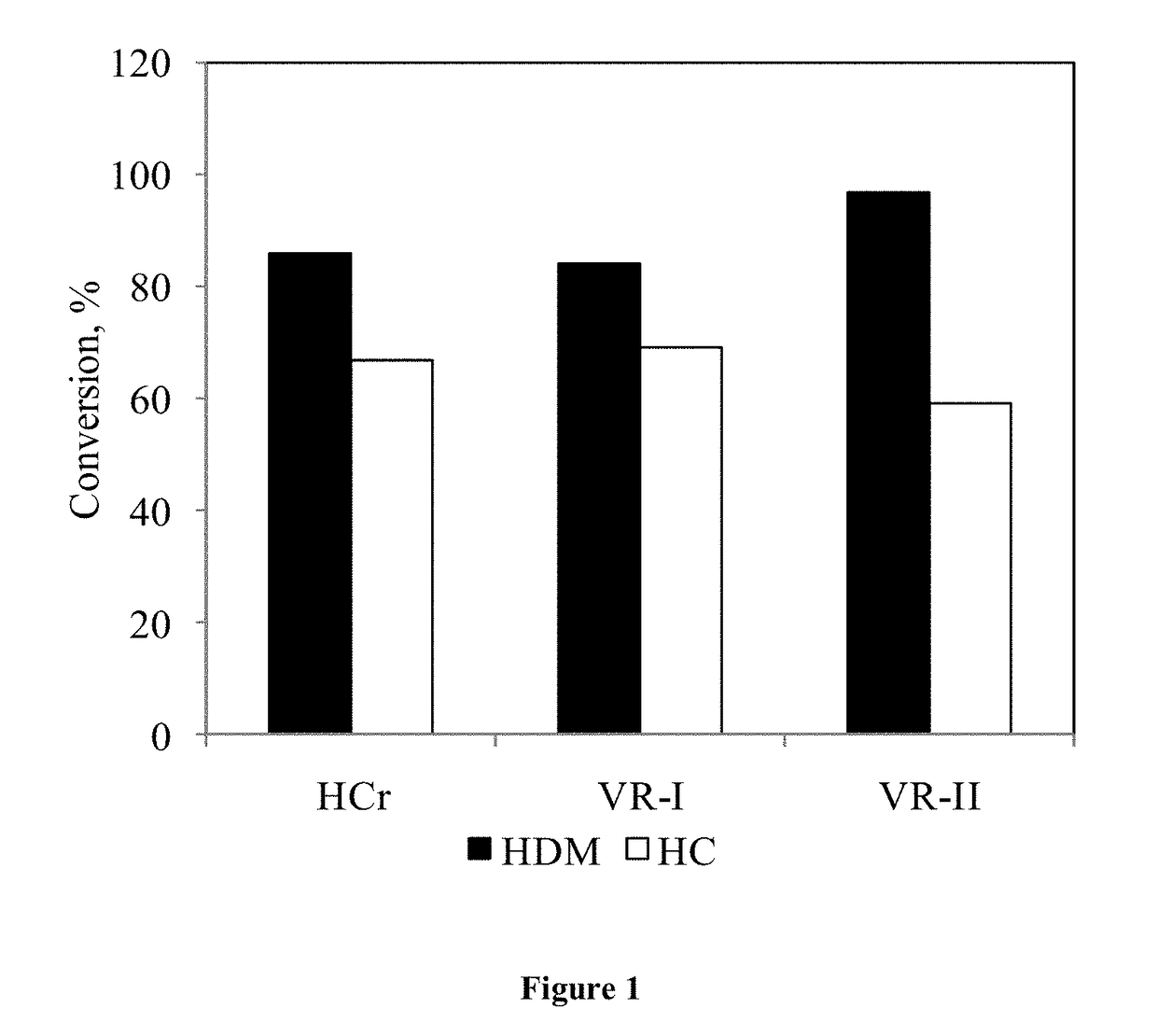
Figure 2 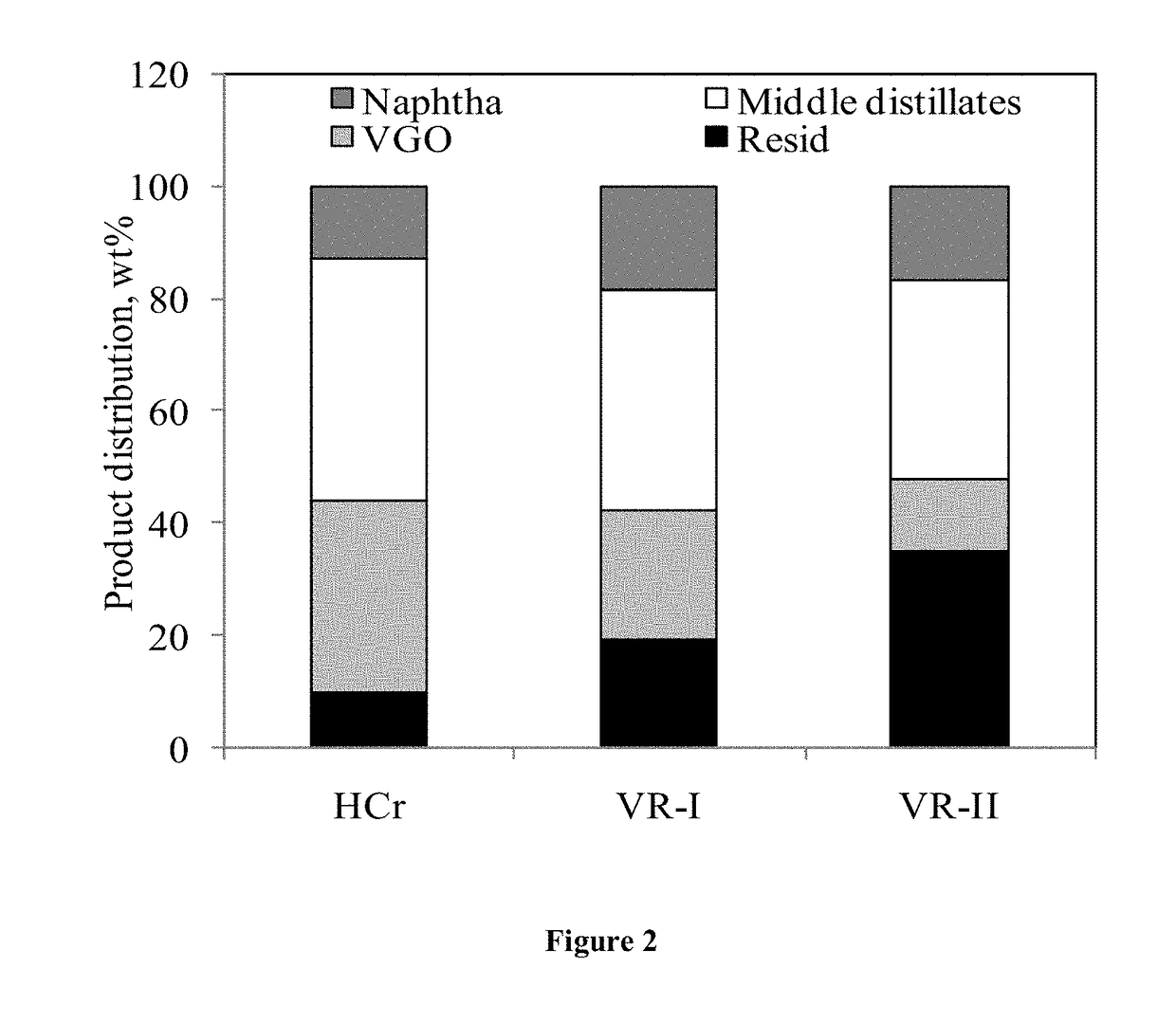
Figure 3
Abstract
Description
CROSS REFERENCE TO RELATED APPLICATIONS
[0001] This application claims priority to Indian Patent Application No. 201711001597, filed on Jan. 16, 2017, the contents of which as are hereby incorporated by reference in its entirety.BACKGROUNDRelated Field
[0002] The present invention relates to a process for upgradation of heavy crude oil / residue using waste plastic as hydrogen donating agent. The present invention further relates to overcome the inconveniences of the conventional methods of processing heavy feeds such as heavy crude oils and vacuum residues by providing a suitable method to increase the amounts of distillate products.
[0003] More particularly, the present invention relates to provide a material having high hydrogen donating agent in reaction media, high activity of conversion of hydrodemetallization (HDM) as well as liquid residue cracking.Description of Related Art
[0004] Heavy oils / residues are becoming increasingly important due to the decrease in conventional oils and inc...
Examples
example 1
[0050]In the present invention, three different feedstocks:—heavy crude (HCr), its vacuum residue i.e. VR-I and another vacuum residue (VR-II) having high asphaltene content are used as feedstocks. The properties of these feeds are given in Table 1. Vacuum residue (VR-I) is highly viscous and contains high metals, asphaltene content than its heavy crude (HCr). VR-II contains very high asphaltene (14.03%), metals (175 ppm) and MCR (26%) than other feeds.
TABLE 1Properties of the feedsPropertiesHCrVR-IVR-IIDensity (g / mL) at 15.6° C.0.86330.9175Kvis (cSt) at 100° C.13.7279.76430693Ni (wppm)99.2153.740.4V (wppm)2.54.6134.5Ni + V (wppm)101.7158.3174.9H / C (atomic ratio)1.591.451.46MCR (wt %)4.848.6326.19Asphaltene (wt %)0.270.9414.03
[0051]In this particular case, the hydrocraking activity of the heavy crude was performed as:—One litre batch reactor was used for the hydrocracking activity test in this invention. An appropriate amount of the heavy crude was taken into the reactor vessel and ...
example 2
[0054]Vacuum residue (VR-I) obtain from the feed heavy crude (HCr) as described in example 1 is used as feed and subjected to the same process as that of example 1. The physic-chemical properties of this hydrocracked product are given in Table 2 and HDM, HC conversions are given in FIG. 1. The distillate products such as naphtha, middle distillates and vacuum gas oil are given in FIG. 2. The HDM and HC conversions with this feed are 84 and 69% respectively. The amount of middle distillates and VGO produced are 39 and 23% respectively.
example 3
[0055]In this particular case, VR-II as explained in example 1 is used as feed and hydrocracking reactions are performed as that of example 1. The product properties are given in Table 2 and conversions are presented in FIG. 1. The product distribution of this hydrocraked product is given in FIG. 2. The hydrocracking conversion and production of middle distillates with feed VR-II is 59 and 36% respectively.