
Surfactant for enhanced oil recovery
Patent Information
- Authority / Receiving Office
- US · United States
- Current Assignee / Owner
- Publication Date
- 2019-01-17
Smart Images
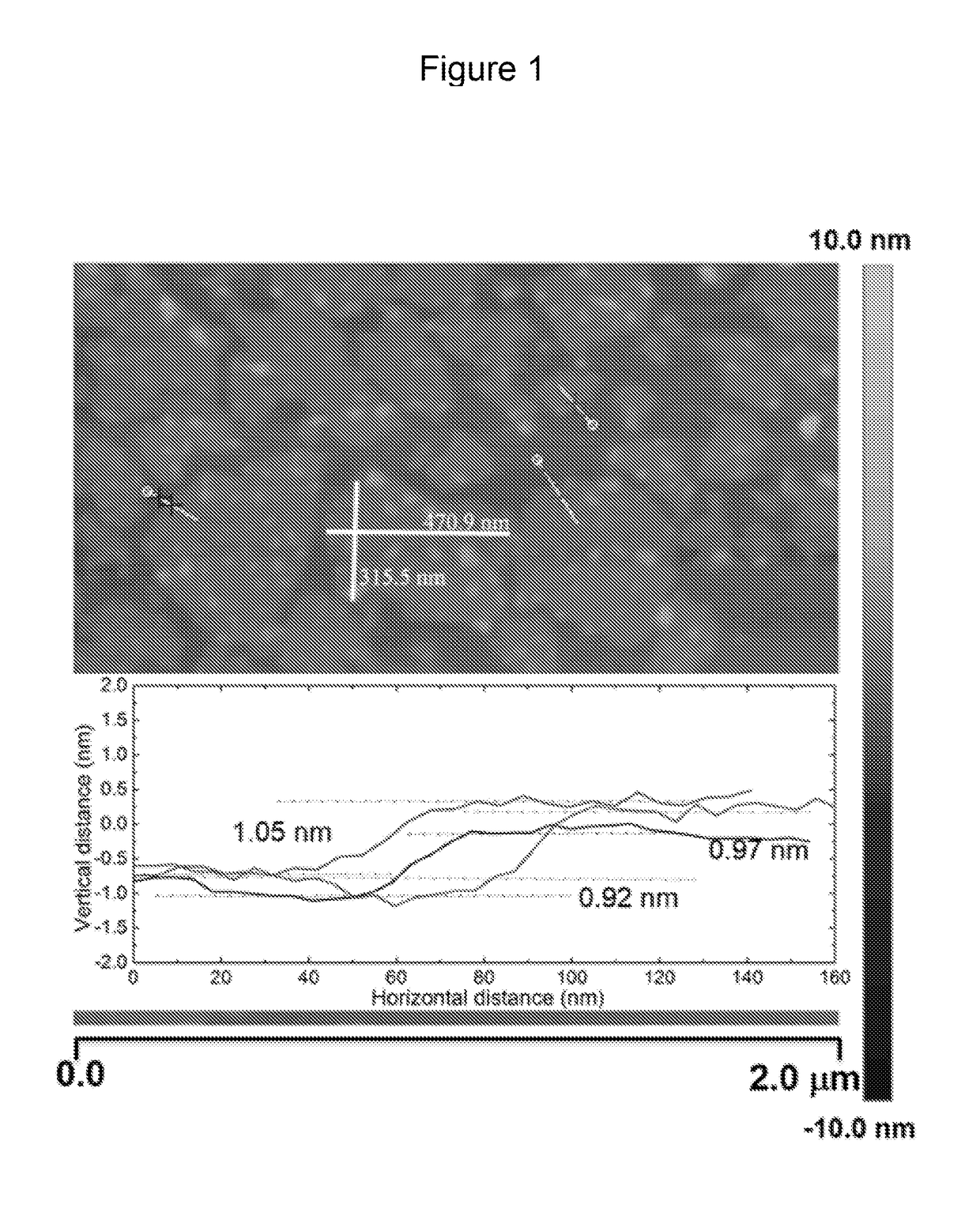
Figure 1 
Figure 2 
Figure 3
Abstract
Description
CROSS-REFERENCE TO RELATED APPLICATIONS
[0001] The present application is a National Phase entry of, and claims priority to, PCT Application No. PCT / US2016 / 042519, filed Jul. 15, 2016, which claims priority to U.S. Provisional Patent Application No. 62 / 194,035, filed Jul. 17, 2015, titled “Surfactant For Enhanced Oil Recovery,” the entire contents of each being hereby incorporated by reference herein for all purposes.STATEMENT REGARDING FEDERALLY SPONSORED RESEARCH OR DEVELOPMENT
[0002] This invention was made with Government support under Grant No. DE-FG02-13ER46917, awarded by United States Department of Energy; and under Grant No. DE-SC0010831, awarded by the United States Air Force Office of Scientific Research. The Government has certain rights in the invention.BACKGROUNDField of the Disclosure
[0003] The disclosure relates generally to surfactants for the recovery of oil. More particularly, the disclosure relates to an improved amphiphilic surfactant. Still more particularly, the pr...
Examples
examples
[0040]3.0 g of graphite was ball milled for 1-100 hours. A 9:1 mixture of concentrated H2SO4 / H3PO4 (360:40 mL) was poured into the graphite, followed by adding 18.0 g of KMnO4. The reaction was then heated to 45° C. and stirred for 8-20 hours. The resulting mixture was diluted with 400 mL of deionized water in an ice bath. 3 mL of 35% H2O2 was then added under moderate mixing over 1-60 min. 1-20 g of NaCl was added to the mixture. After sedimentation for 5-300 min, the supernatant was decanted. This process was repeated until the pH value reached 5. Then the mixture was filtrated to collect the solids, which were dispersed in deionized water and ultra-sonicated for 0.5-5 hour to obtain single layer graphene oxide (GO).
Characterization
[0041]Atomic Force Microscopy (AFM; Veeco Dimensions 3000 Atomic Force Microscope) was employed to examine the morphology of GO. Measurement was conducted using silicon AFM probes (HQ:NSC15 / AL BS, Mikromasch) with a resonant f...