
Heat-transforming ceramic roasting cylinder and coffee bean roaster using the same
a ceramic and roasting cylinder technology, applied in the field of roasting cylinders, can solve the problems of compromising the flavor of the resulting coffee, affecting the roasting process, and roasted coffee beans are often heated unevenly, so as to reduce the van der waals force, save time and energy, and smell strong
Patent Information
- Authority / Receiving Office
- US · United States
- Patent Type
- Applications(United States)
- Current Assignee / Owner
- Publication Date
- 2020-02-13
Smart Images
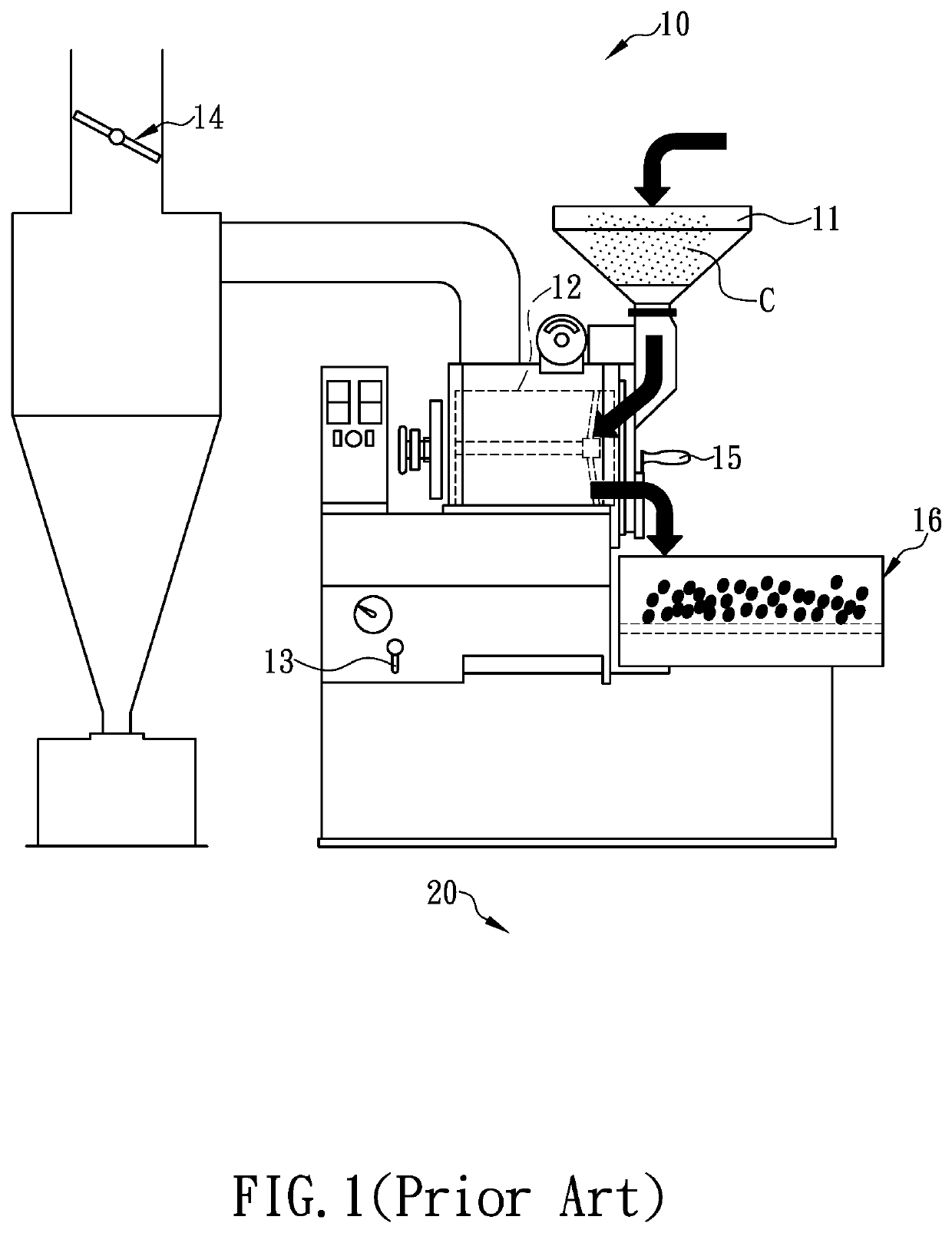
Figure 1 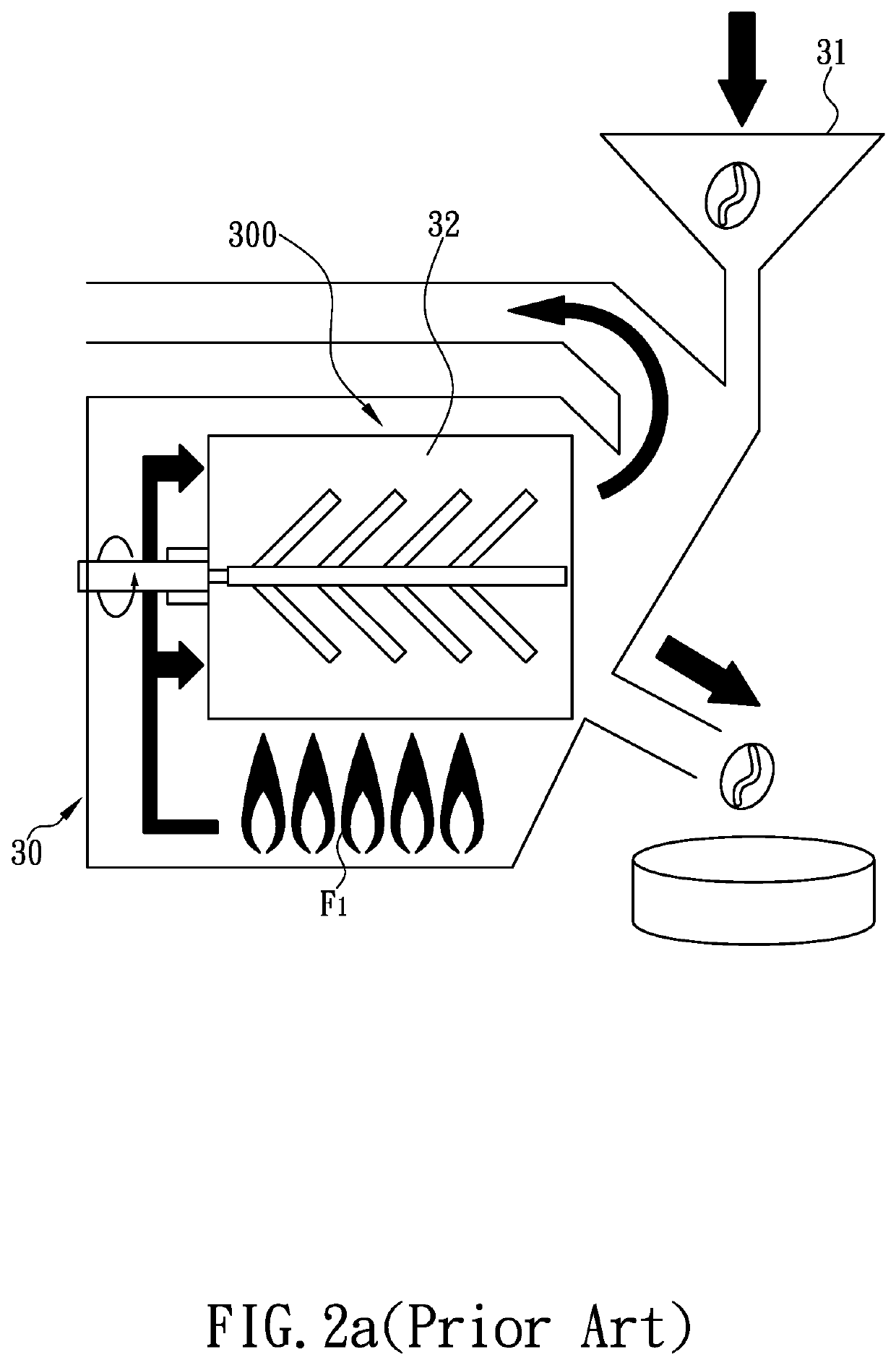
Figure 2 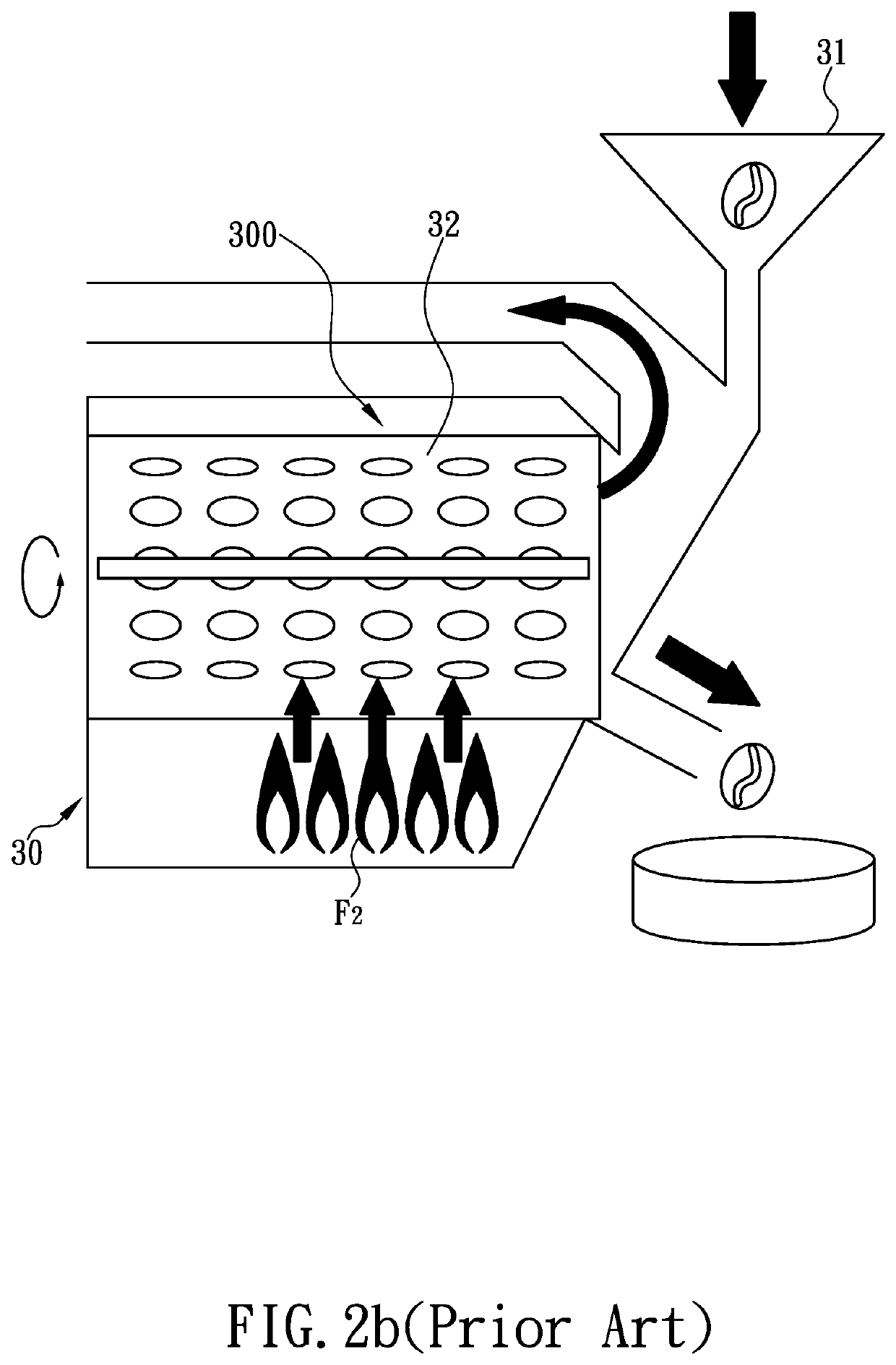
Figure 3
Abstract
Description
FIELD OF THE INVENTION
[0001] The present invention relates to a roasting cylinder and more particularly to a ceramic roasting cylinder made of ball clay, kaolin clay, mullite, spodumene, and an energy ceramic material so as to release far-infrared energy.BACKGROUND OF THE INVENTION
[0002] Green coffee beans of the same batch but roasted by different suppliers or shops tend to smell strikingly different or produce drinks of markedly different tastes. Obviously, the steps and equipment of “roasting” have certain effect on the flavor of the roasted beans and the drinks prepared therefrom. The existing roasting steps are briefly described below with reference to FIG. 1:
[0003] 1. Bean selection: Before roasting the coffee beans C, it is necessary to pick out and remove therefrom all the beans that may have adverse effect on the resulting roasted beans (e.g., those partially eaten by insects).
[0004] 2. Getting ready: The selected coffee beans C to be roasted are placed in a standby area 20, wh...
Examples
Embodiment Construction
[0029]Seeds for human consumption (e.g., soybeans, ginkgo seeds, coffee beans, cocoa beans, peanuts, almonds, and various other nuts) contain oils whose molecule clusters tend to gather together because of the van der Waals forces therebetween, foaming relatively large oil molecule clusters. These relatively large oil molecule clusters not only may harbor contaminants and impurities, but also result in a reduced heat-absorbing area, preventing the seeds from being heated evenly. That is to say, heat is likely to accumulate in a specific portion of a heated seed rather than permeate the entire seed. In particular, while such seeds are being roasted, it is difficult for the relatively large oil molecule clusters to seep evenly to those areas of the seeds that are adjacent to the seed surface; consequently, oil is concentrated in certain parts of the roasted seeds, creating an oily and less crunchy mouthfeel.
[0030]In view of the above, and based on his ample experience, professional kn...