
System of quantum sensors for magnetoencephalography
a quantum sensor and magnetoencephalography technology, applied in the field of quantum sensors for magnetoencephalography, can solve the problems of high cost of squid-based meg solutions, inability to use in a normal environment, and modification for high-density meg applications
Patent Information
- Authority / Receiving Office
- US · United States
- Patent Type
- Applications(United States)
- Current Assignee / Owner
- Publication Date
- 2022-06-09
Smart Images
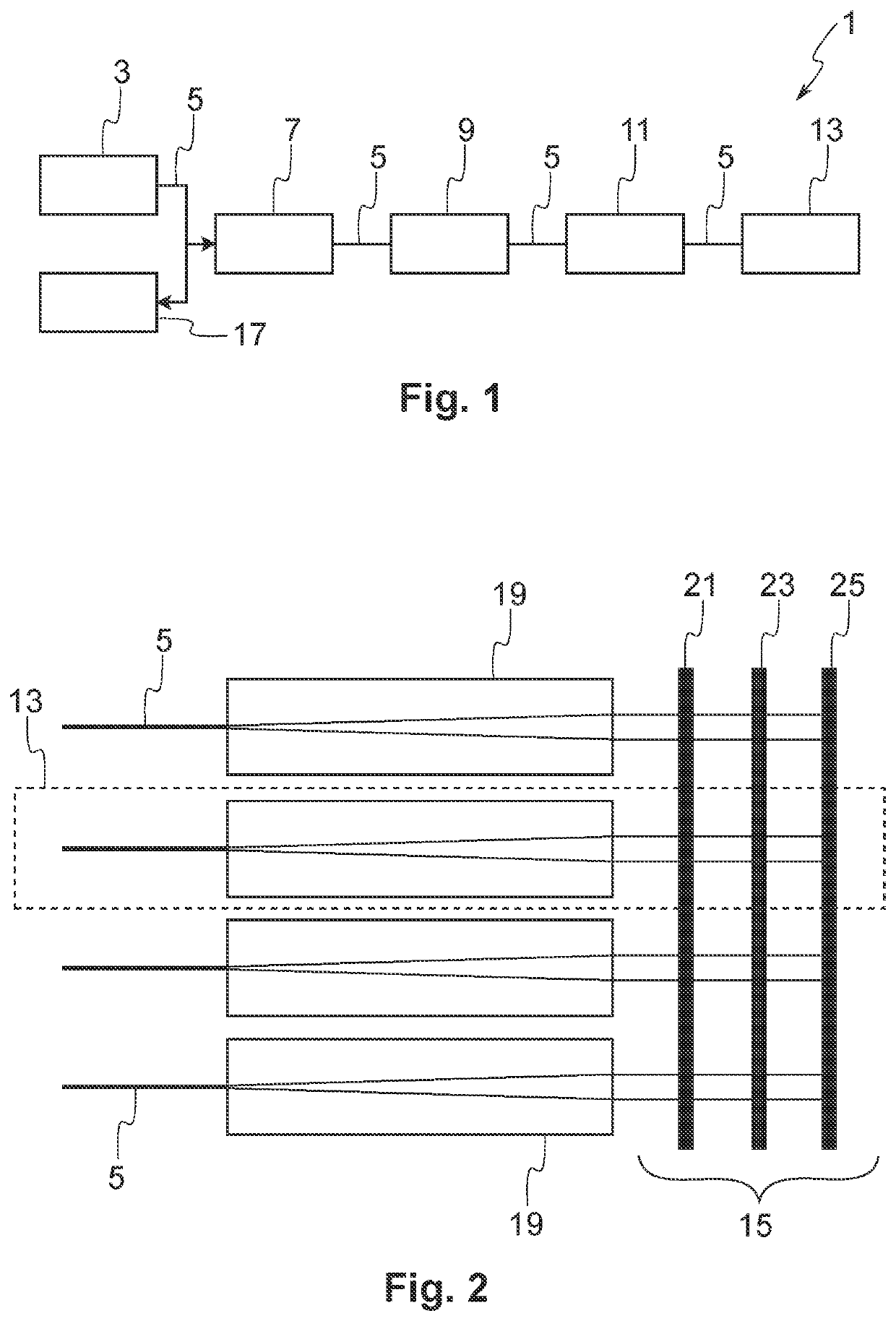
Figure 1 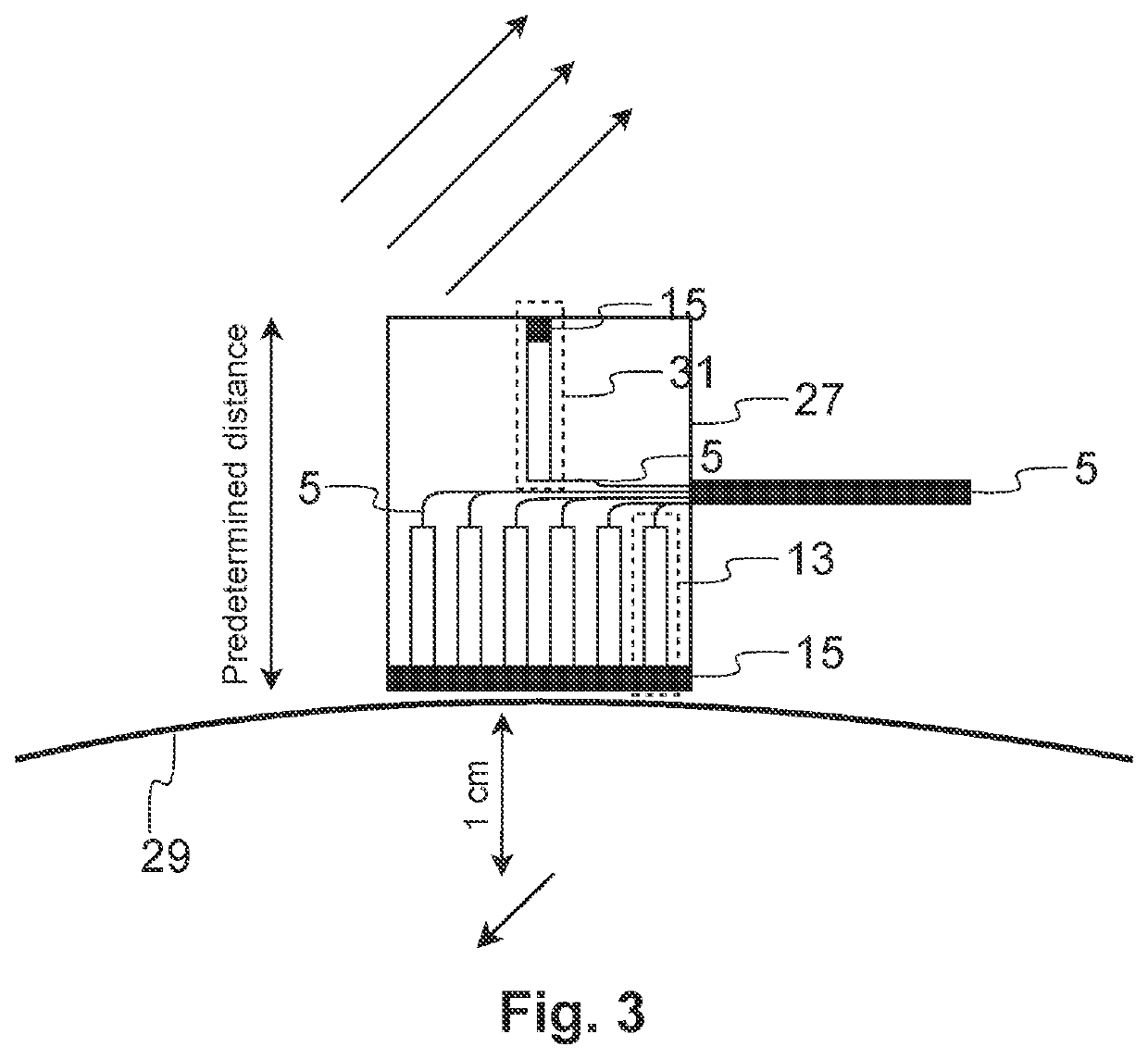
Figure 2 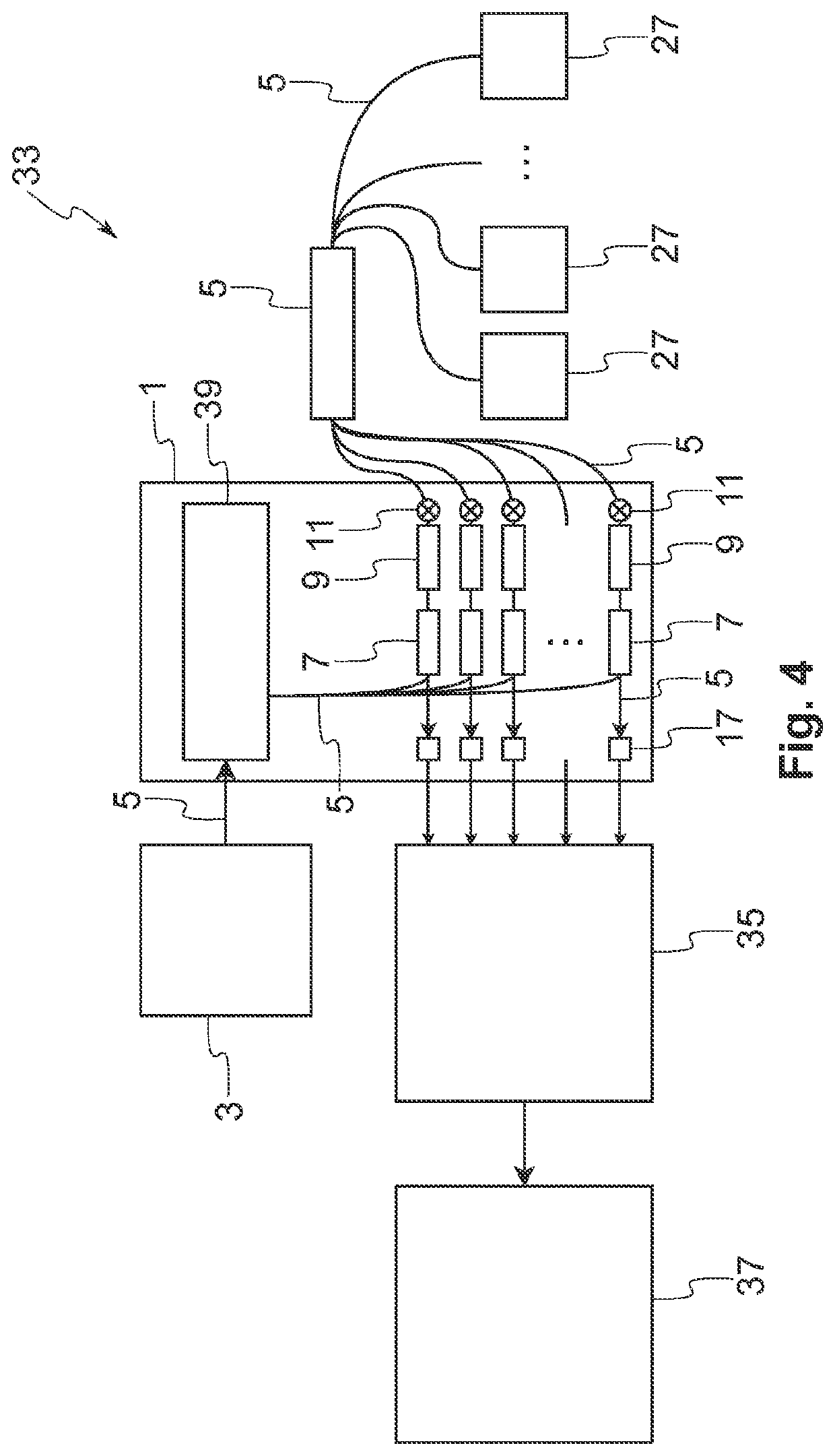
Figure 3
Abstract
Description
TECHNICAL FIELD
[0001] The present disclosure pertains to a novel device for recording magnetic fields produced by electric currents occurring naturally in an object, such as a human or animal brain and related to neural activity. The invention equally relates to a method of recording magnetic fields with such a device.BACKGROUND OF THE INVENTION
[0002] Magnetoencephalography (MEG) is a functional neuroimaging technique for mapping brain activity by recording magnetic fields produced by electric currents occurring naturally in the brain. Currently available devices use a system of very sensitive magnetometers to record magnetic fields produced by neural activity in the brain.
[0003] Today most of the MEG devices are superconducting quantum interference devices (SQUIDs). MEG devices based on arrays of SQUIDs require a magnetically shielded room, while sensors of the SQUIDs inside the device require cooling with liquid helium. These requirements make SQUID-based MEG solutions expensive and ...
Examples
Embodiment Construction
[0023]An embodiment of the present invention will now be described in detail with reference to the attached figures. The embodiment is described in the context of an optical system based on the Sagnac effect (interferometer), but the teachings of the invention are not limited to this environment. For instance, other optical systems could be used instead. Identical or corresponding functional and structural elements which appear in the different drawings are assigned the same reference numerals. It is to be noted that the use of words “first”, “second” and “third”, etc. may not imply any kind of particular order or hierarchy unless this is explicitly or implicitly made clear in the context. As becomes clear by reading the following description, the proposed novel system dramatically reduces the cost of an MEG system compared to existing solutions. First of the advantages of the system we represent, is the ability to arrange a large number of sensors very densely. The second main adva...