
Exhaust gas purification catalyst for internal combustion
a technology of exhaust gas purification and catalyst, which is applied in the direction of physical/chemical process catalyst, metal/metal-oxide/metal-hydroxide catalyst, and separation process, etc., can solve the problem of not being able to suppress the reduction in purification capability after endurance treatment, and achieve the reduction of purification capability, suppress the separation of the catalyst layer, and improve the adhesion
Patent Information
- Authority / Receiving Office
- US · United States
- Patent Type
- Patents(United States)
- Current Assignee / Owner
- Publication Date
- 2005-04-05
- Estimated Expiration
- Not applicable · inactive patent
Smart Images
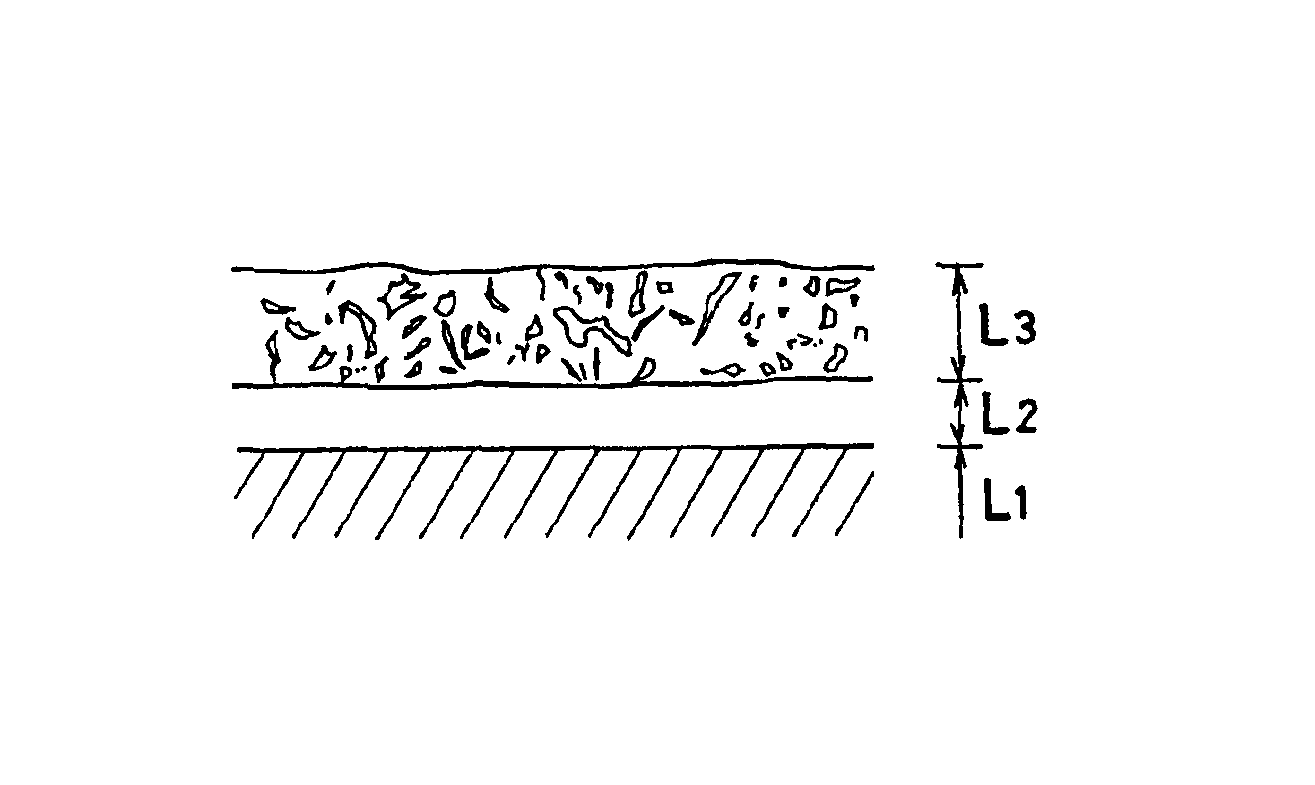
Figure 1 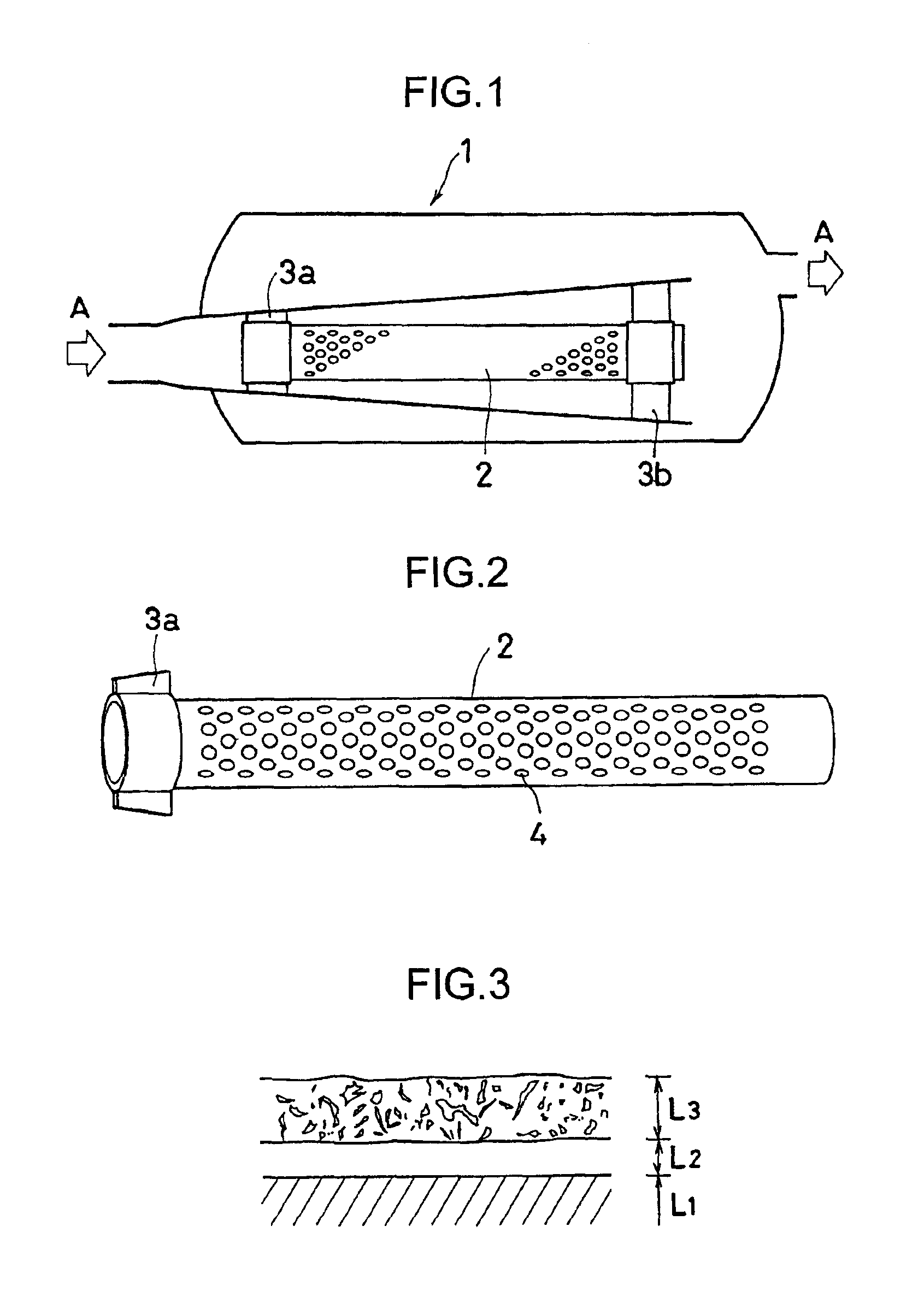
Figure 2
Abstract
Description
BACKGROUND OF THE INVENTION1. Field of the InventionThis invention relates to exhaust gas purification catalysts for internal combustion engine, and more particularly to an exhaust gas purification catalyst which has excellent thermal resistance and adhesion properties, can suppress thermal deterioration even under severe conditions, and can exhibit excellent purification capabilities.2. Description of the Related ArtIn two-wheeled motor vehicles, four-wheeled motor vehicles and the like, an exhaust gas purification catalyst is installed in the exhaust gas flow path so as to reduce the contents of carbon monoxide (CO) and hydrocarbons (HC) in exhaust gas from the internal combustion engine. As a conventional exhaust gas purification catalyst for two-wheeled motor vehicles, there is commonly used a ternary catalyst comprising a metallic carrier made of heat-resisting stainless steel and coated with a catalytic substance comprising noble metals.In the exhaust pipe of a two-wheeled mot...
Examples
example 1
A punching pipe (with an outer diameter of 22 mm and a length of 80 mm) made of stainless steel (SUS430) was used as a catalyst carrier. This carrier was soaked in a slurry of a heat-resistant inorganic oxide (composed chiefly of alumina) having ceria added thereto, taken out of it, and dried in hot air to form an undercoat layer of alumina containing ceria on a surface of the carrier. Subsequently, a catalyst-carrying layer consisting chiefly of activated alumina was formed on the undercoat layer in the same manner as described above for the formation of the undercoat layer, and then fired at 500° C. for 3 hours. Thereafter, the carrier was soaked in a nitric acid solution containing platinum (Pt) and rhodium (Rh), taken out of it, dried to impregnate the catalyst-carrying layer with platinum and rhodium, and then fired at 200° C. for 1 hour. Thus, exhaust gas purification catalyst A was obtained.