
Polyamide composition
a polyamide and composition technology, applied in the field of polyamide composition and molded articles, can solve the problems of reducing the obtainable properties such as rigidity at high temperature, chemical resistance and imensional stability, and poor dimensional stability due to water absorption, and achieves low water absorption, sufficient heat resistance, and dimensional stability. the effect of stability
Patent Information
- Authority / Receiving Office
- US · United States
- Patent Type
- Patents(United States)
- Current Assignee / Owner
- Publication Date
- 2005-05-03
- Estimated Expiration
- Not applicable · inactive patent
Smart Images
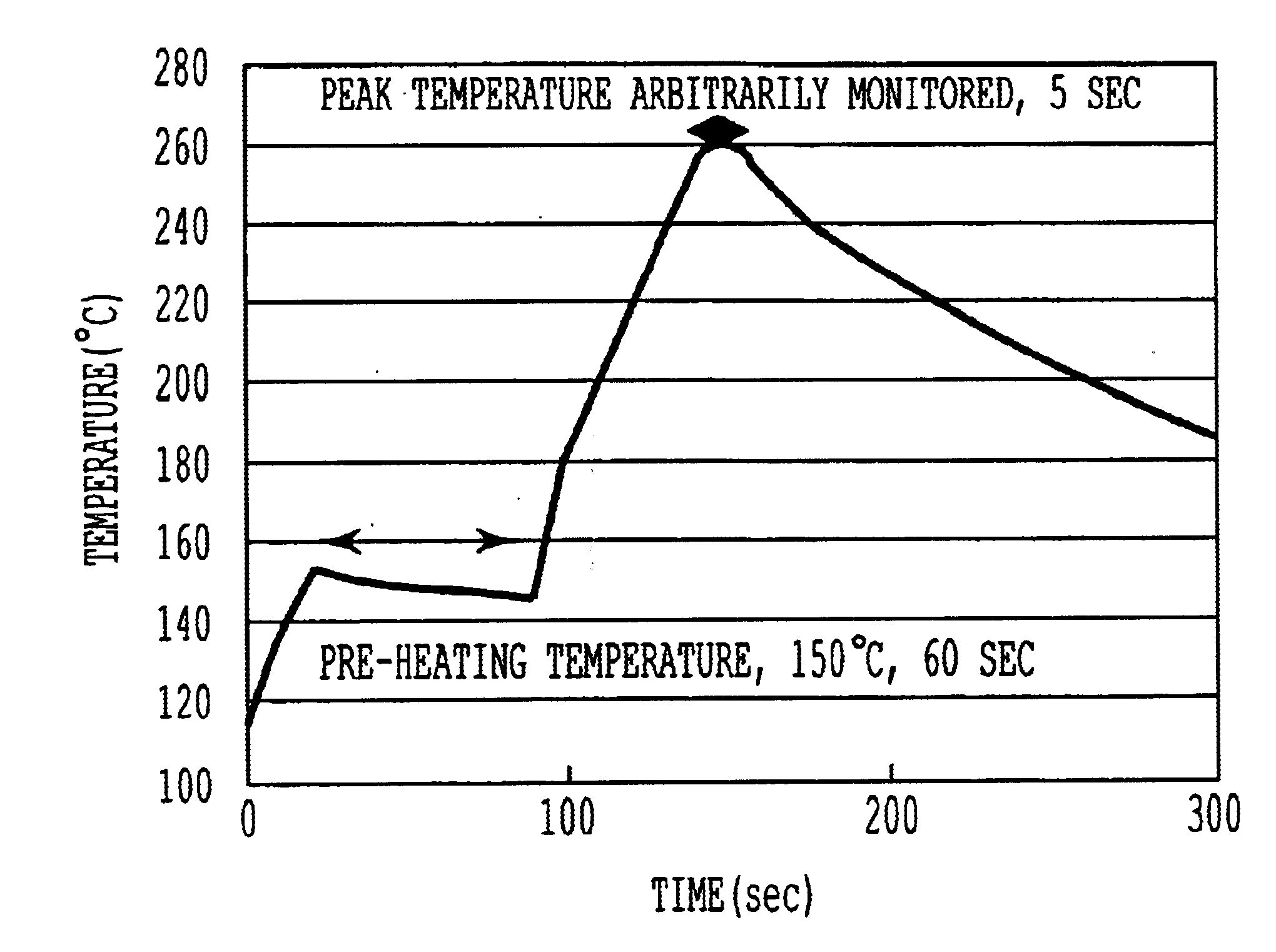
Figure 1 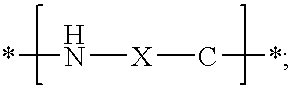
Figure 2 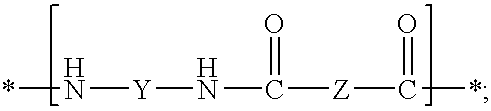
Figure 3
Abstract
Description
BACKGROUND OF THE INVENTION
[0001] 1. Field of the Invention
[0002] The present invention relates to a polyamide composition and a molded article therefrom. The polyamide compositions of the present invention have excellent moldability, toughness, light-weightness, as well as excellent hot water and steam resistance, heat resistance, mechanical characteristics, low water absorption and chemical resistance. The polyamide compositions of the present invention can be used as molding materials for industrial materials or household goods.
[0003] 2. Description of the Background
[0004] Crystalline polyamides represented by nylon 6 and nylon 66 have been used widely in fibers for clothing or industrial materials, and as general-purpose engineering plastics, because they have excellent properties and melt moldability. Such general-purpose polyamides are, however, pointed out to have problems such as insufficient heat resistance and poor dimensional stability due to water absorption. Particularly in...
Examples
examples
[0057]Now, the invention is described in more detail hereinbelow with reference to the following Examples and Comparative Examples, which are provided for the purposes of illustration only, however, and are not intended to restrict the scope of the invention.
[0058]The intrinsic viscosity, glass transition temperature, crystallization temperature, melting point, melt stability, deflection temperature under load, mechanical characteristics, impact strength, water absorption, steam resistance, chemical resistance, degree of crystallization after quench, blistering resistance and flame retardance were evaluated according to the procedures described below.
[0059]A sample of the polyamide or the polyamide composition to be measured is dissolved in concentrated sulfuric acid to give sample solutions having a concentration of 0.05, 0.1, 0.2 or 0.4 g / dl, and the inherent viscosity (η inh [dl / g]) of each sample solution is measured at 30° C. as follows:
ηinh=[ln(t1 / t0)] / C...
examples 1 to 5
[0091]The components shown in Table 1 were blended in dry with a ratio shown in Table 1. The resulting blend was subjected to a twin-screw extruder (“TEX44C”; trade name, made by Nippon Seiko Inc.] and extruded in melt under the condition of the cylinder temperature of 320° C. The melt strands were cooled and cut in pieces to give pellets of a polyamide composition. The pellets were dried in vacuum at 120° C. for 12 hours and tested for their crystallization temperature, melting point and melt stability. Results are shown in Table 1. Also, the dried pellets were subjected to injection molding under the condition of the cylinder temperature of 320° C. and mold temperature of 100° C. to give a test piece having a determined shape. The water absorption, mechanical characteristics, steam resistance, chemical resistance, IZOD impact strength and deflection temperature under load were measured using the test piece according to the above described procedures. Results are shown in Table 1. ...