
Engine cooling system
a cooling system and engine technology, applied in the direction of machines/engines, mechanical equipment, cylinders, etc., can solve the problems of increasing parasitic energy losses, slowing down the cooling process, etc., to reduce parasitic losses, increase or decrease the flow of coolant
Patent Information
- Authority / Receiving Office
- US · United States
- Patent Type
- Patents(United States)
- Current Assignee / Owner
- Publication Date
- 2005-10-18
- Estimated Expiration
- Not applicable · inactive patent
Smart Images
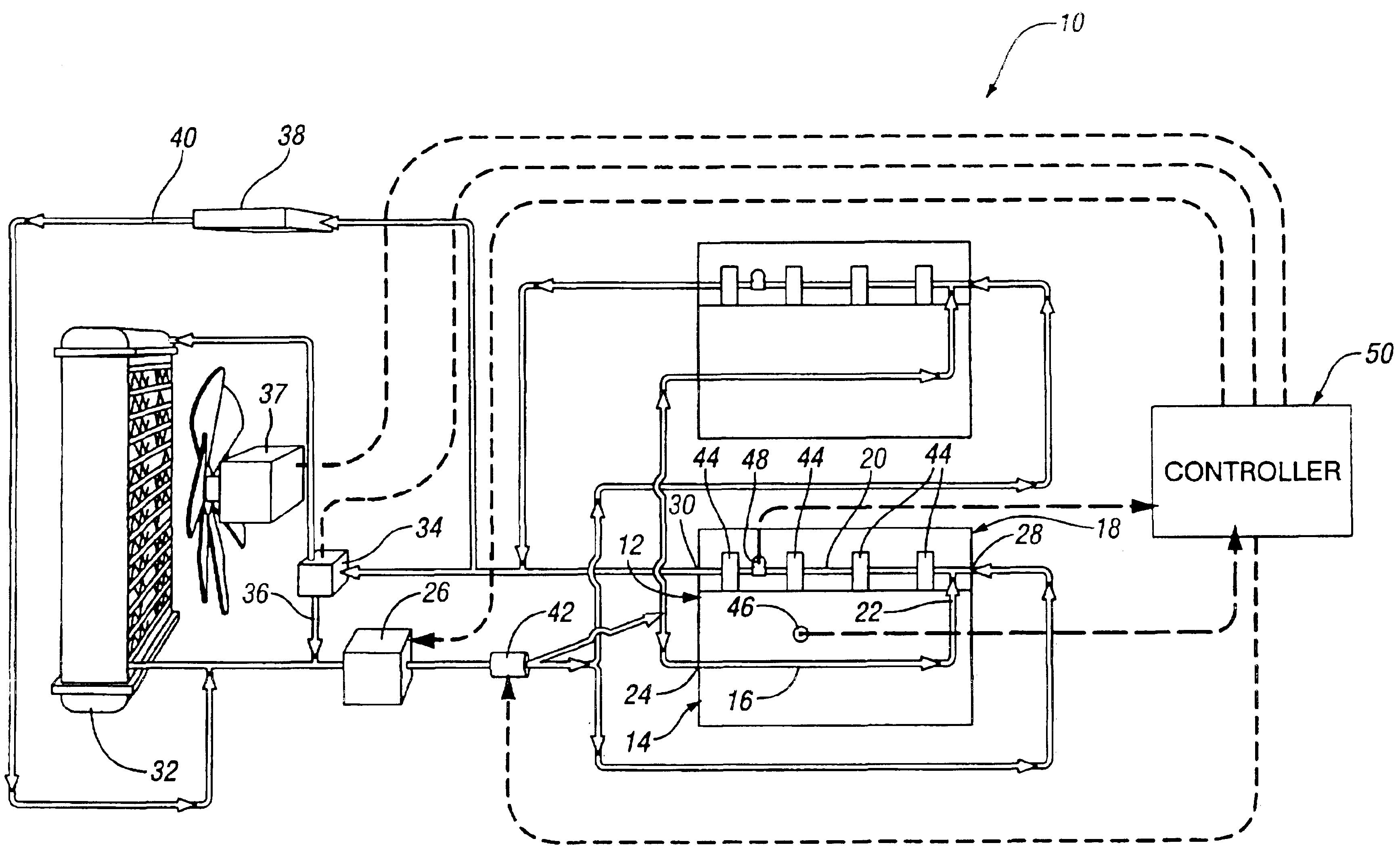
Figure 1 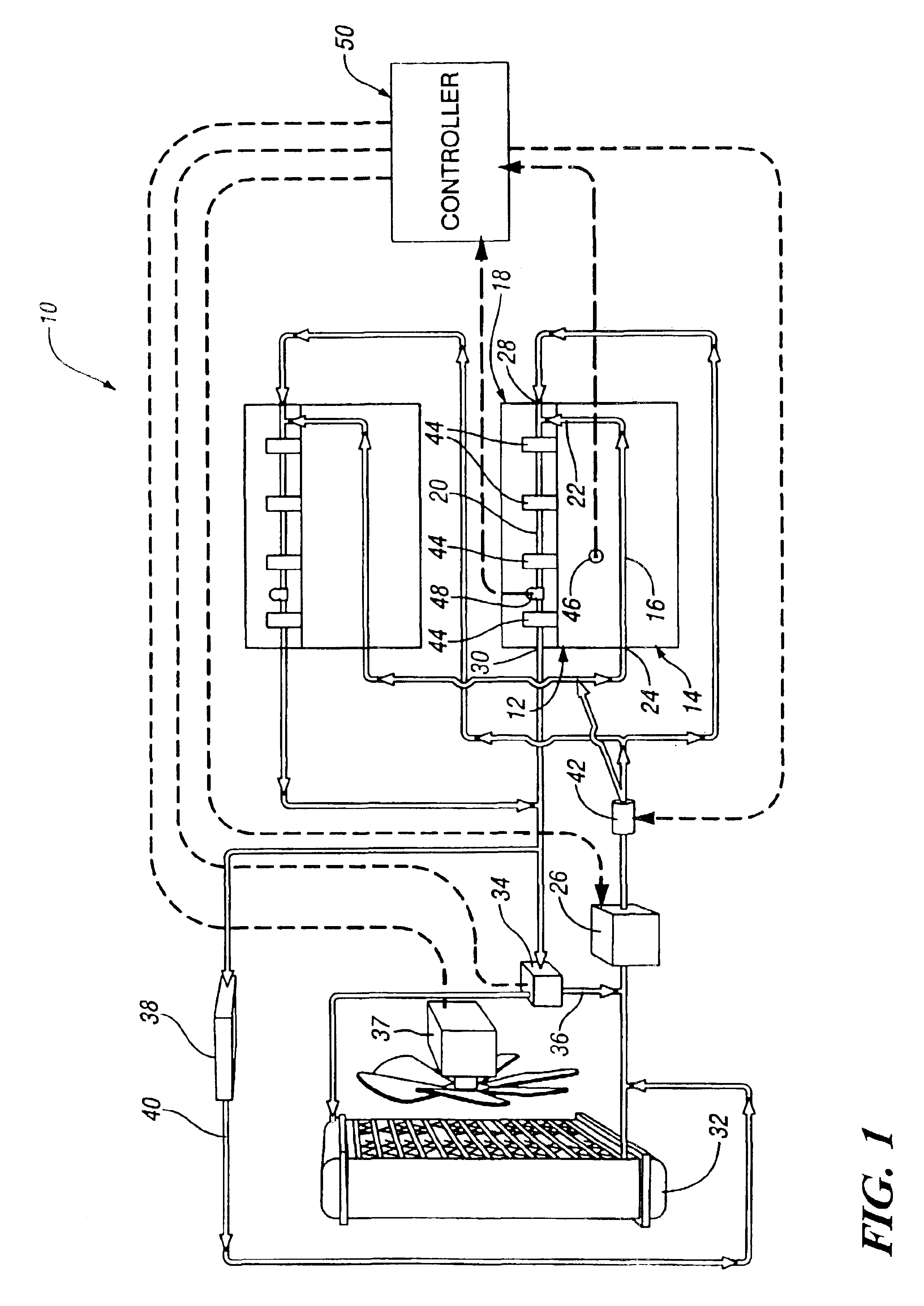
Figure 2 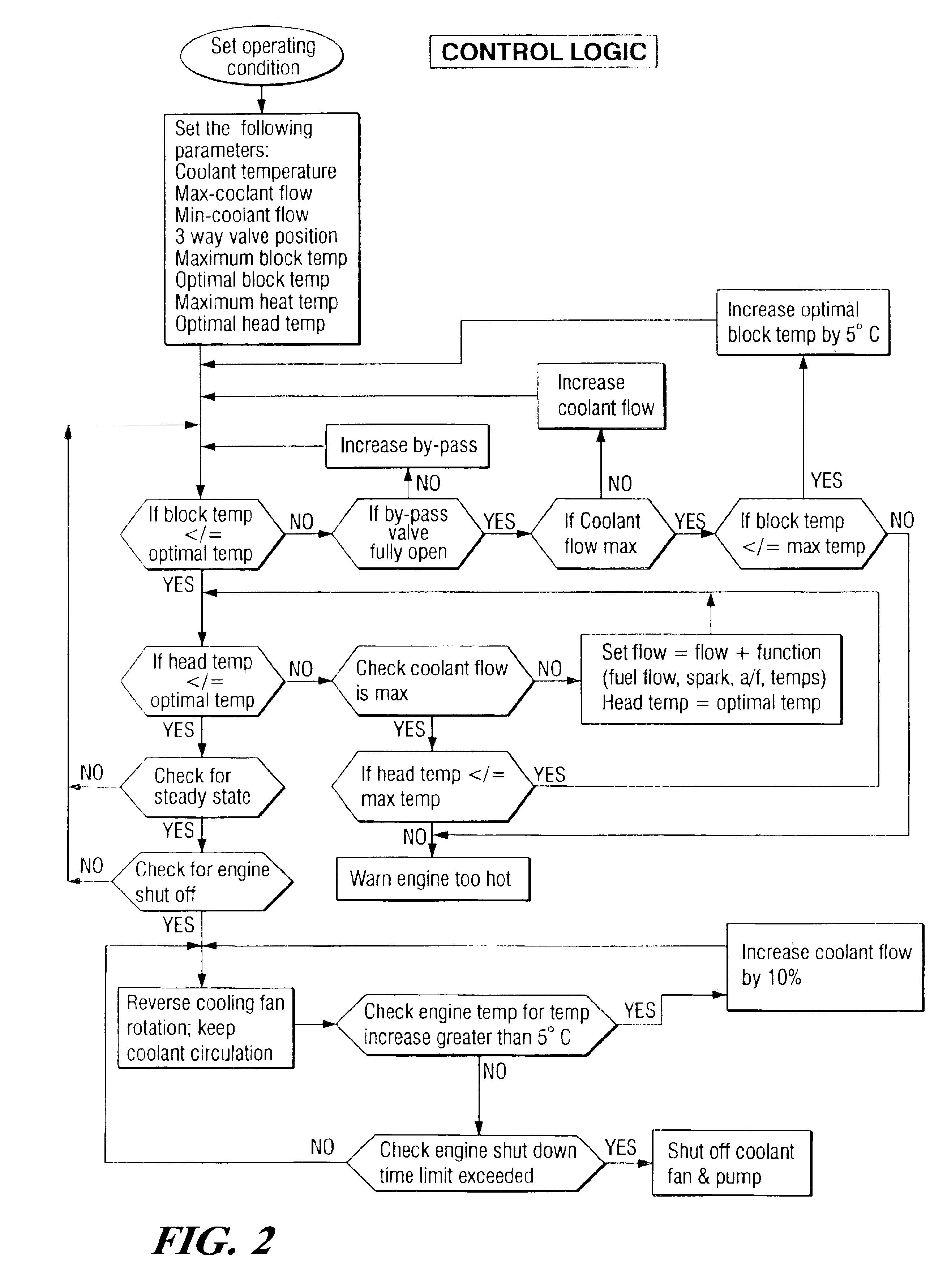
Figure 3
Abstract
Description
TECHNICAL FIELD
[0001] This invention relates to a cooling system for a liquid cooled internal combustion engine and, more particularly, to a method and means for controlling liquid coolant flow through the system.BACKGROUND OF THE INVENTION
[0002] An internal combustion engine commonly employs a pressurized cooling system with a circulating liquid coolant for cooling the engine. Engine heat is transferred from the engine to the coolant in a cooling jacket surrounding combustion heated parts of the engine. The heat absorbed by the circulated coolant is generally dissipated by a heat exchanger into the air.
[0003] Under normal operating conditions, an engine may require only nominal coolant flow to maintain proper temperature of internal components. However, under severe conditions an engine requires increased coolant flow to maintain proper component temperature. If a high flow rate water pump is used to provide a high coolant flow rate under severe conditions to prevent engine overheatin...
Examples
Embodiment Construction
[0019]Referring to FIG. 1 of the drawings in detail, numeral 10 generally indicates a cooling system for an internal combustion engine. System 10 includes an engine 12 having a cylinder block 14 with a cooling jacket 16 and a cylinder head 18 mounted on the cylinder block with a cooling jacket 20. Cooling jackets 16 and 20 are connected by an internal passage 22 between the head 18 and the block 14. A first coolant inlet 24 connects with the cooling jacket 16 of the block 14 and receives coolant from a water pump 26. A second coolant inlet 28 connects with the cooling jacket 20 of the head 18 and also may receive coolant from the water pump 26.
[0020]A coolant outlet 30 connects with the cooling jacket 20 of the head 18 and discharges coolant to an ambient air heat exchanger 32 through a temperature control valve 34. The ambient air heat exchanger 32 removes excess heat from the coolant heated in the engine 12. Coolant discharged from the heat exchanger 32 is conducted back to the wa...