
Device control using job ticket scoring
a device control and job ticket technology, applied in the direction of digital output to print units, instruments, electrographic process apparatuses, etc., can solve the problems of inability to adapt data structures to serve users, lack of interoperability of data structures used in conventional printer control software,
Patent Information
- Authority / Receiving Office
- US · United States
- Patent Type
- Patents(United States)
- Current Assignee / Owner
- Publication Date
- 2005-12-13
Smart Images
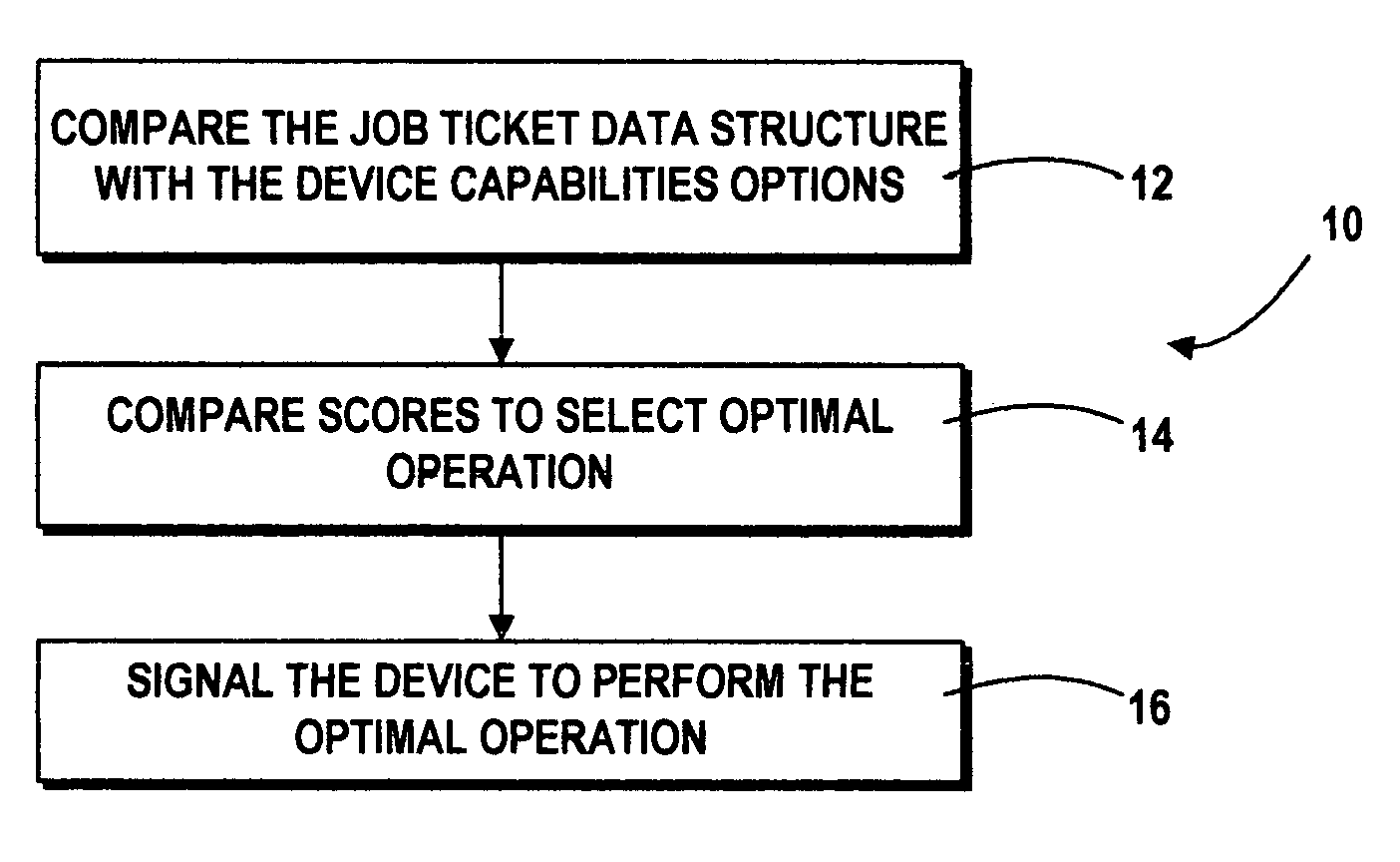
Figure 1 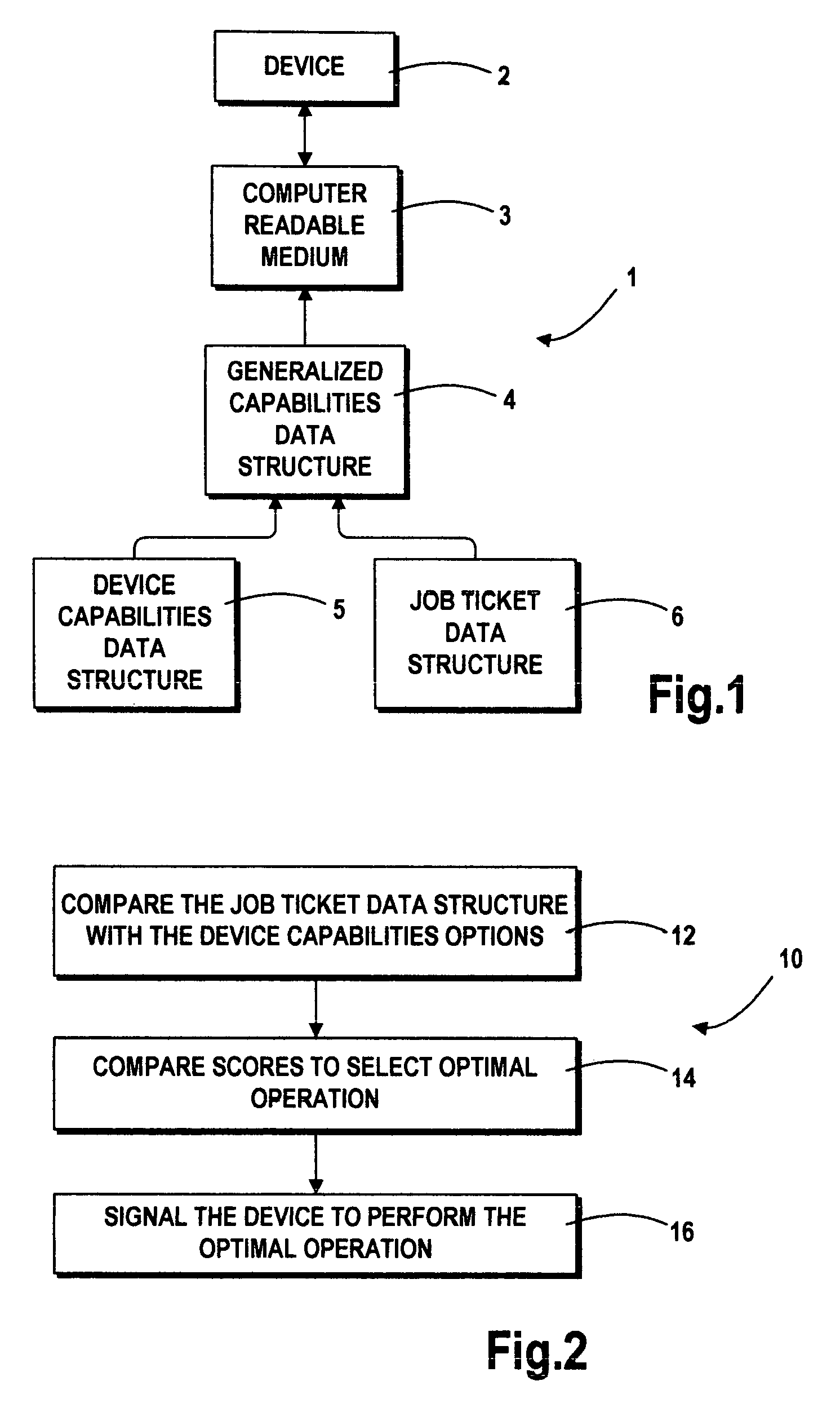
Figure 2 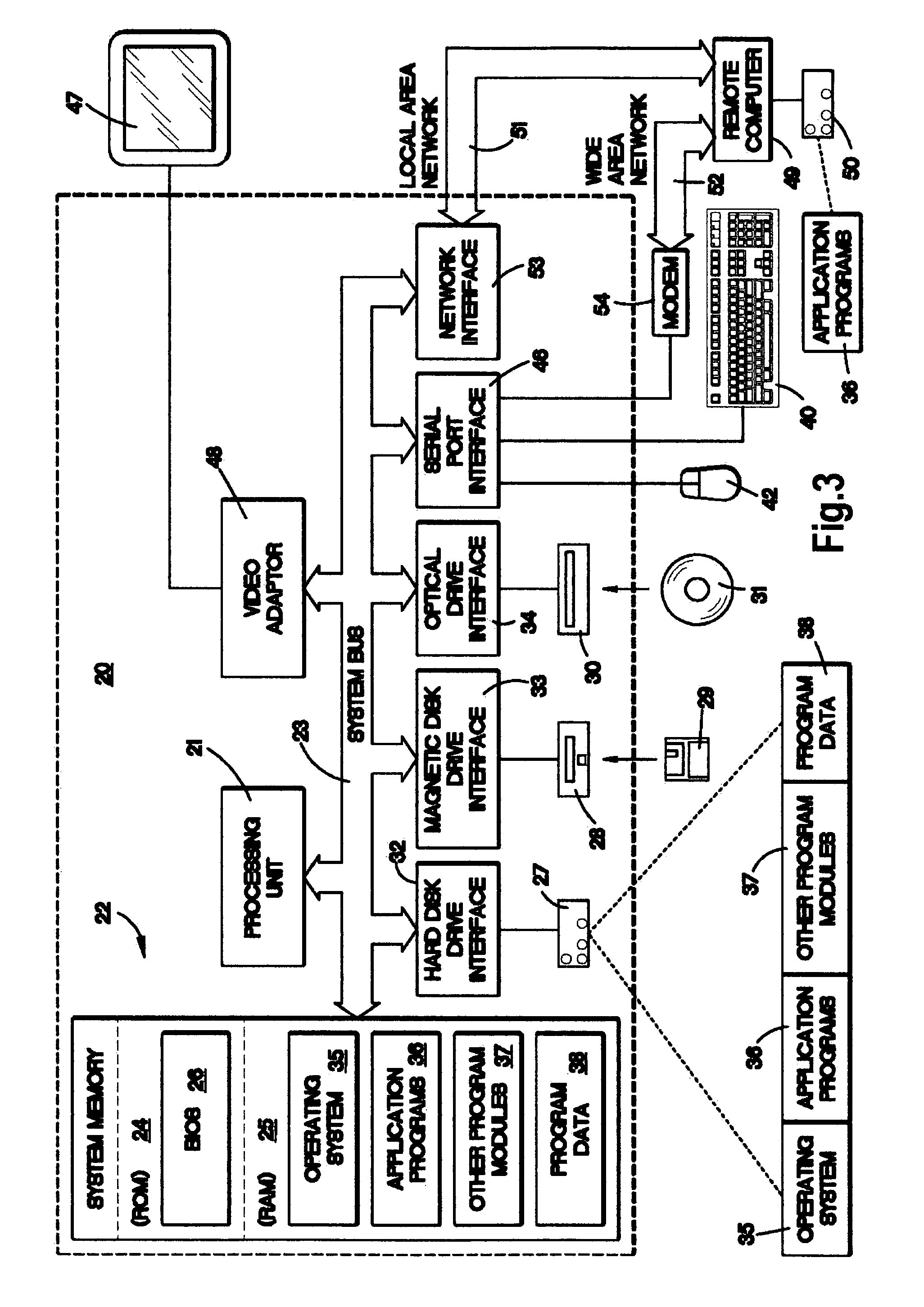
Figure 3
Abstract
Description
FIELD OF THE INVENTION
[0001] The present invention concerns the control of devices such as electronic printers capable of performing operations fulfilled by device capabilities options.BACKGROUND ART
[0002] Numerous electronic devices are capable of performing operations fulfilled by options selected by a user. For example, some conventional clothes dryers are configured to allow users to choose from pre-defined drying cycles designed for popular fabric types such as cotton, wool or silk. The choice of cycle controls the time, temperature and degree of agitation used in drying the fabric. If a user wishes to dry a fabric which is not among the particular types for which pre-defined cycles have been provided, the user must choose among those cycles the combination of time, temperature and degree of agitation which best approximates the ideal for the fabric which the user wishes to dry.
[0003] This observation is true for many peripheral devices for data processing systems and the like. Co...
Examples
example 1
[0044]Suppose that a generalized capabilities data structure for a class of electronic printers includes the tree of generalized properties subordinate to the feature “MediaType”140 which is illustrated in FIG. 6. According to this scheme, “MediaType”140 has the following properties:[0045]MediaWeight (142): Light (20 lb.), Medium (24 lb.), Heavy (28 lb.), Ultra Heavy (32 lb.)[0046]Color (144): Transparent, White, Red, Green, Blue[0047]ColorSaturation (146): None, Light, Medium, Intense[0048]Texture (148): Glossy, Bond, ClayCoated[0049]HoleTreatment (150):[0050]LeftEdge (152): None, TwoHoleLeftEdge, ThreeHoleLeftEdge[0051]TopEdge (154): None, TwoHoleTopEdge[0052]PrePrinted (156): Plain, Letterhead, Watermark, Borders
[0053]Consider the following job ticket:[0054]MediaWeight: Medium[0055](Weight=100)[0056](VarianceFactor=5)[0057]Color: White[0058](Weight=100)[0059]ColorSaturation: None[0060](Weight=100)[0061]Texture: Bond[0062](Weight=100)[0063]HoleTreatment:[0064](Weight=200)[0065]Lef...
example 2
[0108]The interoperability of the exemplary system and method will be illustrated by the following example. Assume that an institution has created standard definitions of MediaSize (e.g., paper size) properties. Let the standard MediaSize property contain the following options (expressed in XML code):[0109][0110][0111][0112][0113]
[0114]Now assume that there exist other clients that use another system of referring to media sizes. This system describes media sizes using a different naming convention, which will be referred to as the “A Name” system. Let there be another group of clients that use a second naming convention, which will be referred to as the “B Name” system.
[0115]The exemplary system and method allow devices to accommodate these client's naming conventions by simply adding the “A Name” system and the “B Name” system as additional subproperties for the MediaSize property:[0116][0117][0118][0119][0120][0121][0122]
[0123]Thus, if a client requests a media size by referencing...