
System and method of translating a relational database into an XML document and vice versa
a relational database and document technology, applied in the field of system and method of translating a relational database into an xml document, can solve the problems of inability to realize potential, laborious process, tedious and error-prone, etc., and achieve the effect of improving database performance and being convenient to us
Patent Information
- Authority / Receiving Office
- US · United States
- Patent Type
- Applications(United States)
- Current Assignee / Owner
- Publication Date
- 2008-12-25
Smart Images
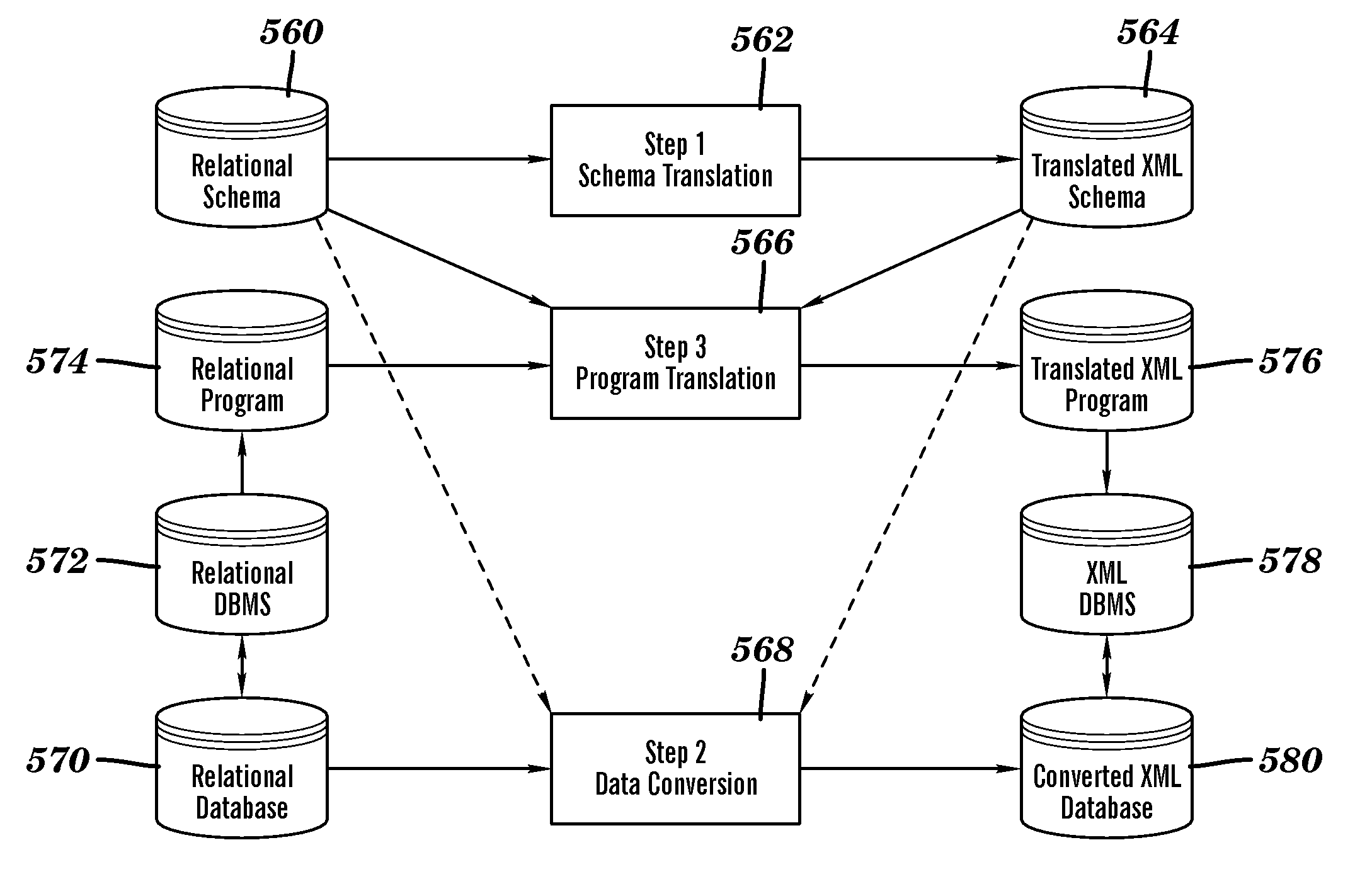
Figure 1 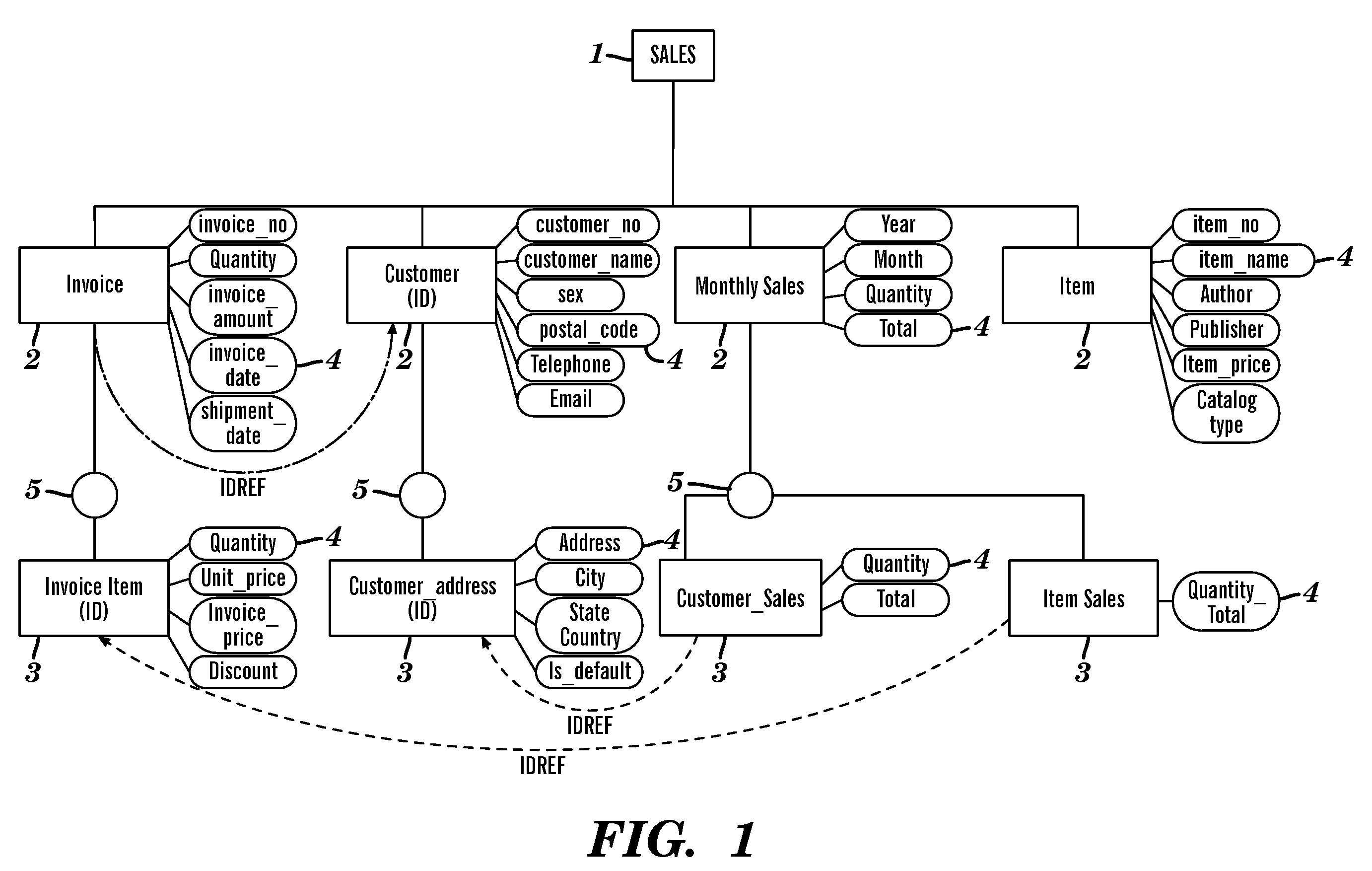
Figure 2 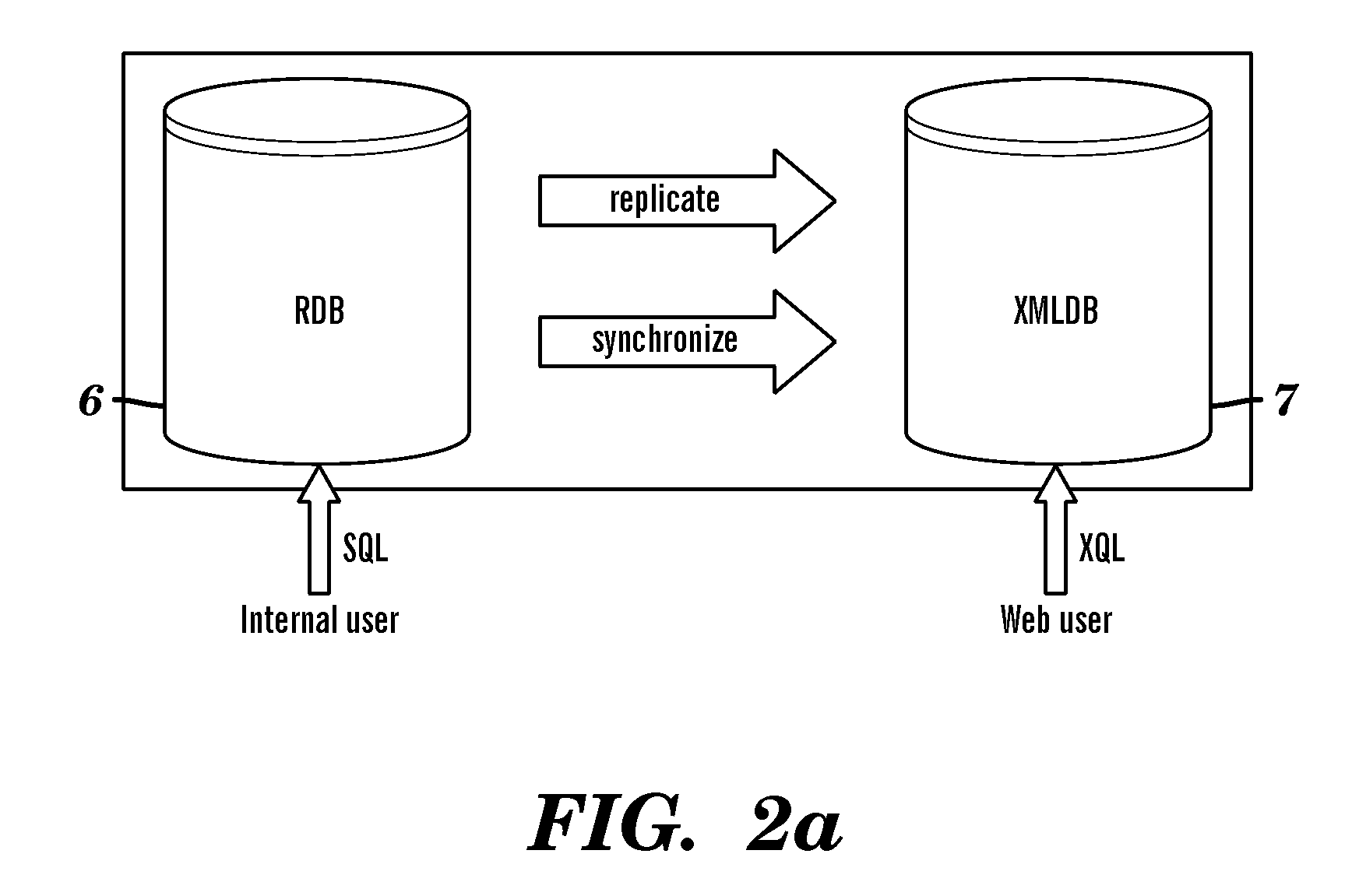
Figure 3
Abstract
Description
FIELD OF INVENTION
[0001] The present invention relates to a method of translating a relational database into an XML document, a method of translating an XML database into a relational database, a method of data transmission of relational data through an XML document between a sender and a receiver over a network, a computer program, computer program product, a system of translating a relational database into an XML document and a system of translating an XML database into a relational database.BACKGROUND OF INVENTION
[0002] Internet applications today are faced with the problem of replicating, transforming, exporting, or saving data from one format to another. This process may be laborious, tedious and error prone. The Internet holds within it the potential for integrating all information into a global network, promising access to information any time and anywhere. However, this potential has yet to be realised. At present, the Internet is merely an access medium. To realize the Intern...
Examples
case study 1
[0273]This case study is of a Hospital Database System. An EER of the system is shown in FIG. 14. In this system, a patient 582 may have many record folders 584. Each record folder 584 may contain many different medical records 586 of the patient. The AE record 604, a ward record 606 and an outpatient record 608 may be generalised as a medical record 586. A country 588 has many patients 582. A borrower 596 of the record folder 584 of the patient 582 may be a department 612, a doctor 614 or another hospital 616 for their references or checking. Once a record folder 584 is borrowed, a loan history 598 may be created to record the details about it. The relational schemas for this case study are shown in Tables 13 to 25 below.
[0274]In the following, underlined and italic means primary key and * means foreign key.
TABLE 13CountryCountry NoCountry—NameC0001ChinaC0002CanadaC0003Korea
TABLE 14Record FolderFolder NoLocation*HKIDF_21Hong KongE3766849F_22KowloonE8018229F_23New TerritoriesE607788...
case study 2
[0295]This case study is for a bank loan application. In this study, a loan with an identity number belongs to a customer who has a customer identity number Customers have mortgage loans secured by loan securities. Each loan interest type may be accrued by multiple interest types. Each interest type may be assigned to different loans. Customers open accounts at different branches with a maturity date. Each loan is charged with interest of a rate of an interest type. All of these may be described in an extended entity relationship model such as that shown in FIG. 17.
[0296]Starting from the entity Loan 672 in the EER model of FIG. 17, the relevant entities for it are determined. The relevant entities include the related entities that are navigable from the parent entity 672 in various relationships. The entity Customer 670 is in a many-to-many relationship 674 defined as secured with the parent entity 672. The entity Security 676 is in a many-to-many relationship 674 defined as secure...