
Laminate for printing and, printing method and printed matter using the same
a technology of laminate and printing method, applied in the field of printing laminate, can solve the problems of blurred edges, inability to obtain sufficient color density, and impair image sharpness, and achieve the effects of weak affinity, weak affinity, and permeability of dyes
Patent Information
- Authority / Receiving Office
- US · United States
- Patent Type
- Patents(United States)
- Current Assignee / Owner
- Publication Date
- 2007-07-03
- Estimated Expiration
- Not applicable · inactive patent
Smart Images
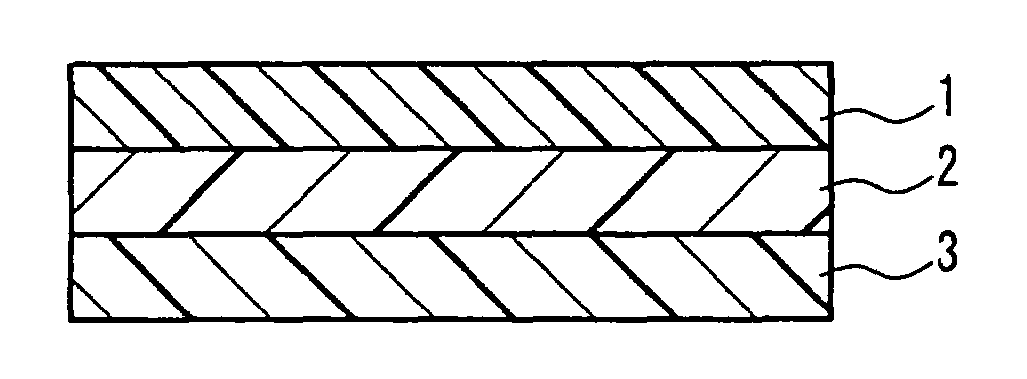
Figure 1 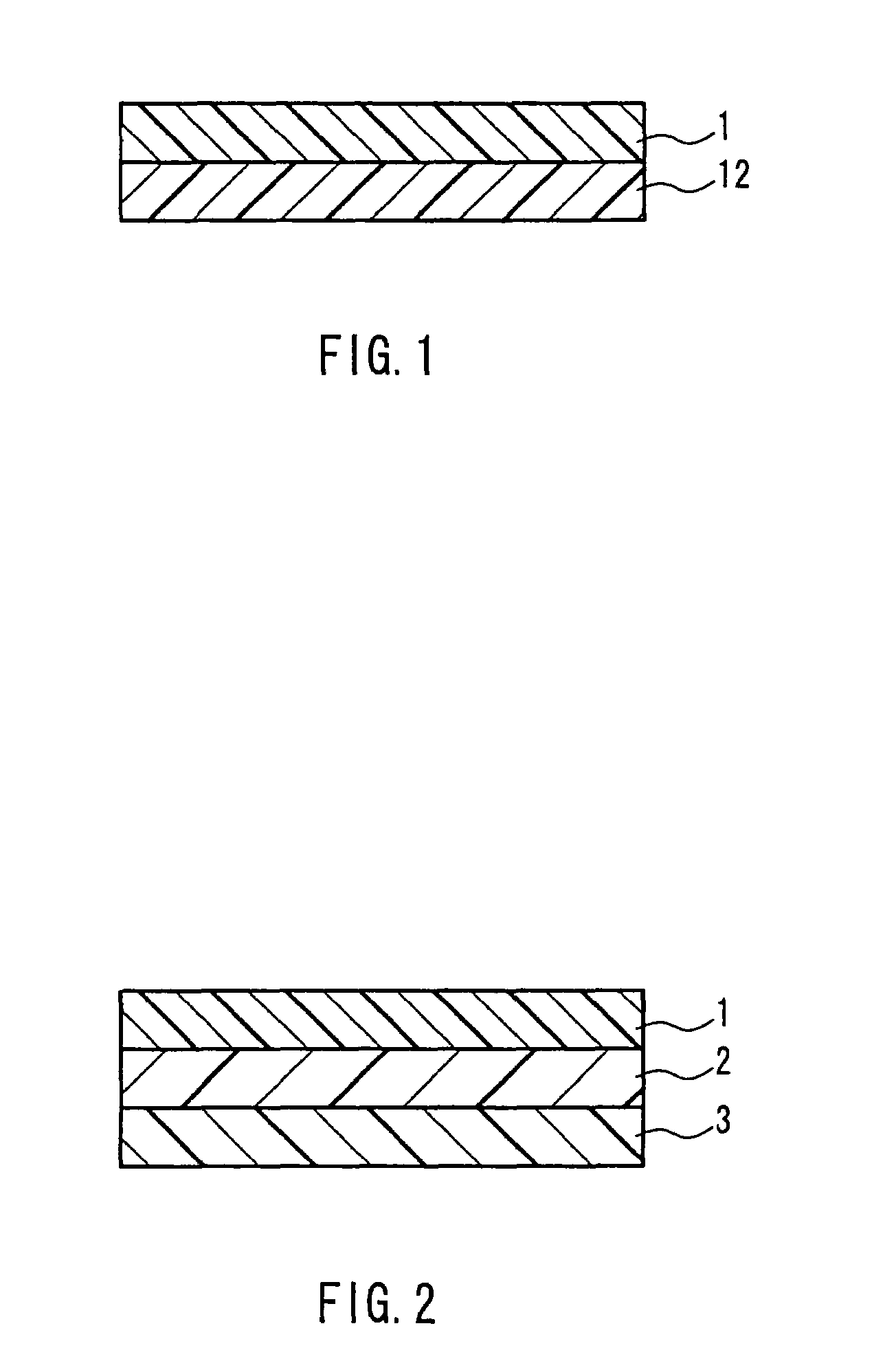
Figure 2 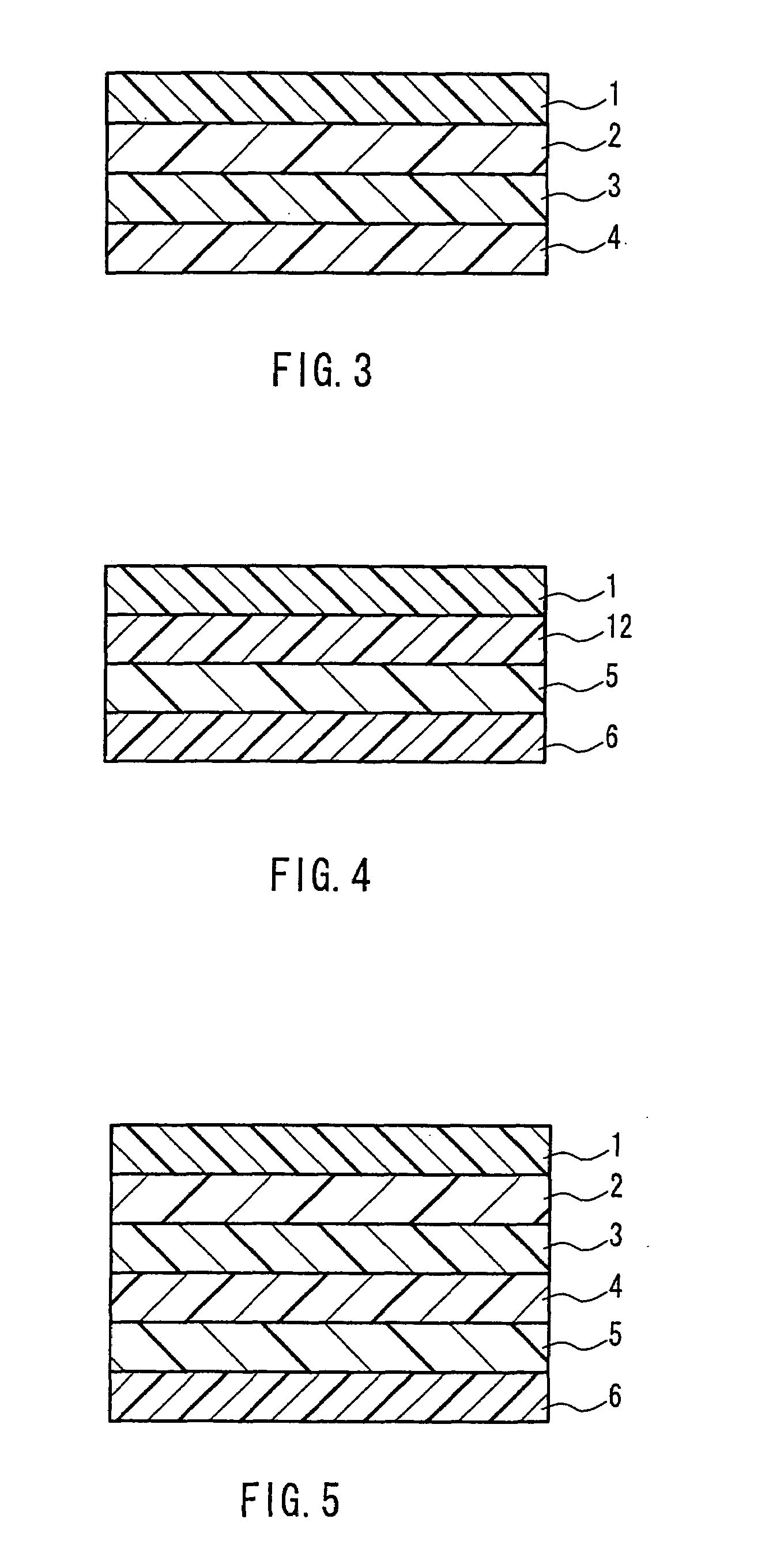
Figure 3
Abstract
Description
TECHNICAL FIELD
[0001] The present invention relates to a printing laminate that is used for sublimation dyeing in which a sublimable dye is allowed to penetrate the inside of a resin by the application of heat and relates to a printing method and a print using the printing laminate. More specifically, the present invention relates to a printing laminate that prevents the migration of a sublimable dye, which occurs during the dyeing or occurs over the course of time after the dyeing, and relates to a printing method and a print using the printing laminate.BACKGROUND ART
[0002] Conventionally, when an image or the like is printed on a printing laminate using a sublimable dye, the printing is conducted first on paper using an ink containing the sublimable dye, and then the printed surface of the paper is applied to a surface of the printing laminate and the printed surface of the paper is brought into intimate contact with the printing laminate by means of a heat vacuum applicator, a heat...
Examples
reference example 1
[0072]1000 parts of n-butyl acetate was put in a four-necked flask equipped with a stirrer, a thermometer, an inner gas inlet and a condenser, and a temperature was increased to 100° C. Next, a mixture including: 650 parts of methyl methacrylate; 245 parts of n-butyl methacrylate; 100 parts of 2-hydroxy ethyl methacrylate; 5 parts of methacrylic acid; and 15 parts of t-butyl peroxy-2-ethyl hexanoate was dropped at 110° C. over 4 hours, and even after the dropping, the temperature was kept at 110° C. so as to continue the reaction for 6 hours, whereby vinyl copolymer (a-1) having about a nonvolatile content of 50% was obtained. This vinyl copolymer (a-1) was dried and its SP value was measured. The measurement result was 10.16.
reference examples 2 to 6
[0073]Vinyl copolymers (a-2) to (a-6) were obtained in a similar manner to Reference Example 1 except that the ratio of vinyl monomers was changed as in Table 1. Furthermore, they were dried and their SP values were measured. The measurement results are shown in Table 1.
[0074]
TABLE 1Vinyl monomersa-2a-3a-4a-5a-6styrene100200200methyl methacrylate200500800400ethyl methacrylate200450ethyl acrylate190100n-butyl methacrylate100200300t-butyl methacrylate200n-butyl acrylate195951501902-hydroxy ethyl200methacrylatemethacrylic acid551010S P values9.799.6410.499.029.54
[0075]When the afore-mentioned substances having the SP values of 9.0 or more are used as a dye migration preventive layer, the film thickness preferably is set from 1 μm to 100 μm, inclusive, more preferably from 2 μm to 80 μm, inclusive and still preferably from 3 μm to 60 μm, inclusive. A thickness less than 1 μm leads to insufficient effects for preventing the migration of the dye, and a thickness exceeding 100 μm makes the...
working examples
[0177]The present invention will be described more specifically by way of the following Working Examples. In the following Working Examples, “parts” refer to parts by weight, and “%” refers to percentage by weight.