
VLSI artwork legalization for hierarchical designs with multiple grid constraints
a hierarchical design and artwork technology, applied in the field of object layouts, can solve the problems of high post-layout process cost, high manufacturing cost, and the most challenging topic of designers and researchers in the field of design for manufacturability (dfm)
Patent Information
- Authority / Receiving Office
- US · United States
- Patent Type
- Patents(United States)
- Current Assignee / Owner
- Publication Date
- 2008-10-14
Smart Images
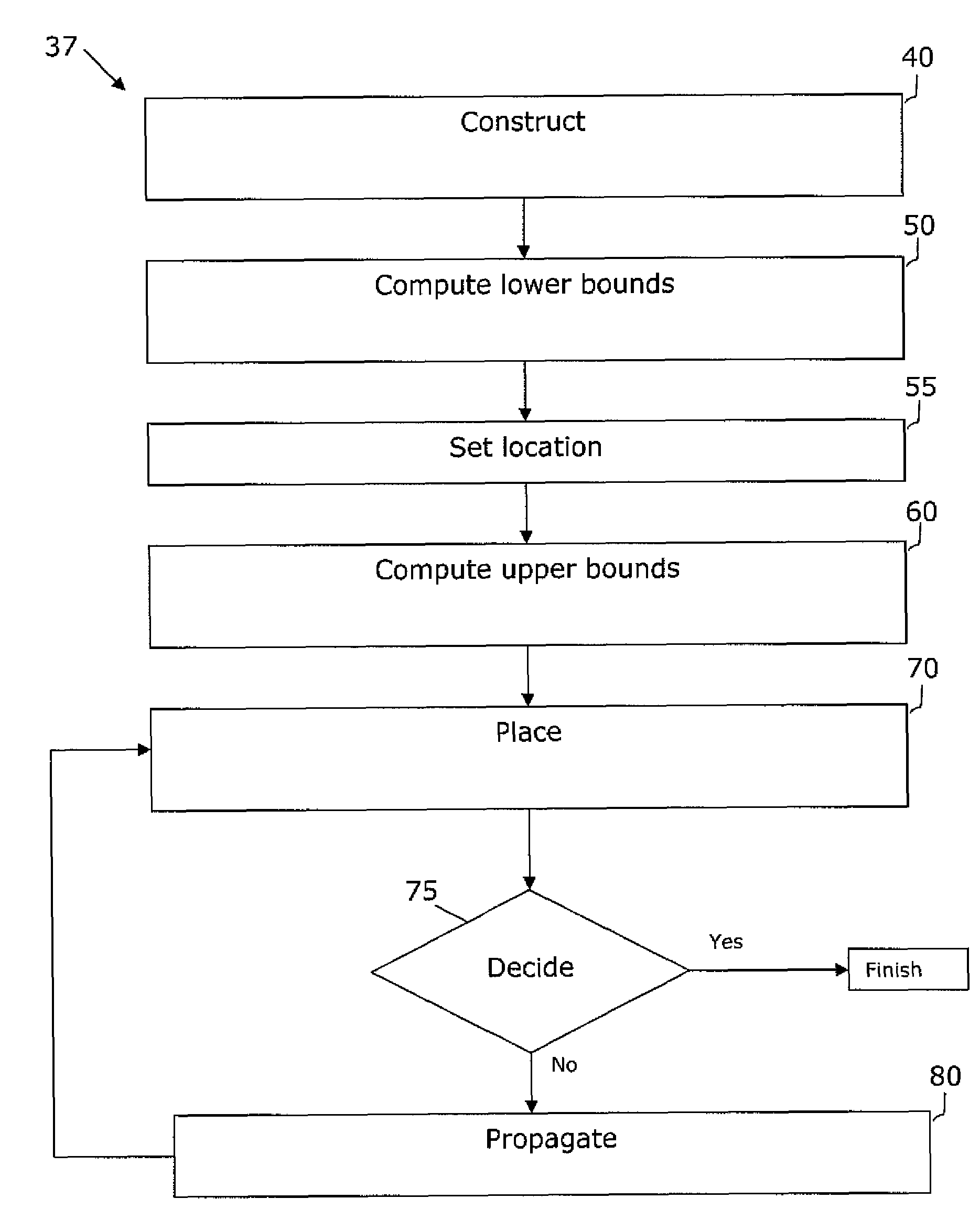
Figure 1 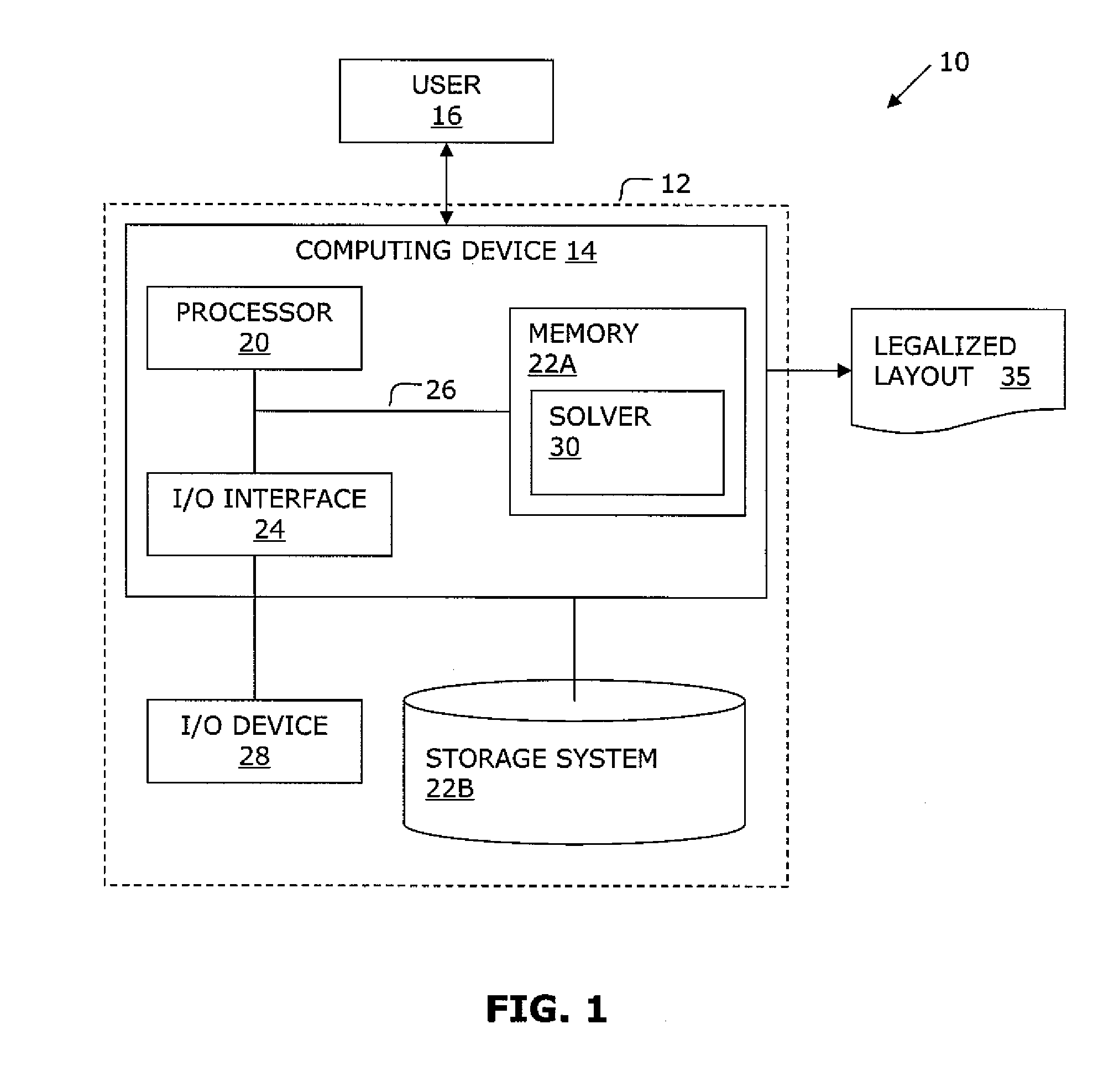
Figure 2 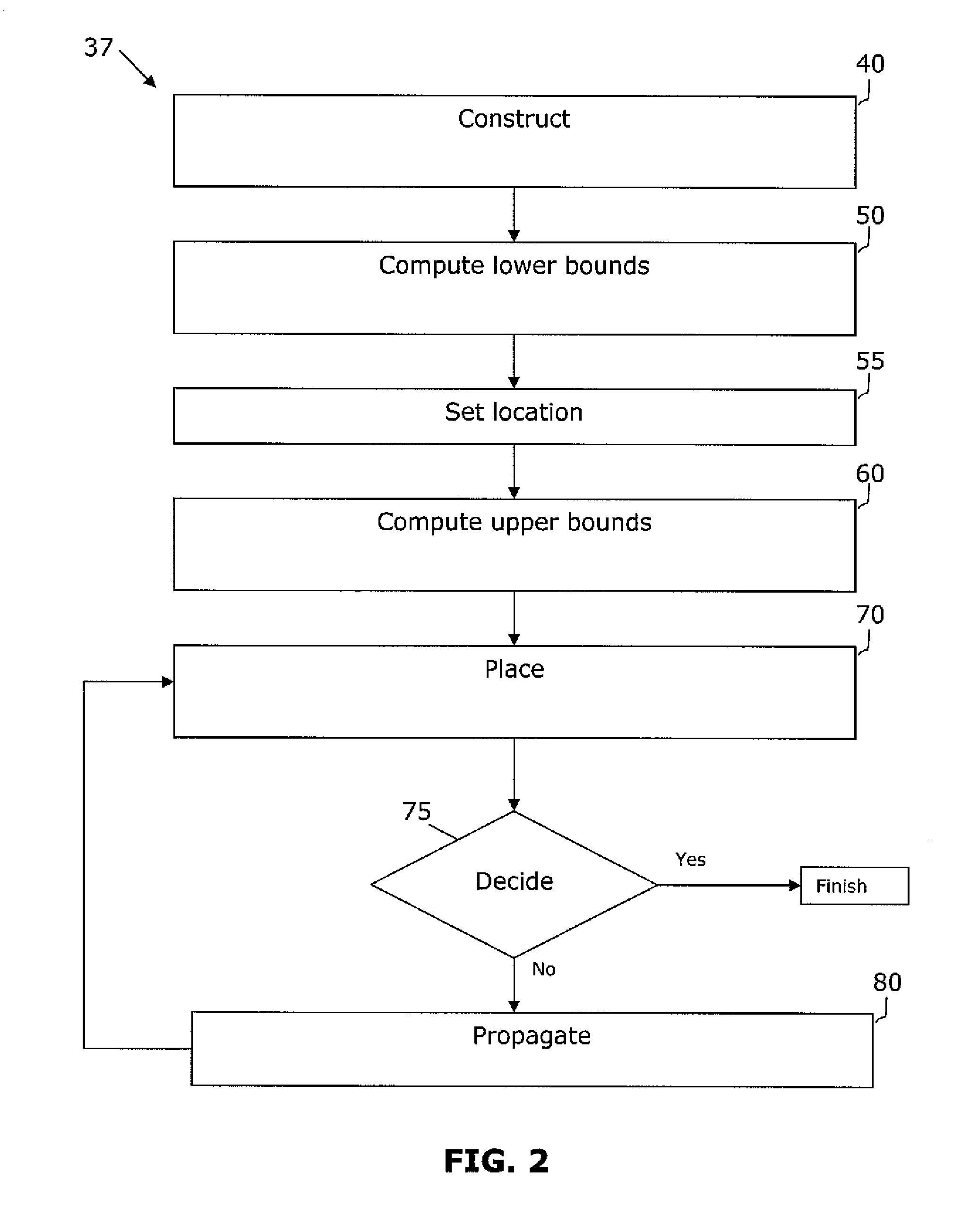
Figure 3
Abstract
Description
FIELD OF THE INVENTION
[0001] The invention relates to object layouts and, more particularly, to a system and method for legalizing flat and / or hierarchical layouts with multiple grid constraints.BACKGROUND OF INVENTION
[0002] With the advance of ultra deep submicron technology, manufacturability has become one of the major problems in very large scale integrated (VLSI) circuit design. Because the ability to control the physical properties of fabricated devices and interconnects is decreasing, the variability of finally printed shapes and their physical properties is increasing. Therefore, design for manufacturability (DFM) has become one of the most challenging topics among designers and researchers. Post-layout manufacturability enhancement techniques, such as optical proximity correction (OPC) and resolution enhancement techniques (RET), have been a key step to compensate for shape variation and ensure the manufacturability of designs. However, these post-layout processes are very ex...
Examples
Embodiment Construction
[0020]The invention is directed to a system and method for legalizing a flat or hierarchical VLSI layout to meet multiple grid constraints and conventional ground rules. Given a set of ground rules with multiple grid constraints and a VLSI layout (either hierarchical or flat) which is layout-versus-schematic (LVS) correct but may not be ground rule correct, the invention provides a legalized layout which meets the multiple grid constraints while maintaining LVS correctness and fixing the ground rule errors as much as possible with minimum layout perturbation from the input design.
[0021]In legalizing a flat VLSI layout to meet multiple grid constraints and conventional ground rules, embodiments of the invention use a minimum perturbation-driven graph-based grid legalization system and method to place objects on-grid while satisfying ground rule constraints. In embodiments of the invention, the system and method detects the existence of positive cycles by determining the iteration bou...