
Digital trunked communication network which supports roaming and method thereof
a trunked communication network and trunked communication technology, applied in the field of trunked communication networks, can solve the problems of increasing the complexity of the roaming mechanism, unable to provide a complete roaming control method, and the control center becomes a bottleneck, so as to reduce the complexity of the system and the coupling, the topology of the system is flexible, and the flow is convenient.
Patent Information
- Authority / Receiving Office
- US · United States
- Patent Type
- Patents(United States)
- Current Assignee / Owner
- Publication Date
- 2010-08-17
Smart Images
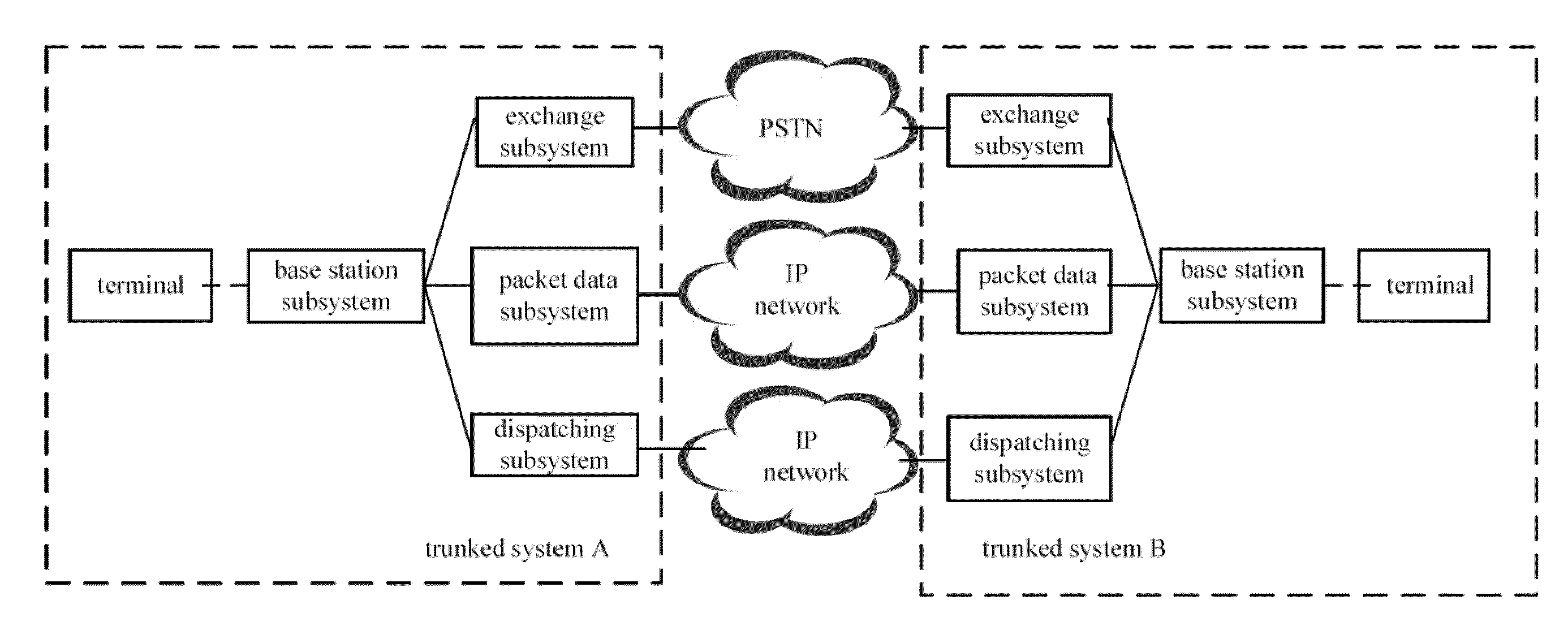
Figure 1 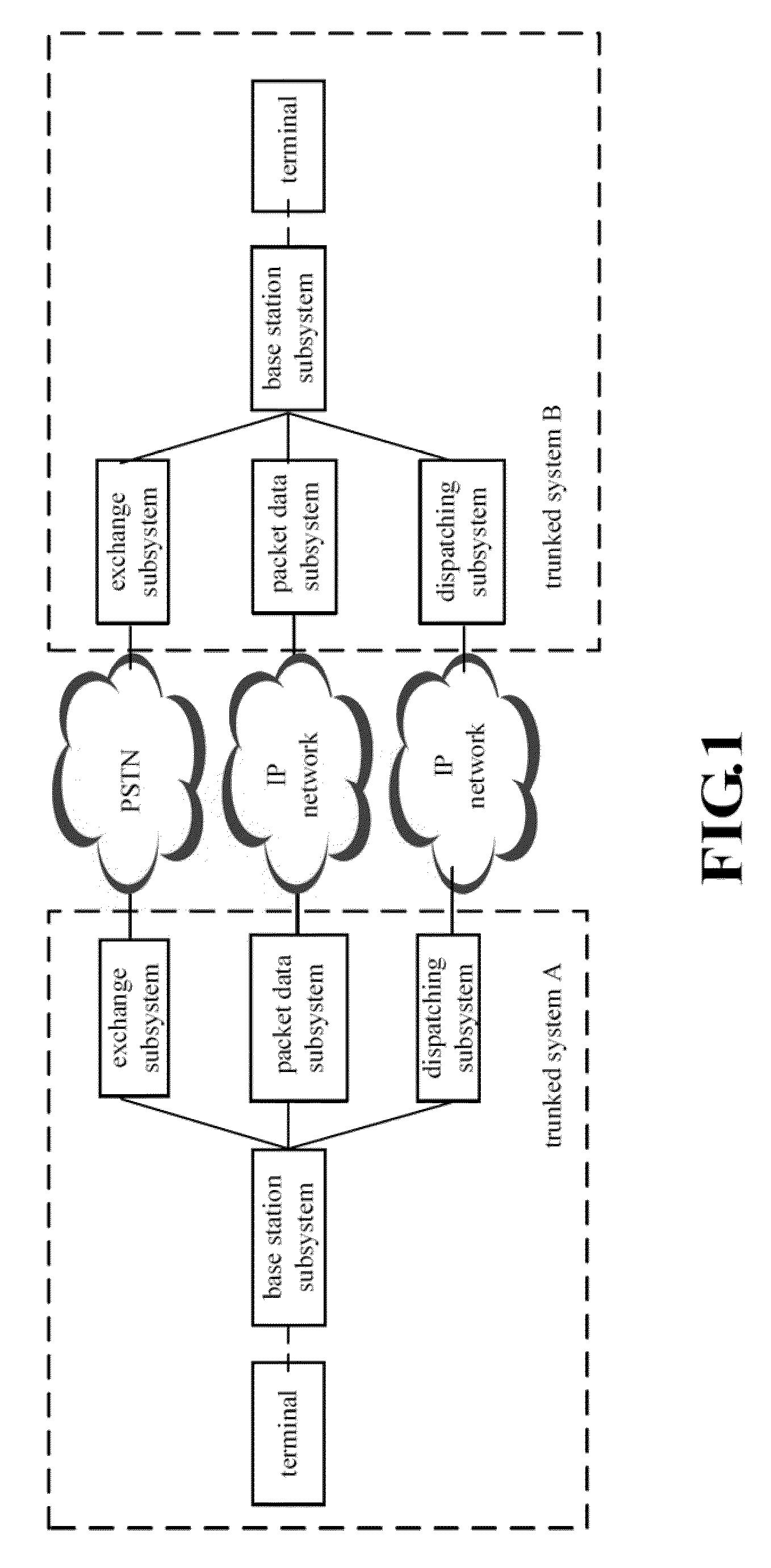
Figure 2 
Figure 3
Abstract
Description
PRIORITY CLAIM
[0001] This application is related to and claims priority to a commonly assigned International PCT Application, Serial No. PCT / CN2004 / 000760, filed Jul. 6, 2004, which is incorporated by reference herein.FIELD OF THE INVENTION
[0002] The present invention relates to trunked communication technology in the field of mobile communication, particularly to a digital trunked communication network which supports roaming and a method for realizing roaming.DESCRIPTION OF PRIOR ART
[0003] Trunked communication is an important branch of mobile communication, while supporting roaming is a necessary function for a trunked communication system, which directly decides whether the trunked communication system can provide a whole network coverage service or not. A trunked service has unique characteristics such as one-to-many call, late-joining and dynamic regroup, while the roaming technology for existing mobile communication system is mainly directed to telephone interconnection service e...
Examples
Embodiment Construction
[0027]Now the technical solution of the present invention will be further describe in detail in combination with the drawings and embodiments thereof.
[0028]An architectural schematic view of a trunked communication network as shown in FIG. 1 at least includes two trunked communication systems, and each trunked system has a base station subsystem, a dispatching subsystem, a packet data subsystem, an exchange subsystem, and a terminal. The terminal is accessed to the exchange subsystem, the packet data subsystem and the dispatching subsystem respectively via the base station subsystem. The exchange subsystems in different trunked systems are interconnected via a PSTN network, the packet data subsystems in different trunked systems are interconnected via an IP network, and the dispatching subsystems in different trunked systems are interconnected via the IP network.
[0029]Wherein the terminal is a terminal equipment which has trunked service function as well as several capabilities such...