
Process for producing template DNA and process for producing protein in cell-free protein synthesis system with the use of the same
a protein synthesis and template technology, applied in biochemistry apparatus and processes, polypeptides with his-tags, polypeptides with gst-tags, etc., can solve the problems of difficult to achieve high-throughput by automation, complex methods, and high time and effor
Patent Information
- Authority / Receiving Office
- US · United States
- Patent Type
- Patents(United States)
- Current Assignee / Owner
- Publication Date
- 2010-12-07
- Estimated Expiration
- Not applicable · inactive patent
Smart Images
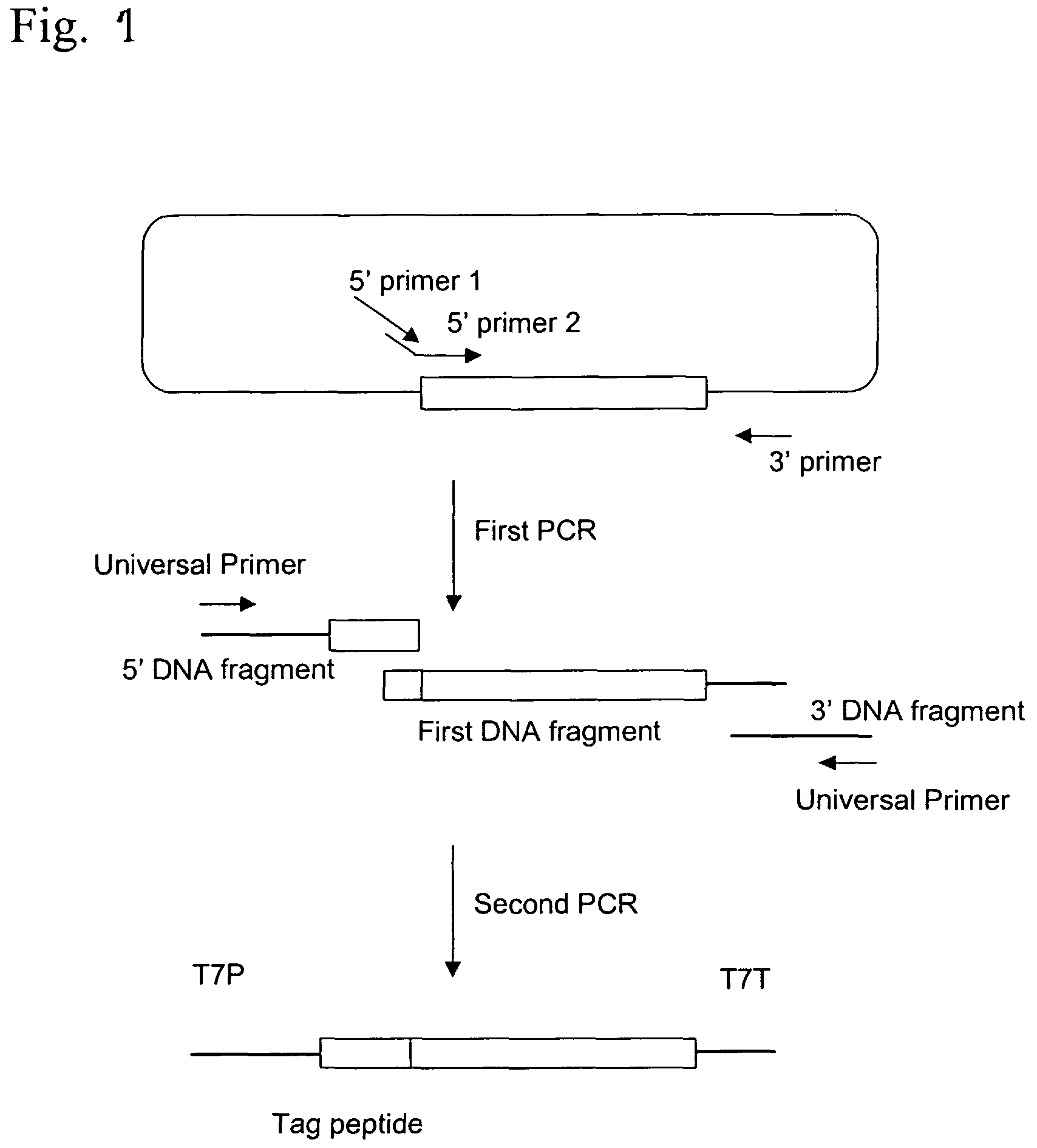
Figure 1 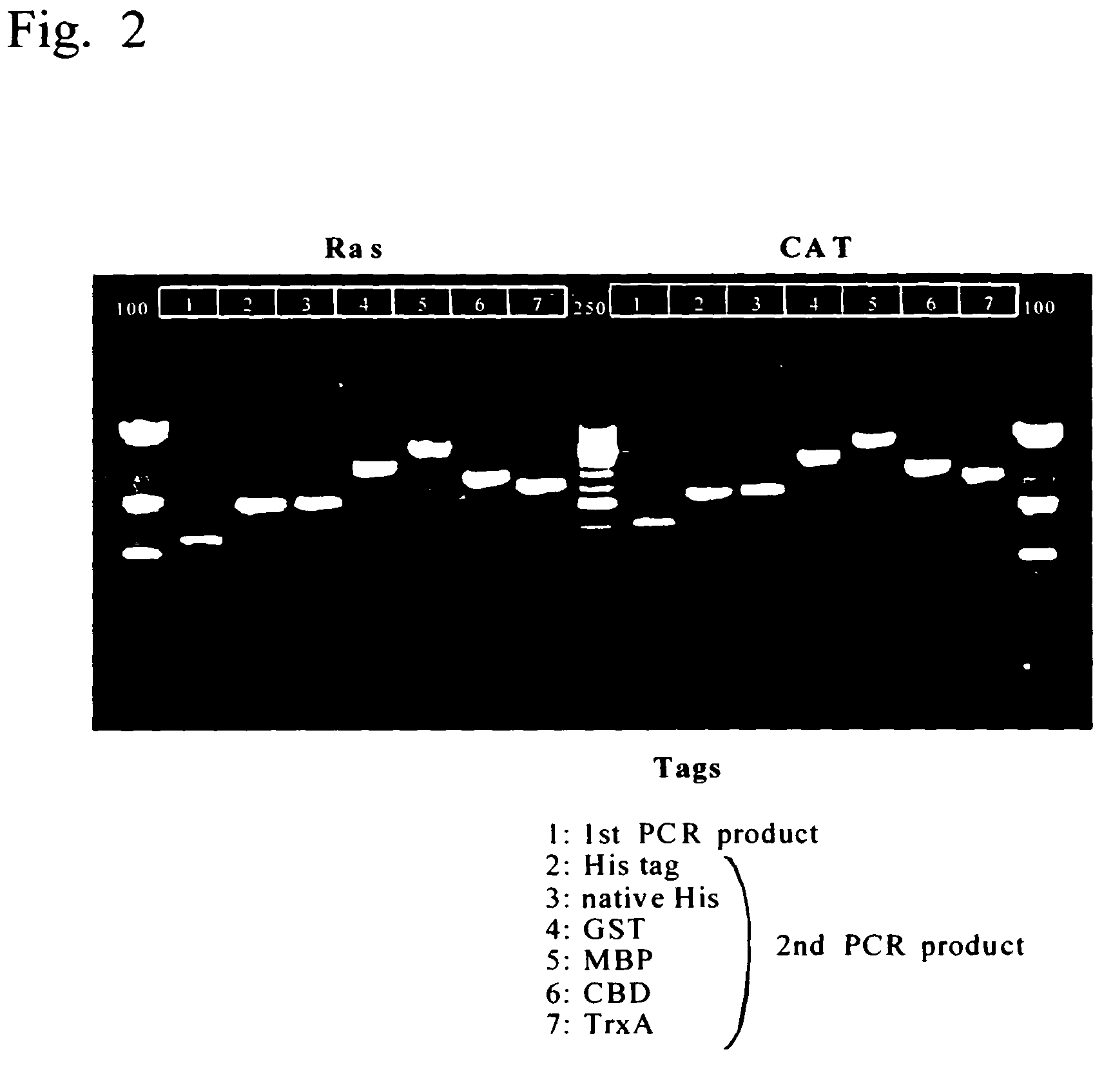
Figure 2 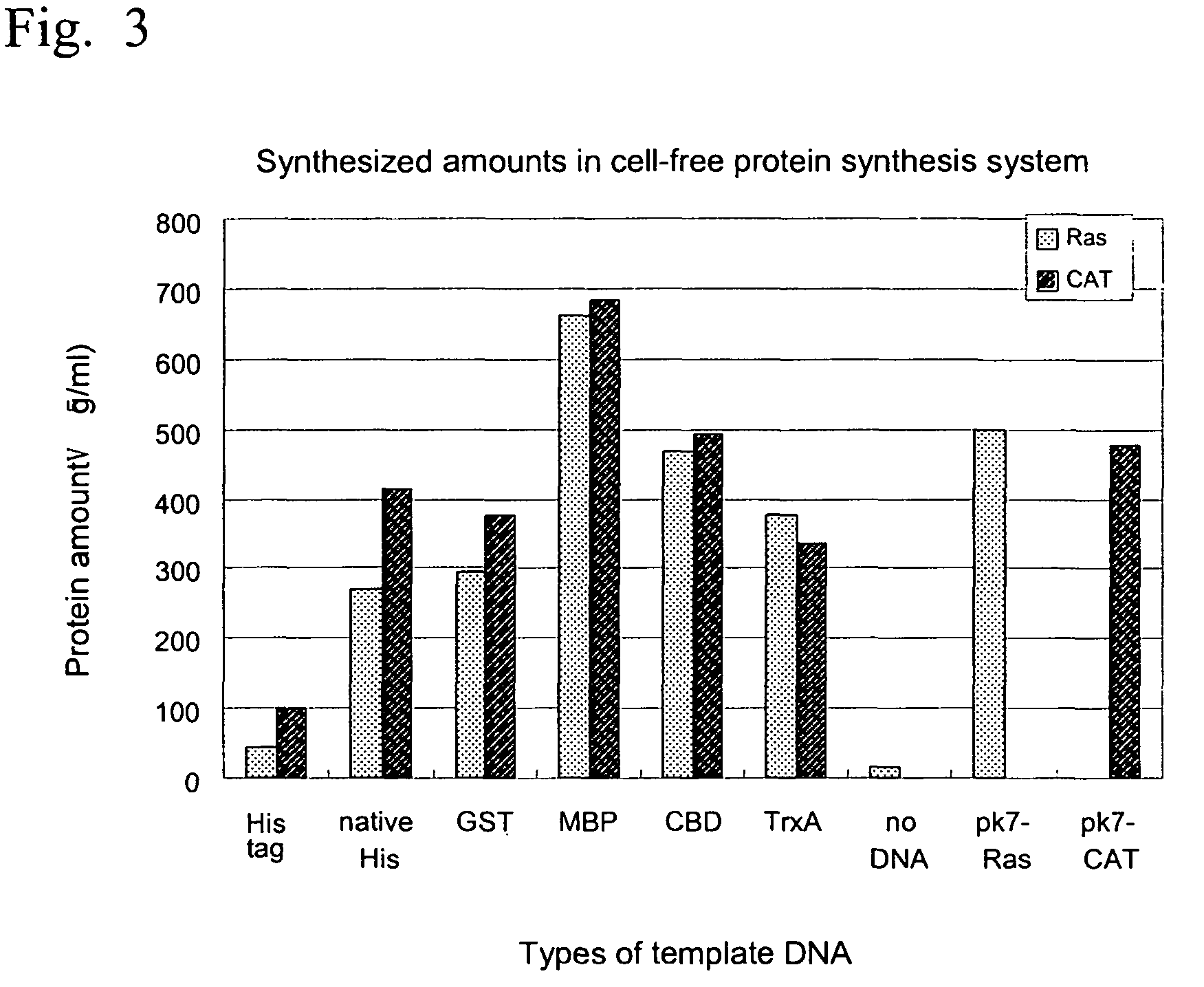
Figure 3
Abstract
Description
[0001] This application is a continuation of co-pending application Ser. No. 10 / 748,055, filed on Dec. 31, 2003, the entire contents of which are hereby incorporated by reference and for which priority is claimed under 35 U.S.C. §120.
[0002] The Ser. No. 10 / 748,055 application claims priority under 35 U.S.C. §119 (a) on Patent Application No. 2001-201356 filed in Japan on Jul. 2, 2001 and it is a Continuation of PCT International Application No. PCT / JP02 / 06261 filed on Jun. 24, 2002, which designated the United States, and on which priority is claimed under 35 U.S.C. §120, the entire contents of which are hereby incorporated by reference.TECHNICAL FIELD
[0003] The present invention relates to a method of producing a template DNA for protein synthesis and a method of producing a protein using a template DNA that is produced by the method.BACKGROUND ART
[0004] Regarding a huge number of genes derived from a great deal of genomic sequence information of organisms, a research called “Structura...
Examples
example 1
Expression of Ras Protein
[0064](1) First PCR
[0065]PCR was performed using a linear double-stranded DNA (nucleotide sequence was described in SEQ ID No. 2) coding for Ras protein as a template and three types of primers, 5′ primer 1: hRBS>B+6 (SEQ ID. No. 3), 5′ primer 2: pRas (SEQ ID No. 4) and 3′ primer: p8.2 (SEQ ID No. 5). The composition of the PCR solution and the amplification program were shown in Tables 1 and 2 respectively.
[0066]
5′ primer 1: hRBS > B + 6(SEQ ID No. 3)5′-CCGAAGGAGCCGCCACCAT-3′5′ primer 2: pRas(SEQ ID No. 4)5′-GAAGGAGCCGCCACCATGACCGAATACAAACTGGTTGTAG-3′3′ PRIMER: p8.2(SEQ ID No. 5)5′-GCGGATAACAATTTCACACAGGAAAC-3′
[0067]
TABLE 1FinalCompositionConcentrationAmountconcentrationTemplate plasmid1 ng / μl4 μl0.2 ng / μl5′ Primer 1 (hRBS > B + 6)1.6 μM1 μl0.08 μM5′ Primer 20.2 μM2 μl0.02 μM3′ Primer (p8.2)2 μM1 μl0.1 μMdNTPs (Toyobo)2 mM2 μl0.2 mMExpand HF buffer(10×)2 μl(1×)(Boehringer Mannheim)(containing 15 mMmagnesium chloride)Sterile distilled water7.85 μl DNA polym...
example 2
Expression of CAT Protein
[0077](1) First PCR
[0078]The first PCR was performed in the same manner as in Example 1 using, as a template, a linear double-stranded DNA having a nucleotide sequence described in SEQ ID No. 13 which DNA codes for CAT protein. In this connection, primer pCAT specific for CAT gene and having a nucleotide sequence described in SEQ ID No. 14 was used as 5′ primer 2.
[0079]
5′ primer 2: pCAT(SEQ ID No. 14)5′-GAAGGAGCCGCCACCATGGAGAAAAAAATCACTGGATATAC-3′
[0080](2) Second PCR and Protein Synthesis in a Cell-Free Protein Synthesis System
[0081]The protein was synthesized in a cell-free protein synthesis system after second PCR in the same manner as in Example 1.
example 3
Expression of Mouse cDNA Clones
[0082](1) First PCR
[0083]Ten types of cDNA clones optionally selected from mouse full-length cDNA library were used as a template. These are obtained by cloning the respective cDNAs in SacI and XhoI sites of plasmid pBluescript SK+, and have been registered in GenBank (Accession Nos. are m16206, m21532, x13605, u51204, 116904, s68022, d87663, x65627, m32599 and u85511 respectively). PCR was performed using the common primers in Example 1 as 5′ primer 1 and 3′ primer and primers specific for the respective cDNAs and having the following nucleotide sequences as 5′ primer 2. The composition of the PCR solution and the program were shown in Tables 6 and 2 respectively.
[0084]
5′ primer 2: p1A2(SEQ ID No. 15)5′-GAAGGAGCCGCCACCATGCTCAAAGTCACGGTGCCC-3′5′ primer 2: p1B2(SEQ ID No. 16)5′-GAAGGAGCCGCCACCATGGAGGAGCAGCGCTGTTC-3′5′ primer 2: p1C8(SEQ ID No. 17)5′-GAAGGAGCCGCCACCATGGCCCGAACCAAGCAGAC-3′5′ primer 2: p1D2(SEQ ID No. 18)5′-GAAGGAGCCGCCACCATGGGTGTTGACAAAAT...