
Programmable resistance memory
a technology of programmable resistance and memory, which is applied in the direction of digital storage, instruments, electrical equipment, etc., can solve the problems of resistance drift, ambiguous programmatic state of the device, and the tendency of the device's resistance to increase over time, so as to increase the memory's dynamic/drift ratio and maximize storage level separation
Patent Information
- Authority / Receiving Office
- US · United States
- Patent Type
- Patents(United States)
- Current Assignee / Owner
- Publication Date
- 2011-08-30
- Estimated Expiration
- Not applicable · inactive patent
Smart Images
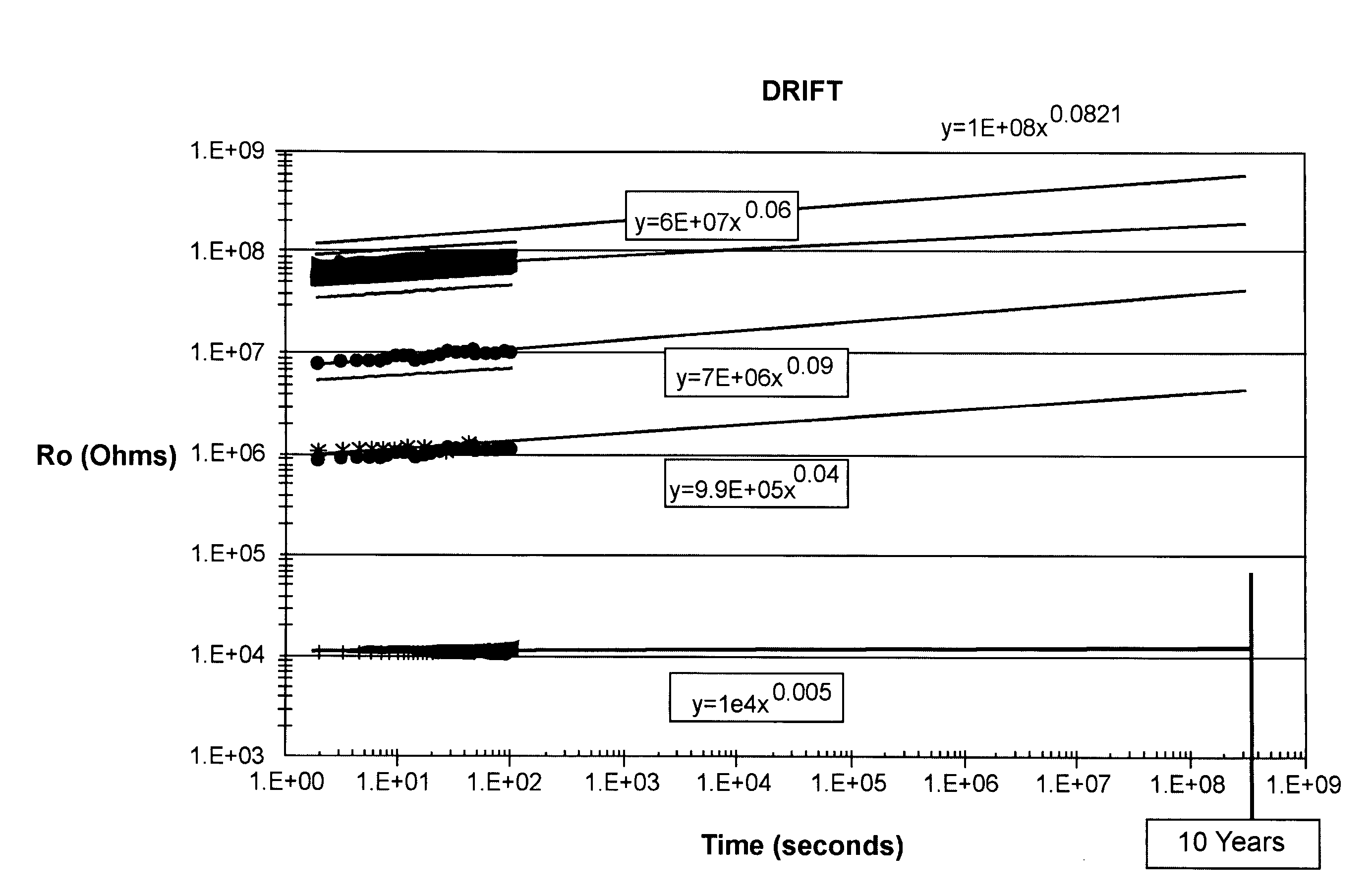
Figure 1 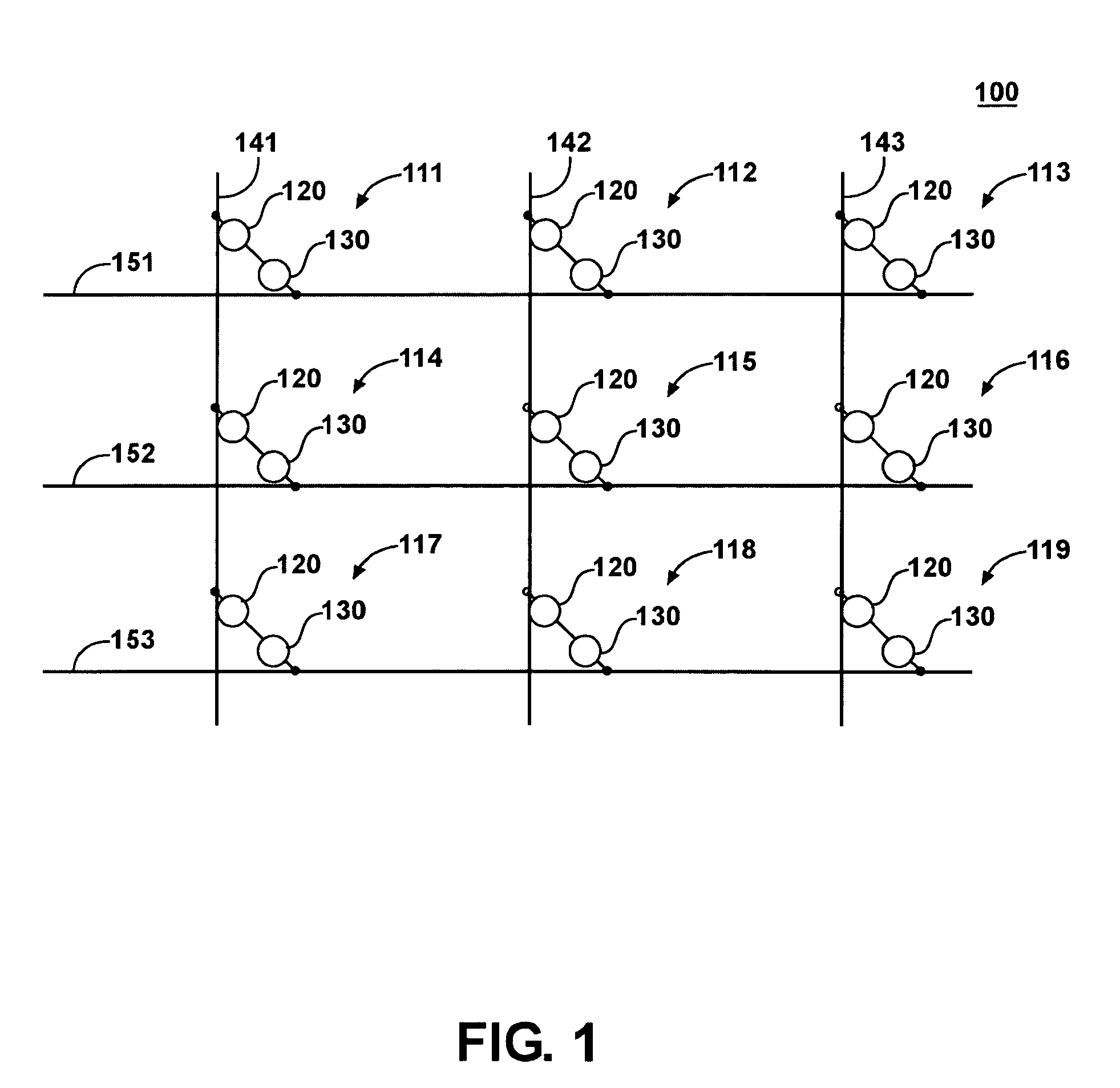
Figure 2 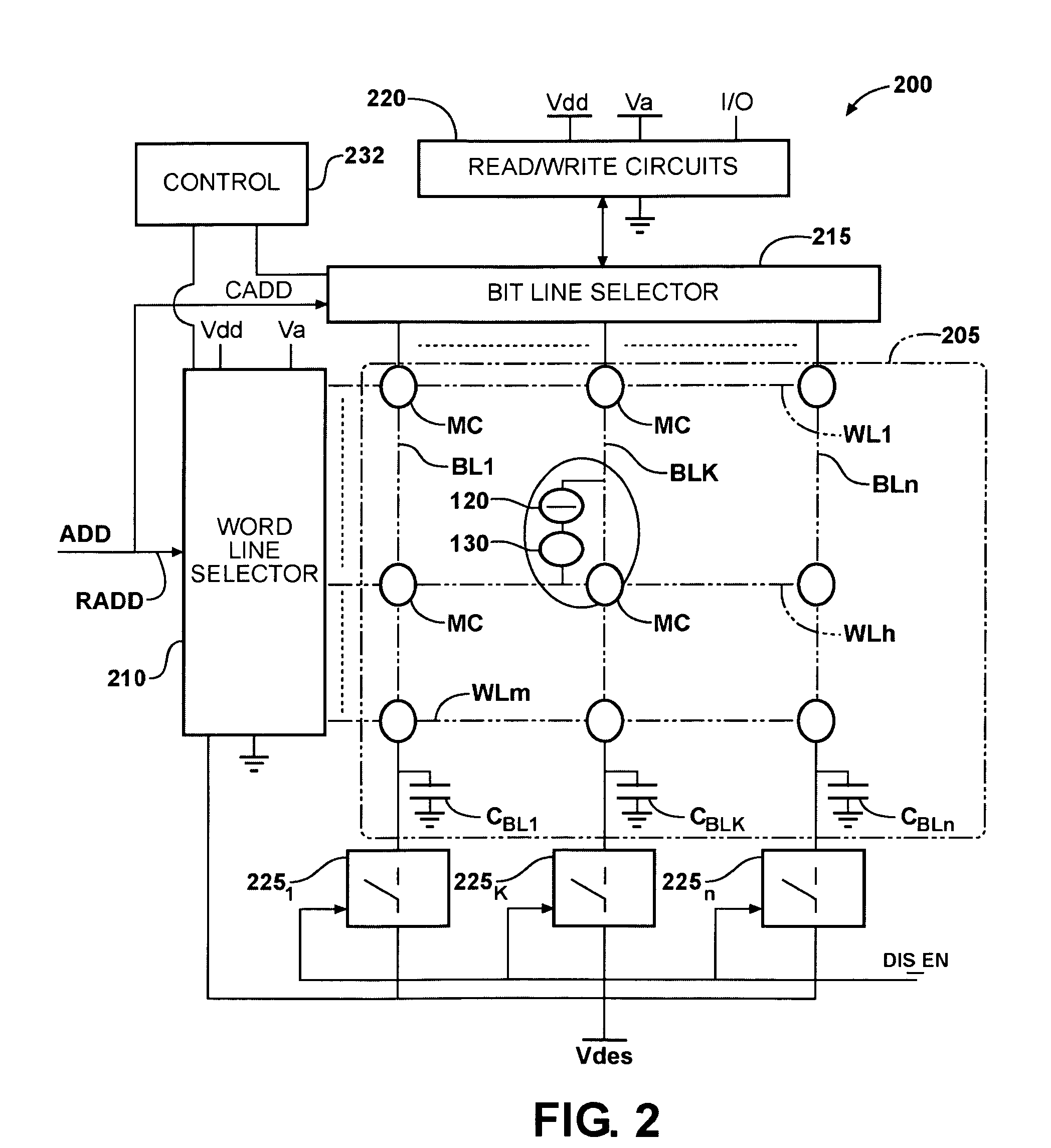
Figure 3
Abstract
Description
CROSS-REFERENCE TO RELATED APPLICATIONSField of Invention
[0001] This invention relates to electronic memory devices.BACKGROUND OF THE INVENTION
[0002] As electronic memories approach limits beyond which they will no longer be able to produce the density / cost / performance improvements so famously set forth in Moore's law, a host of memory technologies are being investigated as potential replacements for conventional silicon complementary metal oxide semiconductor (CMOS) integrated circuit memories. Among the technologies being investigated are programmable resistance technologies, such as phase change memory technologies. Phase-change memory arrays are based upon memory elements that switch among two material phases, or gradations thereof, to exhibit corresponding distinct electrical characteristics. Alloys of elements of group VI of the periodic table, such as Te, S or Se, referred to as chalcogenides or chalcogenic materials, can be used advantageously in phase change memory cells. In ...
Examples
Embodiment Construction
[0030]Although this invention will be described in terms of certain preferred embodiments, other embodiments that are apparent to those of ordinary skill in the art, including embodiments that do not provide all of the benefits and features set forth herein, are also within the scope of this invention. Various structural, logical, process step, chemical, and electrical changes may be made without departing from the spirit or scope of the invention. Polarities and types of devices and supplies may be substituted in a manner that would be apparent to one of reasonable skill in the art. Process descriptions may include flowcharts that illustrate various steps taken in a process. Such flowcharts and accompanying discussion are not meant to be an exhaustive explanation of every step and every procedure in such a process. Rather, they are meant to provide a description with sufficient detail to enable one of ordinary skill in the art to practice and use the invention. In some embodiments,...