
Method for predicting catalyst performance
a catalyst and performance technology, applied in the field of catalyst performance prediction, can solve the problems of increasing the tendency of asphaltenes to agglomerate into larger particles, and more polyaromatic compounds to suffer significantly from catalyst aging, etc., to achieve the effect of maximizing conversion to desired products, minimizing fouling or coking, and simple and cost-efficient and repeatable manner
Patent Information
- Authority / Receiving Office
- US · United States
- Patent Type
- Patents(United States)
- Current Assignee / Owner
- Publication Date
- 2015-09-08
Smart Images
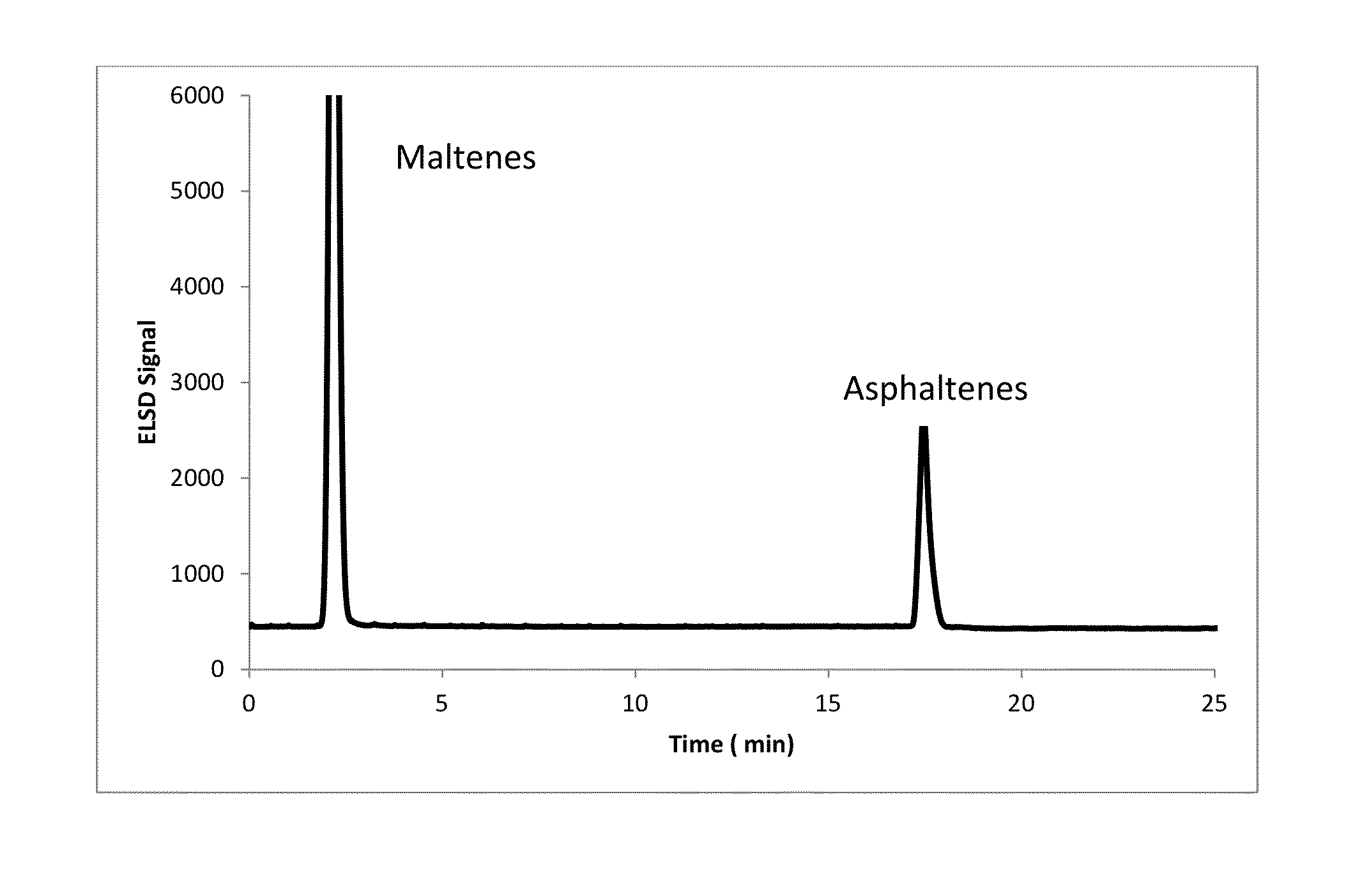
Figure 1 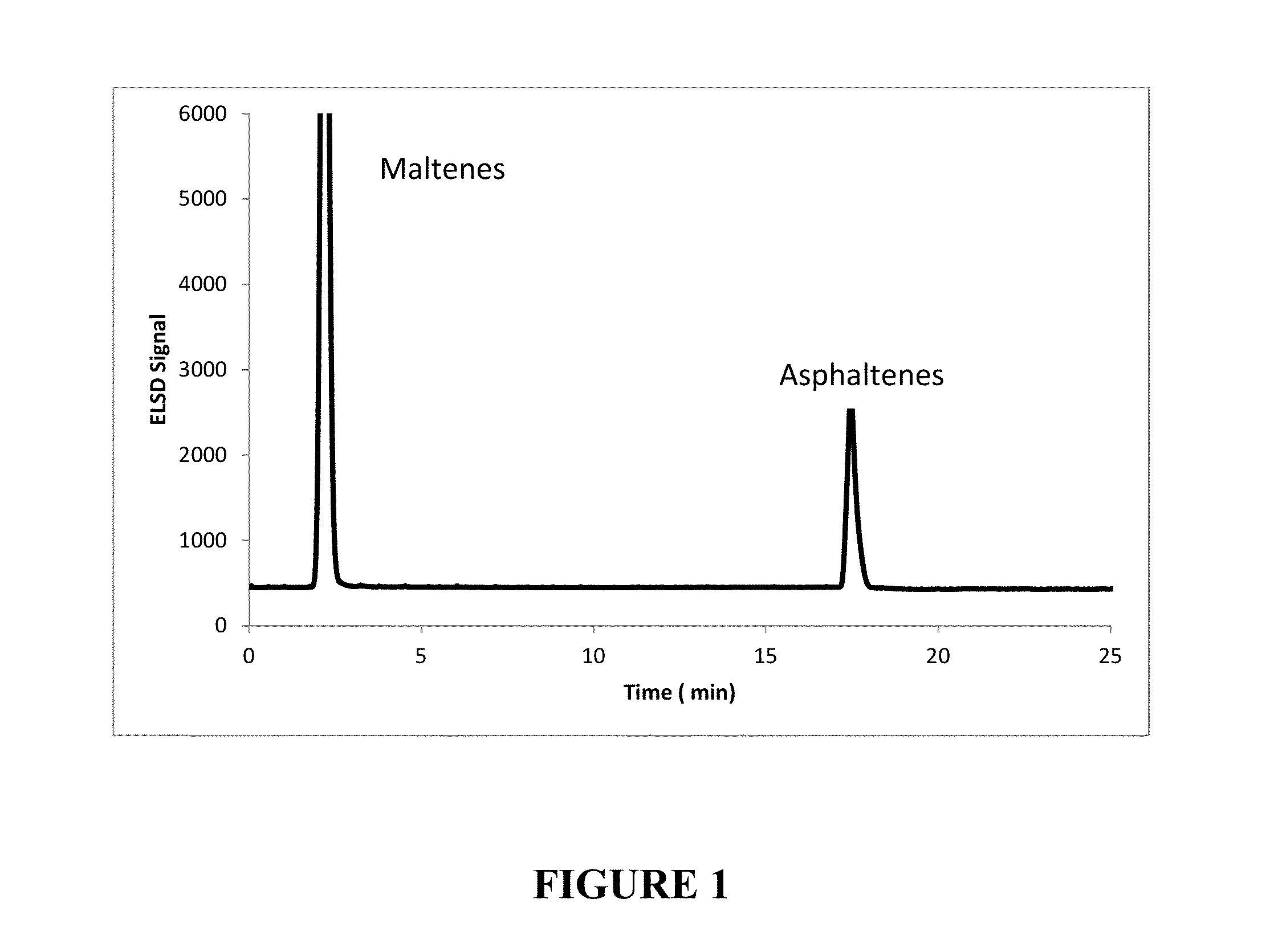
Figure 2 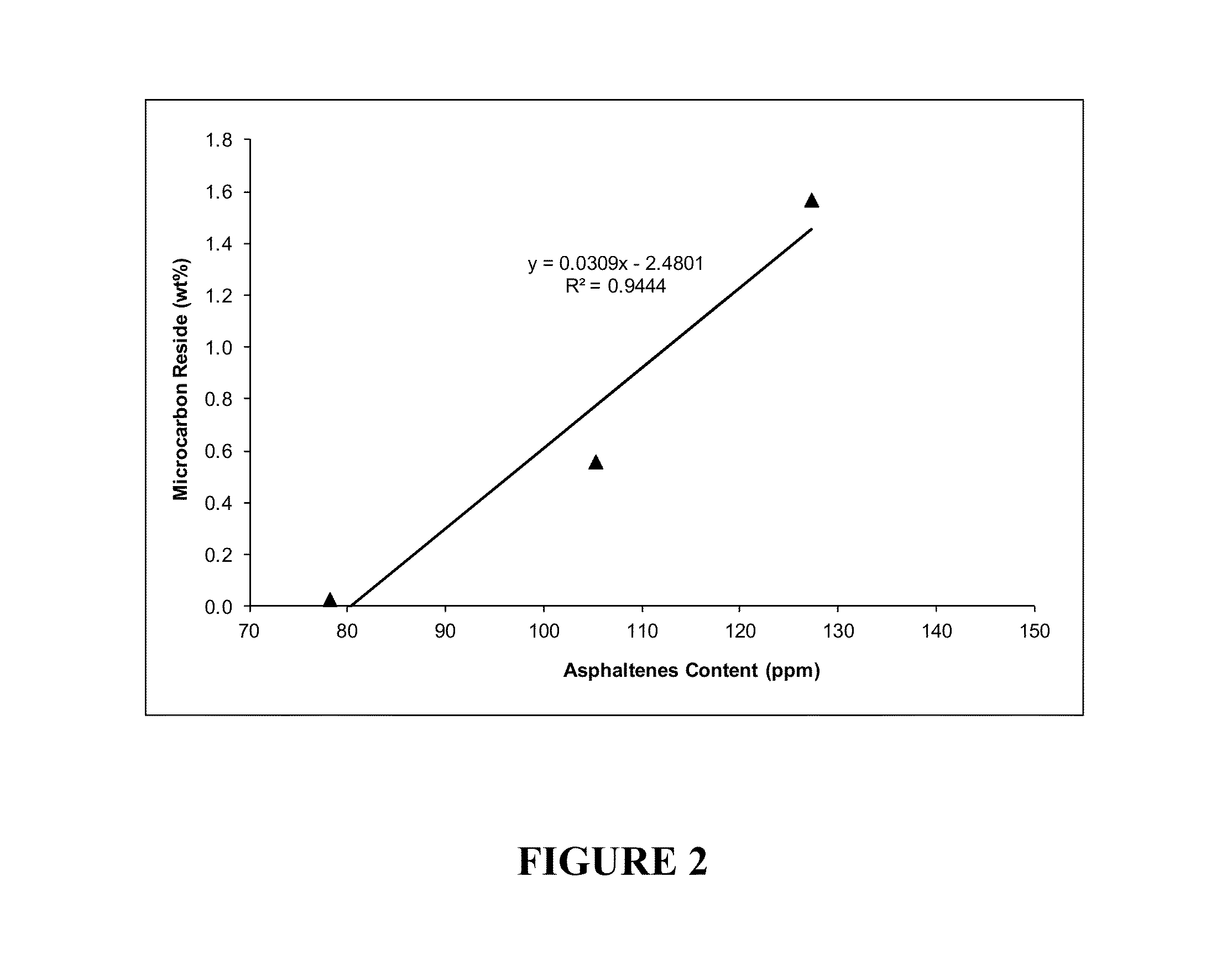
Figure 3
Abstract
Description
BACKGROUND OF THE INVENTION
[0001] 1. Technical Field
[0002] The present invention generally relates to a method for predicting catalyst performance in catalyst processes in the refining and petrochemical industry.
[0003] 2. Description of the Related Art
[0004] Hydroprocessing, which includes by way of example hydroconversion, hydrocracking, hydrotreating, hydrogenation, hydrofinishing and hydroisomerization, plays an important role in upgrading petroleum feedstocks to meet the more stringent quality requirements. For example, there is an increasing demand for improved hetero-atom removal, aromatic saturation, and boiling point reduction as well as removal of metal contaminants such as vanadium and nickel. Much work is presently being done in hydrotreating because of greater demands for the removal of undesirable components such as heteroatoms, most notably sulfur, from transportation and heating fuel streams. Hydrotreating is well known in the art and usually involves treating the petrole...
Examples
example 1
[0098]Solutions of three reference feedstocks shown in Table 1 were prepared by dissolving 5.00 g of the feedstocks in 10 mL of methylene chloride. The solutions were injected into a separate stainless steel column packed with poly(tetrafluoroethylene) (PTFE) using a heptane mobile phase (Solubility Parameter of 15.3 MPa0.5) at a flow rate of 4 mL / min. The maltenes (heptane solubles) eluted from the column as the first peak around 2 minutes after the injection. The mobile phase was then switched to a blend of 10% methanol / 90% dichloromethane (Solubility Parameter of 21.23 MPa0.5). In this manner, the asphaltene contents were measured with a total analysis time of approximately 20 to 22 minutes.
[0099]The eluted fractions were quantified using an Evaporative Light Scanning Detector (ELSD) operating at the following conditions: drift tube temperature 75° C.; volumetric flow of the solvents was 4.0 mL / min. and 3.5 L / min. of nitrogen as the nebulizing gas. The light scattered by the non-...
example 2
[0103]Solutions of three reference feedstocks shown in Table 2 were prepared by dissolving 0.100 g of the feedstocks in 10 mL of methylene chloride. The asphaltene contents of these three samples were determined as described in Example 1 and they are shown in Table 2. Then, the solutions were also injected into the stainless steel column packed with poly(tetrafluoroethylene) (PTFE) using a heptane mobile phase (Solubility Parameter of 15.3 MPa0.5) at a flow rate of 4 mL / min. The maltenes (heptane solubles) eluted from the column as the first peak around 2 minutes after the injection. The mobile phase was then switched in successive steps to solvents of increasing solubility parameters: (1) 10 minutes after the addition of the heptane phase, a blend of 15% dichloromethane / 85% n-heptane (Solubility Parameter of 16.05 MPa0.5) was added to the column; (2) 10 minutes after the addition of the blend of 15% dichloromethane / 85% n-heptane, a blend of 30% dichloromethane / 70% n-heptane (Solubi...