

Barrier composition, use thereof, method for manufacturing flexible packaging, and paper packaging
A biodegradable and compostable barrier composition for paper packaging, combining polyvinyl alcohol, starch syrup, and calcium stearate, addresses the permeability issues of paper packaging and recycling challenges of plastic coatings, providing effective sealing and barrier properties while being environmentally friendly and cost-effective.
Patent Information
- Application Number
- PCT/BR2024/050203
- Authority / Receiving Office
- WO · WO
- Patent Type
- Applications
- Current Assignee / Owner
- Priority Date
- 2023-05-19
- Filing Date
- 2024-05-20
- Publication Date
- 2024-11-28
AI Technical Summary
Current paper packaging is permeable to oils, fats, gases, and liquids, compromising its appearance and material properties, and existing plastic-based coatings are difficult to recycle and separate from fibers, necessitating a biodegradable and compostable barrier composition with good sealing and barrier properties for various coating systems.
A barrier composition comprising 20-50% sealing agent, 40-80% biobinding agent, and 5-10% antiblocking agent, specifically using fully or partially hydrolyzed polyvinyl alcohol, starch syrup, and calcium stearate, applied through various systems like bar, blade, and engraved roller, providing excellent barrier and sealing properties while being biodegradable and compostable.
The composition offers superior runnability, sealing, and barrier properties against fats, oxygen, and light, with improved recyclability and compostability, reducing environmental impact and operational costs by using renewable sources and versatile application methods.
Smart Images
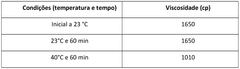
Figure IMGF000014_0001 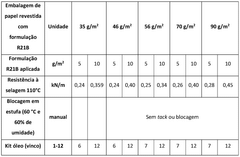
Figure IMGF000015_0001 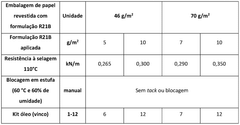
Figure IMGF000015_0002
Abstract
Description
BARRIER COMPOSITION, ITS USE, METHOD FOR MANUFACTURING FLEXIBLE PACKAGING AND PAPER PACKAGING FIELD OF INVENTION
[0001] The present invention relates to a biodegradable and compostable barrier composition for packaging, comprising about 20% by weight to about 50% by weight of a sealing agent, about 40% by weight to about 80% by weight of a biobinding agent, and about 5% by weight to about 10% by weight of an anti-blocking agent. The composition of the present invention relates to a coating composition suitable for coating paper and paperboard substrates, and has good application, sealing, and barrier properties to grease, oxygen, oils, and / or light transmission. Also disclosed are the use of the barrier composition for application to primary and secondary paper packaging, a method for manufacturing flexible packaging, and paper packaging comprising the barrier composition of the present invention. BACKGROUND OF THE INVENTION
[0002] Paper packaging is permeable to oils, fats, gases, water, and other liquids. The permeation of oils and fats compromises the external appearance of the packaging, which becomes oily and sticky. This permeation also affects material properties such as rigidity, delamination resistance, and heat seal resistance, among others. On the other hand, contact with oxygen can cause a series of undesirable changes, such as the production of unpleasant aromas, loss of nutritional value, and changes in color, aroma, and flavor. Therefore, packaging with good oxygen barrier characteristics is necessary for the production of products sensitive to this gas.
[0003] In this context, it is common to coat or treat the paper with coatings, which provide barrier properties, which are essential for packaging products that require protection, for example, food or medicinal products.
[0004] Plastic-based paper coatings are commonly used. Polyolefin coatings are often used as liquid barrier layers, heat seal layers, and adhesives. Additionally, styrene-acrylic and styrene-butadiene resins are currently available for paper applications, providing sealing and barrier properties. However, recycling this type of plastic-coated paper product is difficult, as it is difficult to separate the polymers from the fibers.
[0005] To replace plastic packaging with paper packaging, a biodegradable and compostable composition with good sealing properties and barriers to grease and oxygen was developed in the present invention. The composition developed in the present invention comprises a significant amount of renewable material and can be applied in various processes.
[0006] Although some studies use materials from renewable sources, such as carbohydrates, proteins and lipids, which also provide barrier properties, the formulations from such studies are not easily applied to different coating systems, such as blade, rod, air knife and engraved roller systems.
[0007] Prior art documents using renewable-source materials did not evaluate machine applications, only superficially suggesting potential applications. Due to the limitations and conditions of each packaging barrier composition application process, previous studies were unable to develop a formulation with good application performance in bar, engraved roller, air knife, and / or printer systems, as in the present invention. Therefore, there is a need in the prior art for a sustainable barrier composition with good barrier and sealing properties, and application in various processes for manufacturing paper products. SUMMARY OF THE INVENTION
[0008] Described herein is a barrier composition comprising about 20 wt % to about 50 wt % of a sealing agent, about 40 wt % to about 80 wt % of a biobinding agent, and about 5 wt % to about 10 wt % of an anti-blocking agent, wherein the wt % is based on the total weight of the composition.
[0009] In a preferred embodiment, the composition comprises about 35% by weight of the sealing agent, about 60% by weight of the biobinding agent and about 5% by weight of the anti-blocking agent.
[0010] In one embodiment of the invention, the sealing agent is selected from the group consisting of fully or partially hydrolyzed polyvinyl alcohol (PVOH), polyvinyl acetate (PVA), and poly(ethenol), preferably polyvinyl alcohol (PVOH).
[0011] In one embodiment of the invention, the biobinding agent is a formulation comprising starch syrup, dextrin and modified starch.
[0012] In one embodiment of the invention, the anti-blocking agent is selected from the group consisting of stearate, emulsified waxes, carbonate and talc, preferably calcium stearate.
[0013] The barrier composition of the present invention has good application, sealing and barrier properties to grease, oxygen, oils and / or light transmission.
[0014] In one embodiment of the invention, the barrier composition comprises about 35% by weight to about 45% by weight solids content, preferably about 42% by weight solids content, wherein the % by weight is based on dry weight. The solids content was measured by drying oven or moisture balance.
[0015] In one embodiment of the invention, the barrier composition has a viscosity of about 800 cp to about 1800 cp, preferably about 800 cp, wherein the viscosity was measured using a Brookfield rotational viscometer, provided with spindle L4, at 100 rpm and at a temperature of 23°C or 40°C.
[0016] Also described in the present invention is the use of the barrier composition of the present invention for application in primary and secondary paper packaging.
[0017] In a preferred embodiment, the use is for application in flexible packaging, preferably food packaging or coating packaging for pharmaceutical compositions.
[0018] Also described in the present invention are paper packaging comprising the barrier composition of the present invention.
[0019] In a preferred embodiment, the paper packaging has a grammage of approximately 35 g / m 2 at about 90 g / m 2, in which the grammage was measured in accordance with ISO 536:2019.
[0020] The present invention also describes a method for manufacturing flexible packaging, comprising applying the barrier composition of the present invention to a paper-based material using bar, blade, engraved roller, curtain, air knife or printer systems.
[0021] In one embodiment of the invention, the method for manufacturing flexible packaging comprises applying about 3 g / m 2 at about 15 g / m 2 of the barrier composition to a paper-based material. In another embodiment of the invention, the flexible packaging manufactured by the method of the present invention has a grammage of approximately 35 g / m 2 at about 90 g / m 2 , in which the grammage was measured in accordance with ISO 536:2019. DEFINITIONS
[0022] The definitions of some terms / expressions used in the present invention are presented here.
[0023] The term "barrier," as used here, refers to the ability of a product, such as packaging, to resist the passage of gases, oils, and greases, as well as the transmission of light. The barrier properties of a package should not be confused with its chemical resistance, which is associated with its ability to resist solubilization, alteration, or softening when in contact with an agent. However, the barrier attributes of a package are closely related to the chemical, physical, sensory, microbiological, and biological stability of the products.
[0024] The term "sealing" is the adhesion of two surfaces by applying heat and pressure for a certain period of time.
[0025] The term "tack" refers to the adhesiveness or stickiness of the coating applied to the paper.
[0026] "Primary packaging" is the packaging that is in direct contact with the product. "Secondary packaging," in turn, is the packaging that protects the primary packaging.
[0027] The term "biodegradation" is defined as a chemical process in which materials are metabolized into water, carbon dioxide, and biomass with the help of microorganisms. The biodegradation process depends on environmental conditions, such as temperature, inoculum, and humidity, and on the material or its application. To declare a product's biodegradability, the environmental conditions and a timeline must be specified. for biodegradation must be established in order to make claims measurable and comparable. Some examples of standards are EN 13432, ASTM D6400, ASTM D5338, ISO14855, ASTM 5988, ASTM D6003, ASTM G160, ABNT NBR 15448-1, and ABNT NBR 15448-2.
[0028] The term "composting" is defined as a process that controls biological decomposition and transforms biodegradable materials into a humus-like substance called compost. The decomposition of biodegradable materials results in the production of carbon dioxide, water, minerals, and stabilized organic matter (manure or humus). Therefore, compostable materials are those that undergo biodegradation during composting to release CO2, water, inorganic compounds, and biomass at a rate consistent with other known compostable materials and leave no visible, distinguishable, or toxic residues.
[0029] Compostable materials, which are designed to be disposed of after use through organic recycling—composting—represent one of the strategic options available for waste management. Composting is an attractive alternative for reducing solid waste and is especially suitable for conventional plastics segments, where recycling is difficult or not economically viable.
[0030] The term "repulpability" is the ability of the material to be processed again without damaging the fibers and the quality of the final paper.
[0031] The term "recyclability" refers to the property of paper in having fibers that can be reused to form new paper.
[0032] The expression "pulp disaggregation" refers to the mechanical treatment in water so that the intertwined fibers, which were free in the pulp suspension, are separated from each other again, without appreciable variation in their structural properties.
[0033] The expression "Somerville scrubbing" is a cleaning operation, that is, separation of foreign materials, from the cellulose pulp.
[0034] The expression "sheet formation" consists of forming a circular sheet, from a suspension of cellulose pulp, on a metal screen, under suction, with a standardized diameter and grammage specified for physical resistance tests.
[0035] The term "grammage" refers to the determination of the mass per unit area of the paper, described in grams per square meter in the present invention.
[0036] "Tensile strength" refers to the maximum tensile force per unit width that the paper can withstand before breaking. The "tensile index," in turn, refers to tensile strength divided by basis weight.
[0037] "Elongation" refers to the increase in length of a test specimen.
[0038] "Burst strength" refers to the maximum pressure developed by the hydraulic system that forces an elastic diaphragm through a circular area of paper. The "burst index," in turn, is the burst strength divided by the basis weight.
[0039] Tear strength is the force perpendicular to the plane of the paper required to tear multiple sheets of paper a specified distance after tearing has begun. Tear index, in turn, refers to tear strength divided by basis weight. BRIEF DESCRIPTION OF THE DRAWINGS
[0040] Figure 01 represents a graph of TGA and DSC analyses of formulation R21B of example 1 of the invention.
[0041] Figure 02 represents a DSC analysis graph of formulation R21B of example 1 of the invention.
[0042] Figure 03 represents a graph of the pulp yield after Somerville purification of example 3 of the invention.
[0043] Figures 04 to 07 represent graphs with comparisons of the physical tests for the five cycles of samples 1 and 2 of example 3 of the invention. In particular, figure 04 refers to tensile strength, figure 05 refers to burst strength, figure 06 refers to tear strength and figure 07 refers to elongation. DETAILED DESCRIPTION OF THE INVENTION
[0044] The barrier composition of the present invention combines a sealing agent, a bio-binding agent and an anti-blocking agent, so that the balance of the proportions of these constituents provides good application properties in various processes for manufacturing paper products, sealing and barrier to oxygen, oils, fats and light transmission.
[0045] The barrier composition of the present invention is biodegradable and compostable.
[0046] The barrier composition of the present invention can be used for application in primary and secondary paper packaging, especially flexible packaging, replacing the application of plastic films. This composition can be applied to papers with different grammages, for example, approximately 35 g / m 2 at about 90 g / m 2 , in accordance with ISO 536:2019, and uses different application systems, such as bar, blade, engraved roller, curtain, air knife and printers.
[0047] The packaging barrier composition of the present invention, in addition to providing sustainability and possessing good barrier and sealing properties, has superior runnability when compared to existing formulations, without impregnation problems. Furthermore, the composition developed in the present invention, when applied to the surface of paper, does not present blocking problems at temperatures up to 60°C. The composition of the present invention also has an economic advantage, since, as it is applicable in various processes and in a versatility of equipment, it requires a low investment since it uses inputs commonly used in the paper mill.
[0048] The composition of the present invention comprises about 20 wt% to about 50 wt%, preferably about 35 wt%, of a sealing agent, about 40 wt% to about 80 wt%, preferably about 60 wt%, of a biobinding agent, and about 5 wt% to about 10 wt%, preferably about 5 wt%, of an anti-blocking agent, wherein the wt% is based on the total weight of the composition.
[0049] In one embodiment of the invention, the sealing agent is selected from the group consisting of fully or partially hydrolyzed polyvinyl alcohol (PVOH), polyvinyl acetate (PVA), and poly(ethenol), preferably polyvinyl alcohol (PVOH).
[0050] In one embodiment of the invention, the biobinding agent is a formulation comprising starch syrup, dextrin and modified starch.
[0051] In one embodiment of the invention, the anti-blocking agent is selected from the group consisting of stearate, emulsified waxes, carbonate and talc, preferably calcium stearate.
[0052] In a preferred embodiment of the invention, the barrier composition comprises: (a) 20 to 50% by weight of polyvinyl alcohol (PVOH), (b) 40 to 80% by weight of biobinding agent and (c) 5 to 10% by weight of calcium stearate or emulsified vegetable waxes.
[0053] Polyvinyl alcohol is solubilized in water and heated for complete solubilization, providing a barrier to fat and oxygen and helping in sealing. The biobinding agent also aids in sealing. Stearate or emulsified waxes help eliminate tack and reduce blocking problems.
[0054] In one embodiment of the invention, the barrier composition comprises about 35 wt % to about 45 wt % solids content, preferably about 42 wt % solids content, wherein the wt % is on a dry weight basis. The solids content was measured by drying oven or moisture balance.
[0055] In one embodiment of the invention, the barrier composition has a viscosity of about 800 cp to about 1800 cp, preferably about 800 cp, wherein the viscosity was measured using a Brookfield rotational viscometer, provided with spindle L4, at 100 rpm and at a temperature of 23°C or 40°C.
[0056] The barrier composition of the present invention can be applied to papers of different grammages for primary and secondary paper packaging, which require heat sealing and a barrier to grease, oxygen, oils and / or light transmission.
[0057] The barrier composition of the present invention can be manufactured by mixing a sealing agent (e.g., polyvinyl alcohol), previously solubilized in water at a temperature of 90 °C for 30 min, a biobinding agent, solubilized in water, and an anti-blocking agent (e.g., calcium stearate).
[0058] Additionally, the present invention also relates to a method for manufacturing flexible packaging. Said method comprises applying, with good performance, the developed barrier composition to a paper-based material using bar, blade, engraved roller, curtain, air knife, or printer systems. In one embodiment, invention, the method for manufacturing flexible packaging comprises applying the barrier composition with a grammage ranging from about 3 g / m 2 at about 15 g / m 2 , preferably about 5 g / m 2 at about 10 g / m 2, in which the grammage was measured in accordance with ISO 536:2019.
[0059] The weight of the barrier compound to be used in packaging manufacturing is determined by the sealing and barrier performance desired. For example, for packaging that only requires sealing, approximately 5 g / m is used. 2 of barrier composition. To achieve high levels of barrier to fat, apply approximately 10 g / m 2 of the barrier composition.
[0060] The flexible packaging of the present invention exhibits good sealing properties, which are evaluated on vertical and horizontal filling machines. Furthermore, depending on the grammage of the barrier composition applied in the process, Kit 12 oil / grease permeability can be achieved, representing high barrier properties of the packaging. In the Kit 12 method, the sample is subjected to a series of solvent mixtures of different polarities and oil, where the mixtures are numbered from 1 to 12, in order of increasing potency. Higher kit numbers indicate better oil and / or grease barrier properties for the sample.
[0061] In one embodiment of the invention, flexible packaging manufactured by the method of the present invention has a grammage of about 35 g / m 2 at about 90 g / m 2, in accordance with ISO 536:2019. Said packaging is made of paper and comprises the barrier composition disclosed in the present invention.
[0062] The paper packaging of the present invention may be primary or secondary. In a preferred embodiment, the packaging disclosed in The present invention is flexible food packaging or flexible coating packaging for pharmaceutical compositions. EXAMPLES
[0063] The examples presented in the present invention are non-exhaustive, serve only to illustrate the invention and should not be used as a basis for limiting it. Example 1
[0064] In this example, tests are described to validate the barrier composition of the present invention with regard to sealing and tack.
[0065] This study evaluates the properties of a barrier composition of the invention comprising polyvinyl alcohol (PVOH), a biobinder, and calcium stearate. Specifically, the resin composition designated Formulation R21B used in the tests comprises 35% by weight PVOH, 60% by weight biobinder (or biopolymers), and 5% by weight calcium stearate, wherein the biobinder is a formulation comprising starch syrup, dextrin, and modified starch. Since this formulation presented the best cost-benefit ratio in terms of sealing and tack, tests were performed to validate it.
[0066] To validate the R21B formulation, the following tests were performed, more details about which will be provided below: - Evaluation of the thermal properties of the formulation; - Assessment of resin viscosity during application; - Application of the formulation in engraved roller and air knife systems; - Assessment of repulpability; - Migration test in n-heptane; - Bottling test. Evaluation of the thermal properties of the R21B formulation, through TGA and DSC
[0067] To evaluate the thermal properties of the resin composition, thermogravimetric analysis (TGA) and differential scanning calorimetry (DSC) were performed.
[0068] The results obtained are presented in the graphs in figures 01 and 02. As can be seen in figure 01, the beginning of the degradation of the R21B formulation occurs at a temperature of approximately 170°C. Furthermore, as can be seen in figure 02, the glass transition temperature (Tg) is in the range between 40°C and 80°C, with half height equal to 58.6°C. Evaluation of the viscosity of the R21B formulation during application
[0069] When evaluating the viscosity variation of formulation R21B at 40 wt% solids, a large decrease in viscosity was observed at 40°C, as can be seen in Table 1 below. Viscosity was measured using a Brookfield rotational viscometer, supplied with an L4 spindle, at 100 rpm and at temperatures of 23°C and 40°C. Table 1 Application of the R21B formulation in engraved roller and air knife systems
[0070] To validate the barrier composition (formulation R21B), applications were made using engraved roller and air knife systems, both on a pilot scale. Tests were conducted using barrier compositions with grammages of 5, 7, and 10 g / m. 2 , in accordance with ISO 536:2019. The paper packaging to which the formulation was applied comprised grammages of 35 to 90 g / m 2 , in accordance with ISO 536:2019.
[0071] The results are presented in Table 2 and Table 3 below. Table 2 - Application in engraved roller - Double layer Table 3 - Air knife application - Double layer Assessment of repulpability
[0072] The repulpability assessment consists of quantifying rejects and the formation of small sheets, following the TAPPI T 275 sp-18 and ABNT standards NBR ISO 5263-1.
[0073] In the present study, the repulpability of the material was evaluated by applying 5 g / m 2 of the R21B formulation and it was concluded that the material is repulpable. Table 4 illustrates the repulpability. Table 4 N-heptane migration test
[0074] The n-heptane migration test is a migration analysis required for materials that come into contact with food, according to ANVISA RDC 88 regulation.
[0075] In this test, the migration of the material in n-heptane was evaluated with an application of 10 g / m 2 and it was found that the residue obtained is below the maximum limit of 8 mg / dm 2 . Details of this test can be found in Table 5 below. Table 5 Test completion
[0076] For this test, horizontal and vertical flowpack filling machines were used. Rolls with grammages of 46, 56, and 70 g / m were used. 2 , according to ISO 536:2019, with applications of 5 and 10 g / m 2 of R21B resin, and all samples presented good sealing. The ideal mordant temperature was between 180 and 190 °C, both in the horizontal and vertical flowpack machine. Example 2
[0077] This example describes a test to evaluate the runnability of the barrier composition of the present invention on machines, particularly its applicability on an engraved roll. The composition tested is formulation R21B, and the application weight of the composition was 5 g / m. 2 and 10 g / m 2 , according to ISO 536:2019.
[0078] The present study aims to technically validate (runnability and quality) the high-speed "Recorded Roller" applicator (up to 400 m / min) to apply the barrier composition R21B of the present invention, in flexible paper products, for example, straws.
[0079] Industrial coating equipment was used, with the following specifications: - Width: 2,080 mm; - Speed: 400 m / min; - Applicator: 01 Engraved Roller Head + 01 nip head for silicone rubber rollers + 01 flexo head for printing on the back; - Other information: for drying, large hot air hoods were used, infrared after flexo printing and maximum coil diameter at the entrance 1,000 mm.
[0080] For the test, an Anilox Cylinder was used to apply 5 g / m 2 ; a barrier composition R21B (PVOH / Biobinder / stearate, in proportions of 35 / 60 / 5) with different % by weight of solids, measured by moisture balance and viscosity, measured using a Brookfield rotational viscometer, supplied with L4 spindle, at 100 rpm and at a temperature of 23 °C; and the following base papers: - 35g base, there are three coils (6,900m + 20,300m + 20,200m); - 46g base, one coil (14,400 m); - 70g base, there are two coils (13,400m + 13,100m).
[0081] The test was conclusive and validates the high-productivity "Recorded Roller" application system for applying the R21B water-based barrier, used in flexible grids with 5 g / m2 (sealing) and 10 g / m 2 (sealing and fat).
[0082] Regarding the stability of the barrier composition of the present invention, two days of applying the barrier were completed without the occurrence of operational problems related to it, such as lump formation, roll buildup, filter clogging, and others. Therefore, it can be concluded that the barrier composition is very stable.
[0083] Regarding speed and productivity, it is clear that at the lowest grammage (35g / m 2) of base paper, it was possible to run up to 290 m / min, applying an average of 5 g of barrier with the cylinder. The quality was approved, as good coverage and sealing were observed. The 290 m / min limit was due to the calibration of the machine's tension sensors for the weight in question, which caused the head to open at this speed. It was observed that the paper did not break, so it was possible to work at higher speeds. This was confirmed with the 46 g / m weight. 2 , in which 400 m / min was reached (machine limit), and this grammage already fit the previous calibrations of the machine that works with 50g / m 2 .
[0084] The sealing quality and grease kit results of the tested barrier composition are shown in Table 6. Table 6 Sample 1: 35 + 5 LC (diluted 39% / speed 200 m / min); Sample 2: 35 + 5 (41.8% / speed 150 m / min base coil 2); Sample 3: 46 + 5 1st Coil (41.8% / speed 300 m / min); Sample 4: 46 + 5 2nd Coil (41.8% / speed 300 m / min); Sample 5: 46 + 5 3 g Coil (41.8% / speed 400m / min); Sample 6: 70 + 5 R21B (1st Pass 41.8% / speed 400m / min); Sample 7: 70 + 10 R21B double application (speed 400m / min). Where: 35 + 5 - uncoated paper with a weight of 35 g / m 2 with application of 5 g / m 2 of R21B resin; 46 + 5 - uncoated paper with a weight of 46 g / m 2 with application of 5 g / m 2 of R21B resin; 70 + 5 - uncoated paper with a weight of 70 g / m 2 with application of 5 g / m 2 of R21B resin; 70 + 10 - uncoated paper with a weight of 70 g / m 2 with application of 10 g / m 2 of R21B resin.
[0085] The sealing quality test passed all tests, as the minimum specification is 0.200 KN / m.
[0086] Regarding the Fat Kit, for application of 5 g / m 2 a good value was achieved (Kit 7) and for application of 10 g / m 2 the maximum expected value was reached (Kit 12). The higher the Kit number, the better the oil and / or fat barrier property of the sample. Example 3
[0087] In this example, the recyclability of two samples is assessed. To this end, disaggregation, screening, sheet formation, and physical-mechanical tests were performed to assess the recyclability of the samples.
[0088] The samples, indicated below, were tested according to standards and specific technical procedures. The tests were performed in triplicate. - Sample 1 - GNS 56 BR: 46g / m uncoated paper 2 with application of 10 g / m 2of the R21B formulation; - Sample 2 - GNS 80 BR: 70 g / m coated paper 2 with application of 10 g / m 2 of the R21B formulation.
[0089] The samples were disaggregated according to ABNT NBR ISO 5263-1:2005, totaling an initial 150 g. The total sample hydration time before disaggregation was approximately 20 hours. After disaggregation, the samples were sieved in a Somerville sieved screen with a 0.15 mm slit. After sieving, 150 g / m sheets were prepared. 2 according to NBRISO 5268-2 standard, with tensile, burst, and tear tests being performed. The sheets from the first cycle were disaggregated and purified and tested again for tensile, rupture, and burst. This was done successively until 5 9 cycle. Table 7 indicates the standards and procedures in which the samples were tested. Table 7
[0090] Table 8 and figure 03 indicate the pulp yield after Somerville screening (0.15 mm gap) in relation to the previous cycle. Table 8
[0091] The pulp yield shows that there is no waste in the purification process, with all the fibers being used.
[0092] Regarding sheet formation, sheets were made with 150 g / m 2 .
[0093] Tables 9 and 10 indicate the physical tests for samples 1 and 2. Table 9 - Physical tests of sample 1 (GNS 56 BR) Table 10 - Physical tests of sample 2 (GNS 80 BR)
[0094] Figures 04 to 07 show the comparisons of the physical tests for the five cycles of samples 1 and 2.
[0095] As can be seen in the tables above and in figures 4 to 6, there is a drop in strength over the cycles for both sample 1 (GNS 56 BR) and sample 2 (GNS 80 BR), with the exception of burst strength. As can be seen in figure 5, the burst strength for sample 1 (GNS 56 BR) remains at very similar values over the cycles, while for sample 2 (GNS 80 BR) there is a slight decrease.
[0096] The drop in resistance was expected and the explanation is based on two main items, which are the reduction of microfibrils during each cycle and the loss of fiber flexibility during its passage during the drying process due to the stiffening of hemicelluloses.
[0097] Although there was an expected reduction in resistance, the formation and appearance of the sheets were normal, indicating that they are recyclable.
Claims
CLAIMS 1. Barrier composition, characterized by the fact that it comprises about 20% by weight to about 50% by weight of a sealing agent, about 40% by weight to about 80% by weight of a biobinding agent and about 5% by weight to about 10% by weight of an anti-blocking agent.
2. Composition according to claim 1, characterized in that it comprises about 35% by weight of the sealing agent, about 60% by weight of the biobinding agent and about 5% by weight of the anti-blocking agent.
3. Barrier composition according to claim 1 or 2, characterized in that the sealing agent is selected from the group consisting of fully or partially hydrolyzed polyvinyl alcohol (PVOH), polyvinyl acetate (PVA) and poly(ethenol).
4. Barrier composition according to claim 3, characterized in that the sealing agent is polyvinyl alcohol (PVOH).
5. Barrier composition according to any one of claims 1 to 4, characterized in that the biobinding agent is a formulation comprising starch syrup, dextrin and modified starch. Barrier composition according to any one of claims 1 to 5, characterized in that the anti-blocking agent is selected from the group consisting of stearate, emulsified waxes, carbonate and talc.
7. Barrier composition according to claim 6, characterized in that the anti-blocking agent is calcium stearate.
8. Barrier composition according to any one of claims 1 to 7, characterized in that it comprises about 35% by weight to about 45% by weight of solids content, preferably about 42% by weight of solids content.
9. Barrier composition according to any one of claims 1 to 8, characterized by the fact that it has a viscosity of about 800 cp to about 1800 cp, preferably about 800 cp.
10. Use of the barrier composition defined in any one of claims 1 to 9, characterized in that it is for application in primary and secondary flexible paper packaging.
11. Use according to claim 10, characterized in that it is for application in food packaging or coating packaging for pharmaceutical compositions.
12. Method for manufacturing flexible packaging, characterized by the fact that it comprises applying the barrier composition defined in any one of claims 1 to 9 to a paper-based material by means of bar, blade, engraved roller, curtain, air knife or printer systems.
13. Method according to claim 12, characterized in that it comprises applying about 3 g / m 2 at about 15 g / m 2of the barrier composition to a paper-based material.
14. Method according to claim 12 or 13, characterized in that the flexible packaging obtained has a grammage of approximately 35 g / m 2 at about 90 g / m 2 .
15. Paper packaging, characterized in that it comprises the barrier composition defined in any one of claims 1 to 9 and has a grammage of approximately 35 g / m 2 at about 90 g / m 2 .
16. Invention of a product, process, system, kit or use, characterized by the fact that it comprises one or more elements described in this patent application.
Citation Information
Patent Citations
Paper coating composition containing high starch levels
CA3129837A1
Coloration of paper by binding colorants in a surface application
US20040110883A1
Coating compsition
US20170081541A1
Coating composition comprising hydrolysed wheat proteins
US20180044858A1
Barrier coatings
US20180362792A1